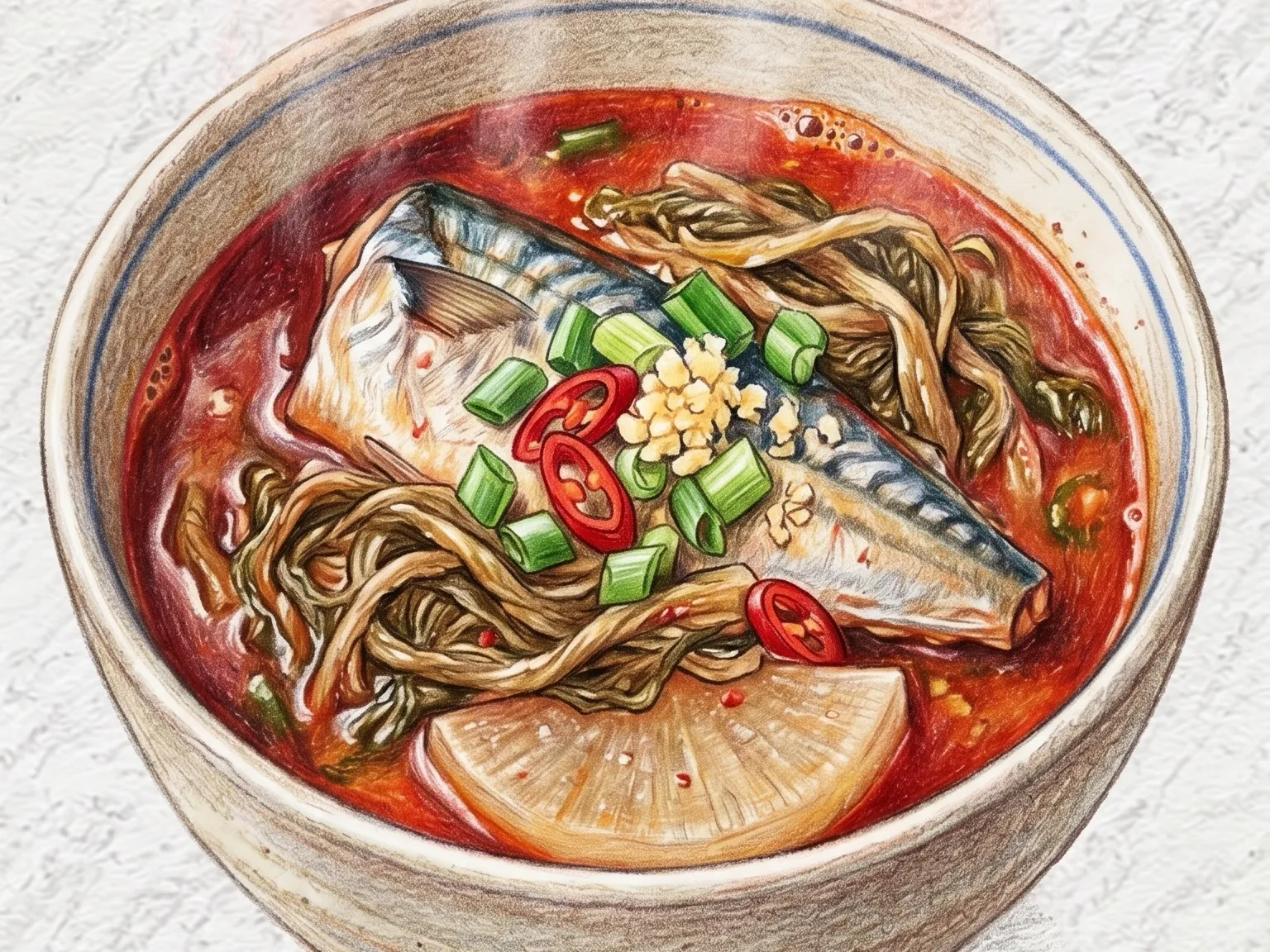
Korean Dried Greens Mackerel Stew
Quick answer
- Total time
- 55 min
- Level
- Medium
- Servings
- 4 servings
- Ingredients
- 9
About this dish
Radish lines the bottom of the pot, dried radish greens go on top, and mackerel sits above both, with rice-rinse water poured slowly in at the edge.
Read more
Chili flakes alone, no gochujang, keep the broth a clear red rather than a cloudy one. The mackerel is cooked on the bone, and the flesh is picked off with chopsticks at the table.
Ingredients
Instructions
- 1
Squeeze 250 g boiled dried radish greens firmly so they do not leave grassy liquid in the stew, then cut them into 4 to 5 cm pieces. Slice 220 g Korean radish into 0.8 cm half-moons, and cut the onion and green onion for later.
- 2
Spread the radish across the bottom of the pot first, then lay the dried radish greens over it.
Add 1.5 tablespoons gochugaru, 1 tablespoon minced garlic, and 1 tablespoon soup soy sauce, and toss gently so the greens are coated without crushing them.
- 3
Place 500 g cleaned mackerel on top of the seasoned greens in a single layer.
Pour 1000 ml rice-rinse water slowly down the side of the pot, not directly onto the fish, so the flesh stays intact and the seasoning remains settled.
- 4
Set the pot over medium heat and, once it begins to boil, skim off only the obvious foam from the surface.
Leave the lid slightly ajar and simmer for about 15 minutes, until the radish edges look translucent and the broth turns clear red.
- 5
Add 120 g onion and continue simmering for 12 more minutes, keeping the heat at a steady medium simmer.
Do not flip the mackerel; spoon broth over it 2 to 3 times so the top cooks through without breaking the pieces.
- 6
Add 50 g diagonally sliced green onion and simmer for 3 minutes, just until it softens but still looks green.
Turn off the heat and rest the stew for 5 minutes, then check the seasoning and serve while the broth is hot.
Use-up ingredient planner
Turn these ingredients into two more meals
The overlap excludes basic seasonings. Open the next recipe and your selected dishes will stay with you.
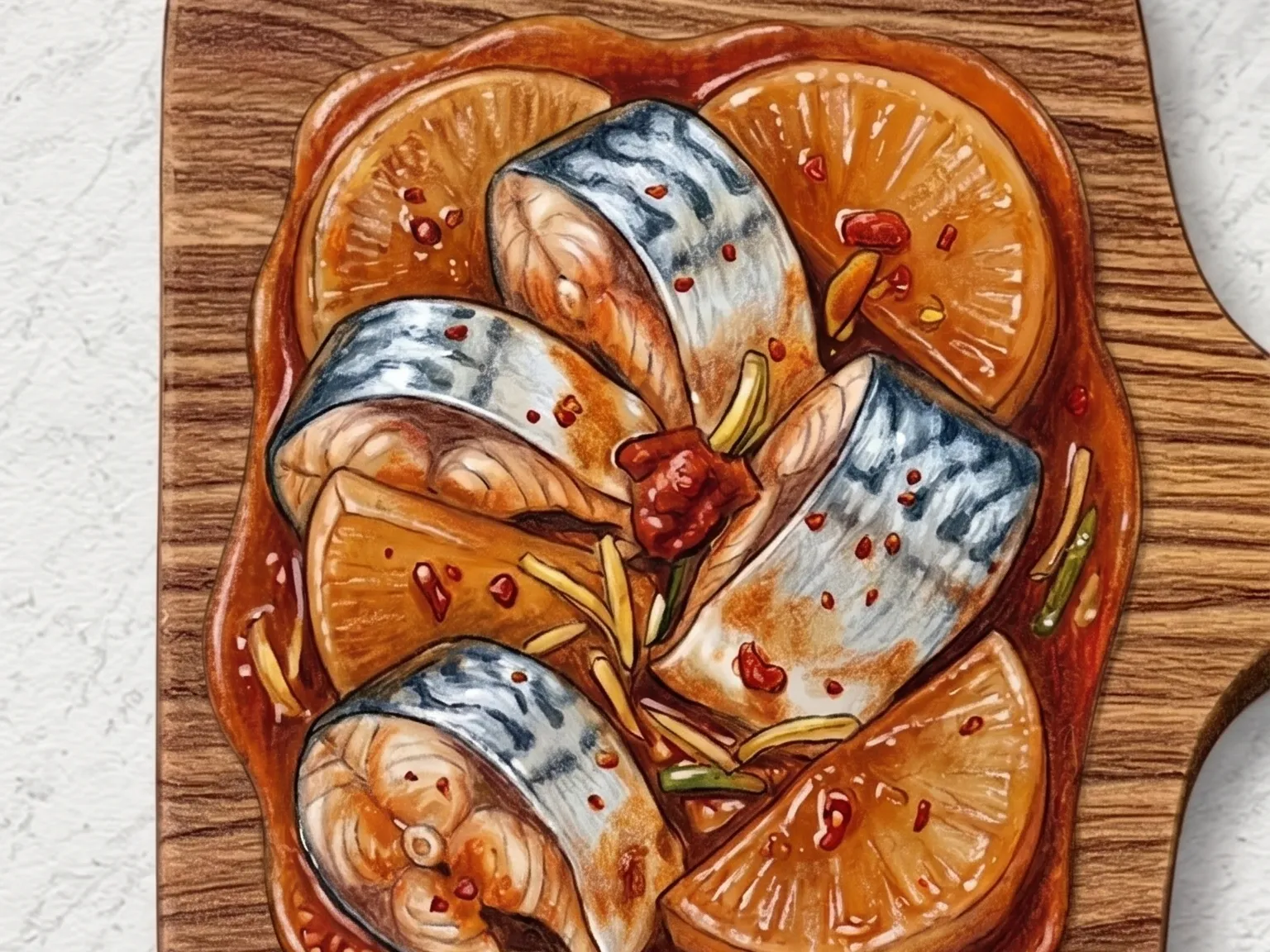
Korean Braised Mackerel with Radish
cleaned mackerel, korean radish
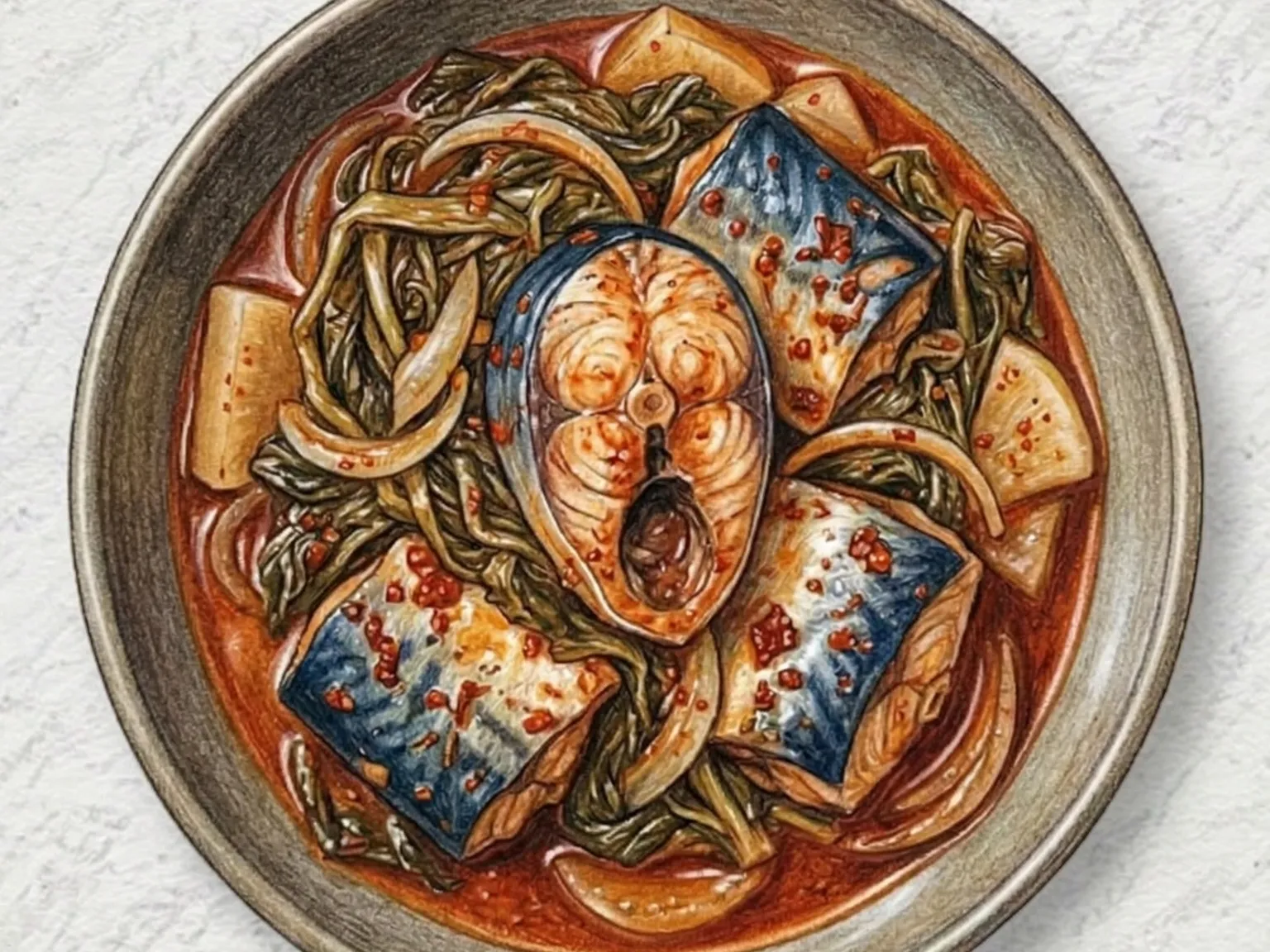
Korean Braised Mackerel with Dried Radish Greens
boiled dried radish greens, korean radish
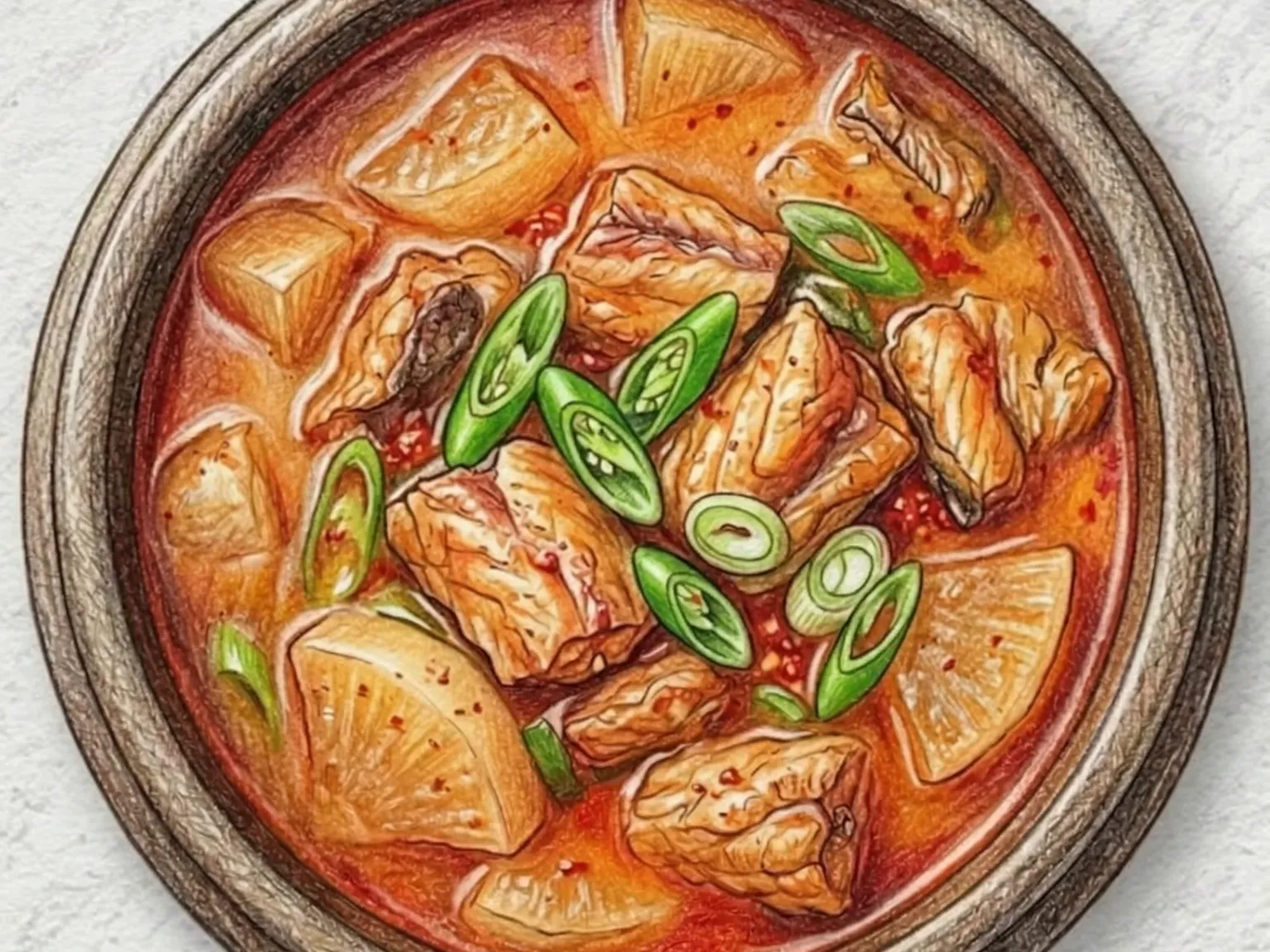
Korean Semi-Dried Pollock Radish Stew
korean radish, onion