Korean Dried Radish Greens Soup
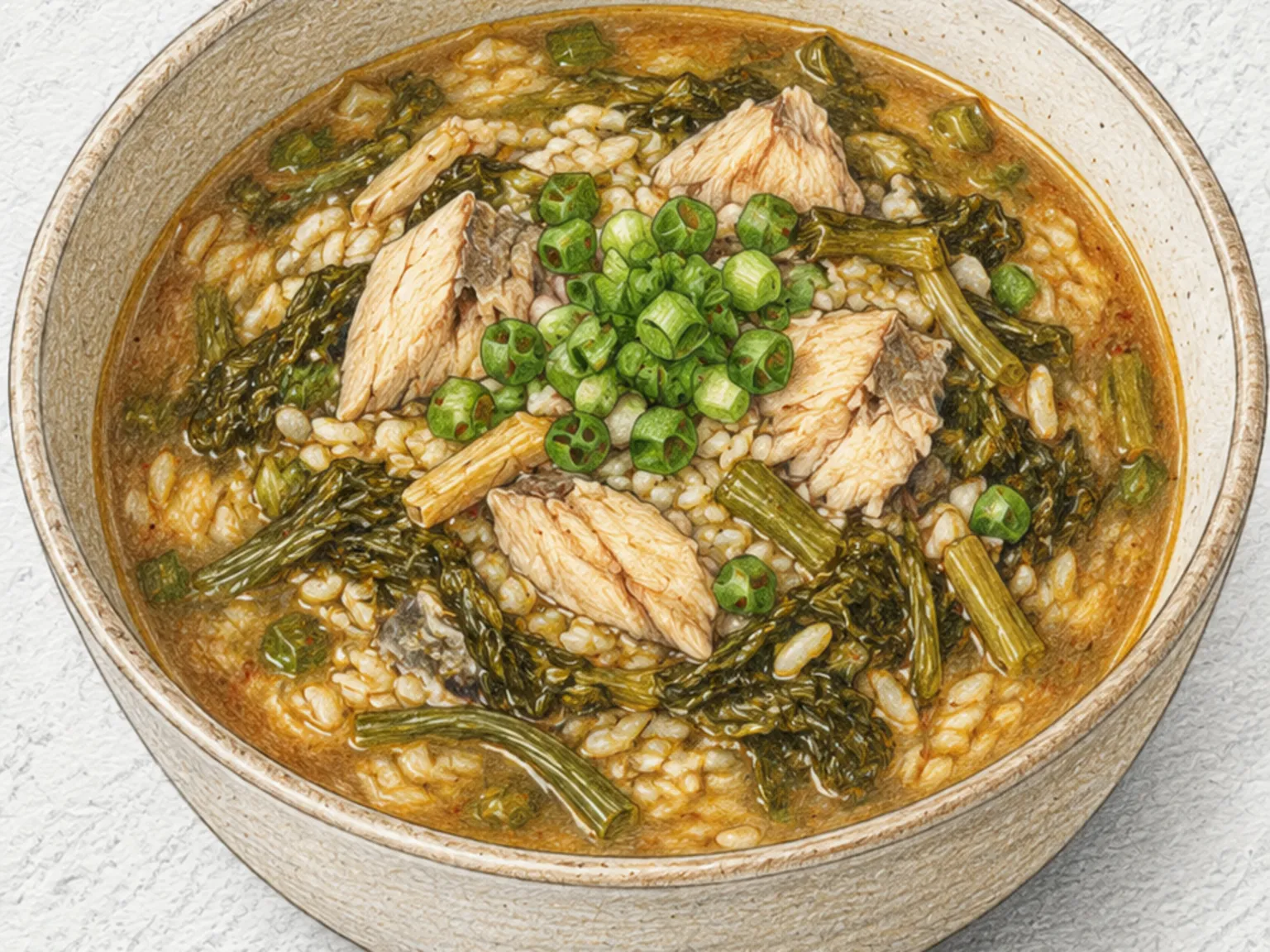
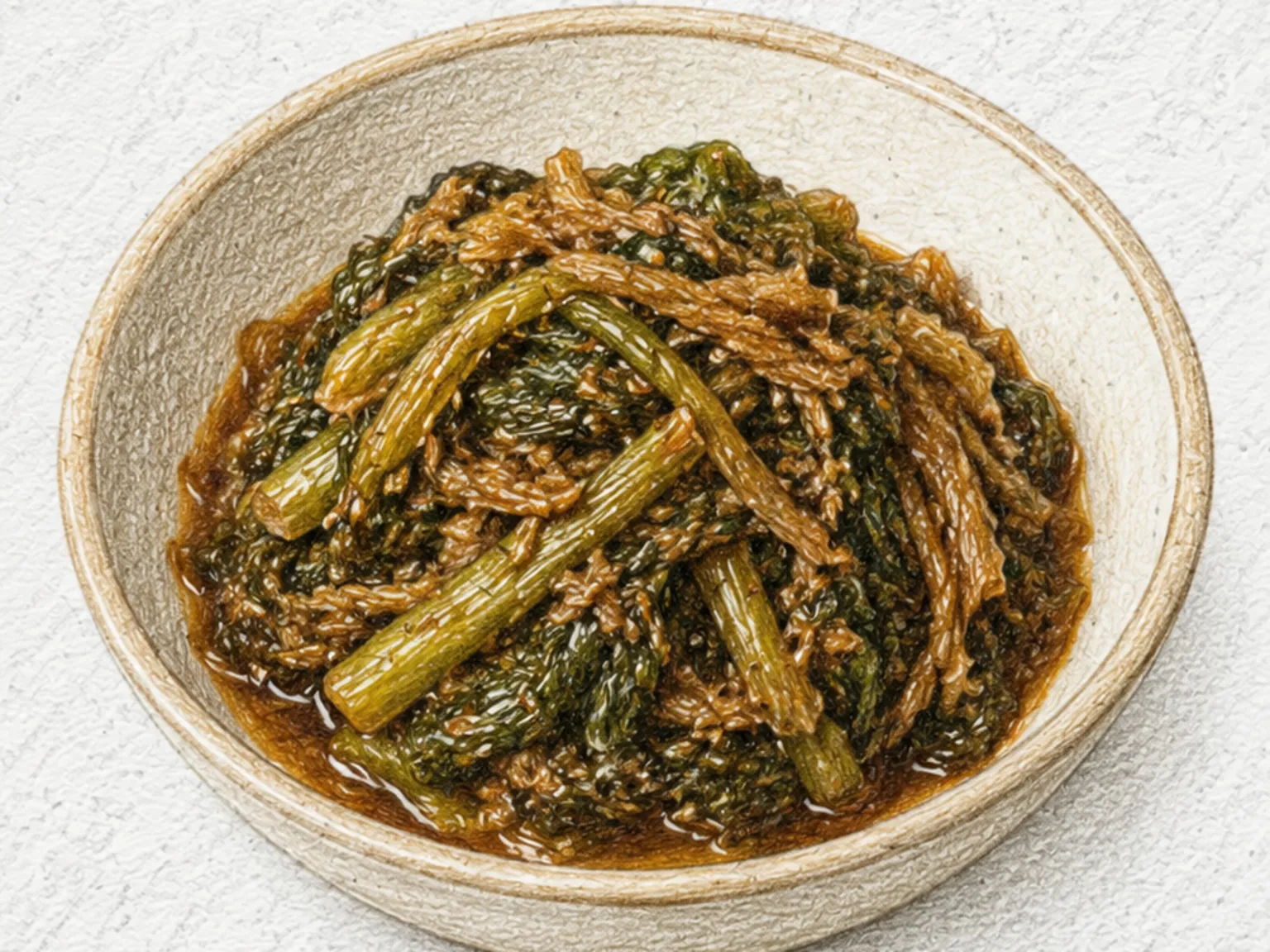
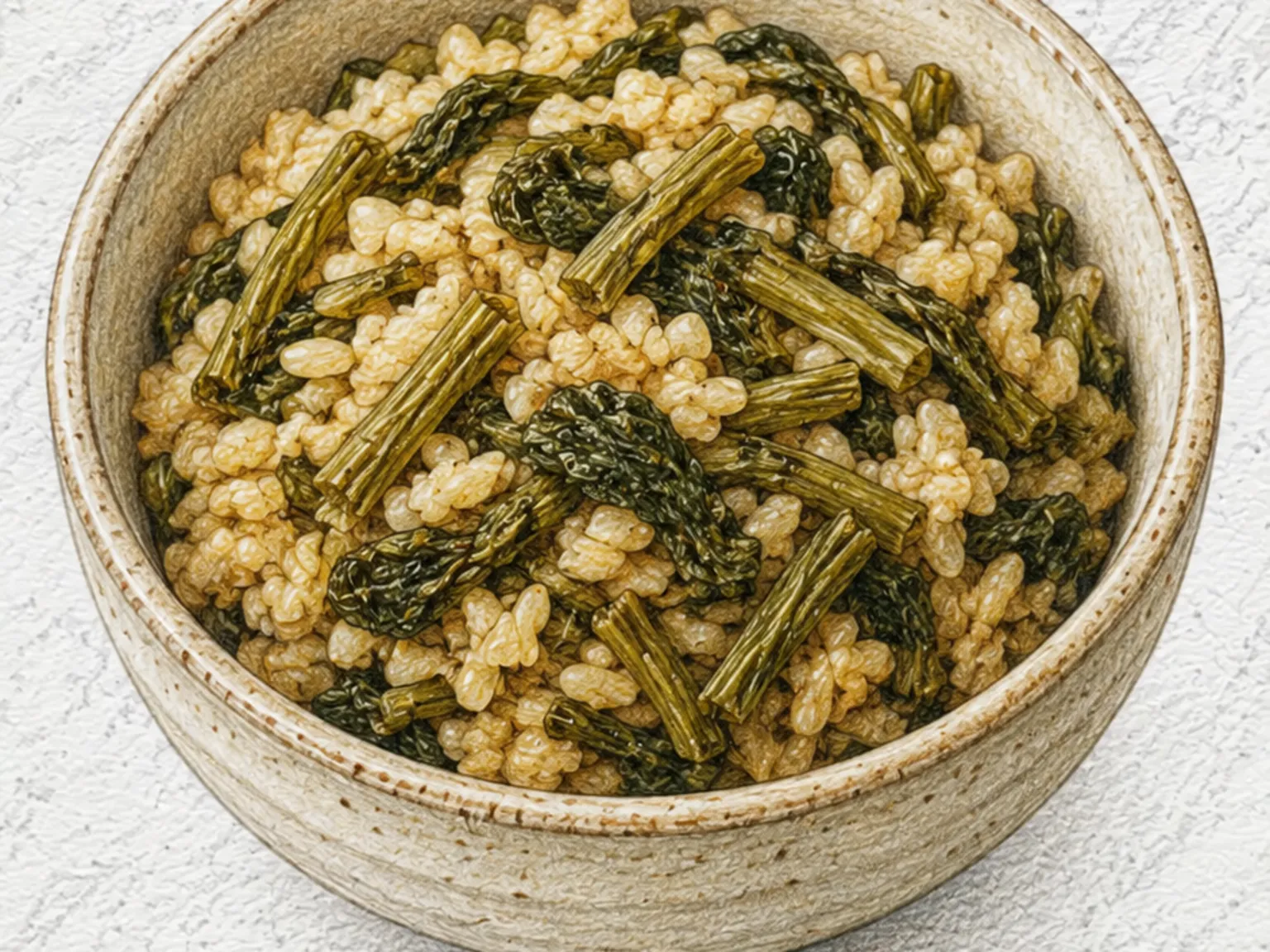
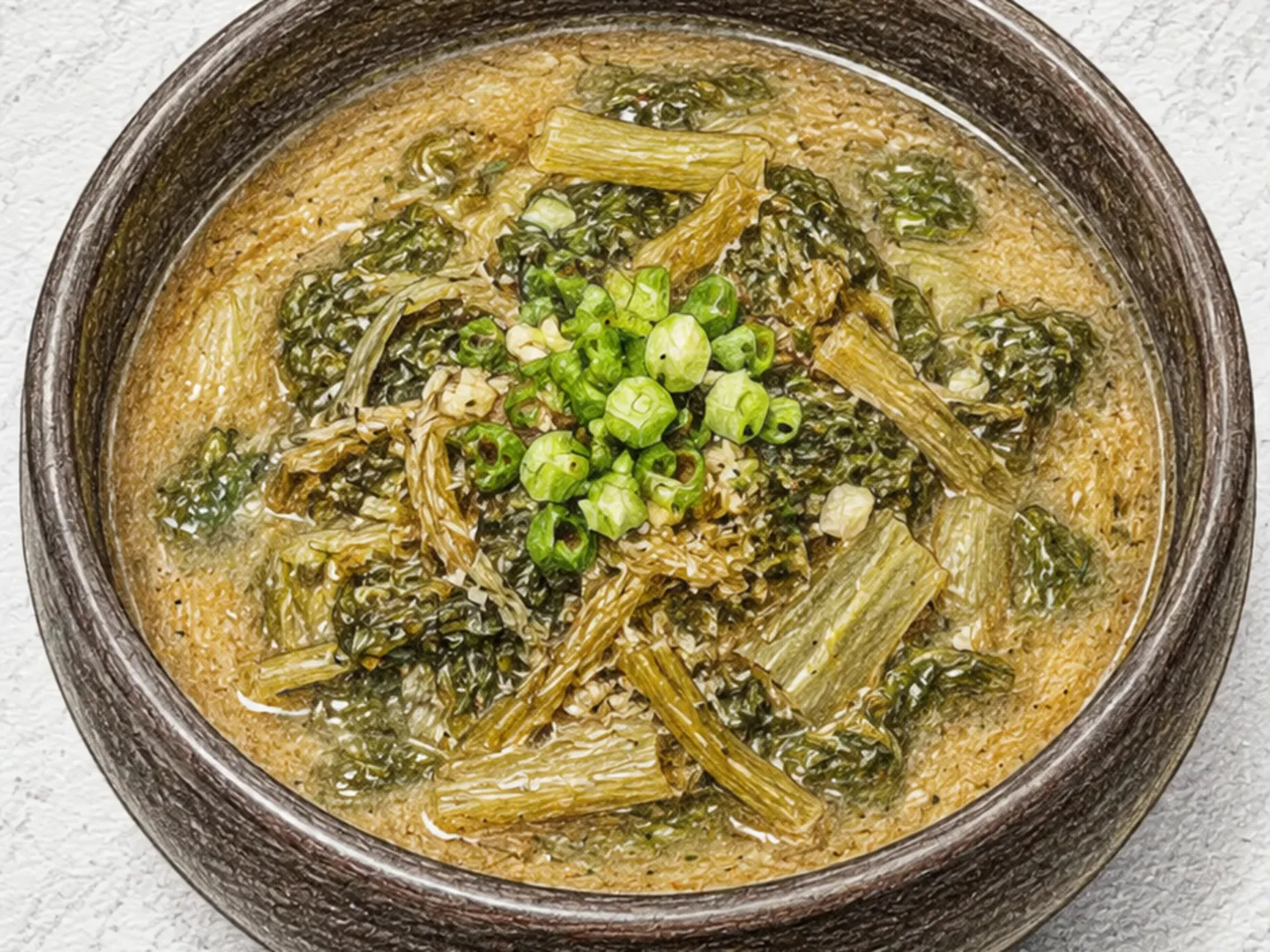
Siraegi-guk is a Korean dried radish greens soup that transforms a humble preserved vegetable into something deeply flavorful through the medium of doenjang. The greens are dried in autumn, then reconstituted by boiling until soft - a process that concentrates their earthy, slightly bitter character. When simmered in stock with dissolved soybean paste, that concentrated flavor meets fermented umami and the result is a broth richer than the ingredient list would suggest. Adding ground perilla seeds pushes the soup further, turning the liquid creamy and nutty. Garlic and green onion form the aromatic backbone. The soup works well without meat, but many cooks stir-fry a small amount of beef in perilla oil before adding the liquid, which introduces a beefy depth that rounds out the overall profile. The critical step is managing the initial boiling of the dried greens: not enough, and the bitterness overwhelms; too much, and the greens become bland. Experienced Korean cooks leave just enough edge to give the soup its distinctive character - a pleasant astringency that makes doenjang taste more interesting rather than less. Siraegi-guk is pantry cooking at its finest, relying on dried goods and fermented paste to produce a bowl that tastes like slow, patient effort.
Adjust Servings
Instructions
- 1
Trim fibrous parts of greens, cut into 5 cm lengths, and squeeze out water.
- 2
Mix greens with doenjang, chili flakes, garlic, and soup soy sauce to pre-season.
- 3
Heat perilla oil and stir-fry seasoned greens for 3 minutes.
- 4
Add anchovy stock, bring to a boil, then simmer for 25 minutes on medium heat.
- 5
Add green onion, simmer 2 more minutes, taste, and serve.
As an Amazon Associate, we may earn from qualifying purchases.
Tips
Nutrition (per serving)
More Recipes

Korean Dried Radish Greens Pork Soup
Siraegi-dwaejigogi-guk is a hearty Korean soup that marries dried radish greens with pork in a broth deepened by doenjang and warmed with a moderate dose of gochugaru. The dried greens are first boiled until pliable, then dressed with soybean paste so the fermented flavor works its way into every fiber. Pork shoulder or neck, cut into bite-sized pieces, simmers alongside, releasing rendered fat that enriches the broth and adds a full-bodied mouthfeel. The chili flakes turn the liquid a dark reddish-brown and introduce a gentle heat that prevents the pork fat from feeling heavy. Garlic and green onion build the aromatic base, and some cooks add a splash of perilla oil at the end for an extra layer of nuttiness. The greens keep a pleasant chew even after long cooking, providing textural contrast to the tender pork. Served over rice with plenty of broth ladled on top, each spoonful delivers doenjang, pork, and radish greens in a single, satisfying combination. This soup is at its best during winter, when dried radish greens from the autumn harvest are at peak flavor and the cold weather demands something hot and substantial.

Korean Dried Radish Greens Beef Soup
Siraegi-soegogi-guk combines beef brisket or shank with dried radish greens in a doenjang-seasoned broth that is simultaneously meaty, earthy, and fermented. The beef simmers first, building a clear stock with substantial body, before the pre-boiled and softened radish greens are introduced. Doenjang dissolves into the stock and acts as a bridge between the animal richness of the beef and the vegetal, slightly bitter quality of the greens, making both taste more complete than they would alone. An optional spoonful of gochugaru adds warmth and color, shifting the soup from mild to gently spicy. Garlic and green onion handle the aromatic duties, and a scoop of ground perilla seeds - stirred in near the end - gives the broth a creamy, nutty finish that softens the edges. This soup is one of the more filling options in the Korean guk repertoire because both the beef and the fibrous greens provide substance and chew. A single bowl, ladled generously over rice, can replace an entire meal without any additional banchan. The flavors deepen overnight, making leftovers an anticipated breakfast rather than an afterthought.

Siraegi Guk (Korean Perilla Radish Greens Soup)
Creamy, nutty, and deeply warming - this siraegi guk (dried radish greens soup) gets its velvety texture from perilla powder stirred into an anchovy-doenjang broth. The greens, which are dried and then rehydrated before use, carry a concentrated, earthy flavor and a fibrous chew that fresh vegetables cannot replicate. Massaging the greens with doenjang, garlic, and soup soy sauce before simmering allows the fermented seasoning to penetrate deep into the fibers over twenty minutes of cooking. Perilla powder added in two separate batches dissolves evenly without clumping, turning the broth an opaque, milky white with a thick, creamy consistency that clings to each spoonful.

Korean Young Radish Doenjang Soup
Yeolmu doenjang-guk is a summer soybean paste soup that uses rice-rinse water as its base, giving the broth a smoother texture than plain water would. Young radish greens are cut into five-centimeter lengths and simmered for eight minutes until they soften and lose their raw grassy edge. Diced tofu, garlic, and a half tablespoon of chili flakes go in next, cooking for six more minutes so the tofu absorbs the fermented soybean flavor. Soup soy sauce and green onion finish the pot, resulting in a mellow, earthy soup that complements a simple rice-and-banchan meal.

Korean Dried Radish Greens Doenjang Kalguksu
Siraegi doenjang kalguksu is a Korean noodle soup that combines dried radish greens with a soybean paste broth built on anchovy-kelp stock. The radish greens contribute an earthy, slightly bitter note that complements the fermented depth of doenjang. Onion and zucchini add natural sweetness during simmering, and perilla seed powder stirred in at the end brings a toasted, nutty finish. Fresh kalguksu noodles absorb the broth as they cook, resulting in a soft, chewy texture.

Korean Dried Radish Greens Perilla Stew
This stew simmers rehydrated dried radish greens in rice-rinse water thickened with a generous four tablespoons of perilla seed powder. A small amount of doenjang and gochujang provides savory depth, while the perilla powder creates a creamy, nutty broth with a pale beige hue. The chewy texture of the greens contrasts with the smooth, rich soup. Onion and green onion add layers of sweetness and fragrance, making it a warming winter staple in Korean home cooking.