Charim

2686 Korean & World Recipes

2686+ Korean recipes, clean and organized. Ingredients to instructions, all at a glance.

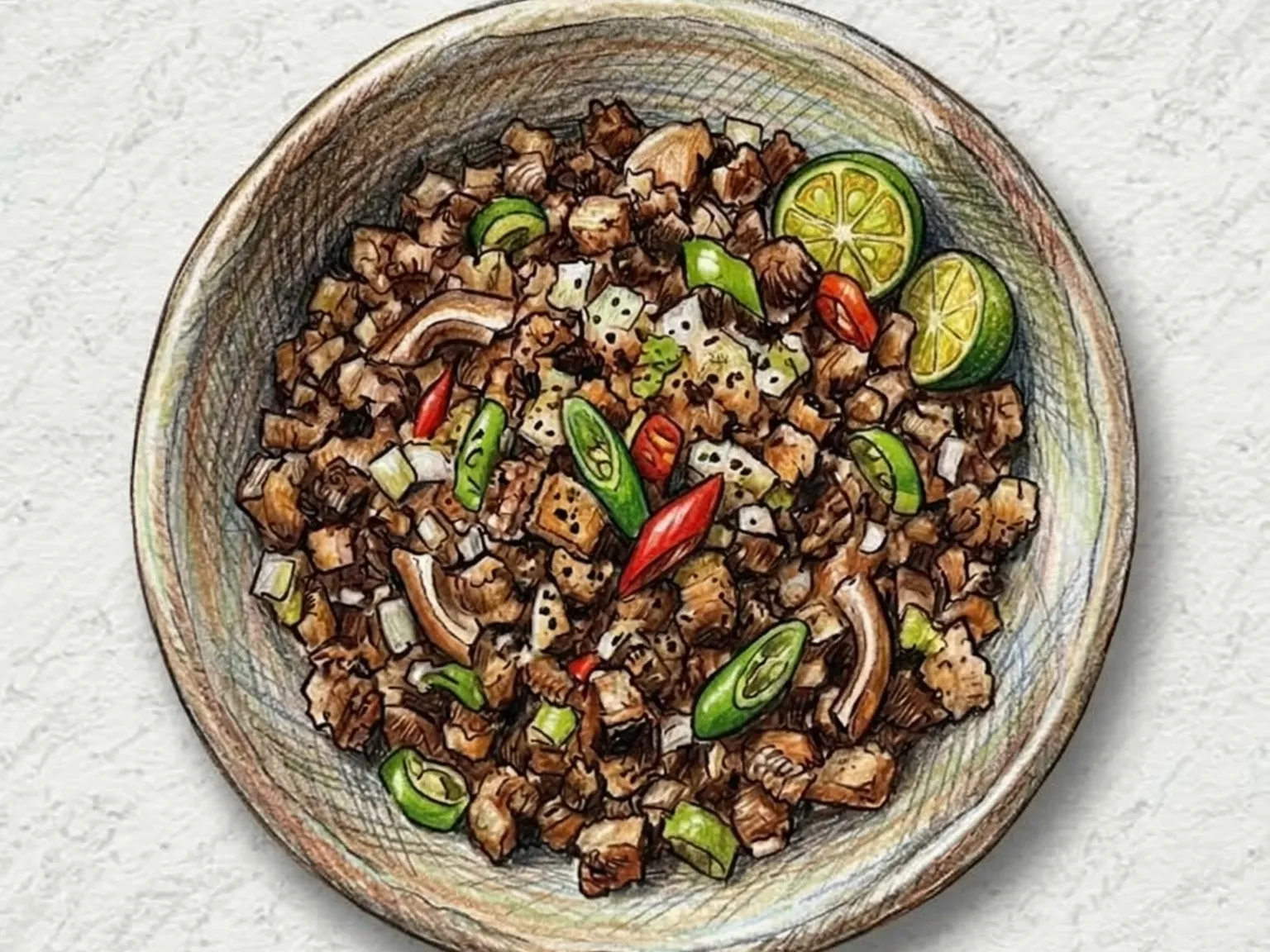
Sisig (Filipino Crispy Chopped Pork with Chili and Calamansi)
Asian Medium

Sisig (Filipino Crispy Chopped Pork with Chili and Calamansi)

Sisig is a quintessential Filipino bar food built around chopped pork that is boiled first for tenderness, then pan-fried in butter until the edges turn deeply crisp. Diced onion and fresh chilies are tossed in briefly, adding crunch and a sharp bite that cuts through the richness. Calamansi juice-a small citrus native to the Philippines-brings a tart brightness that lifts the entire dish, while a finishing fold of mayonnaise binds everything together in a creamy coating without dulling the flavor. The mixture is traditionally served on a sizzling cast-iron plate so it arrives at the table still popping and hissing. Each forkful delivers a layered experience: the crunch of the fried pork, the cool tang of citrus, and the lingering heat of the chili. Sisig is inseparable from Filipino drinking culture and remains one of the country's most iconic street-to-table dishes.

Prep 20min Cook 25min 2 servings

Adjust Servings

2servings
servings

Instructions

  1. 1

    Boil pork until cooked, drain, and chop finely.

  2. 2

    Melt butter and fry chopped pork on high heat until crisp.

  3. 3

    Add onion and chilies and stir-fry briefly.

  4. 4

    Season with soy sauce, pepper, and calamansi juice.

  5. 5

    Turn off heat, fold in mayonnaise, and serve sizzling hot.

🛒Shop Ingredients on Amazon

As an Amazon Associate, we may earn from qualifying purchases.

Tips

Add mayonnaise off heat to prevent splitting.

Nutrition (per serving)

Calories
540
kcal
Protein
28
g
Carbs
7
g
Fat
44
g

More Recipes

Bicol Express (Filipino Pork Belly in Spicy Coconut Cream Stew)
AsianMedium

Bicol Express (Filipino Pork Belly in Spicy Coconut Cream Stew)

Bicol Express is named after the railway line that once connected Manila to the Bicol region in southeastern Luzon - an area famous for its love of coconut and chili peppers. Thinly sliced pork belly simmers in a mixture of coconut milk and coconut cream with shrimp paste (bagoong), garlic, onion, and a generous amount of finger-length chilies and bird's eye chilies. The coconut milk reduces slowly over medium heat, splitting into oil as the liquid evaporates, at which point the pork begins to fry in the rendered coconut fat. The finished dish is nearly dry - the sauce has thickened into a creamy, oily coating that clings to the pork and chilies. The shrimp paste adds a deep, funky salinity beneath the coconut sweetness, and the chili heat builds over successive spoonfuls rather than hitting immediately. Despite its name suggesting a modern invention, the combination of coconut, chili, and fermented shrimp is an ancient Bicolano flavor profile. It pairs inseparably with steamed white rice, which absorbs the rich, spicy sauce.

🎉 Special Occasion
Prep 15minCook 35min4 servings
Sinigang na Baboy (Filipino Tamarind Sour Pork Rib Soup)
AsianMedium

Sinigang na Baboy (Filipino Tamarind Sour Pork Rib Soup)

Sinigang na baboy is the quintessential Filipino sour soup, a dish that appears on family tables across the Philippines with the comforting regularity of a weekly ritual. Pork ribs are simmered until the meat loosens from the bone, then the broth is sharpened with tamarind - either fresh pods pounded and strained, or a spoonful of tamarind paste for convenience. Tomatoes, onions, and daikon radish go in early and soften into the broth, while eggplant, long green beans, finger chilies, and leafy greens like water spinach are added toward the end so they keep their color and bite. The resulting broth is clear, tart, and savory all at once, with the pork fat adding a subtle richness beneath the acidity. Filipinos ladle the soup generously over steamed rice, and the sourness is said to sharpen the appetite rather than satisfy it, which explains why second helpings are almost mandatory.

🎉 Special Occasion
Prep 20minCook 50min4 servings
Chicken Adobo (Filipino Vinegar Soy Braised Chicken)
AsianEasy

Chicken Adobo (Filipino Vinegar Soy Braised Chicken)

Chicken adobo is the unofficial national dish of the Philippines, rooted in a pre-colonial preservation technique of braising meat in vinegar to extend its shelf life in tropical heat. Chicken simmers uncovered in soy sauce, cane vinegar, crushed garlic cloves, bay leaves, and whole black peppercorns until the sharp acidity of the vinegar mellows into a salty-sour sauce with caramelized depth. Once braised, the chicken is pan-fried until the skin turns golden and crisp, then reunited with the reduced sauce - the moment the crackling skin meets the thick, glossy liquid is the dish's defining pleasure. Every Filipino household has its own ratio of soy to vinegar, and the debate over whose mother makes the best adobo is a national pastime that never resolves. It is always served over steamed white rice, with extra sauce spooned over generously. Adobo famously tastes better on the second day, after the flavors have deepened overnight in the refrigerator.

🍱 Lunchbox
Prep 15minCook 35min4 servings
Bibingka (Filipino Coconut Rice Cake)
AsianEasy

Bibingka (Filipino Coconut Rice Cake)

Bibingka is a Filipino baked rice cake inseparable from the Christmas season, eaten warm outside churches after Simbang Gabi - the series of dawn masses held in the nine days before Christmas. A batter of rice flour, coconut milk, eggs, and sugar is poured into a clay pot lined with banana leaves and baked between two layers of charcoal heat; the banana leaves release a green, vegetal fragrance into the batter as it cooks. Slices of salted duck egg and fresh coconut are pressed into the surface, then the top is brushed with butter and returned to the heat for a final browning that caramelizes the edges and sends up a triple aroma of banana leaf, coconut, and butter. The texture sits between a rice cake and a sponge - slightly sticky and chewy yet airy and moist. At four in the morning in December, the sight of bibingka vendors tending charcoal braziers outside Philippine churches, smoke curling into the pre-dawn air, is one of the country's most iconic holiday scenes.

🎉 Special Occasion🧒 Kid-Friendly
Prep 15minCook 30min4 servings
Pancit Canton (Filipino Stir-Fried Egg Noodles with Chicken and Vegetables)
NoodlesEasy

Pancit Canton (Filipino Stir-Fried Egg Noodles with Chicken and Vegetables)

Pancit canton is a Filipino stir-fried egg noodle dish cooked with chicken, carrot, and cabbage in a soy sauce and oyster sauce seasoning. The noodles are parboiled to about seventy percent doneness so they finish cooking in the wok while absorbing the sauce, staying springy rather than soft. Chicken thigh is stir-fried first to render its fat and juices, then carrot and cabbage go in over high heat to keep their crunch. Soy sauce and oyster sauce combine into a salty, umami-rich glaze that coats the noodles evenly. A squeeze of fresh lemon after the heat is turned off lifts the dish with citrus brightness, cutting through the oily richness. The lemon must be added at the very end to preserve its volatile aroma.

🎉 Special Occasion🌙 Late Night
Prep 15minCook 15min2 servings
Pancit Palabok (Filipino Rice Noodles with Annatto Shrimp Sauce)
NoodlesMedium

Pancit Palabok (Filipino Rice Noodles with Annatto Shrimp Sauce)

Pancit palabok is a Filipino celebratory noodle dish built on thin rice noodles blanketed in an orange-hued shrimp sauce. The sauce gets its color from annatto powder and its backbone from shrimp-shell stock simmered with fish sauce. Boiled egg halves and a squeeze of lime are the traditional garnish, balancing richness with acidity. It is a staple at Filipino birthday parties and holiday gatherings, served family-style on a large platter.

🎉 Special Occasion
Prep 20minCook 25min2 servings
More Asian →