Socca Niçoise (French Chickpea Flour Flatbread)
Quick answer
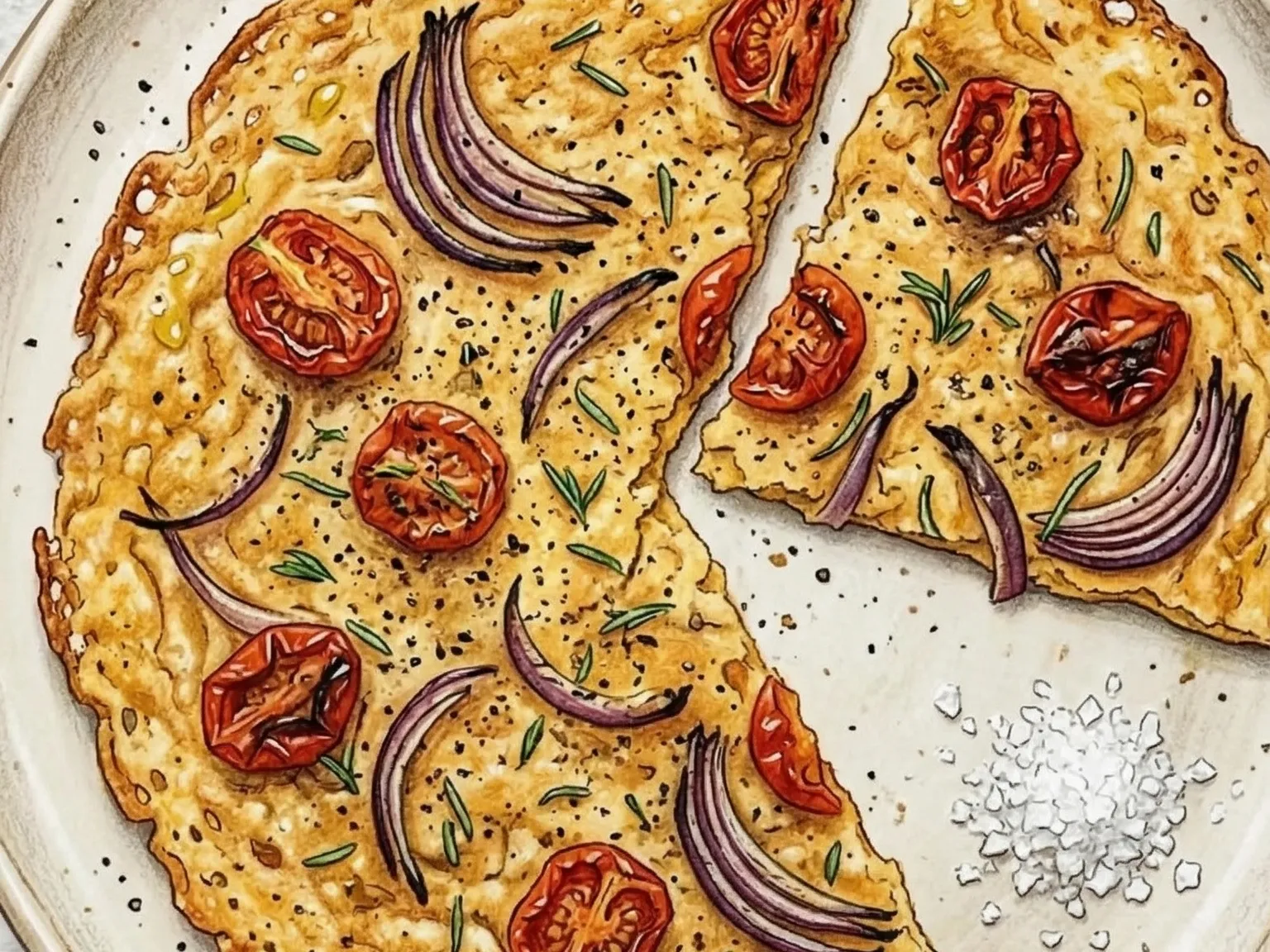
Socca nicoise is a chickpea-flour flatbread from Nice, France, made by whisking chickpea flour with water, olive oil, salt, pepper, and rosemary, then baking the thin bat...
What makes this special
- Rested batter poured into sizzling preheated oil gives socca nicoise its crisp edge and chewy, nutty center.
- 10-minute rest lets chickpea flour absorb water for crisp edges and chewy center
- Sizzling olive oil in a preheated pan keeps batter from sticking and forms crisp base
Key ingredients
Core cooking flow
- 1 Mix 180 g chickpea flour with 1 teaspoon salt and 1/2 teaspoon black pepper in a bowl.
- 2 Whisk in 1 tablespoon olive oil and 1 teaspoon rosemary until the oil no longer floats on top.
- 3 Heat the oven to 220°C. Thinly slice the red onion and halve the cherry toma...
Socca nicoise is a chickpea-flour flatbread from Nice, France, made by whisking chickpea flour with water, olive oil, salt, pepper, and rosemary, then baking the thin batter in a preheated oven-safe pan at 220 degrees Celsius for twelve to fifteen minutes. Resting the batter for ten minutes allows the flour to hydrate fully, which produces the characteristic texture - crisp and almost shatteringly crunchy at the edges, soft and slightly custardy in the center. The pan must be fully preheated and generously oiled so the batter sizzles on contact and releases cleanly. Sliced red onion and halved cherry tomatoes placed on top before baking lose their moisture in the oven and concentrate into sweet, slightly charred toppings. A final grind of coarse black pepper emphasizes the nutty, earthy flavor of the chickpea base.
Instructions
Read the steps as a cooking flow: prep, heat, seasoning, doneness control, and finish.
- 1Season
Mix 180 g chickpea flour with 1 teaspoon salt and 1/2 teaspoon black pepper in a bowl.
Add the 300 ml water gradually while whisking, keeping the batter smooth and loose with no dry pockets.
- 2Heat
Whisk in 1 tablespoon olive oil and 1 teaspoon rosemary until the oil no longer floats on top.
Rest the batter for 10 minutes so the chickpea flour hydrates and the center bakes tender instead of dry.
- 3Control
Heat the oven to 220°C.
Thinly slice the red onion and halve the cherry tomatoes, then place an oven-safe pan over high heat until the surface is fully hot, which helps the socca release cleanly.
- 4Step
Add the remaining 2 tablespoons olive oil to the hot pan and let it shimmer and sizzle.
Pour in the batter in a thin layer, then tilt the pan right away so it spreads evenly.
- 5Heat
Scatter 60 g red onion and 120 g cherry tomatoes over the batter without piling them up.
Keep the vegetables spread out so their moisture can cook off and the flatbread does not turn soggy in spots.
- 6Finish
Transfer the pan to the oven and bake for 12-15 minutes.
Remove it when the edges are deeply crisp and the center is just set and slightly tender, then finish with more black pepper and serve warm.
After the steps
Pick a recipe that fits this dish.
Continue with shared ingredients, meal pairings, or a similar method.
Recipes That Go Well With This
More Western →Based on shared ingredients and meal pairing
Salade Niçoise
Salade Nicoise is a classic salad from Nice in southern France that arranges tuna, soft-boiled eggs, olives, anchovies, tomatoes, and blanched green beans in separate sections on a plate, finished with a vinaigrette of olive oil, lemon juice, and Dijon mustard. The traditional presentation keeps each ingredient in its own zone rather than tossing everything together. Soft-boiling the eggs for six minutes yields a runny yolk that acts as a natural dressing when broken. The salty depth of anchovies and the oily richness of olives add complexity over the mild tuna, while the mustard vinaigrette brightens and ties the whole plate together with its acidity.
Bouillabaisse (Provencal Saffron Seafood Stew)
Bouillabaisse is a Provencal seafood stew that originated with Marseille fishermen cooking whatever catch remained unsold, distinguished above all by saffron's golden color and subtle floral aroma carried through the broth. Fennel and tomatoes are sauteed in olive oil first to build a fragrant base, then saffron-steeped fish stock is added and brought to a simmer. Firm-fleshed fish such as monkfish or sea bass go in first, with shrimp and mussels added last to protect their texture - overcooked shellfish turns rubbery and loses all elasticity. The broth builds complexity from the successive contributions of each seafood type, with every variety releasing its own distinct character of ocean flavor into the pot. Prolonged simmering concentrates the broth intensely, so once the fish is added, maintaining high heat and finishing quickly is the key to a broth that is rich but still clear and clean. Traditionally, grilled baguette spread with garlicky rouille is dipped into the broth alongside the seafood.
French Celeriac Remoulade
Celeriac remoulade shreds thickly peeled celeriac into fine matchsticks and dresses them in a mixture of Dijon mustard, mayonnaise, lemon juice, and white wine vinegar. Tossing the shreds immediately with half the lemon juice prevents enzymatic browning, while the rest goes into the dressing to balance acidity. The Dijon's sharp heat cuts through the mayonnaise's richness, and the white wine vinegar keeps the finish clean and bright. Cutting the matchsticks as thin as possible maximizes surface area so the dressing absorbs quickly and evenly. A 15-minute chill in the refrigerator lets the flavors settle throughout; overnight refrigeration deepens the result further. The salad pairs well with cold meats and charcuterie, where its tangy crunch offsets richer textures.
Beef Tartare
Beef tartare is a French preparation of premium tenderloin hand-chopped with a knife, never passed through a grinder, so that each small piece stays intact and delivers a clean, juicy bite rather than a pasty mouthfeel. The chopped meat is mixed with capers, anchovies, shallots, and cornichons, then bound with egg yolk and Dijon mustard. Capers and anchovies provide a salty, briny depth that makes raw beef compelling as a dish, while the Dijon adds a sharp, direct mustard heat that brings focus to every forkful. The egg yolk coats each morsel in a silky, rich film that holds the mixture together without masking the meat itself. Freshness is non-negotiable here - the quality of the tenderloin is the entire foundation of the dish, and there is no technique or seasoning that compensates for inferior beef.
Serve with this
Doenjang Clam Spinach Orzo
Doenjang clam spinach orzo is a one-bowl pasta built by cooking orzo in doenjang-seasoned vegetable stock alongside clams in a method borrowed directly from risotto technique. The clams are first purged in salt water to remove sand, then steamed open in white wine so they release their briny cooking liquid into the pan. That liquid merges with the already-present fermented depth of doenjang to form a layered savory base that carries the pasta from the very first minute of cooking. Toasting the orzo in butter or oil before adding any liquid coats the starch on each grain, a step that slows its release and produces a consistently creamy sauce by the end rather than a gluey mass or a watery broth. The stock goes in two or three additions rather than all at once, each addition added only once the previous one has been absorbed, and the pasta is stirred throughout so the released starch works into the liquid rather than sinking to the bottom. Spinach added in the final thirty to sixty seconds of cooking wilts just enough to turn tender without losing its bright green color or dissolving into the sauce. A knob of cold butter stirred in off heat as the finishing touch emulsifies into the sauce, adding a glossy sheen and a rounded, buttery richness that ties all the flavors together.
Korean Honey Grapefruit Tea
Jamong-cha is a Korean fruit tea brewed from grapefruit preserves dissolved in hot water, and the quality of the finished drink depends almost entirely on how those preserves are made. The first step is cleanly separating the flesh from the white pith, which carries most of the fruit's bitterness; leaving even a thin strip of pith in the jar will tip the balance from pleasantly tart to sharp and astringent. Once the flesh is packed in sugar and left to macerate for at least twenty-four hours, the juice slowly pulls away and thickens into a fragrant, amber syrup. Honey replaces some of the sugar to round its hard edge, and a spoonful of fresh lemon juice added at the end sharpens the overall acidity without competing with the grapefruit's floral notes. A pinch of salt simultaneously amplifies the bitter-citrus perfume and the sweetness, a trick that keeps the flavor from reading as flat when diluted in water. The same preserves work equally well over ice with sparkling water as a chilled ade, and refrigerated in a sealed jar they last two to three weeks.
Candied Sweet Potato
Goguma mattang is a Korean candied sweet potato snack made by cutting peeled sweet potatoes into large chunks and deep-frying them at 170 degrees Celsius until the interior turns floury and soft. A syrup of sugar, corn syrup, water, and a measured splash of soy sauce is cooked separately until large, foamy bubbles form - the visual cue for adding the fried sweet potatoes. Everything must be coated within thirty seconds to lock in a thin, glass-like caramel shell that crisps and turns translucent as it cools. The soy sauce shifts the flavor from purely sweet to a rounded, slightly savory depth. Pre-draining surface moisture from the cut sweet potatoes reduces oil splatter during frying and helps the syrup grip the pieces evenly. Black sesame seeds are scattered over the finished pieces for a toasted, nutty note, and each piece is spread individually on parchment paper while still warm so they cool without sticking together.
Similar recipes
Duck Confit
Duck confit is a traditional French preservation dish that begins with rubbing duck legs in coarse salt, fresh thyme, garlic, and cracked black pepper, then leaving them to cure in the refrigerator for twelve hours. This salting stage draws moisture out of the meat through osmosis and allows the aromatic compounds from the thyme and garlic to begin working their way into the flesh. After rinsing the salt off completely and drying the legs thoroughly, they are submerged in duck fat held at a steady 90 degrees Celsius and left there for three hours. The extended low-temperature cooking is the defining technique of confit: the gentle heat gradually dissolves the collagen in the connective tissue, converting it to gelatin without tightening the muscle fibers, which is what produces meat tender enough to pull apart with no resistance. This result is impossible to achieve by cooking at higher temperatures. The cooked legs can be stored submerged in their fat in the refrigerator for several weeks, which explains why confit was invented as a preservation method in the era before refrigeration. When ready to eat, the legs are lifted from the fat and placed skin-side down in a hot pan for a final sear that renders the skin into a crackling, shattering shell. The contrast between that crisp exterior and the yielding interior - silky, rich, and deeply savory from the curing and slow cooking - is what makes duck confit one of the most satisfying preparations in the French culinary tradition. The leftover duck fat is a prized cooking medium and adds exceptional depth when used for roasting or frying potatoes.
Coconut Macaroon
Coconut macaroons are flour-free cookies formed by binding shredded coconut flakes with egg whites and sweetened condensed milk, then baking until the exterior crisps and the interior remains dense and moist. Without flour as a structural element, coconut carries all of the texture and flavor, making every bite intensely coconut-forward in a way that flour-based cookies cannot replicate. In the oven, egg whites set the outer surface of each mound into a thin, golden crust while condensed milk holds the interior together in a chewy, sticky mass. The contrast between the crisp shell and the moist center is the defining textural feature of the macaroon. A pinch of salt sharpens the coconut's natural nuttiness, and a small amount of vanilla extract adds a warm, soft backdrop to the sweetness. Dipping the flat base of each cookie in melted dark chocolate once cooled introduces a bitter counterpoint that balances the concentrated sweetness of the condensed milk.
Steamed Mussels Mariniere
Moules mariniere is a classic dish from northern France in which mussels are steamed open in a base of white wine, butter, garlic, and shallot over high heat. As the mussels open, they release their briny cooking liquid into the wine-butter base, and within roughly five minutes that mixture becomes a deeply aromatic broth that is far more complex than the sum of its parts. The brevity of the cooking time is not incidental but essential. Mussels cooked just until they open remain plump and firm, while those left on the heat any longer shrink and turn chewy. The moment the last mussel opens, the heat comes off. Fresh flat-leaf parsley is scattered over the top before serving, adding a clean green note against the richness of the broth. A dry white wine is preferable to one with residual sweetness, because its acidity balances the butter and amplifies the oceanic flavor of the mussels. Finishing with a small knob of cold butter stirred in at the end gives the sauce a glossy sheen and a rounded, velvety finish. The broth that collects at the bottom of the pot is often considered the best part of the dish, traditionally mopped up with torn pieces of crusty baguette.