Korean Beef and Mushroom Soup
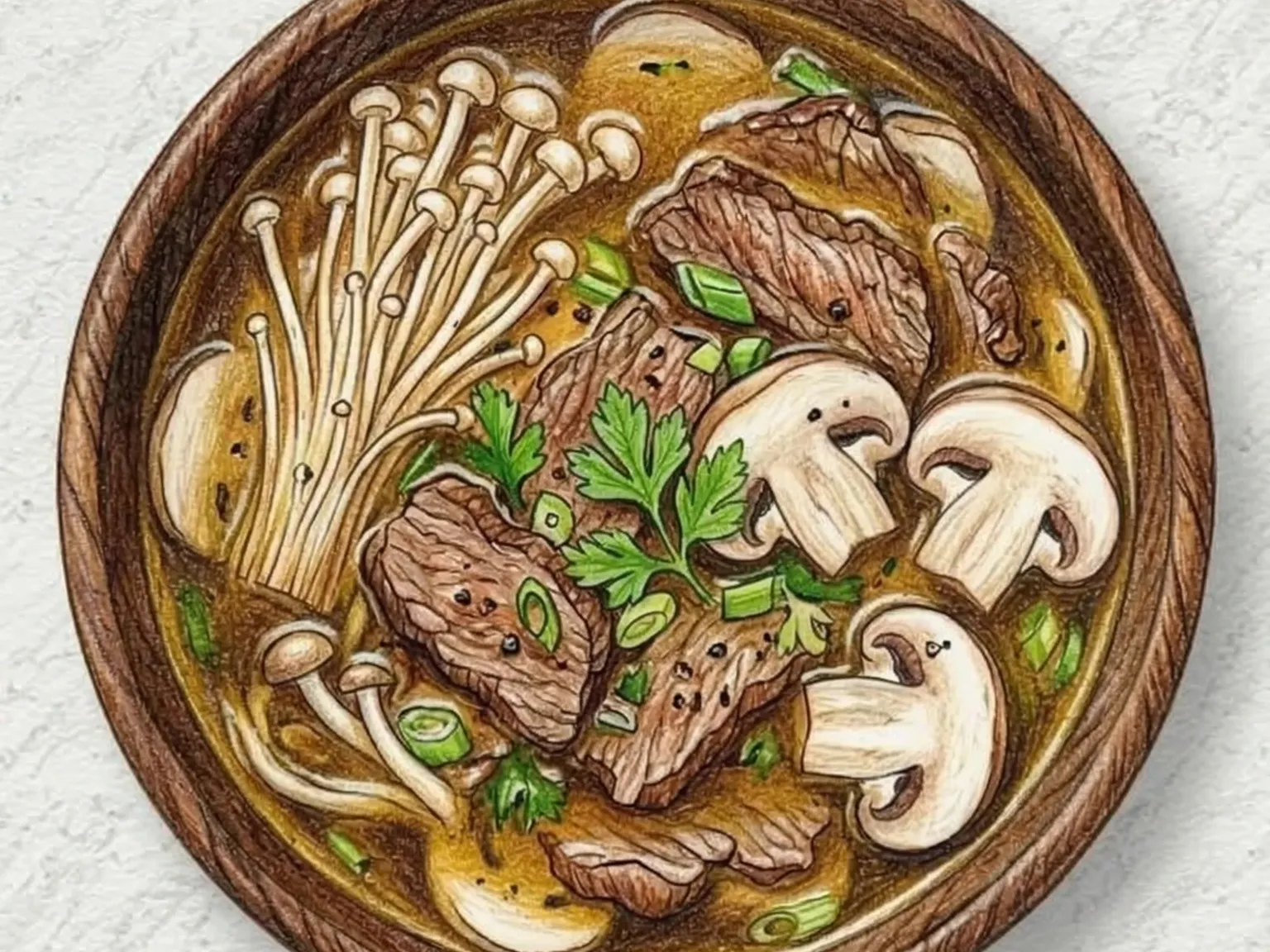
Soegogi beoseot-guk pairs seared beef with a medley of mushrooms in a clear, deeply savory broth. The beef is first stir-fried in sesame oil to develop a caramelized base, then button mushrooms, cut thick so they hold their shape, join the pot along with water or stock. As the soup simmers, the mushrooms leach glutamate into the liquid, layering umami on top of the beef's own juices without any added MSG or bouillon. Enoki mushrooms go in during the final minutes, contributing slippery strands that contrast with the meatier button slices. Soup soy sauce and minced garlic season the broth, keeping it translucent with a faintly woodsy aroma that lingers after each sip. A finish of sliced scallion and cracked black pepper sharpens the bowl just enough to keep the palate engaged from first spoonful to last. It is an understated soup that proves depth of flavor does not require complexity of technique.
Adjust Servings
Instructions
- 1
Pat dry the beef and slice radish into thin squares.
- 2
Heat sesame oil in a pot and stir-fry beef for 2 minutes.
- 3
Add radish and water; once boiling, simmer on medium-low for 15 minutes.
- 4
Add button mushrooms, garlic, and soup soy sauce, then simmer 10 minutes.
- 5
Add enoki and green onion, cooking just 3 more minutes for texture.
- 6
Adjust seasoning if needed and serve immediately while hot.
As an Amazon Associate, we may earn from qualifying purchases.
Tips
Nutrition (per serving)
More Recipes

Korean Beef Radish Soup (Sesame Oil Braised Beef and Daikon)
Sogogi muguk is one of the most frequently cooked soups in Korean households, built from just two main ingredients: beef and daikon radish. Thin-cut beef is stir-fried in sesame oil until lightly browned, then thick radish slices go into the pot before water is added. As the soup comes to a boil and then settles into a steady simmer, the radish transforms: its initial sharpness mellows into a clean sweetness that balances the beef's depth, and its starch clouds the broth just enough to give it body. Soup soy sauce provides the seasoning, tinting the liquid a pale amber while pushing umami forward over saltiness. Minced garlic added near the end lends a quiet heat that sits behind the main flavors rather than competing with them. The radish, when properly cooked, should yield easily to a spoon yet still hold a hint of structure at its center. This soup also serves as the foundational broth for tteokguk on Lunar New Year, and Koreans reach for it instinctively when the weather turns cold or the body needs warming.

Korean Beef Napa Cabbage Soup
Soegogi baechu-guk begins with beef brisket seared in sesame oil until the edges brown and the pan fills with a toasty fragrance. Napa cabbage goes in next, wilting quickly against the hot fat before water or light stock is poured in to build the broth. As the soup simmers, the thick cabbage stems release a quiet sweetness that tempers the beef's richness, while the thinner leaf sections soften into something almost silky. A thin film of sesame-scented oil floats on the surface, delivering an aromatic note with every spoonful. Seasoned with soup soy sauce rather than salt, the broth stays clear with a light amber tint and tastes more of umami than sodium. Sliced scallion scattered on top just before serving adds a sharp, green brightness that cuts through the mellow base. The soup requires no elaborate stock preparation and comes together in under forty minutes, making it one of the most practical weeknight soups in the Korean home-cooking repertoire.

Korean Beef and Daikon Stew
This clear stew is made by first sauteing beef brisket and daikon radish in sesame oil, then simmering them in water seasoned with soup soy sauce. Despite its short ingredient list, the stew develops a surprisingly deep flavor as the brisket slowly renders into the broth and the radish turns translucent and sweet. Green onion and garlic provide a final layer of aroma. It is a simple, soothing bowl often enjoyed with rice spooned directly into the broth.

Muguk (Korean Radish Anchovy Broth Soup)
Muguk is the most elemental expression of Korean soup - radish simmered in anchovy-kelp stock until the broth turns clear, sweet, and gently savory. The radish does nearly all the work: as it softens, its natural sugars and starch leach into the water, creating a broth that is mild yet far from bland. Seasoned with nothing more than soup soy sauce, garlic, and sliced green onion, muguk is the canvas upon which countless variations are painted. Add beef and it becomes sogogi-muguk; add dried pollock and it becomes hwangtae-muguk. On its own, it pairs with virtually any banchan because its flavor never competes. The soup's simplicity is also its practical advantage - a single radish, a handful of dried anchovies, and a strip of kelp are enough to produce a pot that feeds a family. Korean households return to muguk again and again precisely because it demands so little yet delivers a clean, warming comfort that few other dishes can match. It reheats without loss of quality and often improves overnight as the radish continues to soften and sweeten.

Korean Beef & Water Parsley Soup
Minari-soegogi-guk is a clear beef soup that relies on a slow-simmered brisket broth for depth and finishes with a handful of water dropwort for aromatic brightness. The brisket cooks low and long until the stock turns golden and rich with dissolved collagen and beef fat, creating a full-bodied foundation. Radish simmers alongside the meat, contributing a quiet sweetness that rounds out the beefy intensity. When the broth is ready, water dropwort - stems and leaves - is added just before serving so it wilts only slightly, keeping its signature fragrance alive. Green onion and garlic provide the aromatic backbone, while seasoning stays lean: salt or soup soy sauce, nothing more. The boiled brisket is typically sliced thin and returned to the bowl, or pulled aside and served with a soy-vinegar dipping sauce. During spring, when water dropwort is young and fragrant, this soup reaches its peak expression. It is a dish that demonstrates how Korean cooking often pairs a slow, patient stock with a single bright ingredient added at the last moment to transform the entire bowl.

Korean Braised Beef and Radish
Sogogi mu jorim is a Korean braised beef and radish dish where brisket and thick-cut Korean radish are slowly simmered in soy sauce with garlic, ginger, and a touch of sugar. Boiling the beef first and skimming the foam produces a clean broth base for braising. The radish goes in later so it cooks until semi-translucent, absorbing the beef-enriched liquid and developing a natural sweetness that balances the soy. Green onion added at the end contributes a fresh note. Cutting the radish thick is important so it holds its shape through the braise, and resting the dish overnight before reheating deepens the flavor noticeably.