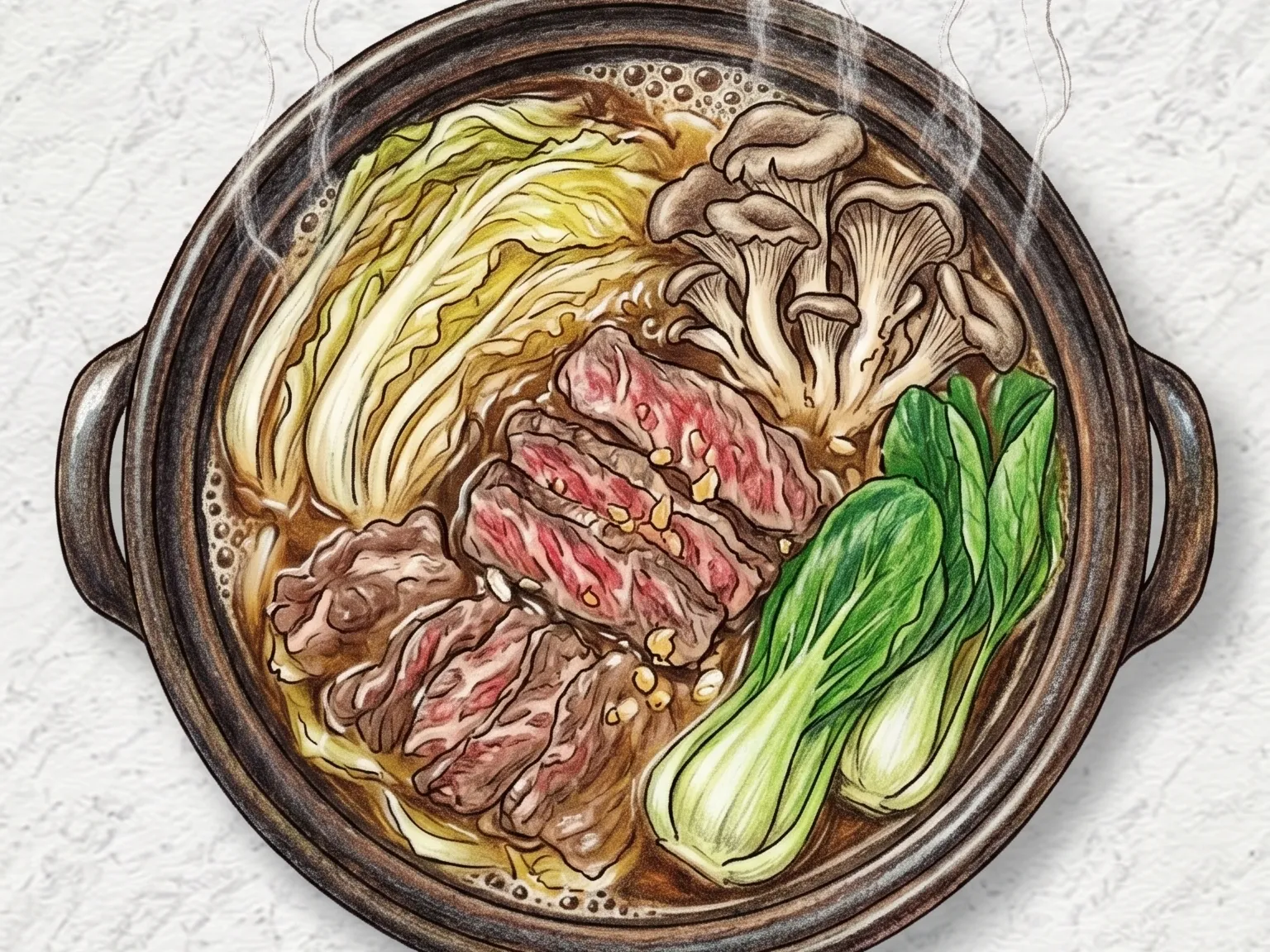
Korean Beef Vegetable Hot Pot
This Korean hot pot arranges beef, baby napa cabbage, oyster mushrooms, and bok choy in a soy sauce-seasoned beef broth. The seasoning is kept simple with soy sauce and minced garlic, allowing the natural taste of each ingredient to come through. As the cabbage and bok choy soften, they release a gentle sweetness into the broth, while the mushrooms provide a pleasant chew. It is meant to be cooked at the table and shared.
Adjust Servings
Instructions
- 1
Slice beef thinly and trim vegetables into even lengths.
- 2
Arrange vegetables around the pot and place beef in the center.
- 3
Mix soy sauce and garlic into broth and pour into the pot.
- 4
Bring to a boil over high heat, then reduce to medium.
- 5
Skim foam and simmer about 8 minutes until ingredients are cooked.
- 6
Adjust seasoning and serve immediately.
As an Amazon Associate, we may earn from qualifying purchases.
Tips
Nutrition (per serving)
More Recipes

Korean Tofu Hot Pot (Tofu & Beef Kelp Broth Pot)
Dubu jeongol is a Korean hot pot centered on tofu and beef simmered in kelp broth. Shiitake mushrooms contribute a deep umami backbone, while napa cabbage and green onion add freshness and texture. The broth is seasoned with soup soy sauce, keeping it light enough to let each ingredient shine. Traditionally served bubbling at the table, this is a communal dish meant to be enjoyed slowly, with each diner ladling broth and ingredients into their own bowl.

Korean Beef Tripe Hot Pot
Naejang jeongol is a Korean tripe hot pot that simmers mixed beef offal in rich beef bone broth with onion, bean sprouts, and green onion. A touch of doenjang tames any gaminess, while gochugaru and garlic build a spicy, warming broth. The tripe offers a satisfyingly chewy bite against the milky, collagen-rich stock. This dish has long been a go-to accompaniment for soju and a popular hangover remedy.

Korean Seafood Hot Pot (Shrimp, Squid & Crab Spicy Pot)
Haemul jeongol is a seafood hot pot loaded with shrimp, Manila clams, squid, and a whole blue crab, all simmered together in a kelp stock seasoned with gochujang and gochugaru. Each type of seafood contributes its own character - the clams release their liquor, the crab sweetens the broth, the squid adds chew, and the shrimp bring a clean bite. Tofu and zucchini round out the pot. Served bubbling in a wide vessel at the table, it is a communal dish built for sharing.

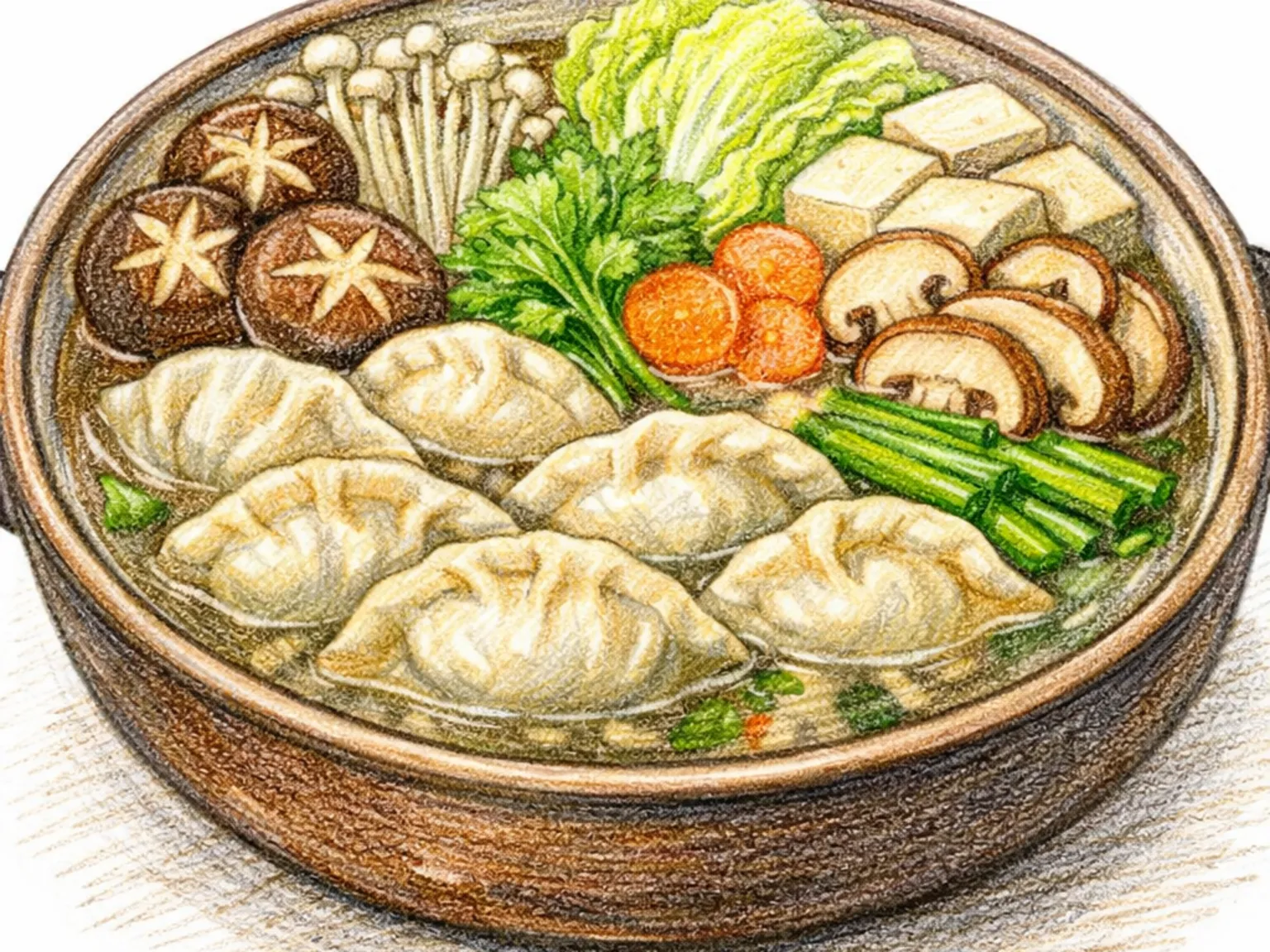
Korean Kimchi Beef Dumpling Hot Pot
This hearty hot pot combines frozen dumplings, sliced beef, and kimchi simmered together in anchovy stock seasoned with gochujang and soup soy sauce. Napa cabbage, enoki mushrooms, and tofu add layers of texture to the bubbling broth. The umami from the dumpling filling mingles with the tangy, spicy kimchi to create a deeply flavored soup that warms from the inside out.

Korean Dak Hanmari (Whole Boiled Chicken with Potato Broth)
Dak-hanmari is a whole chicken simmered for a long time with potato, green onion, garlic, and ginger in plain water. Extended boiling draws collagen from the bones, turning the broth milky and slightly viscous, while the potatoes cook until they nearly dissolve at the edges. Seasoning stays spare - just soup soy sauce and salt - so the natural richness of the chicken stock comes through unmasked. Originating from the street stalls of Seoul's Dongdaemun area, it is traditionally finished by adding knife-cut noodles directly into the remaining broth.

Korean Beef and Mushroom Soup
Soegogi beoseot-guk pairs seared beef with a medley of mushrooms in a clear, deeply savory broth. The beef is first stir-fried in sesame oil to develop a caramelized base, then button mushrooms, cut thick so they hold their shape, join the pot along with water or stock. As the soup simmers, the mushrooms leach glutamate into the liquid, layering umami on top of the beef's own juices without any added MSG or bouillon. Enoki mushrooms go in during the final minutes, contributing slippery strands that contrast with the meatier button slices. Soup soy sauce and minced garlic season the broth, keeping it translucent with a faintly woodsy aroma that lingers after each sip. A finish of sliced scallion and cracked black pepper sharpens the bowl just enough to keep the palate engaged from first spoonful to last. It is an understated soup that proves depth of flavor does not require complexity of technique.