Soft Pretzel
Quick answer
Yeasted dough is shaped into the classic pretzel twist, briefly dipped in a boiling baking-soda bath, and baked at high heat.
What makes this special
- Soft Pretzels are defined by a chewy interior and a dark crust formed in a baking soda bath.
- Kneading long enough develops gluten so the pretzel stays chewy and springy
- Dipping in baking soda water before baking creates the firm brown crust
Key ingredients
Core cooking flow
- 1 Mix 350g bread flour, 15g sugar, 6g salt, and 5g instant yeast until evenly distributed.
- 2 Cover the dough so the surface does not dry out, then proof it in a warm place for about 1 hour.
- 3 Gently press out excess gas, then divide the dough into 6 equal pieces.
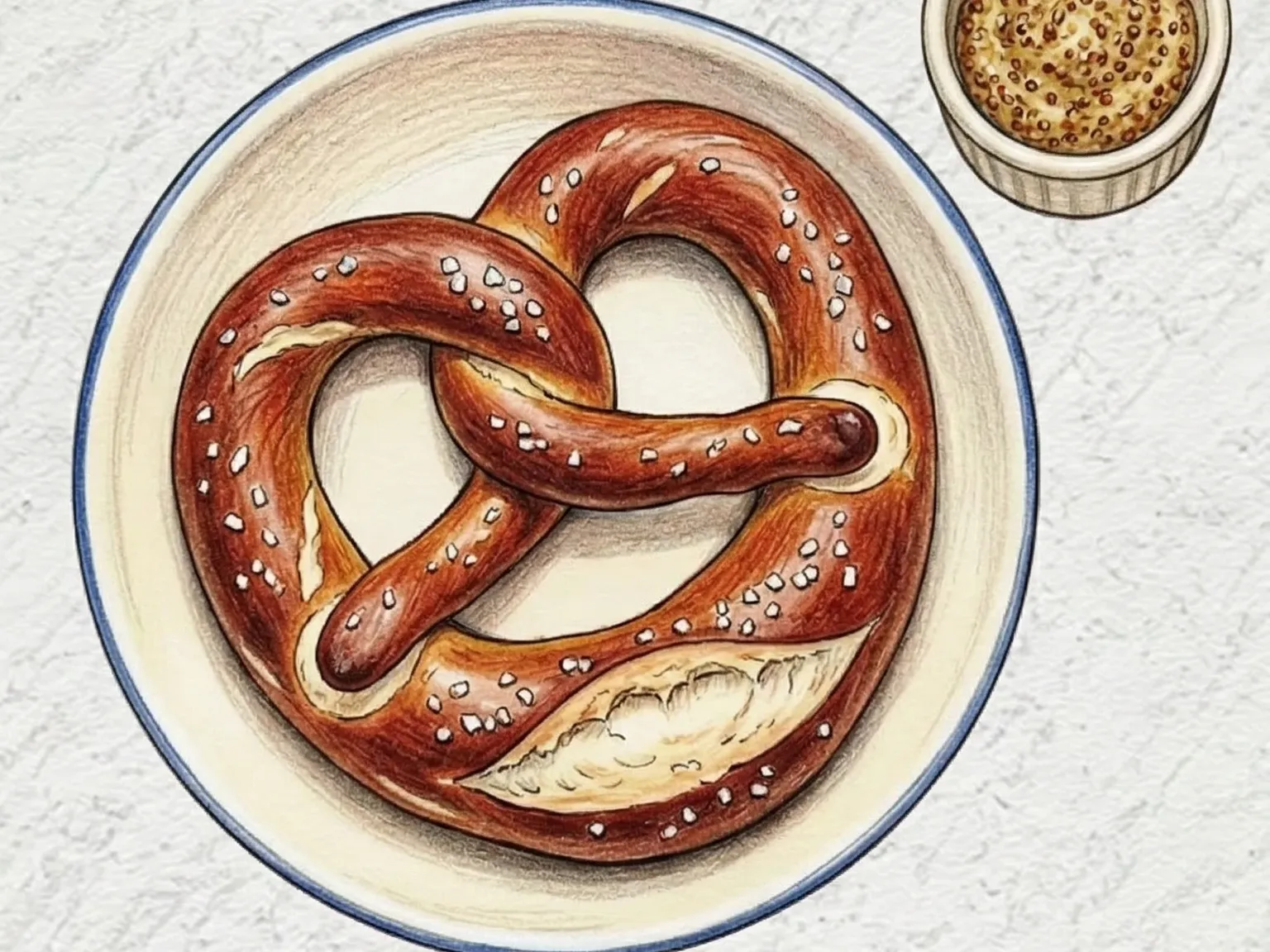
Yeasted dough is shaped into the classic pretzel twist, briefly dipped in a boiling baking-soda bath, and baked at high heat. The alkaline solution triggers an accelerated Maillard reaction on the surface, producing the deep mahogany crust and slightly bitter, complex flavor that separates a true pretzel from ordinary bread rolls. Beneath that thin, chewy shell, the interior stays soft, airy, and faintly sweet. Coarse salt crystals pressed into the surface before baking deliver sharp, salty bursts that contrast with the mellow dough. The dip in the alkaline bath must be brief - thirty seconds at most - or the exterior turns slimy and the texture suffers. Mustard is the traditional accompaniment, its acidity and heat cutting through the bread's richness, though warm cheese sauce has become an equally popular pairing.
Instructions
Read the steps as a cooking flow: prep, heat, seasoning, doneness control, and finish.
- 1Season
Mix 350g bread flour, 15g sugar, 6g salt, and 5g instant yeast until evenly distributed.
Add 210ml water and 25g melted unsalted butter, then knead for 8 minutes until the dough turns smooth and elastic.
- 2Control
Cover the dough so the surface does not dry out, then proof it in a warm place for about 1 hour.
It is ready when nearly doubled and a light fingertip mark slowly springs back.
- 3Step
Gently press out excess gas, then divide the dough into 6 equal pieces.
Roll each piece into a 60cm rope, stretching evenly, and twist it into a pretzel shape without tearing the center.
- 4Heat
Bring 1L water to a boil, then add 60g baking soda slowly so it does not foam over.
Lower to a gentle boil and dip each pretzel for no more than 30 seconds.
- 5Season
Lift each pretzel out carefully and let excess water drain before moving it to the baking tray.
While the surface is still damp, divide 1 tbsp coarse salt over the pretzels and press lightly so it sticks.
- 6Finish
Bake at 220°C for 12-15 minutes until the crust turns deep reddish brown and the bottoms feel firm.
Cool for 5 minutes, then serve warm with mustard or cheese sauce; microwave cooled pretzels for 10 seconds.
After the steps
Pick a recipe that fits this dish.
Continue with shared ingredients, meal pairings, or a similar method.
Recipes That Go Well With This
More Baking →Based on shared ingredients and meal pairing
Stollen
Stollen is a traditional German Christmas bread loaded with mixed dried fruits, almonds, and a generous amount of butter kneaded into a yeasted dough. The loaf is shaped into a distinctive oval, baked until golden, and then brushed with melted butter while still hot to seal in moisture. A thick coating of powdered sugar applied over the butter layer gives the finished bread its signature snow-white appearance. The interior is dense and rich, with pockets of rum-soaked raisins and candied peel appearing at every slice. Soaking the dried fruits overnight in rum or fruit juice before mixing them into the dough ensures they remain plump and soft after baking rather than turning hard and chewy. The bread improves with age - resting for at least a day after baking allows the butter, spice, and fruit flavors to meld and permeate the crumb, which is why many German families bake their stollen weeks before Christmas. Wrapped tightly, it keeps for well over a week without losing quality, making it an ideal gift or make-ahead holiday preparation.
Classic Bagel
Classic bagels are defined by a two-stage cooking process that no other mainstream bread undergoes: the shaped rings are boiled before they are baked, and it is that boiling step that creates everything distinctive about the finished product. The dough is made with high-gluten bread flour and deliberately low hydration, then kneaded extensively to build a dense gluten network strong enough to resist expansion in the oven. After shaping into rings and a brief second proof, the bagels are lowered into boiling water -- often sweetened with honey or malt syrup -- and held there for about a minute per side. The heat gelatinizes the starch on the outer surface, forming a thin, tight skin that acts as a physical barrier against the gas trying to expand inside. When the boiled rings go into a hot oven, that skin constrains the rise so the interior stays compressed and dense rather than open and airy. The result is a crust that is firm, slightly shiny, and resilient under pressure, surrounding an interior with a chewiness measured in seconds of resistance rather than the instant softness of most bread. Adding honey or malt to the boiling water contributes a faint sweetness and a deeper color to the finished crust. In New York tradition the bagel is split, toasted, and loaded with cream cheese and smoked salmon, but sliced in half and toasted with butter alone, the structure of a well-made bagel carries the eating experience entirely on its own.
Kasespatzle (German Alpine Cheese Dumpling Noodles)
Kasespatzle is an Alpine comfort dish from southern Germany and Austria, made by boiling a thick batter of flour, eggs, and milk into small dumplings, then tossing them with melted Emmental cheese and caramelized onions. The batter must maintain a thick consistency rather than being runny - this is what gives the spaetzle their characteristic chew when boiled and drained. Sliced onion is slowly cooked in butter over low heat until deeply browned, transforming the raw sharpness into a concentrated sweetness. The cooked spaetzle and grated cheese are combined in a hot pan so the cheese melts and coats every dumpling. Topped with the caramelized onions and black pepper, the dish is served immediately while the cheese is still molten and stretchy.
Currywurst (Sliced Sausage in Curry Ketchup)
Currywurst is a German street food built around a homemade curry-tomato sauce ladled over sliced bratwurst. Finely chopped onion is sautéed until translucent, then tomato paste is cooked for one minute to mellow its raw acidity. Ketchup, curry powder, paprika, sugar, Worcestershire sauce, and apple cider vinegar are stirred in and simmered for eight minutes until the sauce thickens and the spices meld. Bratwurst is browned separately in a pan, rolled to crisp all sides, then sliced into bite-size rounds. A final dusting of curry powder over the sauced sausage intensifies the spice aroma, and the sauce improves noticeably after resting overnight.
Serve with this
Korean Dalgona Coffee (Whipped Instant Coffee Foam Milk)
Dalgona coffee is made by whipping equal parts instant coffee, sugar, and hot water with a hand mixer for three to five minutes until stiff, caramel-colored peaks form, then spooning the foam over iced milk. The whipped layer carries a concentrated, bittersweet coffee flavor that gradually blends into the cold, neutral milk below as you stir. A light dusting of cocoa powder on top introduces a faint chocolate note, and increasing the sugar slightly helps the whipped cream hold its stiff structure longer.
Homemade Ginger Honey Candy
Homemade Ginger Honey Candy is a hard candy made by boiling fresh ginger juice, honey, sugar, and water to a high temperature. The ingredients are combined in a heavy-bottomed pot and heated without stirring. Avoiding stirring prevents sugar crystallization, which would otherwise make the candy cloudy instead of transparent. The mixture is heated to 150C to reach the hard-crack stage, locking the sharp pungency of the ginger within a glass-like sugar structure. Once it reaches this stage, the syrup is quickly dropped onto a mold or baking paper to shape. After cooling at room temperature for fifteen to twenty minutes, the candies are dusted with powdered sugar to prevent them from sticking together during storage in an airtight container.
Fruit Cottage Cheese Bowl
This high-protein bowl requires no cooking and comes together in under five minutes. A generous scoop of cottage cheese forms the base, and fresh strawberries, blueberries, and banana are arranged on top in whatever combination looks appealing. The cheese's mild, lactic saltiness pairs naturally with the fruit's sweetness without needing any added dressing or seasoning. Sliced almonds contribute crunch and a layer of healthy fats, while chia seeds provide omega-3s and a subtly gel-like texture once they have had a moment to absorb the moisture around them. A light drizzle of honey brings all the components together with a unifying sweetness. The simplicity of the bowl makes it a practical choice for a quick breakfast or a post-workout meal when protein matters but time is short.
Similar recipes
Black Forest Cake
Black Forest cake is a layered chocolate cake from the Schwarzwald region of southwestern Germany. Dark, moist chocolate sponge layers are stacked with alternating fillings of tart cherry compote and lightly sweetened whipped cream. In the traditional preparation, each sponge layer is brushed with Kirschwasser, a clear cherry brandy, which carries the cherry flavor deep into the crumb and adds a quiet warmth throughout the cake. The bitterness of the cocoa, the acidity of the cherries, and the neutral creaminess of the whipped cream create a clear contrast that repeats with each layer, so every bite delivers the same balance of flavors. The cake is finished with whipped cream rosettes, dark chocolate shavings, and whole cherries arranged on top. It must be chilled thoroughly before slicing so the layers hold their shape and the cross-section comes out clean.
German Butter Cake (Yeasted Sheet Cake with Almond Topping)
Butterkuchen is a traditional German yeasted cake that relies on generous amounts of butter for its character. The dough is a soft, enriched bread base similar to brioche that rises into a pillowy sheet before baking. The surface is dimpled with fingertips and small pieces of cold butter are pressed into each hollow, so that as the cake bakes, the butter melts into caramelized pools that create pockets of salty-sweet richness across the top. Sliced almonds scattered over the surface toast to a golden crunch, adding textural contrast to the soft, open-crumbed interior. The finished cake is tender and buttery without being heavy - each square holds together cleanly when sliced, the almonds staying anchored by the caramelized glaze rather than scattering. The recipe has remained largely unchanged in northern German bakeries and family kitchens for generations, where simplicity of ingredients is the point rather than the limitation. A cup of strong filter coffee alongside a warm slice is the standard pairing, and the combination holds up without improvement.
Pork Schnitzel
Pork Schnitzel is a definitive cutlet dish from Germany and Austria, made by pounding pork loin thin and even with a mallet, then coating it in flour, beaten egg, and breadcrumbs before frying in oil. The meat must be pounded to five millimeters or thinner so it cooks through quickly without the breading burning, and the hallmark of a proper schnitzel is a crust that puffs away from the meat rather than clinging flat. Achieving this requires generous oil - enough to submerge the cutlet halfway - and gently shaking the pan so oil flows beneath the breading to lift it. Fine breadcrumbs produce a delicate, even crust, and they should be pressed on lightly rather than compacted to maintain crispness over time. Paprika mixed into the flour adds a faint smoky warmth, and a fresh squeeze of lemon over the finished schnitzel cuts through the richness with bright acidity.