Salt Bread (Sogeum-ppang - Korean Bakery Butter Roll)
Quick answer
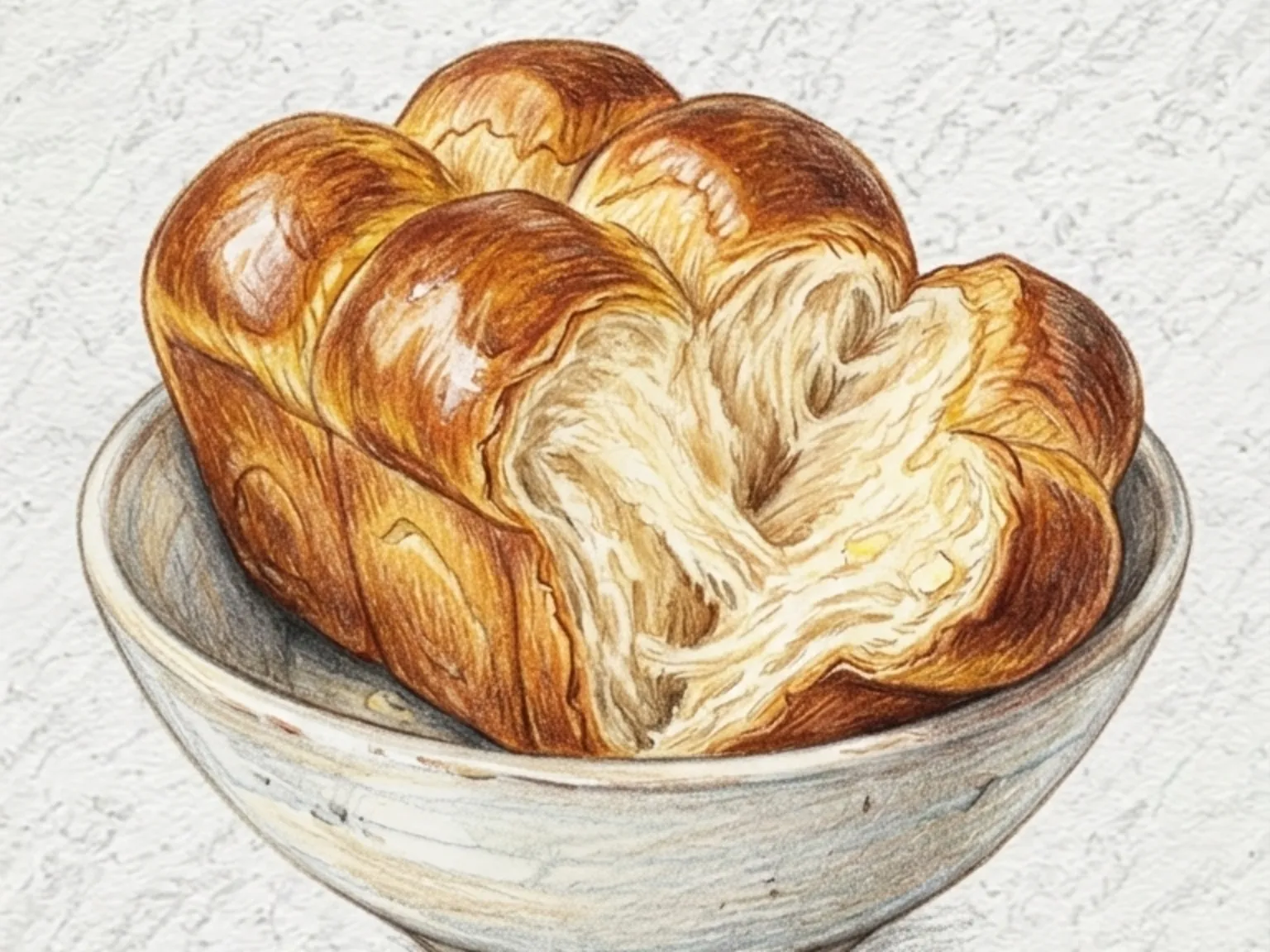
Salt bread is a Korean bakery favorite built on a simple premise: yeasted dough enriched with milk is wrapped around a plug of cold butter, shaped into a tapered roll, an...
What makes this special
- Cold butter tucked into the roll before baking melts through Sogeum-ppang to produce its salty, rich crumb.
- Thorough kneading builds the tight crumb that gives shio-pan its characteristic chew
- Wrapping a piece of butter inside before rolling lets it melt in during baking to keep the inside moist
Key ingredients
Core cooking flow
- 1 Stir 4 g instant yeast and 20 g sugar into 180 ml milk, then let it stand for 5 minutes.
- 2 When the dough comes together, knead in 25 g unsalted butter for about 10 minutes.
- 3 Press the proofed dough gently to release gas, divide it into 8 pieces, and round each one.
Salt bread is a Korean bakery favorite built on a simple premise: yeasted dough enriched with milk is wrapped around a plug of cold butter, shaped into a tapered roll, and baked at high heat. The butter melts during baking and saturates the crumb from the inside out, while the exterior develops a thin, crackling crust. Coarse salt sprinkled on top before the oven amplifies the butter's richness and adds sharp, crystalline bites that punctuate each mouthful. A full second proof is essential - underproofed dough bakes dense and heavy - and a hot oven ensures the outside crisps before the interior dries out. Eaten warm, when the melted butter is still pooled inside the crumb, the bread delivers its full impact: salty, buttery, and gone in four bites.
Instructions
Read the steps as a cooking flow: prep, heat, seasoning, doneness control, and finish.
- 1Season
Stir 4 g instant yeast and 20 g sugar into 180 ml milk, then let it stand for 5 minutes.
When a few bubbles appear, add 300 g bread flour and 5 g salt and mix into a shaggy dough.
- 2Season
When the dough comes together, knead in 25 g unsalted butter for about 10 minutes.
Stop when the surface is smooth and the dough stretches thinly, then proof for 60 minutes at 24-26°C until noticeably puffy.
- 3Control
Press the proofed dough gently to release gas, divide it into 8 pieces, and round each one.
Cover so the surface does not dry, rest for 10 minutes, and keep the 40 g filling butter cut into 8 cold pieces.
- 4Step
Roll each dough piece into a long triangle and place a cold butter piece on the wide end.
Enclose the butter at the start so it cannot leak out, then roll to the tip without leaving loose gaps.
- 5Season
Place the rolls seam side down on a tray and proof for 35 minutes.
When a gentle finger press springs back slowly, brush on a thin layer of beaten egg and sprinkle 4 g flaky sea salt over the tops.
- 6Finish
Bake in a 190°C preheated oven for 16-18 minutes.
Remove when the tops are deep golden and buttery aroma is clear, then cool on a rack for 10 minutes and serve while still warm inside.
After the steps
Pick a recipe that fits this dish.
Continue with shared ingredients, meal pairings, or a similar method.
Recipes That Go Well With This
More Baking →Based on shared ingredients and meal pairing
Soboro Bread (Korean Sweet Streusel-Topped Bun)
Soboro bread is a Korean bakery staple that tops a soft, milk-enriched yeast bun with a layer of sweet cookie crumble. The bun interior is pillowy and slightly sweet, with a fine crumb that tears in gentle strands, while the streusel cap - mixed from butter, sugar, egg, and flour - bakes into a crunchy, golden shell that cracks into irregular pieces. The appeal lies in the contrast: each bite delivers both the airy softness of enriched bread and the sandy crunch of a cookie. Applying the crumble after the second proof, rather than before, prevents the rising dough from being weighed down and allows the surface to fracture naturally in the oven's heat. The crumble stays crisp even after the bread cools completely, which is why soboro bread remains satisfying the next day when many other bakery items have gone stale.
Korean Mashed Potato Bread
Korean Mashed Potato Bread is a snack featuring a potato filling wrapped in a chewy dough. The dough combines bread flour and tapioca starch, which prevents the crust from hardening after cooling, maintaining a soft, elastic texture. Boiled potatoes are mashed while hot with sugar and salt before being wrapped in the dough. Varying sugar levels in the filling and the dough create a layered sweetness. The outer surface is coated with roasted soybean powder and black sesame powder to replicate the earthy look of Gangwon potatoes. Small holes are poked on the surface with chopsticks for a realistic appearance. The bread is baked at 170 C for twenty to twenty-five minutes. Adding mayonnaise to the filling yields a creamier and richer taste.
Gaeseong Juak (Honey Fried Rice Cake)
Gaeseong juak is a traditional Korean confection made from a dough of glutinous rice flour and wheat flour, fried slowly in oil at a deliberately controlled temperature to cook the interior evenly before the exterior develops color. The two-stage frying process begins at 150 degrees Celsius to set the inside through without burning the outside, then the temperature rises to 170 degrees to develop a light golden crust on the surface. Separating the temperature stages solves a specific frying problem: high heat from the start produces a darkened exterior while the chewy glutinous core remains underdone, while insufficient heat makes the exterior soft and oily. The result is a thin crisp shell surrounding a genuinely chewy, sticky interior. After frying, each piece is rolled through a warm syrup made from honey and rice syrup heated together over low heat, which leaves a glossy, fragrant sweetness coating the surface. A finishing dusting of ground cinnamon and chopped pine nuts adds aromatic spice and contrasting crunch. Historical records trace the confection to the Gaeseong region of the Goryeo dynasty, and it remains a standard presence on Korean ceremonial and holiday tables to this day.
Chewy Potato Bread
This recipe creates potato-shaped bread rolls filled with a sweet and savory mashed potato filling enclosed in a chewy dough. The filling is made by mashing hot boiled potatoes with sugar, salt, and mayonnaise. For the dough, tapioca starch and glutinous rice flour are kneaded with egg, melted butter, and corn syrup, which ensures the bread retains its signature chewy texture even after cooling. Each portion of dough is flattened to wrap the potato filling, then shaped by hand to mimic the irregular form of a real potato. Rolling the shaped dough in roasted soybean powder or black sesame powder replicates the color and texture of dirty potato skin. Indentations are poked with a chopstick to resemble potato eyes before baking at 170 degrees Celsius for twenty minutes. The result is a crisp exterior with a moist filling.
Serve with this
Korean Fish Cake Soup (Clear Anchovy Radish Broth)
Eomuk-tang is a Korean fish cake soup in which skewered fish cakes and thick radish slices simmer in a clear broth built from dried anchovies and kelp. The kelp must be removed the moment the water begins to boil, otherwise it releases a slimy texture that clouds the broth. Cutting the radish thick allows it to slowly release natural sweetness over the long simmer. Rinsing the fish cakes in hot water before adding them washes away surface oil and keeps the broth clear and clean. Soup soy sauce adjusts the seasoning, and green onion and black pepper finish the pot. Adding the radish before the fish cakes ensures it has enough time to fully soften and sweeten the broth, since it takes longer than the eomuk to cook through.
Fruit Salad (Fresh Seasonal Fruit in Yogurt)
Fruit salad dices apple, banana, kiwi, strawberries, and blueberries into uniform bite-sized pieces and folds them gently into a light dressing of plain yogurt, honey, and lemon juice. Cutting everything to a similar size ensures an even mix of crisp, soft, and juicy textures in every spoonful. The lemon juice serves two purposes - it adds a bright acidity that ties the different fruits together and slows the oxidation that turns apple flesh brown. Banana should be added last to prevent it from turning mushy under the weight of the other ingredients. Using unsweetened yogurt lets the natural sweetness of the fruit stand out more clearly, and chilling the finished salad for about ten minutes allows the fruit juices to merge with the dressing for a more cohesive flavor.
Chicken and Waffles
Chicken and waffles is a Southern American soul food dish that places crispy fried chicken thighs on freshly made waffles and finishes everything with a pour of maple syrup. Soaking the chicken in buttermilk for at least an hour before dredging tenderizes the meat and gives the finished crust a more pronounced crunch; without this step the coating is drier and less flavorful. The double-dredge technique -- flour first, then beaten egg, then flour again -- builds a thick, irregular crust that shatters at the bite after eight to ten minutes in 170-degree oil, while the interior stays moist and fully cooked. The waffle batter includes melted butter, which is what creates waffles that are genuinely crisp on the patterned exterior while staying soft and airy on the inside; waffles made without fat in the batter tend to turn limp quickly. Waffles are cooked first and kept warm in a low oven so they are ready the moment the chicken is lifted from the oil. The appeal of the dish lies entirely in contrast: the hot, salty, fatty crunch of the fried chicken meets the sweet yielding softness of the waffle and the maple syrup, and the interplay of those opposing sensations is what turns a straightforward combination of ingredients into something that stays in memory.
Similar recipes
Gyeran-ppang Muffin Tray (Korean Egg Bread)
This recipe recreates Korea's beloved street-food egg bread at home using a standard muffin tray and a conventional oven. A lightly sweetened batter fills each cup to the halfway point, then a whole egg is cracked directly on top. As the batter rises during baking, it folds up around the egg, merging bread and egg into one self-contained, portable piece. The bread portion carries a restrained sweetness from a small addition of sugar, while the egg inside cooks to somewhere between soft-set and fully firm, allowing the yolk's richness to play against the sweet dough. The muffin tray produces pieces of uniform shape that sit comfortably in one hand, making them well-suited for breakfast or an afternoon snack. Filling each cup only halfway before adding the egg is important since the batter needs room to expand around it. Oven temperature and tray size affect cooking time, so the point at which the egg white turns fully opaque is the clearest indicator of doneness. Folding in shredded cheese, diced bacon, or chopped parsley before baking opens up a savory direction. These are best eaten immediately after coming out of the oven, while steam still rises from the surface.
Korean Street-Style Egg Bread
Preparing gyeran ppang involves pouring a sweet batter made from flour, milk, egg, and butter into individual molds and cracking a whole egg directly on top. The inclusion of baking powder helps the batter rise into a soft, airy bread structure during the baking process at 180 degrees Celsius. Within fifteen to eighteen minutes, the egg white sets firmly while the yolk reaches a state between soft and fully cooked, creating a moist center. The light sweetness of the buttered batter balances the naturally mild and savory profile of the egg, making the snack complete without any additional sauces. Where the batter makes contact with the mold, it develops a lightly crisped, golden exterior that provides a textural contrast to the pillowy interior. This snack reaches its peak quality immediately after removal from the mold while still warm, as cooling causes the bread to contract and lose its characteristic fluffiness. Its compact shape makes it easy to hold and eat while walking, which contributed to its status as a staple of Korean winter street food culture. Some versions include a light sprinkle of salt or dried herbs over the egg to introduce an aromatic element to the sweet and savory base.
Korean Street Egg Bread (Sweet Batter Muffin with Whole Egg)
Winter streets in Seoul feature this warm handheld snack prepared by baking a whole egg atop a sweet batter. The base consists of cake flour, baking powder, milk, and melted butter poured into muffin molds. Adding a layer of finely diced ham beneath the egg creates a salty contrast against the sweetness of the dough. When baked at 180 degrees Celsius, sixteen minutes results in a soft and runny yolk, while eighteen minutes produces a firm center. Vanilla extract mixed into the batter helps neutralize the natural scent of the egg for a clean finish. A light dusting of dried parsley on the domed surface adds a subtle herbal scent as the bread turns golden in the oven. Small amounts of shredded cheese can be added to the batter to balance the sweetness. Serving the bread while it remains warm ensures the interior stays moist. This egg bread functions well as a quick breakfast option and can be made in paper muffin cups if metal molds are unavailable.