Korean Soy-Braised Beef with Mushrooms

Korean Soy-Braised Beef with Mushrooms

Quick answer

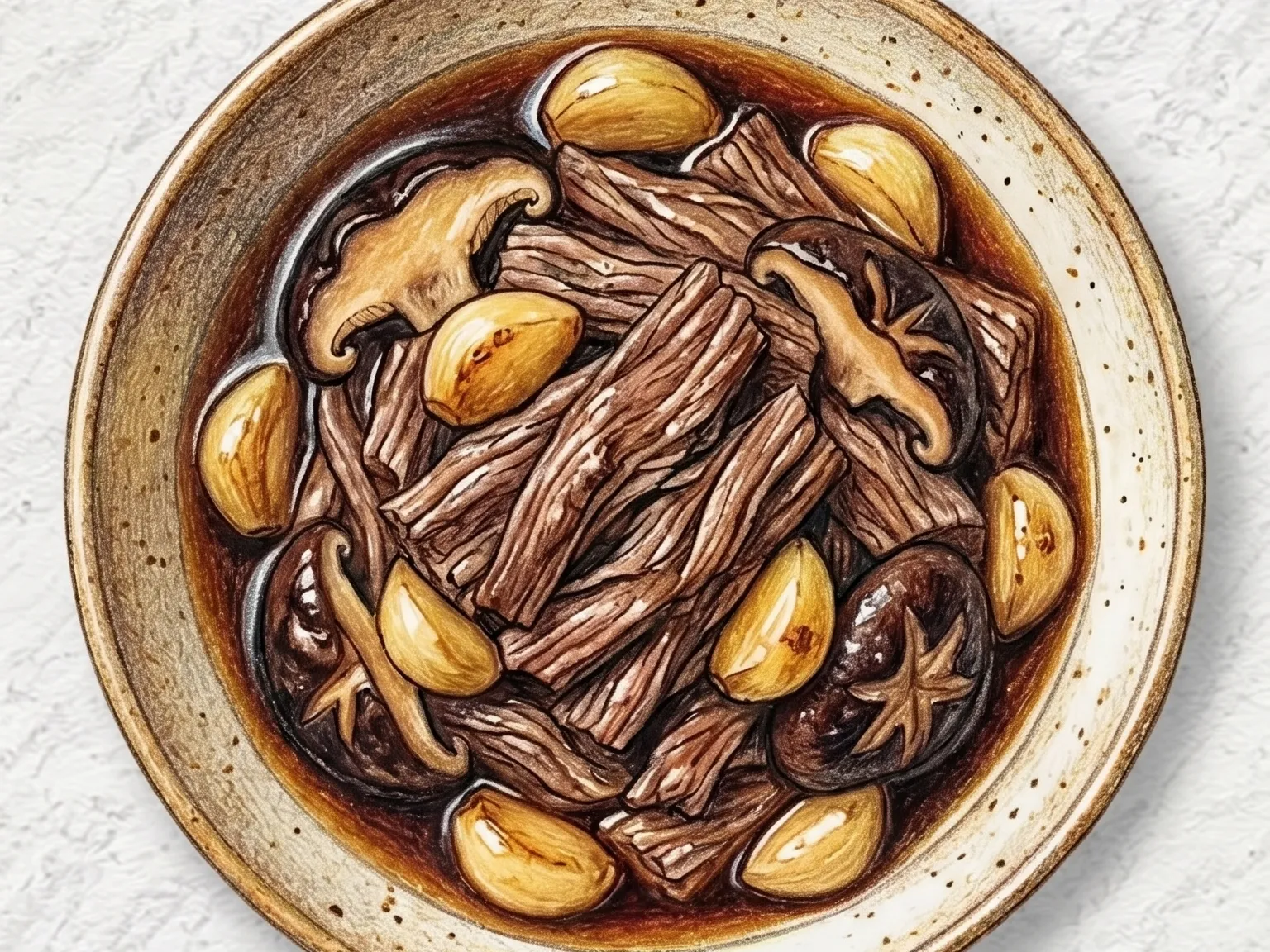
Sogogi beoseot jangjorim is a Korean soy-braised banchan of beef eye round, shiitake mushrooms, and whole garlic cloves, simmered down in soy sauce and soup soy sauce.

What makes this special

  • Sogogi beoseot jangjorim uses beef eye round and shiitake mushrooms to create a savory, make-ahead side dish in clear stock.
  • Shredding the beef against the grain before braising lets it pull apart into soft strands after cooking
  • Adding mushrooms only after the soy broth reduces keeps them from releasing water and losing their chew
Total time
60 min
Level
Easy
Servings
4 servings
Ingredients
9
Calories
330 kcal
Protein
36 g

Key ingredients

beef eye roundshiitake mushroomswhole garlic clovessoy saucesoup soy sauce

Core cooking flow

  1. 1 Soak 500 g beef eye round in cold water for 10 minutes to draw out blood.
  2. 2 Put the beef, 700 ml water, and the bay leaf in a pot, then bring it to a boil over high heat.
  3. 3 Remove the beef and let it cool just until it can be handled, then shred it lengthwise along the grain.

Sogogi beoseot jangjorim is a Korean soy-braised banchan of beef eye round, shiitake mushrooms, and whole garlic cloves, simmered down in soy sauce and soup soy sauce. The beef is boiled first and the resulting clear stock becomes the braising liquid, so the soy sauce carries a deep meat flavor from the very beginning. Shiitake mushrooms contribute their own aromatic umami on top of that base, and whole garlic cloves lose their sharp bite during the long simmer, turning mellow and lightly sweet. Shredding the beef along the grain exposes more surface area to the sauce and makes it easier to portion out. An overnight rest in the refrigerator lets every component absorb the seasoning more fully, and the flavor is noticeably richer the next day. It keeps well for over a week refrigerated, making it a practical and reliable make-ahead banchan.

Prep 15min Cook 45min 4 servings

Instructions

Read the steps as a cooking flow: prep, heat, seasoning, doneness control, and finish.

6 steps
  1. 1
    Step

    Soak 500 g beef eye round in cold water for 10 minutes to draw out blood.

    Change the water once if it turns very red, then drain when the surface looks cleaner.

  2. 2
    Control

    Put the beef, 700 ml water, and the bay leaf in a pot, then bring it to a boil over high heat.

    Once boiling, lower to medium heat and simmer for 20 minutes until a clear beef stock forms.

  3. 3
    Step

    Remove the beef and let it cool just until it can be handled, then shred it lengthwise along the grain.

    Strain the stock to remove solids and return the clear liquid to the pot.

  4. 4
    Season

    Add 7 tablespoons soy sauce, 1 tablespoon soup soy sauce, 1.5 tablespoons sugar, and 2 tablespoons cooking wine to the stock.

    Stir until the sugar dissolves, then bring the seasoned broth back to a steady boil.

  5. 5
    Control

    Add the shredded beef, 150 g shiitake mushrooms, and 12 whole garlic cloves.

    Braise over medium heat for 20 minutes, turning the ingredients occasionally so the beef darkens evenly and the garlic softens without breaking apart.

  6. 6
    Control

    Turn off the heat when the liquid has reduced by about half and the mushrooms look glossy.

    Remove the bay leaf, cool completely, then transfer to a storage container; chilling overnight will make the seasoning penetrate deeper.

After the steps

Pick a recipe that fits this dish.

Continue with shared ingredients, meal pairings, or a similar method.

Recipes That Go Well With This

More Steamed →

Based on shared ingredients and meal pairing

Korean Sogogi Jangjorim (Soy-Braised Beef)
Shared ingredient: bay leaf Steamed

Korean Sogogi Jangjorim (Soy-Braised Beef)

Sogogi jangjorim is one of Korea's essential make-ahead side dishes, made by boiling lean beef round until thoroughly tender, shredding it cleanly along the grain, and braising the shreds with quail eggs in soy sauce, sugar, and garlic. Using the beef cooking broth as the braising base means every spoonful of the liquid carries concentrated, bone-deep meat flavor that plain water could not produce. The quail eggs take on a deep amber-brown color as they simmer, absorbing the soy seasoning all the way through to the yolk rather than just on the surface. Cooling the pot completely before refrigerating is not merely a storage step but a flavor step: both the meat and the eggs continue to draw in seasoning as the temperature drops, resulting in a more uniform taste throughout. Once fully chilled, the braising liquid partially solidifies into a savory coating around each piece of beef and every egg, helping the dish maintain its intensity for days. Refrigerated, this banchan keeps well over a week, making it a staple of Korean weekly meal preparation. The shredded beef tucks easily between grains of rice, and the firm bite of the quail eggs provides a satisfying textural contrast that makes it impossible to stop at just a few bites.

Korean Soy-Braised Pork Loin Strips
Shared ingredient: whole garlic cloves Steamed

Korean Soy-Braised Pork Loin Strips

Dwaejigogi jangjorim is a Korean soy-braised pork dish made by simmering pork loin with whole garlic cloves, ginger, and cooking rice wine until the meat is completely tender. The pork is first boiled whole with enough water to fully submerge it, skimming the foam that rises to keep the braising liquid clean, then shredded along the grain and returned to the reduced soy liquid for a second round of simmering. Shredding along the grain rather than against it gives each strand more surface area to absorb the seasoned liquid, resulting in deeper, more even flavor throughout. The rice wine neutralizes the pork's gaminess from the start, while the whole garlic cloves soften completely during the long braise, turning mellow and spreadable. This dish keeps well refrigerated for several days and is typically served cold or at room temperature, making it a convenient banchan to portion out over multiple meals.

Korean Seasoned Bracken Fern
Serve together Side dishes

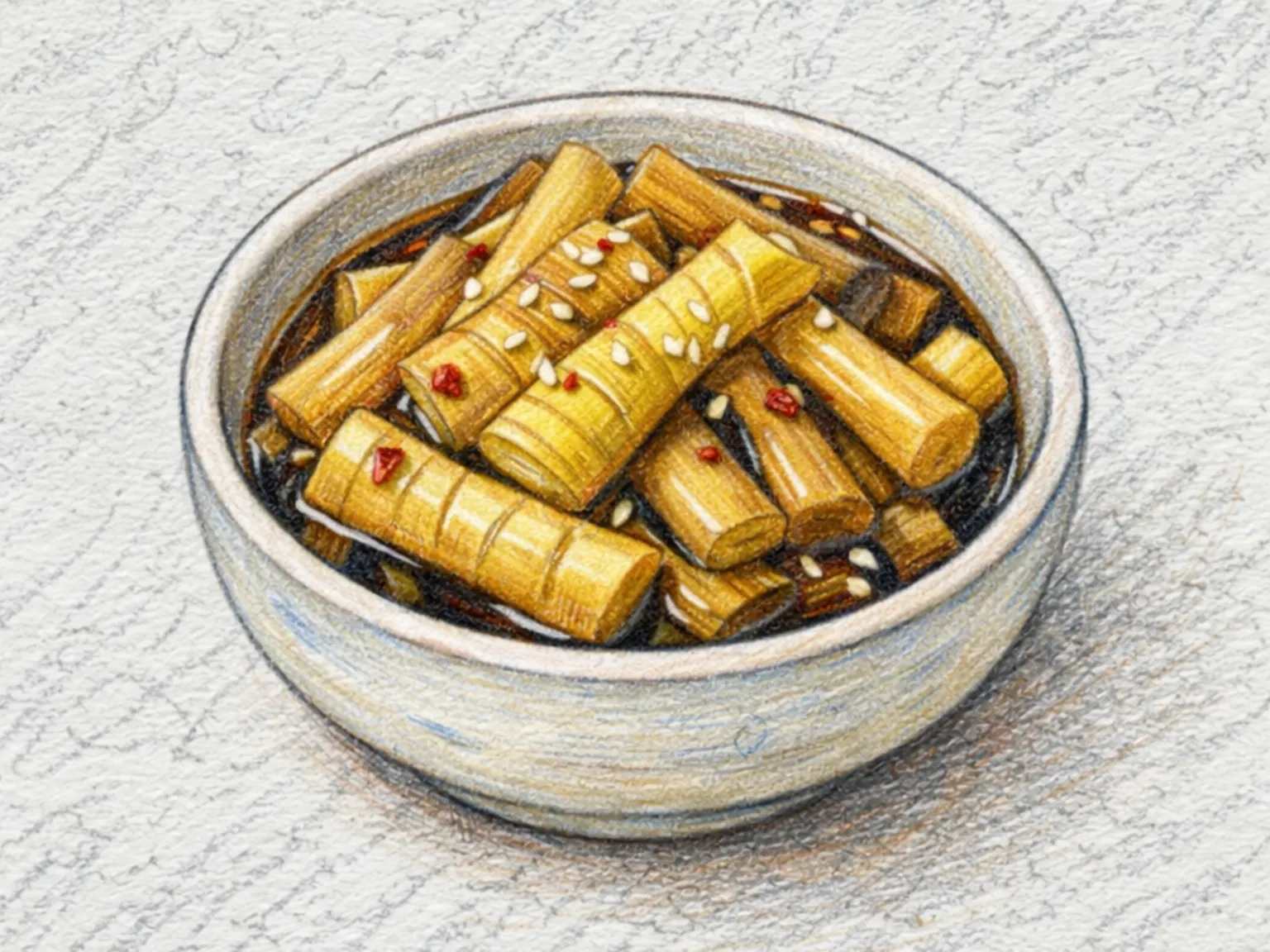
Korean Seasoned Bracken Fern

Gosari, the Korean name for bracken fern, is one of the oldest foraged vegetables in Korean cooking, with consumption records tracing back to the Three Kingdoms period. It is a mandatory component of bibimbap and a required dish on jesa, the ancestral rite table set for ceremonies honoring the dead. Dried gosari must soak overnight in cold water and then boil until the tough, wiry fibers relax into a distinctively springy, almost elastic chew that no fresh vegetable can replicate. The rehydrated fern is stir-fried in perilla oil with minced garlic until fragrant, then a small amount of soup soy sauce and water goes in and the pan is covered to let the liquid absorb and the fern braise briefly. This short braising step is what rounds the flavor and ensures the seasoning penetrates the fibrous strands rather than sitting only on the surface. Perilla oil is the traditional fat of choice rather than sesame oil because its green, herbal quality pairs more naturally with the woodsy, forest-floor flavor of gosari, amplifying rather than competing with it. Large batches are typically made during Chuseok or Seollal and eaten over several days, as the flavor improves and deepens as the dish sits.

Korean Soy-Braised Quail Eggs
Similar recipe Steamed

Korean Soy-Braised Quail Eggs

Mechurial-jangjorim is a Korean soy-braised quail egg dish simmered slowly with garlic cloves and shishito peppers in a seasoned soy sauce base. As the eggs steep in the braising liquid, the soy works its way through the egg white and gradually into the yolk, staining the exterior a deep mahogany brown and seasoning the interior evenly throughout. The braising liquid is built from a measured ratio of water, soy sauce, sugar, and cooking wine to keep the saltiness in check and the glaze balanced. Whole garlic cloves soften gently in the liquid and release a mellow, savory depth that enriches the overall flavor without sharpness. Shishito peppers are added partway through rather than at the start so they retain some snap and their mild green aroma, preventing them from going completely soft. The liquid is reduced until just a small amount remains, coating each egg in a glossy, concentrated glaze. Each egg is a single self-contained bite, which makes this banchan a staple in lunchboxes and a popular snack for children, and it remains one of the most recognizable everyday Korean side dishes.

Serve with this

Korean Cockle & Water Parsley Mixed Rice
Rice Medium

Korean Cockle & Water Parsley Mixed Rice

Kkomak-minari bibimbap is a seasonal rice bowl that comes together when cockles are at their peak in early spring, pairing the ocean sweetness of briefly blanched cockle meat with the clean, grassy sharpness of raw water parsley (minari). The cockle meat is rinsed in light salt water to remove any residual sand, then blanched for no more than thirty seconds in boiling water so the flesh stays springy rather than contracting into a rubbery texture. Julienned carrot and zucchini are each stir-fried separately, controlling moisture and flavor independently, then set aside to cool before assembly. A bowl of well-steamed rice is layered with the blanched cockles, the sauteed vegetables, and the raw minari placed on top last to protect its volatile fragrance from the heat below. A bibimbap sauce made from gochujang, sesame oil, minced garlic, and a touch of vinegar ties everything together when mixed, balancing the briny umami of the cockles against the brightness of the parsley. Sesame oil and toasted sesame seeds added at the end round the flavors and give the bowl a warm, nutty finish.

🎉 Special Occasion 🍱 Lunchbox
Prep 20min Cook 15min 2 servings
Galbitang (Clear Korean Beef Short Rib Soup)
Soups Medium

Galbitang (Clear Korean Beef Short Rib Soup)

Galbitang is a clear Korean soup built from long-simmered beef short ribs, extracting a deep, clean beef flavor without the milky opacity of seolleongtang or gomtang. Before cooking, the ribs are soaked in cold water for one to two hours to draw out blood, which is what allows the finished broth to stay clear and free of off-flavors. The radish goes in from the beginning, slowly releasing a gentle sweetness as it absorbs the surrounding broth and becomes fully saturated with beef flavor. The ribs need time - the measure of doneness is the meat sliding cleanly off the bone with minimal pressure from chopsticks. Unlike bone-based broths that turn white from emulsified collagen and fat, galbitang remains translucent because the fat from the rib meat dissolves more gently, leaving a subtle richness rather than heaviness. Seasoning is deliberately restrained, using only salt and white pepper at the table so nothing interferes with the honest taste of the beef. Garnishes of sliced egg crepe and green onion add color and a fresh note. The soup is served year-round in Korean restaurants, always arriving steaming hot alongside a bowl of plain rice.

🏠 Everyday 🎉 Special Occasion
Prep 60min Cook 120min 4 servings
Korean Bok Choy Kimchi (Gochugaru Fermented Quick)
Kimchi Medium

Korean Bok Choy Kimchi (Gochugaru Fermented Quick)

Cheonggyeongchae kimchi is a bok choy kimchi prepared by halving the heads lengthwise, salting them for twenty minutes, and coating each leaf layer with a paste of gochugaru, salted shrimp, anchovy fish sauce, and sweet rice paste. Keeping the salting time short preserves the crisp snap of the stems, while the leaves soften just enough to hold the seasoning. Julienned scallions and carrot add color and textural variety, and adjusting the fish sauce quantity based on the salted shrimp salinity keeps the overall salt level balanced. After four hours of room-temperature fermentation followed by refrigeration, this kimchi is ready within a day and offers a lighter, crunchier character than traditional napa cabbage kimchi.

🍱 Lunchbox ⚡ Quick
Prep 35min 4 servings

Similar recipes

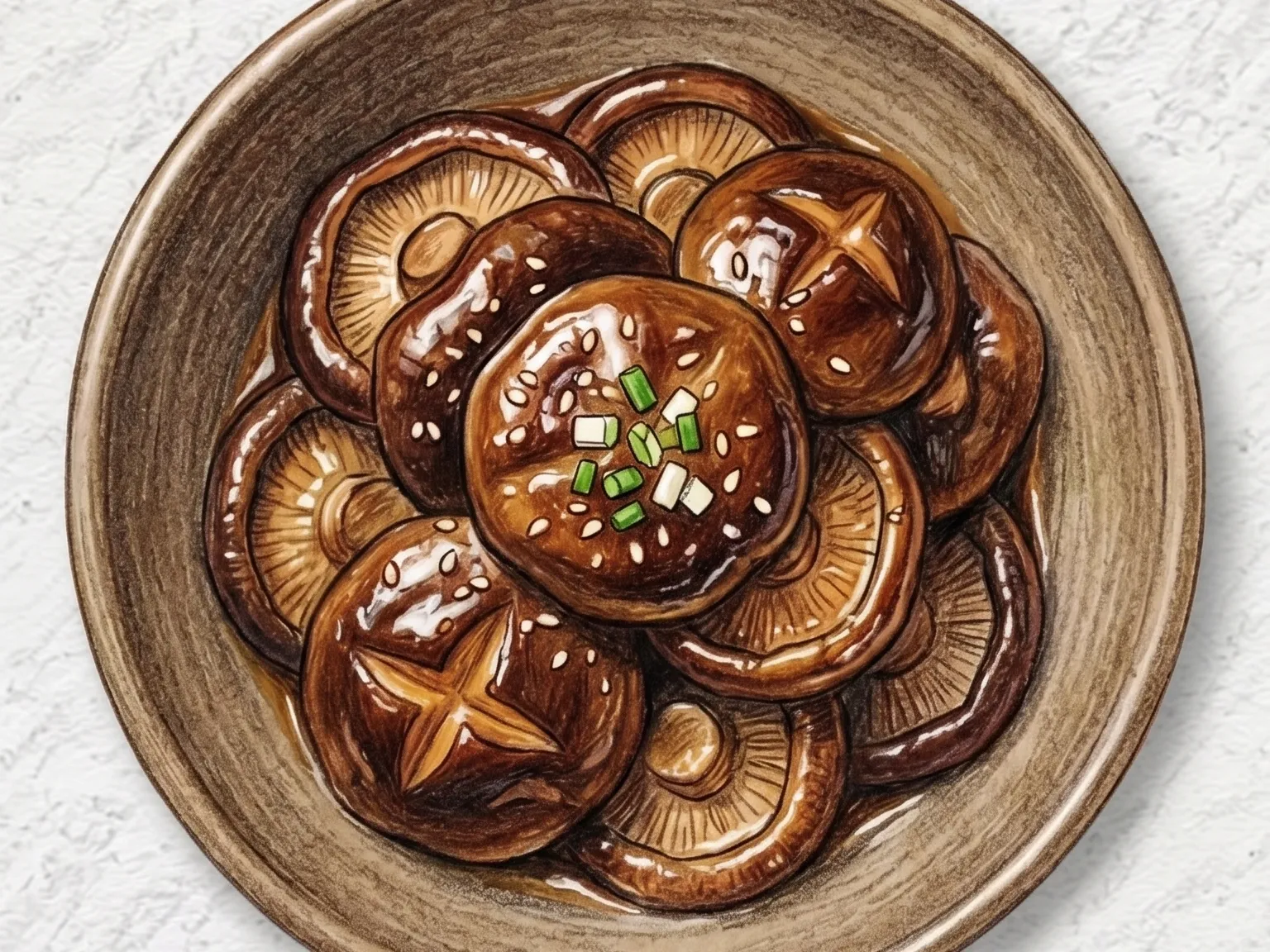
Korean Braised Shiitake Mushrooms
Stir-fry Easy

Korean Braised Shiitake Mushrooms

Pyogo-beoseot-jorim is a Korean side dish of sliced shiitake mushrooms braised in a savory soy-based sauce. The preparation begins by wiping the mushrooms with a damp towel, removing the stems, and slicing the caps thickly so they retain a chewy texture. The sliced mushrooms are added to a boiling mixture of water, soy sauce, oligosaccharide syrup, and minced garlic. Simmering the mixture over medium-low heat for about eight minutes allows the mushrooms to absorb the salty-sweet liquid. As the sauce reduces, the oligosaccharide syrup caramelizes, coating the mushrooms with a glossy sheen. The heat is turned off, and a splash of sesame oil and toasted sesame seeds are tossed in for a nutty finish. Using rehydrated dried shiitake mushrooms can yield a deeper umami profile.

🏠 Everyday 🍱 Lunchbox
Prep 12min Cook 15min 2 servings
Korean Beef & Quail Egg Soy Braise
Side dishes Medium

Korean Beef & Quail Egg Soy Braise

Beef and quail egg jangjorim is a traditional Korean side dish made by simmering beef in a seasoned soy sauce liquid. The preparation starts by boiling beef eye round for twenty minutes to create a clear broth. The cooked beef is then shredded by hand along its natural grain to allow the seasoning to penetrate the fibers. After straining the broth, soy sauce, sugar, minced garlic, black peppercorns, and green onion are boiled to infuse the liquid. The shredded beef and peeled hard-boiled quail eggs are added to this mixture and simmered on low heat for fifteen minutes until the sauce reduces by half. This braising process coats the beef and eggs in a glossy glaze. Once cooled and stored in the refrigerator, this salty side dish is served cold in small portions to accompany bowls of plain rice.

🏠 Everyday 🍱 Lunchbox
Prep 20min Cook 45min 4 servings
Korean Braised Beef with Dried Radish
Steamed Medium

Korean Braised Beef with Dried Radish

Mumallaengi sogogi jorim is a Korean soy-braised side dish of rehydrated dried radish strips and lean beef round, cooked down until the sauce just barely covers the ingredients. Drying concentrates the radish's natural sugars and umami, and once soaked and braised the strips become chewy and deeply flavored in a way fresh radish cannot replicate. Before soaking, a quick rinse removes any dust or impurities from the drying process, and twenty minutes or more in cold water restores just enough elasticity for a satisfying texture after cooking. Thin-sliced beef is pre-seasoned with cooking wine to neutralize any off-smell, then added to the pan so it cooks cleanly and without a heavy aroma. Oligosaccharide syrup adds a gentle sheen and sweetness to the soy base without making the dish cloying. Toasted sesame seeds scattered over the top finish the dish with a nutty fragrance. Like most Korean braised side dishes, this one improves after a night in the refrigerator as the seasoning continues to penetrate, making it a practical and reliable choice for lunchboxes and weekday meal preparation that can be made ahead and eaten across several days.

🏠 Everyday 🎉 Special Occasion
Prep 25min Cook 45min 4 servings

Tips

Overnight chilling deepens jangjorim flavor.
Use king oyster mushrooms for a firmer texture.

Nutrition (per serving)

Calories
330
kcal
Protein
36
g
Carbs
9
g
Fat
16
g