Korean Beef Gimbap (Soy-Marinated Beef Seaweed Rice Roll)
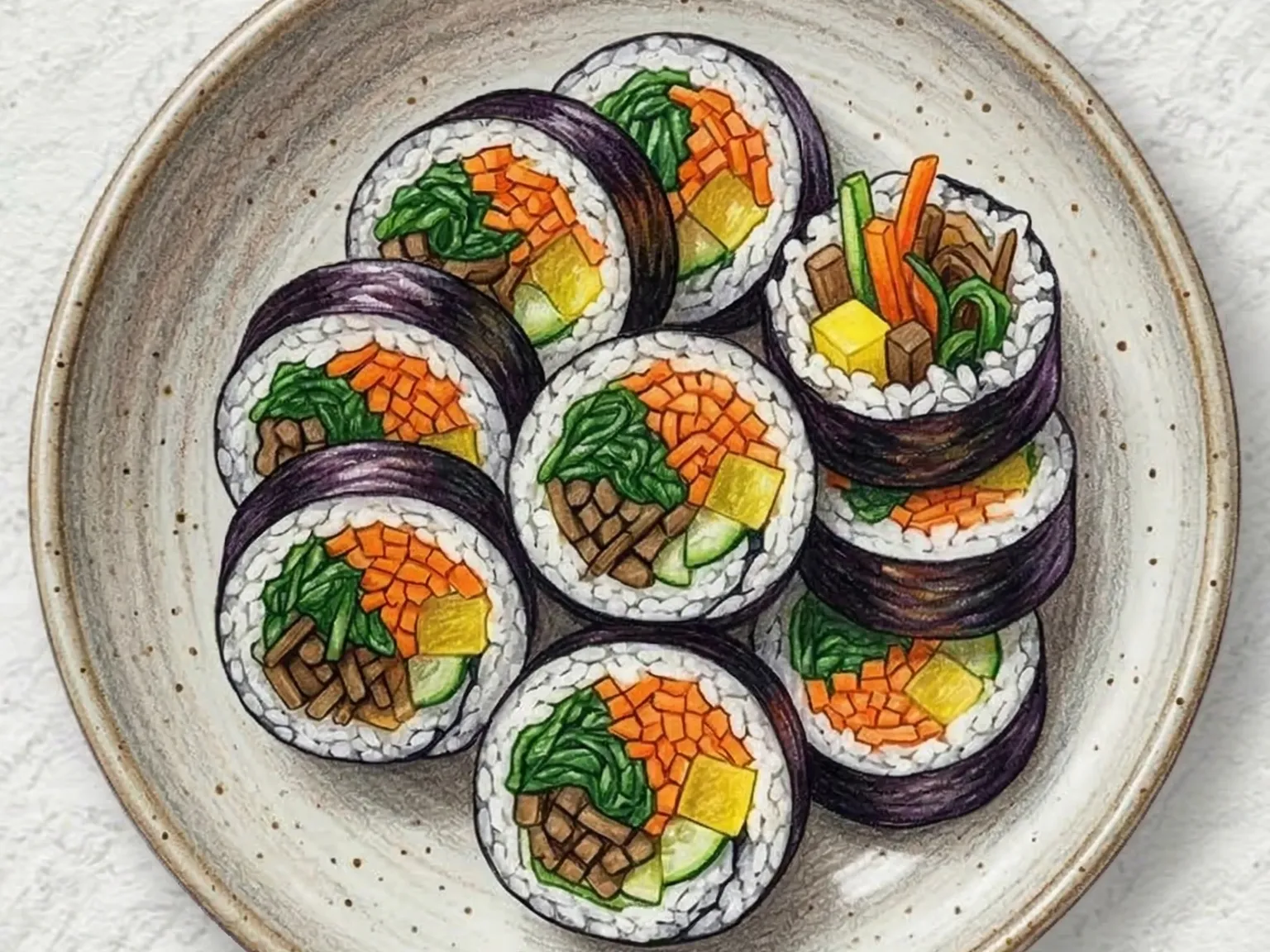
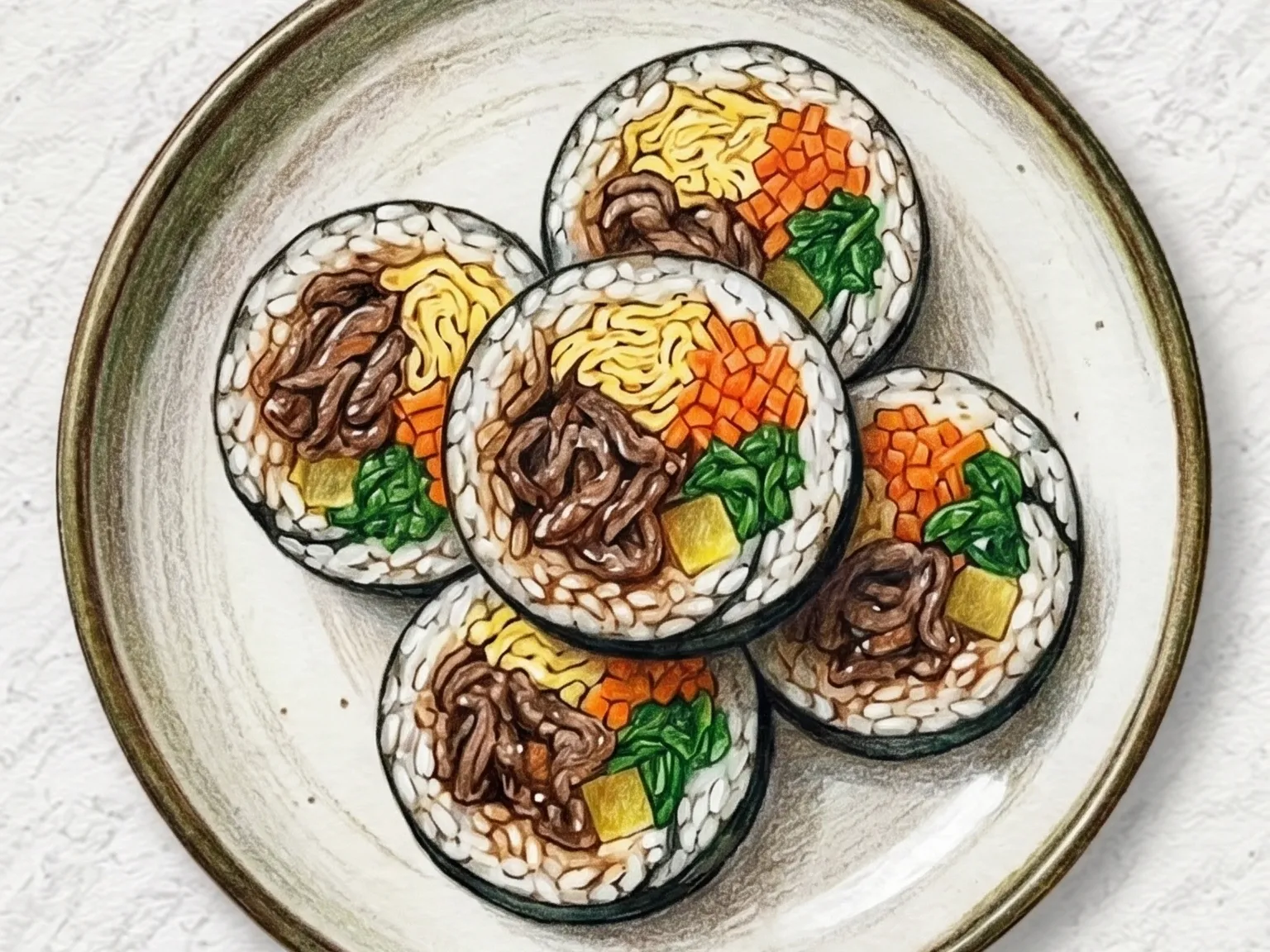
Sogogi-gimbap is a Korean seaweed rice roll featuring beef marinated in soy sauce and sugar, then stir-fried. The sweet-savory beef is rolled alongside sesame-seasoned rice, blanched spinach, sauteed carrots, and thin egg omelet strips inside a sheet of gim. The soy marinade from the beef seeps slightly into the rice, distributing flavor evenly through each cross-section slice. Thinly cut against the grain, the beef stays tender when bitten, while the spinach and carrot provide crisp texture and vegetable sweetness to balance the richness.
Adjust Servings
Instructions
- 1
Marinate beef in soy sauce and sugar for 10 minutes, then stir-fry in a pan.
- 2
Blanch spinach and season with sesame oil and salt; julienne and sauté carrots.
- 3
Make a thin egg omelet and cut into long strips.
- 4
Season rice with sesame oil and salt, spread thinly on seaweed.
- 5
Arrange beef, spinach, carrot, and egg, roll tightly, and cut into pieces.
As an Amazon Associate, we may earn from qualifying purchases.
Tips
Nutrition (per serving)
More Recipes

Korean Bulgogi Sandwich (Soy-Marinated Beef Toast with Mayo Lettuce)
Bulgogi sandwich layers soy-marinated, high-heat stir-fried beef onto lightly toasted bread with mayonnaise and lettuce. The beef marinates briefly in soy sauce, sugar, garlic, and sesame oil, and the quick sear over high heat caramelizes the surface for concentrated savory-sweet flavor. Crisp lettuce and a spread of mayonnaise add crunch and creaminess that contrast with the bold meat. Mixing ssamjang into the mayo intensifies the Korean character of the sandwich.

Korean Avocado Gimbap (Creamy Avocado Crab Seaweed Rice Roll)
Avocado gimbap is a contemporary Korean creation that appeared in the 2010s as avocado became widely available in Korean grocery stores and cafes. Traditional gimbap uses danmuji, ham, and seasoned vegetables rolled in seaweed and rice, but this version places thick slices of ripe avocado at the center, where its buttery, neutral creaminess complements the sesame-oiled rice without competing with the other fillings. The avocado must be firm enough to hold its shape when sliced but soft enough to yield when bitten - the narrow window between underripe and overripe is critical. The rice is seasoned lightly with sesame oil and salt, and the nori provides a toasty, oceanic wrapper that grounds the mild avocado. Often paired with crab stick, cucumber, and a thin strip of egg jidan for color and protein. The cross-section reveals concentric rings of green, white, and yellow that make this gimbap one of the most visually striking versions. Popular as a light lunch or picnic food in Korean cities.

Korean Mini Gimbap
Half-sheet seaweed is lined with a thin layer of seasoned rice and filled with just pickled radish, blanched spinach, and sauteed carrot, then rolled into slender cylinders about half the diameter of regular gimbap. Cut at 2 cm intervals, the pieces are small enough for a single bite. The rice is dressed with sesame oil, salt, and sesame seeds, giving each piece a nutty aroma without any dipping sauce.

Korean Seaweed Rice Roll
Gimbap is a Korean seaweed rice roll made by spreading sesame-oil-and-salt-seasoned rice thinly over a sheet of gim, then lining up individually prepared fillings - spinach namul, sauteed carrot, egg strip, ham, pickled radish, and braised burdock - and rolling tightly. Each filling is cooked separately so distinct flavors and textures meet in a single bite. The rice must cool slightly before spreading to keep the seaweed from going limp. When sliced, the cross-section reveals concentric rings of color, and a brush of sesame oil on the finished roll deepens the nuttiness of the seaweed.

Korean Tuna Gimbap (Chamchi Gimbap)
Chamchi gimbap is a Korean seaweed rice roll filled with canned tuna mixed with mayonnaise, along with carrot, spinach, and pickled radish, all wrapped tightly in seasoned rice and a sheet of roasted gim. The creamy tuna filling contrasts with the crisp vegetables, while the tangy pickled radish adds a bright note that keeps each bite interesting. It has been a beloved lunchbox and picnic staple in Korea for generations, easy to eat sliced into rounds and portable enough to take anywhere. The sesame oil brushed on the outside gives the roll a subtle sheen and a toasty aroma, and each cross-section reveals a colorful spiral of ingredients that makes it as visually appealing as it is flavorful.

Korean Kimchi Bulgogi (Kimchi Stir-Fried Marinated Beef)
Kimchi bulgogi combines soy-and-pear-marinated beef slices with aged napa kimchi, stir-fried together over high heat. The pear juice tenderizes the meat and adds a subtle sweetness that the kimchi's sharp acidity and salt cut through, creating a layered seasoning. As the two cook together, kimchi liquid seeps into the beef and builds a more complex umami than standard bulgogi alone. A finishing drizzle of sesame oil rounds out the dish, which pairs best with plain steamed rice to absorb the pan juices.