Korean Beef Skewers (Soy-Glazed Grilled Beef)
Quick answer
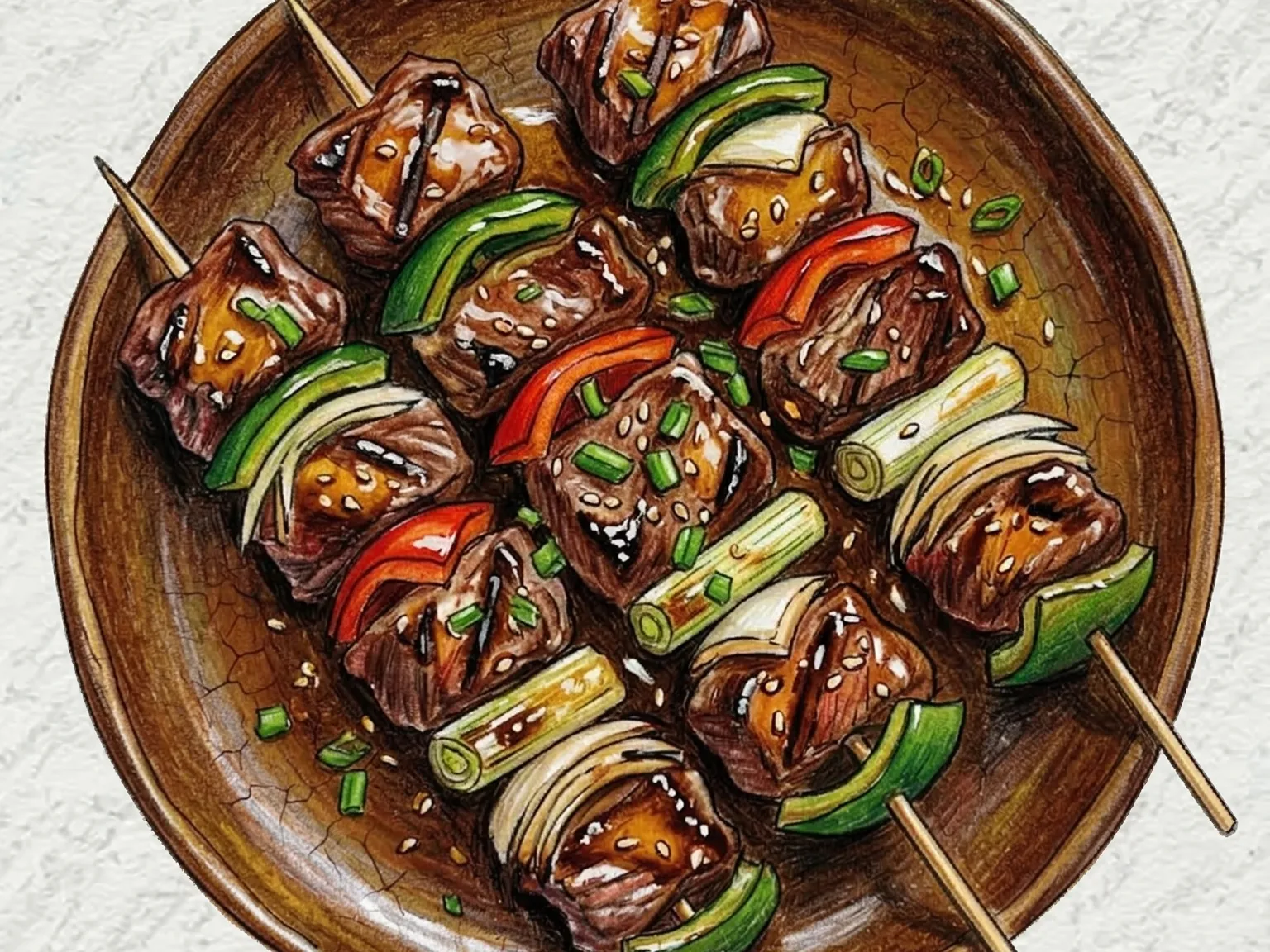
Bite-sized beef cubes and chunks of bell pepper and onion are threaded onto wooden skewers in an alternating pattern.
What makes this special
- Sogogi-kkochi-gui features soy-glazed beef skewers layered with peppers that steam the meat while grilling.
- Moisture from vegetables steams the meat indirectly as skewers cook
- Rolling the skewers ensures the marinade reduces evenly on all sides
Key ingredients
Core cooking flow
- 1 Soak the wooden skewers in water for 20 minutes.
- 2 Mix 3 tablespoons soy sauce, 1 tablespoon oligosaccharide syrup, 1 tablespoo...
- 3 Add the beef to the marinade and rest it for 20 minutes.
Bite-sized beef cubes and chunks of bell pepper and onion are threaded onto wooden skewers in an alternating pattern. The beef marinates for twenty minutes in soy sauce, oligosaccharide syrup, minced garlic, sesame oil, and black pepper before assembly. Grilling over medium-high heat while rotating the skewers lets the marinade reduce into a sticky glaze on the meat, while the vegetables soften and pick up faint char. The result is a hand-held format where each bite delivers soy-seasoned beef alongside lightly smoky, still-crisp vegetables.
Instructions
Read the steps as a cooking flow: prep, heat, seasoning, doneness control, and finish.
- 1Heat
Soak the wooden skewers in water for 20 minutes.
Cut 500 g beef into bite-sized cubes, then cut the bell pepper and onion into similar pieces so everything grills at the same pace.
- 2Season
Mix 3 tablespoons soy sauce, 1 tablespoon oligosaccharide syrup, 1 tablespoon minced garlic, 1 tablespoon sesame oil, and 1/2 teaspoon black pepper. Stir until the syrup is fully loosened into the marinade.
- 3Step
Add the beef to the marinade and rest it for 20 minutes.
Turn it once halfway through so the surfaces are evenly coated, and avoid extending the time too much so the soy flavor does not become harsh.
- 4Step
Thread the beef, bell pepper, and onion onto the skewers in alternating order.
Do not pack them too tightly. Leave small gaps so heat can reach the sides of the beef and the vegetables can soften without steaming heavily.
- 5Control
Heat the grill pan well over medium-high heat, then add the skewers.
Turn them about every 2 minutes and grill for 6 to 8 minutes, until the marinade looks glossy and reduced on the beef.
- 6Finish
Turn off the heat when the beef is browned on the outside and the bell pepper edges are lightly charred.
Rest briefly so the glaze settles, then serve while warm enough to hold and eat comfortably.
After the steps
Pick a recipe that fits this dish.
Continue with shared ingredients, meal pairings, or a similar method.
Recipes That Go Well With This
More Grilled →Based on shared ingredients and meal pairing
Korean Grilled Neobiani Beef Patties
Neobiani-gui is a Korean royal-court grilled beef patty made by kneading finely minced beef with minced onion, green onion, soy sauce, sugar, garlic, sesame oil, and black pepper, then shaping the mixture into thin oval patties and pan-frying until caramelized. The dish traces its origins to the royal court cuisine of the Joseon dynasty, where the seasoning was kept deliberately restrained to let the beef's natural flavor take center stage. Squeezing excess moisture from the minced onion before mixing strengthens the patty's structure, and the onion's natural sugars caramelize during cooking, adding a gentle, almost floral sweetness to the crust. Resting the shaped patties in the refrigerator for fifteen minutes firms the protein bonds so the patties hold their shape in the pan. Cooking over medium-low heat is essential: the surface develops a glossy, lacquered sear while the interior cooks through evenly, and excessive heat risks charring the outside before the center is done. The finished patties carry a thin, aromatic glaze from the soy sauce and sesame oil, making them a refined centerpiece on the Korean table.
Korean Grilled Patty Skewers
Tteokgalbi-kkochi are skewered patties made from a thoroughly kneaded mixture of ground beef, ground pork, soy sauce, sugar, garlic, and sesame oil, shaped into ovals and threaded onto wooden skewers before grilling. A small amount of starch mixed into the meat and at least three full minutes of kneading are what give the mixture enough tackiness to stay firmly anchored to the skewer throughout cooking; skip either step and the patties slide or crack apart on the grill. Moistening your hands with water while shaping prevents the mixture from sticking and helps produce smooth, even ovals. Grilling over medium heat first develops a golden Maillard crust on both sides, then lowering the heat and continuing to cook allows the interior to reach the center without the outside drying out, concentrating the meaty flavor at the core. A thin brushing of soy-and-corn-syrup glaze applied just before flipping and again right before removing from the heat builds a glossy, sweet-salty lacquer on the exterior. Served alongside tteokbokki sauce or ketchup, the skewers carry the unmistakable energy of Korean street food stalls.
Ojingeo-muguk (Korean Squid Radish Soup)
Ojingeo-muguk is a clear Korean soup that pairs squid and radish in a gently sweet, clean-tasting broth built without any chili or strong seasoning. Radish is added to cold water from the start and simmered for at least eight minutes, during which the vegetable slowly releases a natural sweetness that forms the flavor foundation of the soup. Squid is cleaned, sliced into rings, and added only after the radish has softened, and the timing here is critical: five minutes in the hot broth is enough for the flesh to turn fully opaque and pleasantly firm, but even a minute or two beyond that causes the proteins to tighten and the rings to turn rubbery and tough. Soup soy sauce seasons the broth without darkening it, and minced garlic provides depth without heat. Sliced green onion stirred in at the end neutralizes any residual seafood aroma and leaves the broth tasting bright and clean. The simplicity of the combination is the point: the radish's sweetness and the squid's umami reinforce each other in a broth that is light in body but surprisingly satisfying.
Korean Flanken Ribs (Pear-Soy Marinated LA-Cut Beef Short Ribs)
LA-galbi-gui is a Korean grilled short rib dish using flanken-cut beef ribs, where the bones are sliced laterally so several ribs run across each strip in a thin, even slab. This cross-cut format gives the meat a wide surface area and a uniform thickness that makes it both receptive to marinade and quick to cook through evenly. The marinade combines Asian pear juice, soy sauce, sugar, minced garlic, sesame oil, black pepper, and sliced green onion. Enzymes in the pear juice break down muscle fibers in the thin-sliced meat, while the combination of soy sauce and sugar triggers simultaneous Maillard browning and caramelization over high heat, forming a dark, lacquered crust on the surface. Because the marinade carries substantial sugar, cooking over medium heat and flipping frequently is essential; high heat without attention causes the exterior to char before the interior has cooked through. Each side needs three to four minutes to reach full doneness around the bone. Marinating overnight in the refrigerator allows the seasoning to penetrate fully between the bones, producing a noticeably deeper sweet-salty flavor once grilled. Resting the meat for two to three minutes after pulling it off the grill keeps the juices from running out immediately.
Serve with this
Korean Stir-Fried Sweet Potato Stems
Goguma julgi - sweet potato stems - are the above-ground vines of the sweet potato plant, a byproduct that Korean cooks transform into a summer namul rather than discarding. The most labor-intensive step is peeling each stem by hand, pinching the outer skin with a fingernail and pulling it away to reveal the tender core beneath. After blanching for two minutes and rinsing in cold water, the stems are stir-fried in perilla oil with garlic and seasoned with soup soy sauce. Perilla powder stirred in at the end thickens the remaining liquid into a nutty glaze. In season during summer, the stems are harvested from sweet potato fields before the tubers themselves are dug up.
Korean Omelette Rice (Ketchup Fried Rice in Egg Wrap)
Omurice wraps ketchup-fried rice in a thin, softly set egg sheet, producing a one-plate meal that balances sweet-tangy tomato notes with rich buttery egg. Diced onion, carrot, and ham are sauteed in butter until fragrant, then tossed with cooked rice and ketchup to build a lightly caramelized fried rice base. A separate egg mixture enriched with a splash of milk is spread thin in a hot pan and folded around the rice while still slightly runny, so cutting into it reveals a creamy, flowing center. Green peas mixed into the rice add pops of sweetness and color. The contrast between the glossy egg exterior and the savory-sweet filling has made omurice one of the most comforting one-plate meals in both Japanese-origin home cooking and Korean everyday cuisine. Tilting the pan and nudging the egg sheet against the curved edge is the standard technique for shaping the signature oval.
Chicken Mu (Korean Fried Chicken Radish Pickle)
The crunchy, sweet-sour radish pickle served with every order of Korean fried chicken - now easy to make at home in under 15 minutes. Cubed radish is submerged in a cooled brine of vinegar, sugar, salt, and whole black peppercorns. Using fully cooled brine rather than hot is critical for maintaining the radish's firm, snapping crunch. Ready to eat after one day of refrigeration, its bright acidity cleanses the palate between bites of crispy chicken. Stored in a glass jar, this pickle keeps for over a week.
Similar recipes
Korean Grilled Chicken Skewers
Dak-kkochi-gui is a Korean grilled chicken skewer built on the flavors of street-stall cooking, made by threading bite-sized chicken breast or thigh onto bamboo sticks and painting them with a sauce of gochujang, soy sauce, honey, and minced garlic. Thigh meat is the better choice because its higher fat content keeps each piece juicy over direct heat, while breast will dry out quickly. Applying the glaze in two or three separate coats rather than all at once builds a thick, sticky, caramelized surface. Cutting the chicken into uniform cubes ensures even cooking, and alternating pieces with slices of green onion or bell pepper adds moisture and prevents the meat from tightening up. Turning the skewers frequently over medium heat keeps the sugars in the sauce from scorching while the surface develops an even, deep char. The same result comes out well in an air fryer at 200 degrees Celsius for twelve to fourteen minutes. Gochujang's fermented heat against the sweetness of honey and the smell of searing meat is the unmistakable signature of Korean pojangmacha.
Korean-Style Sirloin Steak
Deungsim steak-gui is a Korean-style sirloin steak marinated in soy sauce, sesame oil, sugar, minced garlic, and Korean pear juice, then seared on a hot pan or grill until done. Pear juice contains enzymes that break down surface proteins to tenderize the meat, though marinating beyond thirty minutes risks turning the texture mushy, so timing matters. The flavor base departs from Western steak fundamentals - soy sauce and sesame oil define the savory character here, and the sugar caramelizes at high heat into a sweet-salty crust on the exterior. Coarsely cracked black pepper goes on last, adding heat and sharpness that pushes the result toward a midpoint between bulgogi and a conventional grilled steak.
Korean Soy-braised Beef (Tender Shredded Brisket in Soy Glaze)
Jangjorim is the soy-braised beef that lives semi-permanently in Korean refrigerators - a make-ahead banchan with a shelf life of roughly two weeks. Beef eye round (hongdukkasal) is the traditional cut because its uniform grain and low fat content allow clean shredding along the fibers, producing the signature stringy texture. The process is unhurried: thirty minutes of soaking to draw out blood, forty minutes of simmering with whole garlic and peppercorns, then shredding and returning to the pot with soy sauce and sugar for another twenty minutes. Hard-boiled eggs and shishito peppers added in the final stage absorb the dark soy broth - the eggs turn mahogany and the peppers contribute a gentle heat to the sauce. Swapping in quail eggs makes each piece lunchbox-sized. Flavor deepens noticeably after a day of refrigeration as the seasoning penetrates fully.