Korean Braised Beef and Radish
Quick answer
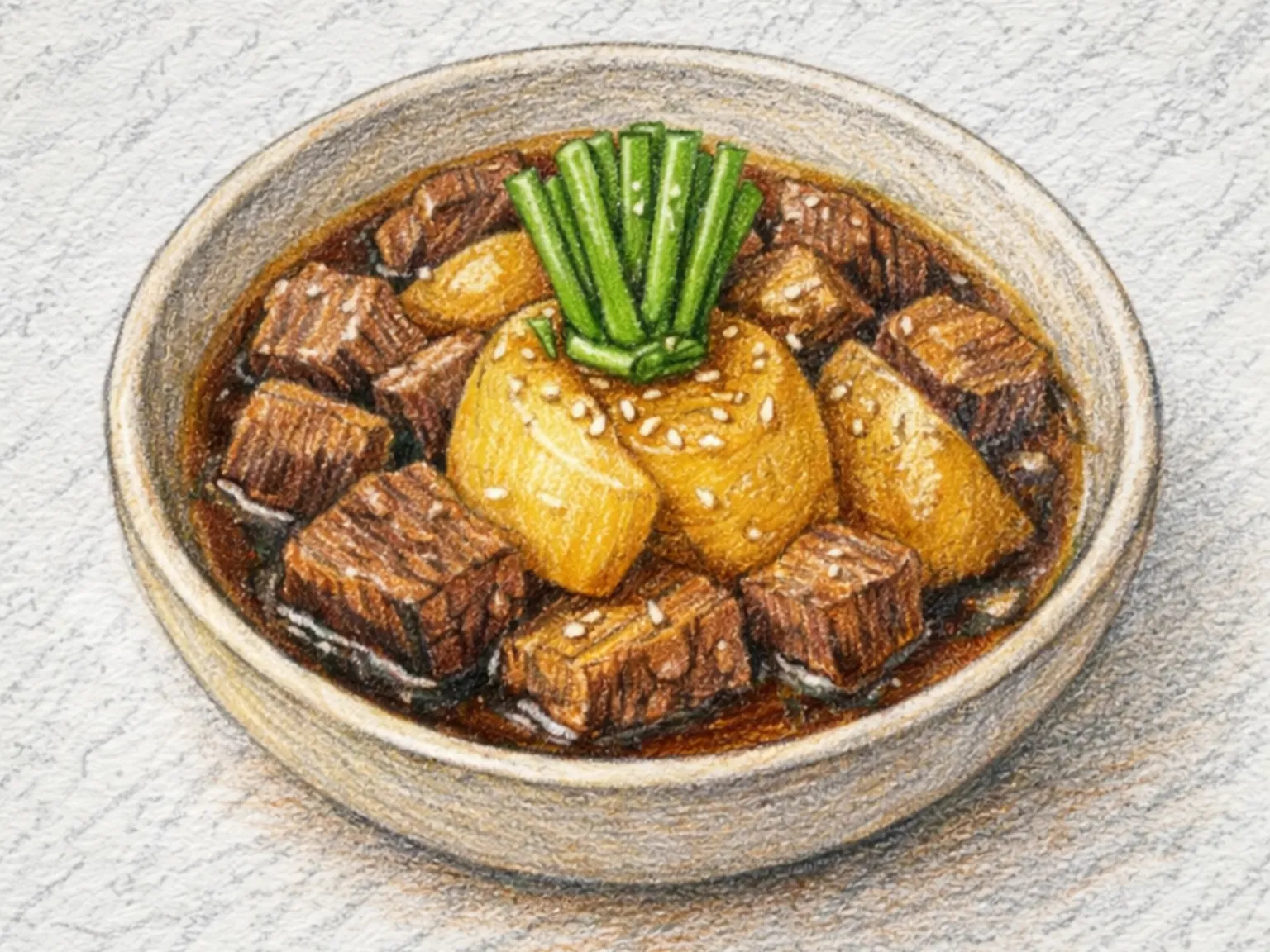
Sogogi mu jorim is a Korean braised beef and radish dish where brisket and thick-cut Korean radish are slowly simmered in soy sauce with garlic, ginger, and a touch of sugar.
What makes this special
- Sogogi mu jorim simmers thick radish rounds and beef brisket until the radish turns translucent and absorbs the savory broth.
- Thick 3cm radish turns translucent while absorbing beef broth umami
- Radish's natural sweetness balances the soy with minimal sugar
Key ingredients
Core cooking flow
- 1 Cut the 500 g beef brisket into large chunks, soak it in cold water for 10 minutes, then drain well.
- 2 Put the beef, 500 ml water, 2 tablespoons cooking wine, and 0.5 teaspoon ginger in a pot over high heat.
- 3 Add 5 tablespoons soy sauce, 1 tablespoon sugar, 1 tablespoon minced garlic...
Sogogi mu jorim is a Korean braised beef and radish dish where brisket and thick-cut Korean radish are slowly simmered in soy sauce with garlic, ginger, and a touch of sugar. Boiling the beef first and skimming the foam produces a clean broth base for braising. The radish goes in later so it cooks until semi-translucent, absorbing the beef-enriched liquid and developing a natural sweetness that balances the soy. Green onion added at the end contributes a fresh note. Cutting the radish thick is important so it holds its shape through the braise, and resting the dish overnight before reheating deepens the flavor noticeably.
Instructions
Read the steps as a cooking flow: prep, heat, seasoning, doneness control, and finish.
- 1Prep
Cut the 500 g beef brisket into large chunks, soak it in cold water for 10 minutes, then drain well.
Cut the 400 g Korean radish into thick 3 cm pieces and lightly trim the edges so they do not break easily.
- 2Control
Put the beef, 500 ml water, 2 tablespoons cooking wine, and 0.5 teaspoon ginger in a pot over high heat.
When it boils, skim off the foam, lower to medium heat, and simmer for 15 minutes to keep the broth clean.
- 3Control
Add 5 tablespoons soy sauce, 1 tablespoon sugar, 1 tablespoon minced garlic, and 0.25 teaspoon black pepper.
Stir until the sugar dissolves, then simmer over medium heat for 10 minutes so the beef starts absorbing the seasoning.
- 4Control
Nestle the radish pieces into the braising liquid and reduce the heat to low.
Cover the pot slightly ajar and braise for 15 to 18 minutes, until the radish edges turn semi-translucent but the pieces still hold their shape.
- 5Prep
Turn the radish pieces only once and spoon the liquid over them so they do not crumble.
When a chopstick slides into the radish easily and the liquid tastes savory and concentrated, keep the heat low to prevent scorching.
- 6Finish
Add 1 sliced green onion stalk and simmer for just 2 more minutes to keep its fresh aroma.
Turn off the heat, rest the dish for 5 minutes, then serve warm or cool it and refrigerate overnight for deeper flavor.
After the steps
Pick a recipe that fits this dish.
Continue with shared ingredients, meal pairings, or a similar method.
Recipes That Go Well With This
More Steamed →Based on shared ingredients and meal pairing
Korean Braised Squid with Radish
Ojingeo mu jorim is a Korean braised dish where radish is cooked first in a soy-based liquid until fully softened, then squid is added and the whole pot is reduced in a spiced sauce of gochugaru and gochujang. Giving the radish time to cook alone is the structural key to this dish: as it slowly absorbs the liquid and breaks down, it releases its natural sweetness into the broth, which merges with the salt and gentle umami of soy sauce to build the braising liquid into something more complex than its ingredients suggest. When the spice paste goes in, the resulting flavor sits at the intersection of heat and coolness - the particular sensation of Korean chili that stings without overwhelming. The single most important technique in this recipe is the timing of the squid. Squid turns rubbery when overcooked, and the window between tender and tough is narrow, so it is added only in the last five minutes of cooking. That brief time is enough for the squid to absorb the surrounding flavors while holding the springy, snapping bite that makes the dish texturally rewarding. Green onion stirred in at the finish adds a sharp herbal lift. The reduced sauce left in the pan is deliberately left shallow rather than thick, concentrated with the flavors of both the squid and the radish, and it is best used by spooning it over rice and eating everything together.
Korean Braised Chicken with Radish
This braise combines bone-in chicken pieces with Korean radish and potato in a soy-and-gochugaru sauce. The radish absorbs both the chicken stock and the spiced seasoning, turning amber on the outside while going translucent within. Potato edges break down during the long simmer, thickening the sauce into a sticky glaze. Gochugaru and black pepper build a layered heat that soy sauce and sugar round off, so the dish is assertively spicy without being harsh. Reducing the liquid until it barely coats the bottom concentrates all the flavors onto the surface of each piece.
Korean Namdo-Style Loach Soup
Namdo-chueotang is the southern Korean take on loach soup, distinguished from other regional versions by grinding the entire loach - bones and all - into a thick, porridge-like broth. The loaches are first boiled until completely soft, then blended and strained to produce a dense, opaque base packed with protein and calcium. Dried radish greens simmer in this liquid, contributing a rustic, earthy backbone. Doenjang and gochujang season the soup with fermented depth and moderate heat, while a generous addition of perilla seed powder lends a nutty richness that rounds out the heavy flavors. A final dusting of sancho pepper tames any lingering fishiness and adds a tingling, aromatic kick. This is restorative cooking at its most direct - a thick, warming bowl meant to rebuild energy during the colder months.
Korean Braised Beef with Dried Radish
Mumallaengi sogogi jorim is a Korean soy-braised side dish of rehydrated dried radish strips and lean beef round, cooked down until the sauce just barely covers the ingredients. Drying concentrates the radish's natural sugars and umami, and once soaked and braised the strips become chewy and deeply flavored in a way fresh radish cannot replicate. Before soaking, a quick rinse removes any dust or impurities from the drying process, and twenty minutes or more in cold water restores just enough elasticity for a satisfying texture after cooking. Thin-sliced beef is pre-seasoned with cooking wine to neutralize any off-smell, then added to the pan so it cooks cleanly and without a heavy aroma. Oligosaccharide syrup adds a gentle sheen and sweetness to the soy base without making the dish cloying. Toasted sesame seeds scattered over the top finish the dish with a nutty fragrance. Like most Korean braised side dishes, this one improves after a night in the refrigerator as the seasoning continues to penetrate, making it a practical and reliable choice for lunchboxes and weekday meal preparation that can be made ahead and eaten across several days.
Serve with this
Korean Mushroom Japchae (Shiitake Glass Noodle Stir-Fry)
Beoseot japchae replaces beef with shiitake mushrooms as the primary source of savory depth, making it a staple of Buddhist temple cuisine and vegetarian tables alike. Sweet potato noodles are soaked and boiled, then rinsed in cold water immediately to lock in a firm, springy texture. Shiitake, spinach, carrot, and onion are each cooked separately - their moisture levels and heat tolerances differ enough that combining them prematurely flattens every component. Soy sauce, sugar, minced garlic, and sesame oil bring the noodles and vegetables together, and the finished dish rests for ten minutes so the seasoning penetrates the noodles evenly. The result is a japchae where the mushroom carries genuine umami weight without any meat.
Korean Blue Crab Doenjang Pot Rice
Cleaned blue crab sits atop soaked rice in a heavy pot, cooked in anchovy-kelp stock that has been infused with dissolved doenjang. Garlic and vegetables are sauteed first in perilla oil to build an aromatic base before the stock-doenjang mixture is poured in and brought to a boil. The crab goes on top and the pot is covered for five minutes on high heat, fifteen minutes on low, then ten minutes off the heat to rest and steam through. The crab's briny sweetness and the doenjang's fermented, earthy depth soak into every grain of rice during the long, slow cook. Zucchini and shiitake mushrooms add a mild sweetness that tempers the saltiness and rounds out the bowl. One additional minute on low heat after resting creates a golden, nutty nurungji crust at the bottom, a prized texture in Korean pot rice. Doenjang saltiness varies by brand, so tasting the diluted stock before adding rice lets you calibrate without oversalting. A few slices of cheongyang chili on top cut through the fermented richness and add a sharp finishing heat.
Korean Soy Pickled Onions
Yangpa jangajji is a soy-pickled onion made by immersing large-cut onion chunks in a boiled brine of soy sauce, vinegar, and sugar. The hot brine tempers the raw onion's sharp, pungent bite on contact, and as the pickle matures in the refrigerator the sweet-salty seasoning penetrates evenly through each piece. Cutting the onion along its fiber rather than against it keeps the texture firm and crisp after pickling, whereas thin cross-cut slices tend to soften quickly in the acidic brine. Sliced cheongyang chili peppers added to the jar gradually release their heat into the liquid, lending a gentle, lingering spiciness that offsets the sweetness and keeps the flavors from becoming one-dimensional. The pickle is ready after one day of refrigeration but improves noticeably at three days or more as the seasoning continues to deepen. It is a staple accompaniment to grilled meats like samgyeopsal, where its acidity and crunch cut through richness and refresh the palate between bites. It also works well over bibimbap or cold noodles. The brine can be brought back to a boil and reused for a second batch of onions, making this an economical pantry item.
Similar recipes
Korean Braised Yellow Croaker
Jogi-jorim is a Korean braised dish of yellow croaker simmered with radish and onion in a seasoning sauce of soy sauce, gochugaru, garlic, and a touch of sugar. Yellow croaker has white, tender flesh and a mild flavor with little fishiness, qualities that make it exceptionally well-suited for braising. The radish goes into the pot first, lining the bottom so the fish sits above the direct heat and does not stick or break apart during cooking. The seasoning sauce is poured over the fish and the pot comes to a boil before the heat is reduced to a steady simmer. Over time the sauce penetrates the flesh and the radish drinks in the braising liquid, turning sweet-savory and soft throughout. One or two Cheongyang chili peppers added to the pot provide a low, sustained heat that builds gradually rather than hitting all at once. The braise is finished when a moderate amount of glossy sauce remains in the pot. That concentrated sauce mixed into a bowl of plain rice is the reason Koreans reach for jogi-jorim as a go-to rice side dish. The dish also appears regularly on ancestral rite tables and holiday spreads, making it one of the more culturally familiar fish preparations in Korean cooking.
Korean Samgyeopsal Ganjang Jorim (Soy-Braised Pork Belly)
Samgyeopsal ganjang jorim is a Korean soy-braised pork belly dish where blanched pork belly is simmered with radish and onion in a soy sauce base for over forty-five minutes. Blanching first removes impurities and excess fat, leaving a clean-tasting braise. The long simmer allows soy sauce to penetrate the layered pork, building a deep flavor that is savory without being greasy. Radish chunks absorb the pork-enriched liquid and develop a richness of their own, while oligosaccharide syrup lends a natural sheen. Cooling and reheating concentrates the seasoning further, making this a strong choice for gatherings or holiday meals.
Korean Braised Spanish Mackerel with Radish
Samchi mu-jorim layers sliced Korean radish on the bottom of a pot, topped with Spanish mackerel steaks and onion, then braised in a sauce of gochujang, soy sauce, gochugaru, and garlic. The radish prevents the fish from sticking, absorbs the braising liquid, and turns translucent-soft as it cooks. Rather than flipping the fish, the sauce is spooned over the top repeatedly so the flesh stays intact. After about fifteen minutes of simmering on medium heat, the liquid reduces to a concentrated, mildly spicy broth with the radish's subtle sweetness woven through it.