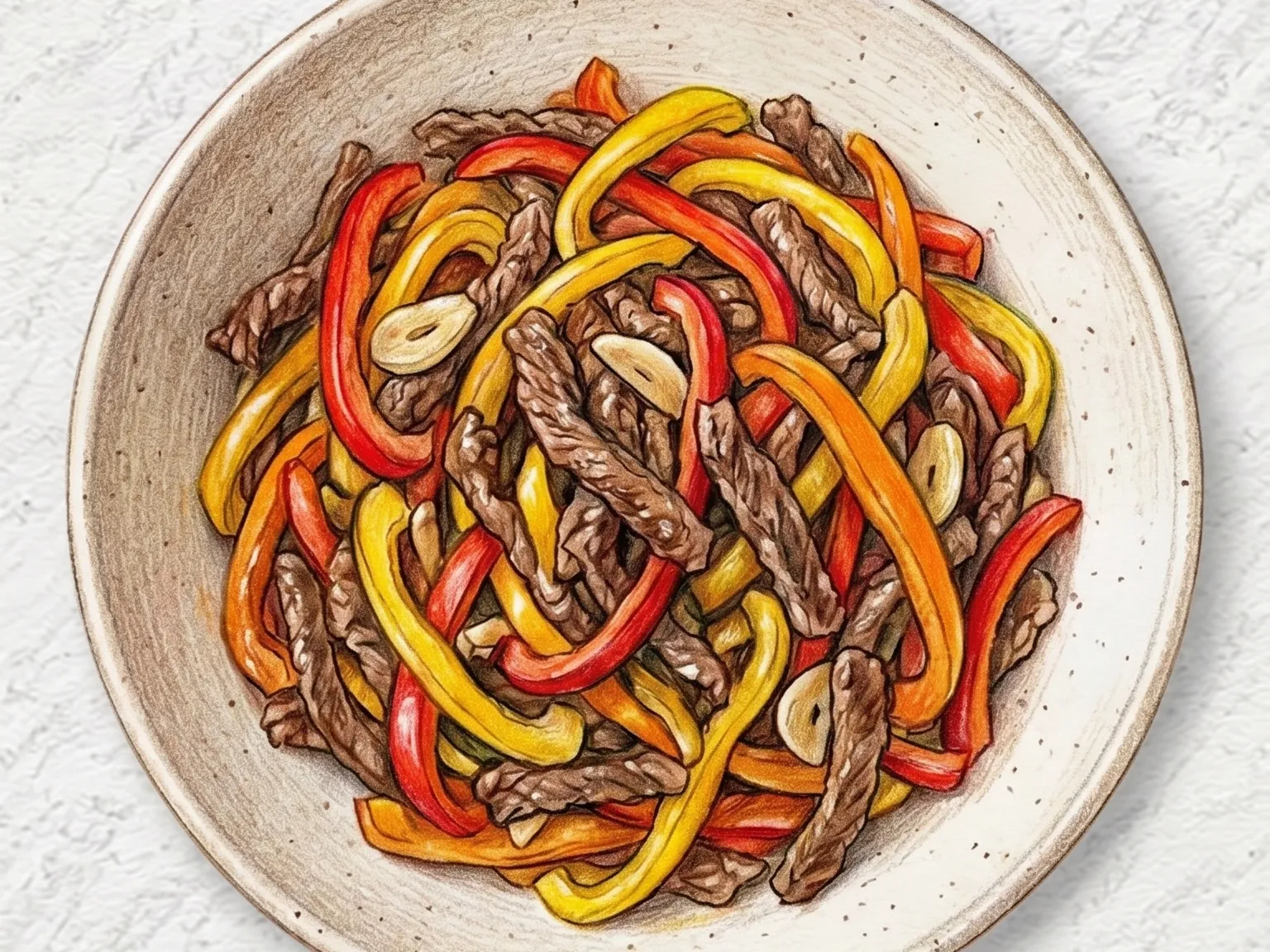
Korean Beef and Paprika Stir-Fry
Quick answer
Sogogi paprika-bokkeum stir-fries soy-and-sesame-marinated beef strips with julienned bell peppers of mixed colors.
What makes this special
- Sogogi paprika-bokkeum stir-fries marinated beef with colorful bell peppers to concentrate their sweetness.
- Red and yellow peppers concentrate their sweetness under heat while adding visual brightness
- Only soy, sesame oil, and garlic let the ingredients speak for themselves
Key ingredients
Core cooking flow
- 1 Cut 200 g beef into thin strips, then coat it evenly with 2 tablespoons soy...
- 2 Remove the stems and seeds from 2 bell peppers, then cut them into strips si...
- 3 Thinly slice 2 garlic cloves. Heat the pan over medium heat for about 1 minu...
Sogogi paprika-bokkeum stir-fries soy-and-sesame-marinated beef strips with julienned bell peppers of mixed colors. The peppers lose just enough moisture over heat to concentrate their natural sweetness, which balances the salty soy marinade on the beef. Two cloves of garlic provide background aroma, but the seasoning is intentionally spare so the ingredients themselves lead the flavor. The dish's vivid reds, yellows, and greens make it as visually striking on the plate as it is straightforward to cook.
Instructions
Read the steps as a cooking flow: prep, heat, seasoning, doneness control, and finish.
- 1Season
Cut 200 g beef into thin strips, then coat it evenly with 2 tablespoons soy sauce and 1 teaspoon sesame oil.
Let it sit briefly while preparing the peppers so the seasoning clings to the meat.
- 2Prep
Remove the stems and seeds from 2 bell peppers, then cut them into strips similar in thickness to the beef.
Leave a little thickness because very thin strips soften too quickly in the hot pan.
- 3Control
Thinly slice 2 garlic cloves.
Heat the pan over medium heat for about 1 minute, then add the garlic and stir briefly just until fragrant, keeping it moving so it does not scorch.
- 4Heat
Add the marinated beef, raise the heat to medium-high, and spread it out in the pan.
Stir-fry for about 2 minutes, just until the outside turns brown and the strips separate.
- 5Control
When the seasoning released from the beef starts bubbling in the pan, add the bell peppers.
Stir-fry over high heat for about 1 minute 30 seconds, turning everything so the peppers heat evenly.
- 6Finish
Turn off the heat when the peppers look vivid and only the edges have softened slightly.
Do not leave the stir-fry in the hot pan too long, because the peppers will release water, so plate it right away.
After the steps
Pick a recipe that fits this dish.
Continue with shared ingredients, meal pairings, or a similar method.
Recipes That Go Well With This
More Stir-fry →Based on shared ingredients and meal pairing
Korean Beef and Broccoli Stir-Fry
Sogogi broccoli-bokkeum stir-fries thinly sliced beef with broccoli florets in a glaze of oyster sauce and soy sauce. The beef is seared first over high heat to lock in its juices, then the broccoli -- blanched just enough to keep its bite -- joins the pan. Oyster sauce binds the two main ingredients with concentrated savory depth, and garlic plus a final drizzle of sesame oil layer on fragrance. The sauce coats every surface with a glossy sheen, making this a complete main dish that needs nothing beyond steamed rice.
Korean Bracken and Beef Soup
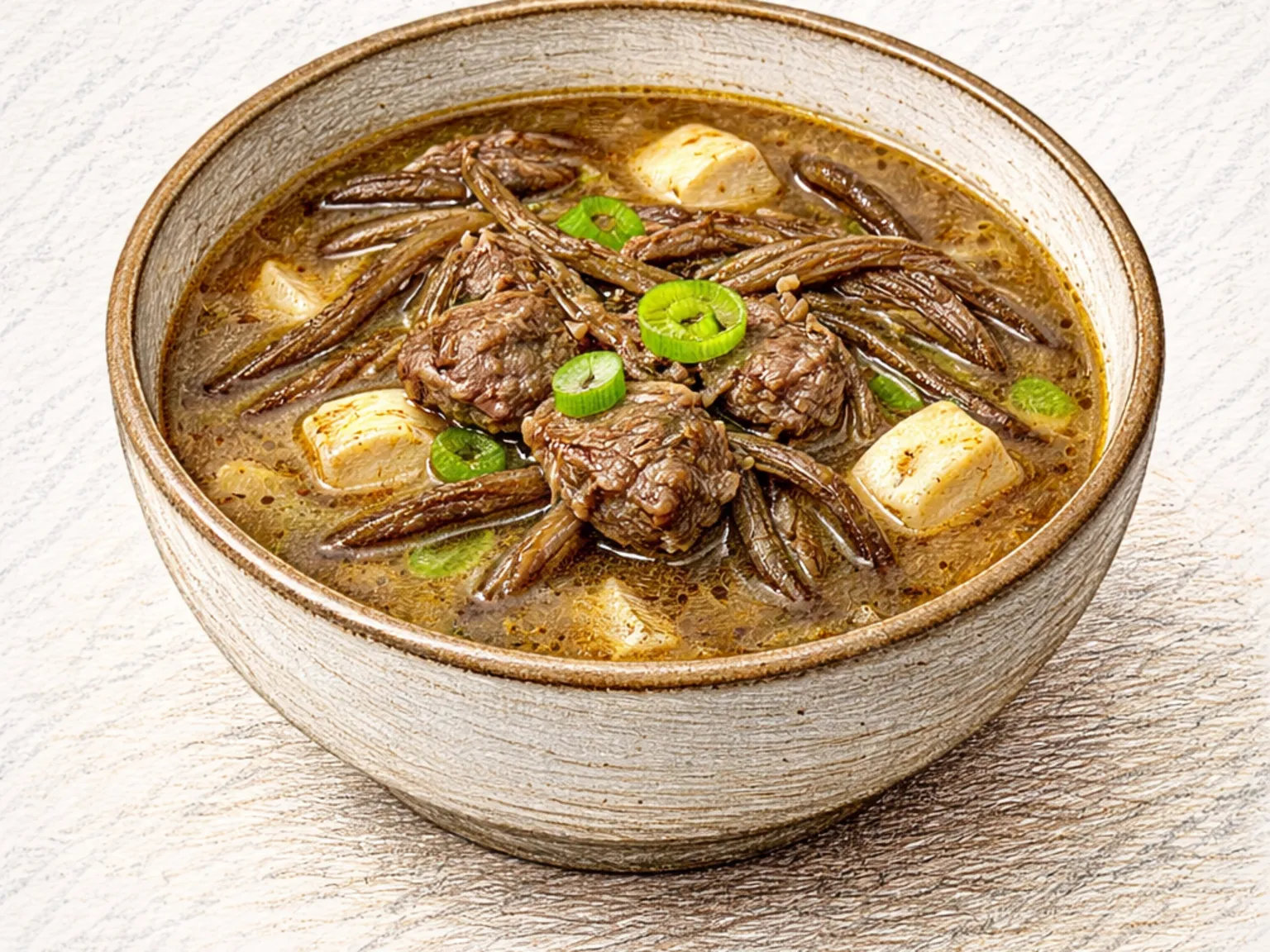
Gosari sogogi-guk is a hearty Korean soup made by first stir-frying rehydrated bracken fern with beef in sesame oil, then adding water and dissolving doenjang into the broth to simmer. The bracken - dried mountain fern that must be soaked overnight until fully pliable - keeps a distinctive chewy resilience even after long soaking and simmering, setting it apart from the softer vegetables found in most doenjang soups. This chewiness is a defining quality of the ingredient and one of the main reasons the soup is valued over simpler alternatives. The stir-frying step before liquid is added is what builds the soup's character: as the bracken and beef cook together in sesame oil, their flavors dissolve into the fat and create a layered, savory base that plain boiling in water cannot achieve. Doenjang is introduced midway through rather than at the start to prevent the salt level from becoming too concentrated during the long simmer - its fermented depth and rounded umami wrap around everything in the pot. Garlic and green onion refine the aroma and cut any residual earthiness from the bracken. This soup has deep ties to Korean holidays: bracken is one of the three classic namul vegetables prepared for ancestral rites at Chuseok and Lunar New Year, and it is customary to use leftover soaked bracken from holiday namul preparation in a pot of soup the following day. Cooked bracken also freezes well, so many households keep it on hand year-round. The combination of earthy bracken, soft beef, and fermented broth produces a warmth and depth that feels distinctively rooted in Korean culinary tradition.
Korean Aster Herb Namul (Blanched Mountain Greens Seasoned)
Chwinamul - aster scaber - is among Korea's most prized mountain herbs, foraged from hillsides every spring. Its broad leaves carry a distinctly bitter, herbaceous edge that sets it apart from milder greens. A one-to-two minute blanch in salted boiling water tames rawness while keeping the woodland scent intact. Using perilla oil rather than sesame oil is the key step: sauteing in perilla oil lifts and deepens the herb's wild character in a way sesame cannot replicate. The seasoning is simple - garlic and salt - whether the greens are dressed as a cold namul or briefly stir-fried. A staple of bibimbap and temple cuisine across Korea, dried chwinamul is rehydrated in cold water and cooked the same way through winter, making it a reliable pantry ingredient beyond the spring harvest.
Korean Tofu and Vegetable Stir-Fry
Dubu-yachae-bokkeum is a Korean stir-fry of pan-fried tofu with carrots, onions, and bell peppers in a light soy-based sauce. Before anything else, the tofu has to be pressed to expel excess moisture, then pan-fried on both sides until a firm golden crust develops, which keeps the pieces from breaking apart when they go back into the wok with the vegetables. Because the vegetables cook at different rates, they are added in sequence to preserve each one's texture. The seasoning of soy sauce, sesame oil, minced garlic, and a small amount of sugar sits on the lighter side, letting the natural sweetness and fragrance of the vegetables come through without being masked. Gochugaru or a spoonful of gochujang can be incorporated for a spicier variation. Sesame seeds and a final drizzle of sesame oil finish the dish with a nutty fragrance that ties all the elements together. The combination of plant protein from the tofu and dietary fiber from the vegetables makes it both nutritious and satisfying, and it is commonly packed into Korean lunch boxes.
Serve with this
Korean Sweet Potato Rice (Steamed Grain Bowl with Natural Sweetness)
Cubed sweet potato is placed on top of washed rice and cooked together in a single pot. As the rice steams, the sweet potato's natural sugars seep into the grains, lending a gentle sweetness without any added seasoning, and the orange chunks against white rice create an inviting visual contrast. Cutting the sweet potato to roughly 2 cm ensures it cooks through at the same rate as the rice. A small pinch of salt sharpens the sweetness, and pairing the finished bowl with doenjang soup or kimchi provides a satisfying salty counterpoint. The choice of sweet potato variety matters: milbam-goguma, the chestnut-type, gives a denser and more restrained sweetness, while hobak-goguma, the butternut type, produces a softer, moister result with a more pronounced sugary flavor. Either way, goguma-bap requires minimal technique and is a reliable first recipe for anyone learning to cook Korean rice dishes.
Korean Crab Doenjang Stew
Gejang-jjigae is a Korean stew made by simmering a whole blue crab in an anchovy broth base seasoned with doenjang, the fermented soybean paste. The crab shell and meat release a concentrated seafood stock as they cook, and that liquid merges with the doenjang to create a broth that is simultaneously briny, earthy, and deeply savory. Using anchovy broth as the foundation amplifies the oceanic notes rather than diluting them, so both the doenjang umami and the crab sweetness come through at the same time. Tofu and zucchini absorb the rich cooking liquid throughout the simmering process, becoming flavorful in their own right rather than acting merely as filler. The tofu in particular pulls in the solids that settle from the fermented paste, softening into a silky texture that contrasts with the firmer crab meat. Picking the sweet crab meat out of the shell with chopsticks is one of the characteristic pleasures of eating this stew, and the contrast between the naturally sweet crab flesh and the bold, fermented broth gives each mouthful a satisfying complexity.
Honghap-tang (Korean Mussel Garlic Broth)
Honghap-tang is a Korean mussel soup that proves how much flavor a single shellfish can deliver with almost no help. Shell-on mussels are placed in water with sliced green onion, garlic, and a light dusting of gochugaru, then brought to a boil. As the shells open, they release a briny, faintly sweet liquor that becomes the broth itself, clear in appearance but surprisingly concentrated in taste. The entire process takes about fifteen minutes. Timing matters here: once the shells have opened and the flesh has puffed, the pot comes off the heat immediately or the meat turns rubbery. In Korea, honghap-tang is a standard drinking companion, sipped between shots of soju while the mussel meat is pulled from the shells and dipped in vinegary chojang sauce. The combination of the bold, oceanic broth and the chilled sauce creates a cycle that is hard to stop. Mussels caught during the colder months, when they are fatter and richer, produce the most intensely flavored broth.
Similar recipes
Korean Pineapple Chicken Stir-Fry
Pineapple dak-bokkeum stir-fries bite-sized chicken pieces with fresh pineapple chunks in a sauce of soy sauce, vinegar, and sugar. The chicken is dusted in cornstarch before cooking, which helps the glaze adhere and gives each piece a lightly thickened exterior. Pineapple's sharp acidity cuts through the soy-based sweetness, creating a pronounced sweet-sour cycle with every bite. The short cook time keeps the chicken moist inside while the fruit softens just enough to release its tropical fragrance.
Korean Potato and Sausage Stir-Fry
This Korean side dish features thinly sliced potatoes and bite-sized sausages stir-fried in a sweet and savory sauce. The potatoes are sliced into half-moons and cooked in a hot pan with oil for three minutes until their edges turn translucent. Sausages are then added, and the heat is reduced to medium to cook for two more minutes, allowing the rendered sausage fat to coat the potatoes. The dish is seasoned with a quick blend of soy sauce, ketchup, and sugar. Because the sauce can burn easily, it is crucial to toss the ingredients rapidly for thirty seconds until a glossy glaze forms. Ketchup provides a mild acidity that balances the saltiness of the soy sauce and the sweetness of the sugar. This stir-fry is a popular lunchbox staple that comes together in under ten minutes, making it highly practical for busy mornings.
Korean Beef Doenjang Bibimbap
Chadol doenjang bibimbap stir-fries thinly sliced beef brisket in a doenjang-based sauce, then serves it over rice with seasoned vegetable namul and egg. The fatty brisket and fermented soybean paste together create a savory depth that is fundamentally different from gochujang-based bibimbap -- earthier, less spicy, and more complex in its umami structure. As the bowl is mixed, the doenjang dressing coats each grain of rice and pulls together the flavors of every component into a coherent, intensely savory bite. Namul vegetables provide a crisp contrast that cuts through the richness of the brisket fat. A fried egg placed on top adds a silky layer, and breaking the yolk releases it to act as an additional sauce that binds the bold flavors. Using doenjang instead of gochujang as the primary seasoning is a single substitution that produces an entirely different character of bibimbap -- one that leans into fermented, miso-adjacent depth rather than heat. Garnishing with sesame oil and toasted sesame seeds before mixing ties the whole bowl together.