Korean Beef Bean Sprout Soup
Quick answer
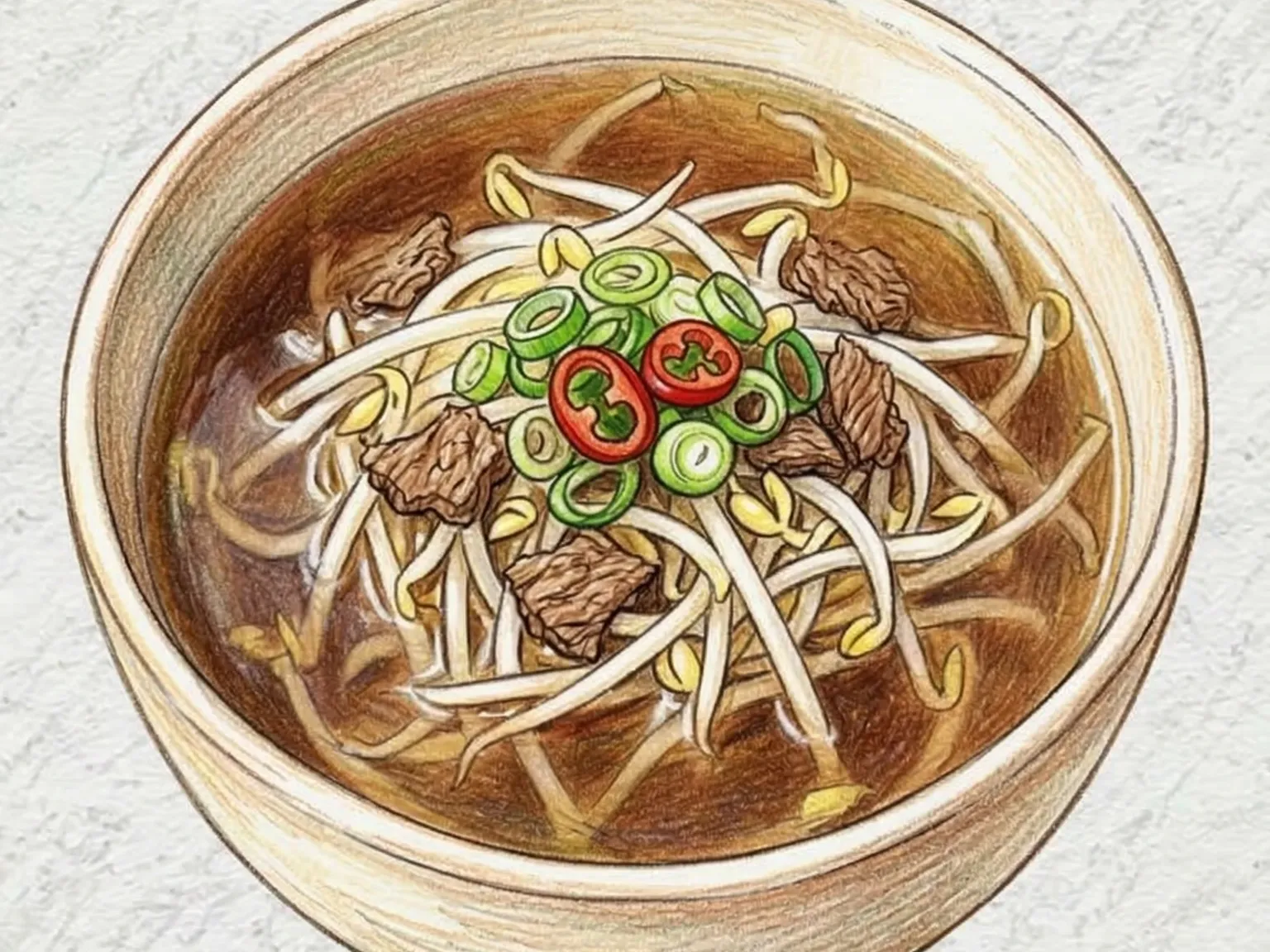
Sogogi sukju-guk is a quick Korean soup where seared beef and crisp mung bean sprouts come together in a clear, invigorating broth.
What makes this special
- Sogogi-sukju-guk contrasts seared brisket with crisp mung bean sprouts in a clear broth.
- Sesame-oil brisket's deep meat aroma contrasts with sprouts' clean grassy notes
- Moisture from bean sprout stems brightens and lightens the broth
Key ingredients
Core cooking flow
- 1 Soak the beef brisket in cold water for 10 minutes to draw out excess blood...
- 2 Warm 1 teaspoon sesame oil in a pot over medium heat.
- 3 Add 1400 ml water and 120 g onion, then bring the pot to a full boil over high heat.
Sogogi sukju-guk is a quick Korean soup where seared beef and crisp mung bean sprouts come together in a clear, invigorating broth. The beef brisket is first stir-fried in sesame oil to render its fat and deepen its flavor, then water is added and brought to a rolling boil. Bean sprouts enter the pot only in the final minutes so they retain their signature crunch - the plump heads snap between the teeth while the slender tails wilt just enough to release moisture that lightens and clarifies the broth. The contrast between the beefy richness and the sprouts' clean, almost grassy freshness keeps the soup feeling bright rather than heavy. Soup soy sauce and a spoonful of minced garlic round out the seasoning without masking the main ingredients. Because bean sprouts lose their texture quickly once overcooked, the soup is best ladled into bowls the moment it is done. Koreans often spoon it over steamed rice for a fast, satisfying meal that feels both nourishing and easy on the stomach.
Instructions
Read the steps as a cooking flow: prep, heat, seasoning, doneness control, and finish.
- 1Season
Soak the beef brisket in cold water for 10 minutes to draw out excess blood, then pat it dry and slice it thinly.
Cut the onion and green onion into manageable pieces so they season the broth evenly.
- 2Control
Warm 1 teaspoon sesame oil in a pot over medium heat.
Add 300 g sliced beef and stir-fry for about 2 minutes, just until the surface changes color and the nutty aroma rises without letting the sesame oil scorch.
- 3Control
Add 1400 ml water and 120 g onion, then bring the pot to a full boil over high heat.
Lower to medium heat and simmer for 15 minutes, skimming foam as it rises to keep the broth clear.
- 4Heat
Rinse 300 g bean sprouts and drain well, then add them with 1 tablespoon minced garlic.
Once the broth returns to a boil, cook for only about 5 minutes so the sprout heads stay crisp and do not develop a harsh flavor.
- 5Control
Add the 2 tablespoons soup soy sauce in two portions, tasting after the first addition for better salt control.
Adjust with 1/2 teaspoon salt as needed, then add 50 g green onion and simmer 2 more minutes.
- 6Finish
Turn off the heat when the sprout stems look slightly translucent but the heads still feel firm.
Let the soup rest for only 3 minutes, then serve right away so the sprouts do not soften and the broth stays bright.
After the steps
Pick a recipe that fits this dish.
Continue with shared ingredients, meal pairings, or a similar method.
Recipes That Go Well With This
More Soups →Based on shared ingredients and meal pairing
Korean Beef Brisket & Bean Sprout Chili Stew
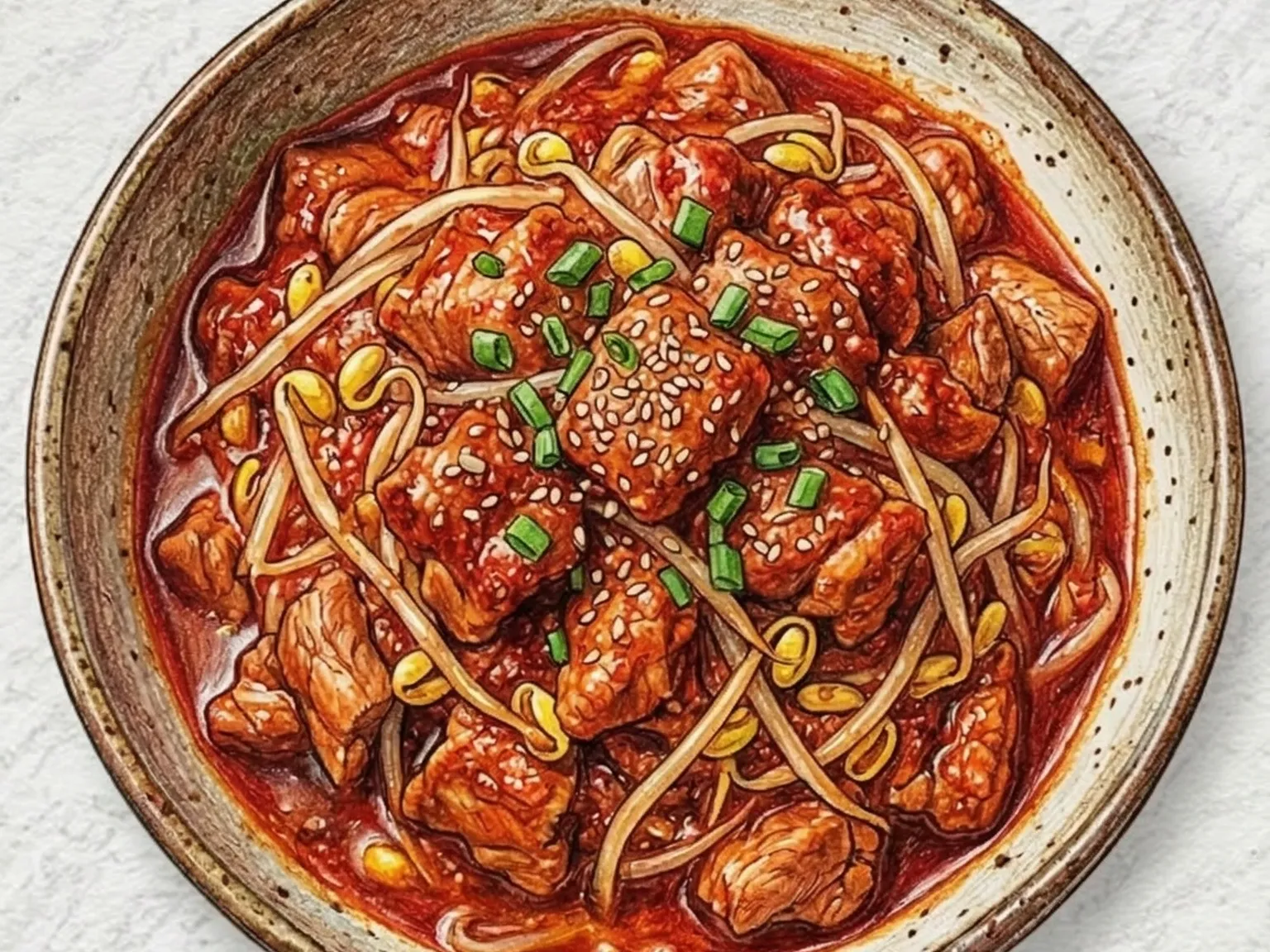
This spicy Korean stew combines thin slices of beef brisket and mung bean sprouts with Cheongyang chilies. The cooking begins by stir-frying the brisket with minced garlic to render the fat, followed by chili flakes and soup soy sauce to build a rich seasoning base. Simmering this mixture in anchovy stock along with onion and tofu creates a deep, savory broth. Mung bean sprouts and Cheongyang chilies are added during the final two minutes of cooking, preserving the crisp texture of the sprouts and keeping the heat clean and sharp. Finishing with green onions adds a subtle aroma. The richness of the beef fat balances the direct spice from the chilies, making it a satisfying choice when a meal needs a hot, spicy stew.
Korean Burdock Root Soup (Earthy Burdock and Beef Clear Broth)
Ueong-guk is a clear Korean soup that highlights the earthy, almost nutty character of burdock root. Julienned burdock is first stir-fried in sesame oil with thinly sliced beef until the root's raw edge mellows and a toasted aroma rises from the pan. Water is then added and the pot brought to a simmer, during which the burdock's tough fibers gradually soften while maintaining enough structure to provide a pleasant chew. The broth takes on a light brown tint from the initial stir-fry, carrying the sesame and caramelized burdock flavors through to the last spoonful. Soup soy sauce seasons the liquid with umami rather than straight salt, and minced garlic stirred in near the end adds a quiet warmth. Burdock is naturally high in dietary fiber, giving this soup a reputation as a digestive-friendly choice. The root is at its best from autumn through winter, when its sugars concentrate underground, and the soup's understated flavor makes it an easy complement to a multi-dish Korean meal.
Korean Kimchi Acorn Jelly Rice Bowl
Acorn jelly (dotorimuk) is sliced into strips, placed over rice, and drenched in a chilled broth made from kimchi juice, cold water, and a touch of sugar. The jelly's slippery, bouncy texture contrasts with the crunch of chopped kimchi, while the tangy broth refreshes the palate with every spoonful. A light toss of sesame oil on the rice provides a nutty base, and roasted seaweed flakes add an ocean-like finish. Adding ice cubes makes it even more bracing, a distinctly Korean way to beat summer heat with a cold, brothy rice bowl. If the kimchi is too tart, a small addition of sugar rounds the flavor into balance.
Korean Bean Sprout Kimchi Soup
The preparation of this traditional Korean soup follows a two-part process designed to build layers of flavor by stacking different ingredients over time. The foundation begins with aged kimchi and a substantial amount of the fermented liquid from the kimchi jar. These ingredients are combined with anchovy stock and allowed to simmer together for a duration of eight minutes. This initial cooking period is essential for the broth to fully absorb the acidic depth of the fermented vegetables. As the mixture simmers, the liquid transforms into a deep shade of brick red, signaling that the base has reached the correct concentration for the next set of ingredients. After the initial simmering period is complete, bean sprouts are introduced to the pot along with gochugaru, minced garlic, and soup soy sauce. It is important to leave the lid off the pot for the remaining five minutes of the cooking process. Leaving the soup uncovered during this specific stage facilitates the removal of the raw scent that can sometimes be associated with fresh bean sprouts. Furthermore, this method prevents the liquid from being diluted by trapped steam, which allows the various flavors to concentrate and sharpen rather than becoming softened. In the final minute of preparation, sliced green onion is incorporated into the broth. This addition provides a fresh herbal element that lifts the profile of the soup and balances the heavier fermented notes of the kimchi base. If the kimchi used in the recipe is not sufficiently fermented, the resulting broth may lack the necessary sharpness. In such cases, adding half a teaspoon of vinegar can enhance the acidity to the desired level without changing the fundamental character of the broth. The combination of the deep flavors from the kimchi and the natural crispness of the bean sprouts results in a liquid that is both warming and restoring. Because of these properties, this dish has a long history as a reliable remedy for hangovers in Korea, and it remains a common staple for families to consume during the cold weather seasons.
Serve with this
Korean Stir-fried Zucchini
Hobak-bokkeum is one of the quickest and most fundamental banchan in the Korean home-cooking repertoire. Thinly sliced Korean zucchini, known as aehobak, is salted for five minutes to draw out moisture before cooking. Skipping this step floods the pan during stir-frying and produces a steamed rather than properly stir-fried result. Seasoning with saeujeot, fermented salted shrimp paste, instead of plain salt brings a deeper marine umami that cannot be replicated by sodium alone, and the high salinity of the paste means additional salt is rarely needed. High heat and a short cooking time allow the surface of each slice to lightly caramelize, building a toasty, nutty aroma while the interior cooks through without turning watery or soft. Garlic goes into the oil first to bloom its fragrance before the zucchini follows, layering flavor from the base. Green onion added in the final seconds of cooking preserves its aromatic edge rather than wilting away. A drizzle of sesame oil and a scatter of toasted sesame seeds at the end produces a clean, simply flavored side dish with a lasting nutty finish. When aehobak is already in the refrigerator, the whole dish can be on the table within five minutes.
Korean Pickled Green Onion
Daepa jangajji is a quick Korean pickle made by cutting large green onions into five-centimeter lengths and submerging them in a cooled brine of soy sauce, vinegar, and sugar with garlic and dried chili. Using primarily the white portions yields a firmer, crisper result, and the brine must be cooled thoroughly before pouring to prevent the onions from wilting prematurely. The soy and vinegar together pull back the raw sharpness of the green onion while leaving its aromatic depth intact. Two days of refrigeration allow the seasoning to penetrate evenly throughout each piece. The result is a sharp, savory condiment that cuts through the fat of grilled pork belly or other rich meats, and its simple ingredient list makes it one of the most practical quick-pickles to keep on hand.
Korean Seaweed Oyster Pancake
Miyeok oyster jeon is a Korean seaweed and oyster pancake that offers a savory taste of the ocean. The cooking begins by rinsing fresh oysters in light salted water and draining them, while soaked seaweed is squeezed firmly to remove moisture before being cut. The pancake batter is prepared by mixing Korean pancake mix, cold water, an egg, minced garlic, and soup soy sauce. The seaweed, oysters, and minced red chili are gently folded into the batter. Ladles of the mixture are pan-fried in oil over medium-low heat for three minutes on each side, ensuring the oysters stay submerged in the batter to cook. The finished pancake features a crisp exterior with a soft, chewy seaweed interior, and juicy oysters that release their briny flavor with every bite.
Similar recipes
Korean Beef & Water Parsley Soup
Minari-soegogi-guk is a clear beef soup that relies on a slow-simmered brisket broth for depth and finishes with a handful of water dropwort for aromatic brightness. The brisket cooks low and long until the stock turns golden and rich with dissolved collagen and beef fat, creating a full-bodied foundation. Radish simmers alongside the meat, contributing a quiet sweetness that rounds out the beefy intensity. When the broth is ready, water dropwort - stems and leaves - is added just before serving so it wilts only slightly, keeping its signature fragrance alive. Green onion and garlic provide the aromatic backbone, while seasoning stays lean: salt or soup soy sauce, nothing more. The boiled brisket is typically sliced thin and returned to the bowl, or pulled aside and served with a soy-vinegar dipping sauce. During spring, when water dropwort is young and fragrant, this soup reaches its peak expression. It is a dish that demonstrates how Korean cooking often pairs a slow, patient stock with a single bright ingredient added at the last moment to transform the entire bowl.
Korean Beef Radish Soup (Sesame Oil Braised Beef and Daikon)
Sogogi muguk is one of the most frequently cooked soups in Korean households, built from just two main ingredients: beef and daikon radish. Thin-cut beef is stir-fried in sesame oil until lightly browned, then thick radish slices go into the pot before water is added. As the soup comes to a boil and then settles into a steady simmer, the radish transforms: its initial sharpness mellows into a clean sweetness that balances the beef's depth, and its starch clouds the broth just enough to give it body. Soup soy sauce provides the seasoning, tinting the liquid a pale amber while pushing umami forward over saltiness. Minced garlic added near the end lends a quiet heat that sits behind the main flavors rather than competing with them. The radish, when properly cooked, should yield easily to a spoon yet still hold a hint of structure at its center. This soup also serves as the foundational broth for tteokguk on Lunar New Year, and Koreans reach for it instinctively when the weather turns cold or the body needs warming.
Korean Napa Cabbage Anchovy Stew
Baechu myeolchi jjigae is a homestyle Korean stew that relies on dried anchovy stock as its flavor base, with napa cabbage as the central vegetable. Large dried anchovies and kelp are simmered together for ten minutes to build a stock with pronounced umami, then strained so the broth is clear and clean. Baby napa cabbage cut into long vertical strips releases the natural sweetness of its pale inner stems into the broth as it cooks, providing a counterpoint to the saltiness of the anchovy stock. Thick-cut tofu slabs are placed between the cabbage layers, and thinly sliced onion adds another source of sweetness to the liquid. Diagonally cut cheongyang chili introduces a direct, sharp heat that gives life to what would otherwise be an entirely mild broth. Fifteen to twenty minutes of simmering is sufficient for the cabbage to soften fully and for its sugars to fully dissolve into the stock, creating the natural sweetness that defines this stew. No gochujang, no doenjang, no complicated sauce: the stew demonstrates a principle central to Korean home cooking, which holds that a well-constructed stock and a single honest vegetable can generate depth and satisfaction without further layering.