Korean Pine Needle Tea (Resinous Jujube Ginger Brew)
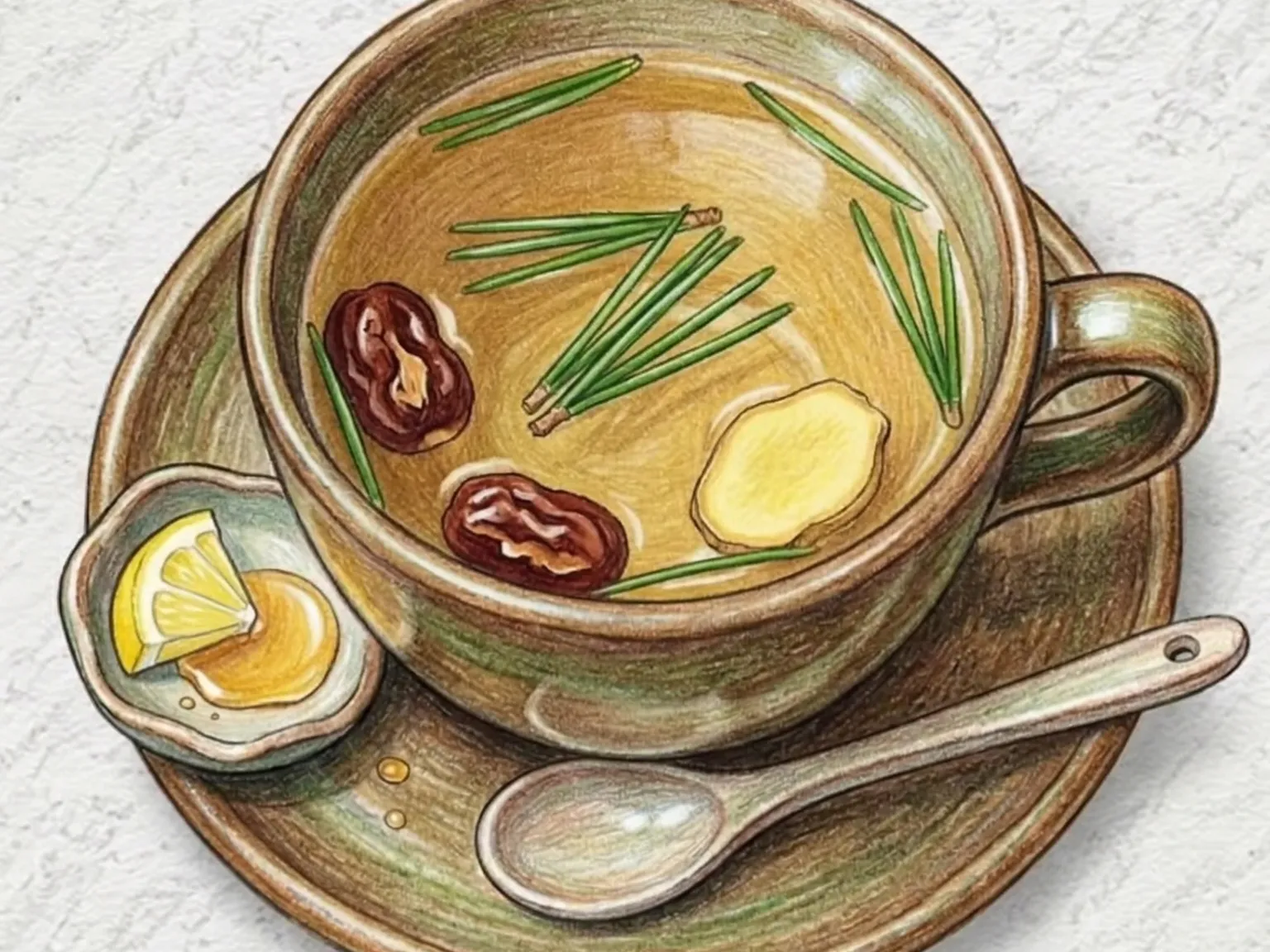
Solnip-cha is a Korean pine needle tea made by simmering young, cleaned pine needles with jujubes and sliced ginger in water, first at medium heat and then on low for 15 minutes to release the needles' fresh, resinous fragrance. The needles are washed two to three times under running water to remove dust and resin residue, then cut into 5-centimeter lengths to increase the surface area for infusion. The jujubes are halved and seeded so their sweetness dissolves readily, and the ginger adds a warm undertone that tempers the pine's sharpness. After straining, honey and a small amount of lemon juice are stirred in off the heat, creating a tea where the clean evergreen aroma, floral sweetness, and gentle acidity come together in balance.
Adjust Servings
Instructions
- 1
Rinse pine needles 2-3 times under running water and cut into 5 cm lengths.
- 2
Halve the jujubes and remove seeds, then thinly slice the ginger.
- 3
Combine water, pine needles, jujubes, and ginger in a pot and bring to a boil over medium heat.
- 4
Lower to low heat and steep for 15 more minutes once boiling starts.
- 5
Turn off heat, strain for clarity, then stir in honey and lemon juice.
- 6
Serve warm immediately, or chill in the fridge and serve cold.
As an Amazon Associate, we may earn from qualifying purchases.
Tips
Nutrition (per serving)
More Recipes

Korean Heotgae Tea (Oriental Raisin Tree Hangover Herbal Brew)
Heotgae-cha is a traditional Korean herbal tea made by simmering dried oriental raisin tree fruit with jujubes, ginger, and a cinnamon stick over low heat for thirty-five minutes. The dried heotgae fruit, small and knobby in appearance, releases a deep, earthy sweetness the longer it cooks. Ginger adds a sharp warmth, cinnamon contributes aromatic sweetness, and jujubes layer in a mellow fruit note, giving the tea a complex, multi-layered profile. Honey is stirred in at the end to adjust sweetness, and the tea has been traditionally consumed in Korea as a morning-after drink following alcohol.

Korean Ginger Tea (Spiced Jujube Honey Ginger Brew)
Saenggangcha is a Korean ginger tea made by simmering thinly sliced fresh ginger and halved, pitted jujubes in water for 15 minutes on medium heat followed by 5 minutes on low to extract both the sharp warmth of ginger and the quiet fruitiness of the jujubes. Slicing the ginger thin maximizes the surface area exposed to water, accelerating the release of gingerol, the compound responsible for the tea's characteristic peppery bite. Honey is dissolved only after the pot is removed from the heat, preserving its floral aroma intact on top of the ginger's lingering warmth. A small measure of ground cinnamon deepens the spice profile, and lemon slices floated on the surface add a citrus brightness that offsets the body of the tea.

Korean Ginseng Tea (Fresh Ginseng Jujube Herbal Brew)
Insam-cha is a traditional Korean ginseng tea made by thinly slicing fresh ginseng (susam) and simmering it with jujubes and ginger over low heat for twenty minutes. Fresh ginseng is milder and less bitter than dried ginseng, but slicing it thin is essential for the active compounds to infuse efficiently, releasing the root's characteristic earthy, herbal aroma during cooking. Jujubes naturally soften the ginseng's bitterness, and ginger introduces a sharp warmth that gives the tea its backbone. Honey balances the flavor, and a few pine nuts floated on the surface add an oily richness that complements the herbal notes.

Korean Cornelian Cherry Tea
Sansuyu-cha is a traditional Korean tea made by simmering dried cornelian cherry fruits with halved jujubes and sliced ginger in water, first bringing it to a boil over medium heat, then reducing to low for 15 minutes. The cornelian cherries contribute a bright, fruity tartness, the jujubes soften it with mellow sweetness, and the ginger threads a warm spiciness through the entire brew. Keeping the total simmer time at or under 20 minutes is important because the berries release astringent tannins if overcooked, and the tea is strained through a fine sieve once done. Honey is stirred in off the heat to wrap around the acidity without masking it, and pine nuts floated on top add a nutty finish that ties the tart, sweet, and spicy notes together.

Korean Milk Rice Porridge
Tarakjuk is a traditional Korean milk rice porridge made by coarsely blending soaked rice, simmering it in water first, then gradually stirring in milk over medium-low heat. The milk is added in two or three portions over 10 minutes of constant stirring to prevent curdling and achieve a velvety consistency. Seasoning with a small amount of salt and sugar ties together the toasty grain flavor and the mild dairy sweetness, and an additional three minutes of simmering brings the porridge to a thickness that flows slowly off a spoon. Pine nuts on top provide a rich, oily nuttiness, and a pinch of ground cinnamon adds a warm spiced note that rounds out the bowl.

Baesuk (Korean Poached Pear Punch)
Baesuk is a traditional Korean punch made by slowly simmering whole or large-cut Korean pear with ginger, whole black peppercorns, and dried jujubes. As the pear cooks over low heat, its juice gradually dissolves into the liquid, building a natural sweetness that forms the drink's backbone. Ginger contributes a warm, peppery sharpness that interlocks with the pear's sweetness, producing a flavor that is comforting yet clean. Whole peppercorns are used sparingly; they provide a subtle spice aroma in the background rather than actual heat. Jujubes add a faint reddish tint and a mild fruity undertone to the liquid. Honey is stirred in after the heat is turned off and the temperature has dropped slightly, preserving its fragrance; because the pear already contributes significant sweetness, the honey amount should start small and be adjusted by taste. Overnight refrigeration allows the ginger and pear flavors to meld more fully, rounding out the drink. Pine nuts floated on the surface before serving add a subtle oily richness to the finish of each sip.