Korean Crispy Fried Sundae
Quick answer
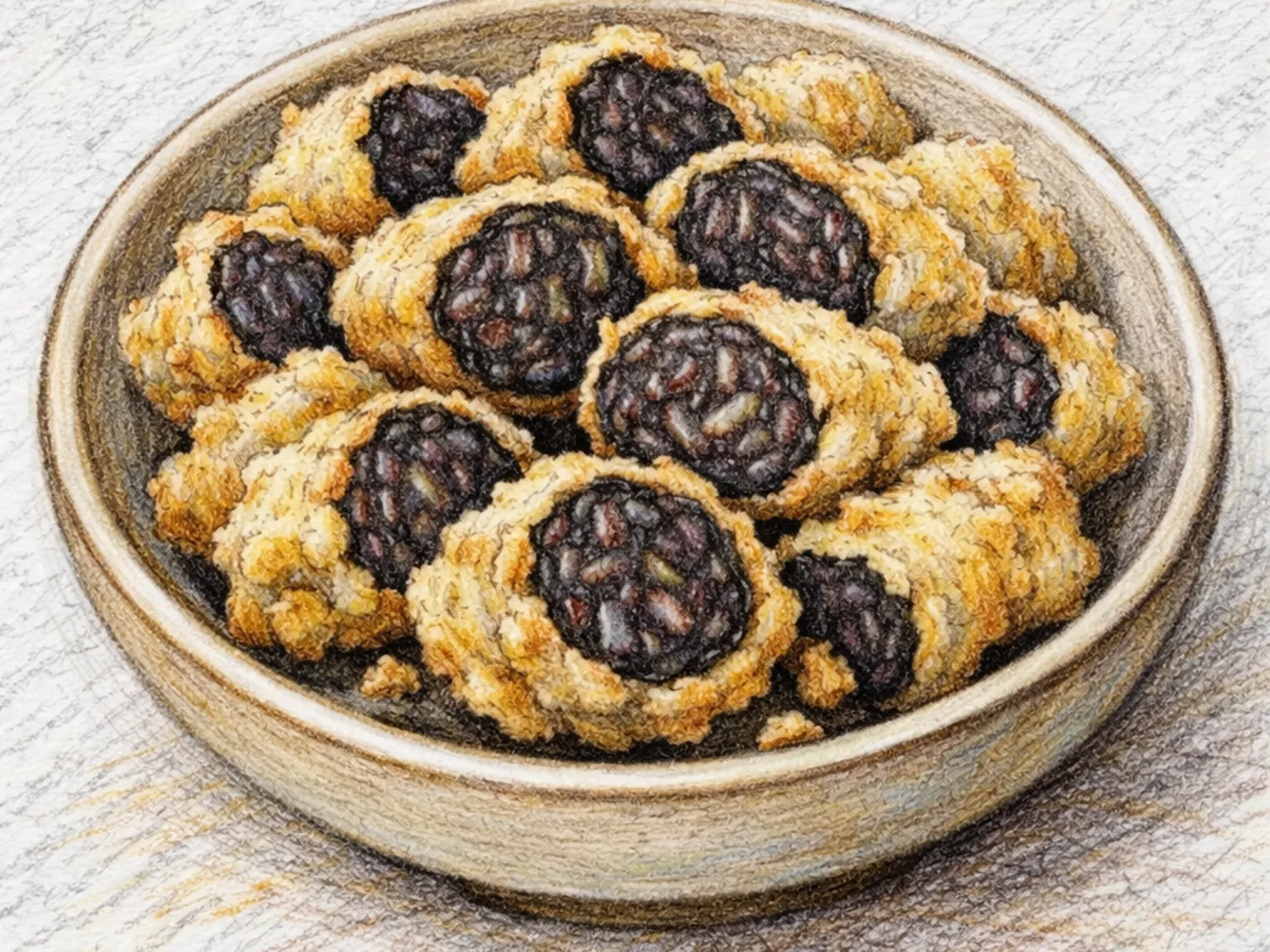
Soondae-twigim is deep-fried Korean blood sausage, sliced thick and coated in a batter of frying mix blended with potato starch for extra crunch.
What makes this special
- Sliced soondae coated in potato starch batter and double-fried results in a glass-crisp crust.
- Potato starch in the batter creates a glass-crisp crust when fried
- Double-frying keeps soondae moist inside while crust stays shatteringly crisp
Key ingredients
Core cooking flow
- 1 Slice 300 g soondae into 1.5 cm rounds.
- 2 In a bowl, combine 120 g frying mix, 2 tablespoons potato starch, and 1/4 teaspoon salt.
- 3 Pour 700 ml frying oil into a deep pan and heat it to 170C.
Soondae-twigim is deep-fried Korean blood sausage, sliced thick and coated in a batter of frying mix blended with potato starch for extra crunch. A double-frying method is used: the first round at 170 degrees Celsius cooks the inside through, followed by a brief second fry at 185 degrees that hardens the crust to a shattering crispness while the interior stays chewy and moist. Patting the sundae surface dry before battering is essential so the coating adheres evenly and does not peel off in the oil. A light dusting of chili powder and a side of mustard add heat and a sharp tang that cuts through the richness.
Instructions
Read the steps as a cooking flow: prep, heat, seasoning, doneness control, and finish.
- 1Prep
Slice 300 g soondae into 1.5 cm rounds.
Press paper towels over the cut sides and outer surface until dry, so the batter can grip evenly and will not slide off in the oil.
- 2Season
In a bowl, combine 120 g frying mix, 2 tablespoons potato starch, and 1/4 teaspoon salt.
Add 150 ml cold water and stir just until thick, stopping before the batter becomes gluey.
- 3Heat
Pour 700 ml frying oil into a deep pan and heat it to 170C.
Coat each soondae slice right before frying, then let excess batter drip off so the crust stays thin and even.
- 4Heat
Fry the battered slices in small batches for 3 minutes.
Leave them untouched for the first 30 seconds so the coating sets, then turn gently when the outside firms and turns lightly golden.
- 5Heat
Lift the soondae out and rest it for 1 minute to release steam from the crust.
Raise the oil to 185C and fry again for 1 minute 30 seconds, until bubbling slows.
- 6Finish
Drain the fried soondae briefly, then dust it evenly with 1/2 teaspoon chili powder while hot.
Serve at once with 1 tablespoon mustard, before the crust softens from trapped steam.
After the steps
Pick a recipe that fits this dish.
Continue with shared ingredients, meal pairings, or a similar method.
Recipes That Go Well With This
More Street food →Based on shared ingredients and meal pairing
Korean Crispy Fried Chicken Skin
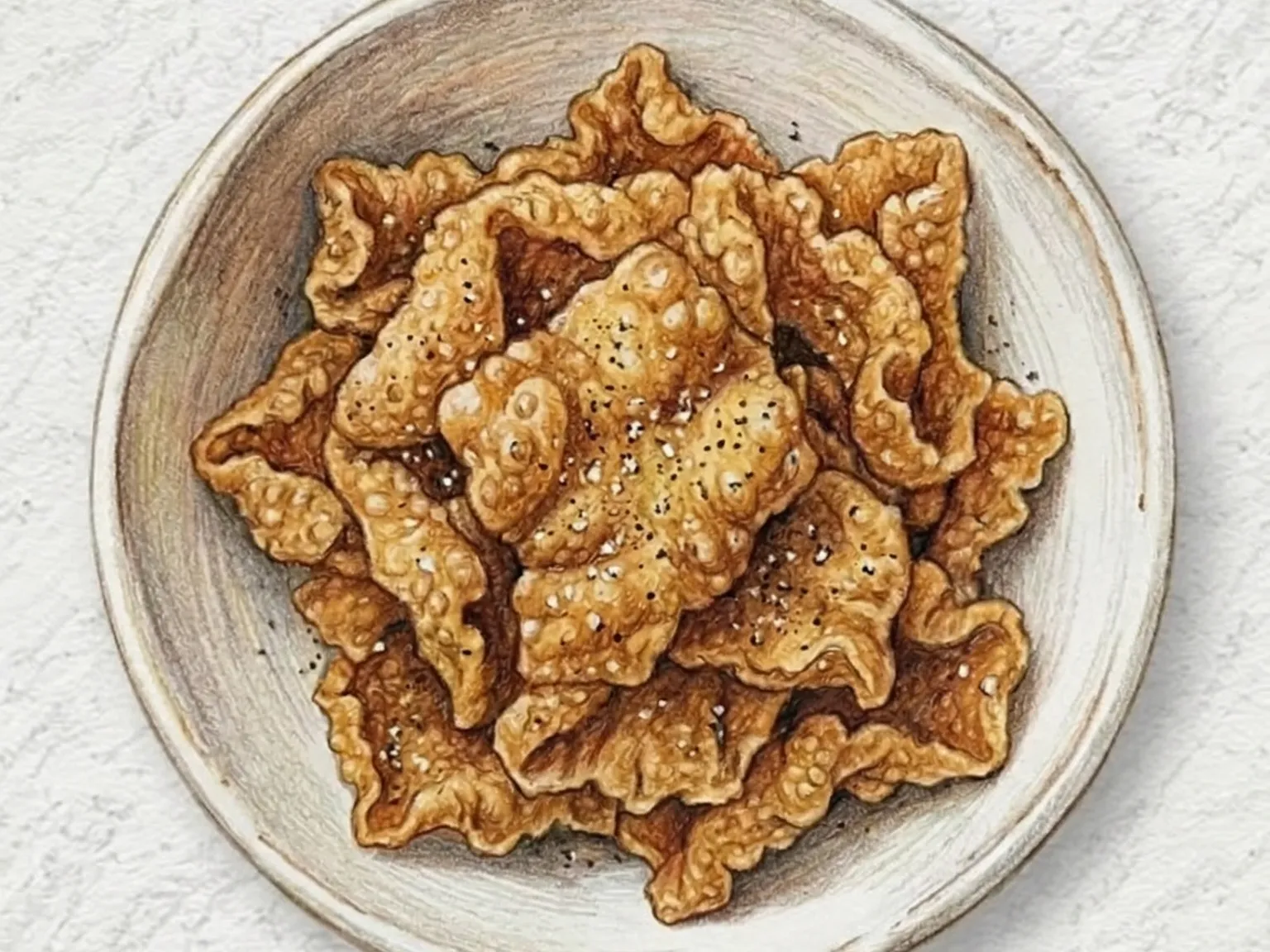
Dak-kkopjil-twigim starts with chicken skin seasoned with salt and black pepper, coated in starch, and fried twice in hot oil. The first fry drives out moisture from the skin, and the second at higher temperature traps air inside, puffing the surface into a cracker-like texture with visible bubbles locked throughout. The rendered fat from the skin produces a deep, concentrated savoriness that salt alone can bring to full expression. Black pepper and garlic powder sprinkled over the top cut through the richness and keep each piece from feeling heavy. Straightforward to prepare and endlessly snackable, this is a dependable bar food and everyday appetizer in Korean households.
Korean Fried Squid
Cleaned squid is cut into 1 cm rings, dipped in a light batter of frying mix, cold water, and egg, then deep-fried at 170 degrees Celsius for three to four minutes until golden and crisp. Cold water is essential for the batter -- warm water activates the gluten in the flour and produces a thick, doughy coating instead of the thin, shatter-crisp shell this dish depends on. The batter should be mixed just enough to combine, leaving a few lumps intact, because those uneven patches fry up with irregular texture that adds to the crunch. Scoring the squid rings lightly with a knife or pounding them briefly helps them stay flat and allows the batter to adhere without sliding off. Frying in small batches matters, since crowding the pan drops the oil temperature and causes the rings to absorb fat rather than fry. The defining quality of this dish is the contrast between the springy, chewy squid and the airy, crisp coating that surrounds it, a contrast that only exists in the first few minutes after frying. Served with a pinch of salt or a soy-vinegar dipping sauce, these rings are a fixture at street food stalls and snack shops across Korea.
Korean Dalgona Coffee (Whipped Instant Coffee Foam Milk)
Dalgona coffee is made by whipping equal parts instant coffee, sugar, and hot water with a hand mixer for three to five minutes until stiff, caramel-colored peaks form, then spooning the foam over iced milk. The whipped layer carries a concentrated, bittersweet coffee flavor that gradually blends into the cold, neutral milk below as you stir. A light dusting of cocoa powder on top introduces a faint chocolate note, and increasing the sugar slightly helps the whipped cream hold its stiff structure longer.
Korean Sausage Skewers
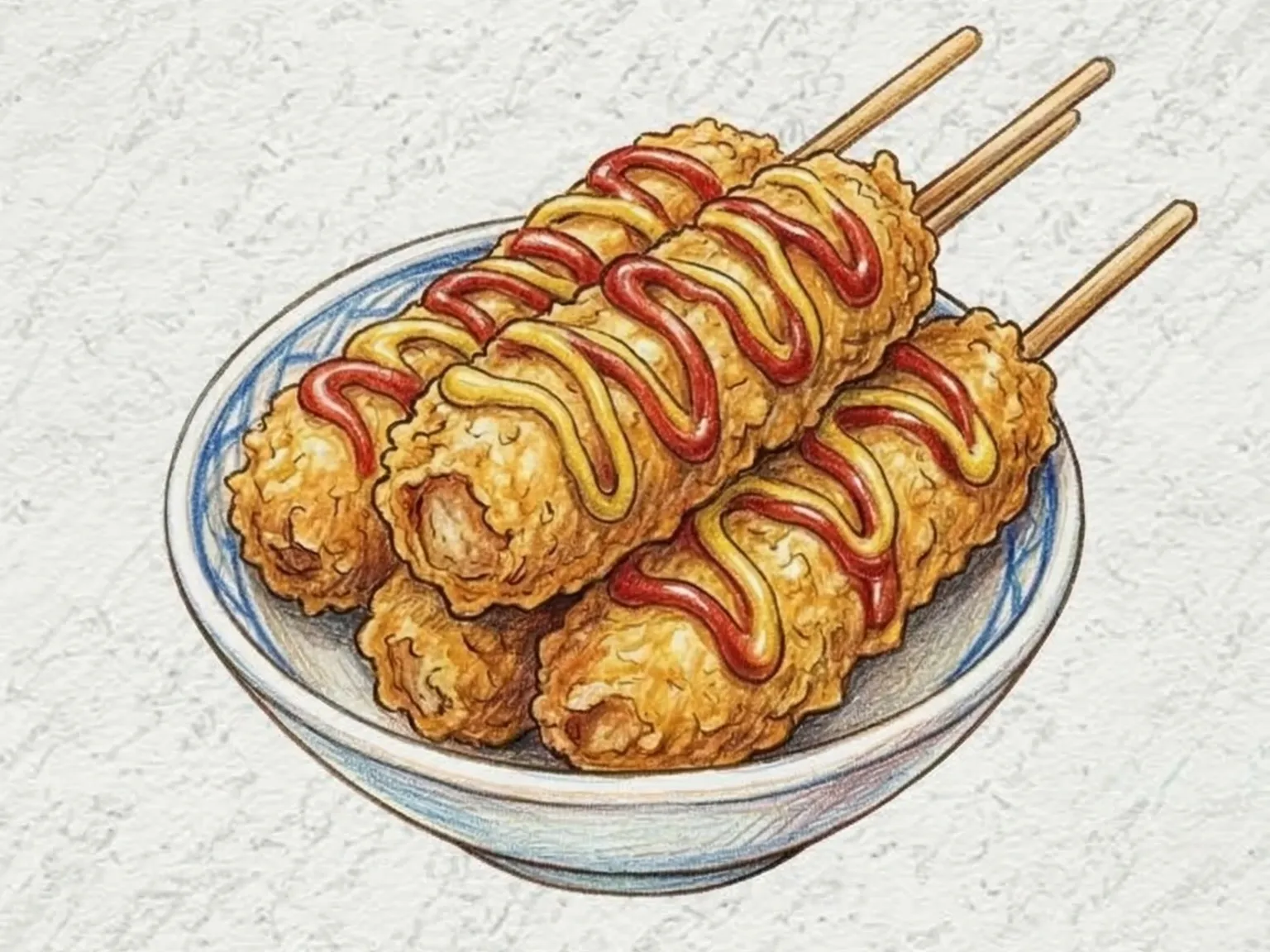
Sosiji kkochi are Korean sausage skewers made by scoring Vienna sausages deeply along their length and threading two or three onto wooden sticks, then pan-frying them until golden brown all over. The score marks serve a functional purpose: as the sausages heat, the cuts open up, allowing heat to penetrate to the center more evenly and creating edges that caramelize slightly and turn crisp. A thin film of oil in a medium-heat pan and steady rotation ensures even color across the entire surface, producing a skin that snaps on the outside while the inside stays juicy and springy. Ketchup and mustard are the classic accompaniments, with the tomato sweetness and the sharp, pungent bite of the mustard complementing the salt and fat of the sausage. Threading rice cakes between the sausage pieces transforms the skewer into a sotteok-sotteok style, a widely popular Korean street food variation. The dish comes together in under fifteen minutes and requires no special equipment beyond a pan and wooden skewers, making it a practical choice for a quick snack, a children's side dish, or a lunchbox item that holds up well at room temperature.
Serve with this
Candied Sweet Potato
Goguma mattang is a Korean candied sweet potato snack made by cutting peeled sweet potatoes into large chunks and deep-frying them at 170 degrees Celsius until the interior turns floury and soft. A syrup of sugar, corn syrup, water, and a measured splash of soy sauce is cooked separately until large, foamy bubbles form - the visual cue for adding the fried sweet potatoes. Everything must be coated within thirty seconds to lock in a thin, glass-like caramel shell that crisps and turns translucent as it cools. The soy sauce shifts the flavor from purely sweet to a rounded, slightly savory depth. Pre-draining surface moisture from the cut sweet potatoes reduces oil splatter during frying and helps the syrup grip the pieces evenly. Black sesame seeds are scattered over the finished pieces for a toasted, nutty note, and each piece is spread individually on parchment paper while still warm so they cool without sticking together.
Korean Stir-Fried Dried Napa Cabbage Leaves
Dried outer leaves of napa cabbage, known as ugeoji, are rehydrated, boiled, and stir-fried with doenjang and ground perilla seeds to create a deeply savory banchan. These tough outer leaves, too coarse to eat fresh, develop a satisfying chewy texture once dried and reconstituted, offering a bite that ordinary cabbage cannot match. Doenjang introduces its fermented umami during the stir-fry, layering complexity onto the cabbage's otherwise neutral flavor. Ground perilla seeds dissolve into the residual moisture, forming a creamy, pale coating that enriches every strand with a nutty warmth. A small amount of anchovy and kelp stock added mid-cook creates just enough liquid for the seasonings to soak into the fibrous leaves before evaporating. Perilla oil used as the cooking fat establishes a fragrant base from the first moment the pan heats, and minced garlic stirred in partway through adds a sharp accent that cuts through the richness. The finished dish pairs naturally with a bowl of steamed rice and a hot soup.
Korean Spicy Whelk Bibim Guksu
Golbaengi bibim-guksu is a cold mixed noodle dish built around chewy canned whelk tossed in a spicy-tangy sauce, widely enjoyed as a drinking snack in Korea. Gochujang and gochugaru set the heat level, while vinegar and sugar counter with a sharp sweetness, and sesame oil rounds everything out with a nutty finish. Julienned cucumber and onion contribute a crisp crunch that contrasts with the springy whelk and the slippery noodles. The somyeon must be rinsed immediately in ice water after boiling to lock in their firm, bouncy texture before mixing with the sauce. Adding a small splash of the whelk canning liquid into the sauce deepens the umami base, and rinsing the whelk itself under cold water controls the salinity.
Similar recipes
Korean Stir-fried Sundae (Sundae Bokkeum)
Sundae-bokkeum is a spicy Korean stir-fry of blood sausage with cabbage, onion, and green onion in a sauce made from gochujang, gochugaru, soy sauce, sugar, and garlic. High heat and a short cooking time are essential because prolonged stir-frying causes the sundae casing to burst and the filling to toughen, while the cabbage and onion release just enough moisture as they wilt to help the sauce coat every piece evenly. The seasoning stacks direct heat from gochujang, a gentler radiant warmth from gochugaru flakes, and sweetness from sugar into a multidimensional spicy-sweet profile. Green onion is held until the very last moment so its fragrance survives the heat; added earlier, the aroma disappears before the dish reaches the table. Adding tteokbokki rice cakes transforms the dish into the popular combo known as tteoksuni, and a layer of melted cheese on top rounds out the spice.
Korean Stir-fried Sundae with Vegetables
Sundae yachae bokkeum stir-fries Korean blood sausage with cabbage, onion, and scallion in a sauce of gochujang, soy sauce, and gochugaru. The vegetables go into the pan first to drive off excess water so the sauce clings better, while the sundae is added later to keep its casing intact and its filling dense and chewy. The combined seasoning creates a spicy-salty glaze that coats the sundae slices evenly. Compared to sundae-gopchang-bokkeum, this version skips the tripe and leans heavier on vegetables, making it a lighter take on the same street food flavor.
Korean Stir-fried Sundae and Tripe
Sundae-gopchang-bokkeum is a bunsik-style stir-fry combining blanched beef tripe and Korean blood sausage (sundae) with cabbage, onion, and scallion in a gochujang-gochugaru sauce. The tripe is seared first for a lightly charred exterior, then the spicy sauce is built in the pan before vegetables are added. Sundae goes in last and cooks briefly to prevent the casing from splitting. Each component brings a distinct texture - springy tripe, dense chewy sundae, and sweet crunchy cabbage - unified by the bold, spicy coating.