Sopa de Ajo (Spanish Roasted Garlic and Bread Soup)
Quick answer
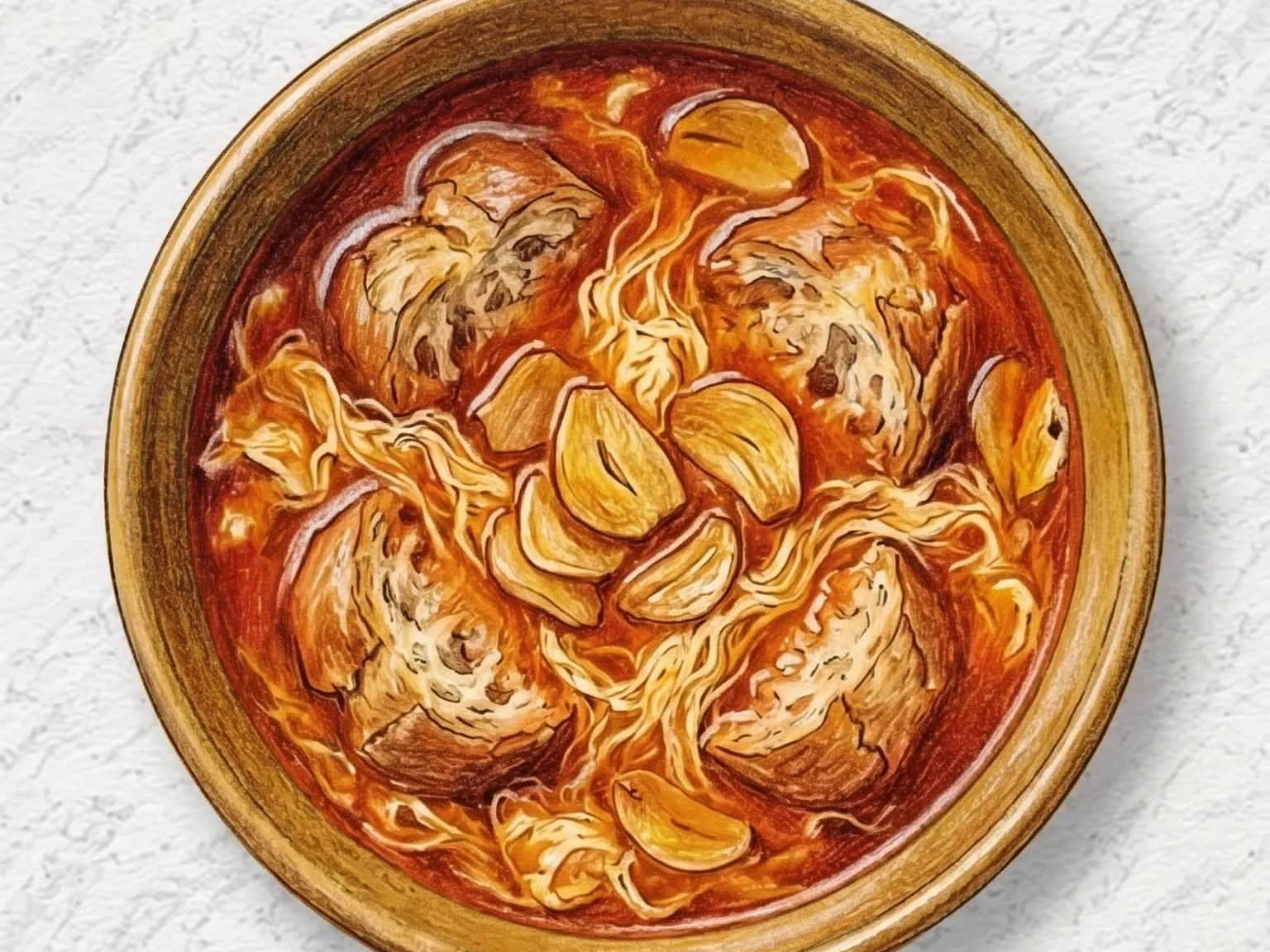
Sopa de ajo is a traditional Spanish garlic soup that begins with the process of gently cooking thinly sliced garlic cloves in olive oil.
What makes this special
- Garlic fried to pale gold gives sweetness; day-old baguette thickens the broth as it simmers in chicken stock.
- Garlic slowly fried to golden color yields sweetness without any bitterness
- Day-old baguette naturally thickens the broth over 10 minutes of simmering
Key ingredients
Core cooking flow
- 1 Slice 8 garlic cloves thinly so they cook evenly, and tear 120 g day-old baguette into bite-size pieces.
- 2 Warm 2 tbsp olive oil in a pot over low heat, then add the sliced garlic.
- 3 Add the baguette pieces and 1 tsp smoked paprika, then stir for only about 1 minute.
Sopa de ajo is a traditional Spanish garlic soup that begins with the process of gently cooking thinly sliced garlic cloves in olive oil. This specific step requires a low heat setting to ensure the garlic becomes fragrant and reaches a pale gold color without being scorched. If the garlic pieces are allowed to burn, they will introduce a distinct bitterness that can negatively affect the final flavor of the broth. After the garlic has been properly cooked, torn pieces of baguette that are at least one day old are added to the pot along with smoked paprika. These ingredients are toasted briefly in the garlic-infused oil so the bread can absorb the fat and develop a light crust on its exterior surface. Chicken stock is then poured into the cooking vessel to create the liquid base for the dish. The mixture is left to simmer for approximately ten minutes. During this period of simmering, the bread pieces soften and partially dissolve into the liquid, which serves to thicken the soup while still allowing some of the original bread texture to remain. Once the soup is sufficiently hot, beaten eggs are poured into the pot in a thin and continuous ribbon. As the eggs come into contact with the hot liquid, they set into delicate strands that contribute both protein and additional physical body to the soup. The inclusion of smoked paprika provides the broth with a warm reddish color and a subtle charred flavor profile. This specific smoky note is intended to complement the mellow sweetness that develops from the slow-cooked garlic slices over the course of the preparation.
Instructions
Read the steps as a cooking flow: prep, heat, seasoning, doneness control, and finish.
- 1Season
Slice 8 garlic cloves thinly so they cook evenly, and tear 120 g day-old baguette into bite-size pieces.
Beat 2 eggs in a small bowl, then measure the stock, paprika, and salt before heating the pot.
- 2Control
Warm 2 tbsp olive oil in a pot over low heat, then add the sliced garlic.
Cook for about 3 minutes, stirring often, until it smells sweet and turns pale gold, but lower the heat if the edges brown quickly.
- 3Step
Add the baguette pieces and 1 tsp smoked paprika, then stir for only about 1 minute.
Let the bread absorb the garlic oil and take on a light crust, while keeping the paprika from scorching.
- 4Control
Pour in 700 ml chicken stock and scrape the bottom of the pot to release the toasted flavor.
Once it starts bubbling, reduce to low heat and simmer for about 10 minutes so the bread softens and thickens the broth.
- 5Heat
Keep the soup hot but not violently boiling, then pour in the beaten eggs in a thin stream.
Stir slowly with chopsticks or a spoon so the eggs set into delicate strands instead of large clumps.
- 6Finish
Season with 0.75 tsp salt, taste the broth, and turn off the heat before the bread fully disappears.
Serve while hot, when the soup is lightly thickened and the garlic flavor tastes mellow rather than sharp.
After the steps
Pick a recipe that fits this dish.
Continue with shared ingredients, meal pairings, or a similar method.
Recipes That Go Well With This
More Western →Based on shared ingredients and meal pairing
Gambas al Ajillo (Garlic Shrimp)
Gambas al ajillo cooks peeled shrimp in a generous pool of olive oil infused with thinly sliced garlic and dried red chili over low heat, a method that turns the oil itself into the flavor foundation of the dish. The garlic must be coaxed slowly to release its sweetness into the oil without crossing into bitterness - the moment it turns golden, the shrimp go in and cook for two to three minutes until pink and just cooked through. A seasoning of salt, black pepper, and a scatter of chopped parsley finishes the pan. The dried chili adds a gentle warmth that sharpens both the garlic-scented oil and the natural sweetness of the shrimp, while the olive oil absorbs and carries all these flavors together. Sliced baguette served alongside is not optional - it exists to soak up the deeply flavored oil, and mopping the pan completely clean is the traditional way to end the dish. Keeping the heat consistently low throughout is the one non-negotiable rule: high heat burns the garlic in seconds and toughens the shrimp.
Croquetas de Jamon (Crispy Ham Béchamel Bites)
Croquetas de jamon begin with a roux of butter and flour cooked together for two minutes, followed by milk added in stages while whisking continuously to build a thick, smooth bechamel. Finely chopped jamon serrano is folded into the sauce along with seasoning, and the mixture is spread into a shallow dish and refrigerated until firm enough to shape without collapsing. Thorough chilling is the most critical step because soft filling cannot hold its oval form during breading and frying. Each croqueta is coated in beaten egg and rolled in fine breadcrumbs, then coated a second time to reduce the risk of splitting in hot oil. Fried at medium heat until deeply golden on all sides, the exterior shatters crisply while the interior releases a stream of hot, creamy, ham-laced bechamel. The salt and smoke of the jamon permeate the filling completely, making every bite rich and savory. These croquetas are one of the most beloved items in Spanish tapas culture, typically served two or three to a plate alongside a cold drink.
Spanish Orange Cod Salad (Spanish Salt Cod Salad)
Remojon is a traditional spring festival salad from Andalusia in southern Spain, built around salt cod that has been soaked in cold water for at least twenty-four hours to draw out the preserved brine before the fish is shredded along the grain into chewy, light flakes. Thick-cut orange segments provide a burst of sweet, juicy acidity that stands in direct contrast to the residual saltiness of the fish, creating the tension at the center of the dish. Thinly sliced red onion and whole black olives add layers of pungent sharpness and deep brininess that widen the overall flavor profile without competing with each other. Good-quality extra virgin olive oil draws every element together into a cohesive whole, coating each piece with a smooth, fruity richness. A measured splash of white wine vinegar tightens the entire salad and gives it a clean definition, while flat-leaf parsley scattered over the top provides a final note of fresh, green fragrance. The salad is well suited to being served tapas-style alongside wine or dry sherry, and because all the components can be prepared in advance, it assembles quickly at the table and makes a composed, elegant starter for guests.
Ajo Blanco (Chilled Spanish Almond and Garlic Soup)
Ajo blanco predates the red tomato gazpacho that most people associate with Spanish cold soup - it is a Moorish-era recipe from Andalusia that was already established long before tomatoes arrived from the Americas in the 16th century. Raw blanched almonds, garlic, stale bread soaked in water, olive oil, and sherry vinegar are blended into a velvety white emulsion that is served thoroughly ice-cold. The almonds supply the soup's body and a subtle sweetness, while a single clove of raw garlic provides a quiet but persistent pungency that builds slowly as you work through the bowl. The bread serves as both thickener and emulsifier, binding the oil and water into a stable cream with no dairy involved. Traditional garnishes are peeled green grapes or sliced almonds - the green grapes add a burst of cold sweetness and acidity that plays directly against the savory almond base. Ajo blanco is a summer dish specific to Malaga province, where temperatures push well past 40 degrees Celsius and hot food loses all appeal. That it achieves this level of complexity without tomatoes or dairy is what sets it apart from more widely known cold soups.
Serve with this
Gochugaru Anchovy Broccolini Orecchiette
Gochugaru anchovy broccolini orecchiette uses anchovy fillets dissolved in olive oil as the flavor foundation. The fillets go into the pan with garlic over low heat and are stirred continuously until they break apart and disappear into the oil, leaving behind deep salinity without any trace of fishiness. Korean red pepper flakes are added next and fried in the anchovy oil for twenty seconds so their aromatic compounds are released into the fat without scorching. The tomato sauce goes in immediately after and simmers for three minutes to cut its raw acidity against the rich oil base. Broccolini is blanched directly in the pasta cooking water during the final two minutes of boiling, which saves a separate pot and keeps the florets just crisp with a slightly bitter edge intact. Breadcrumbs toasted separately in a dry pan until golden are scattered over the plated pasta for crunch, since orecchiette's small ear shape traps sauce inside but offers a soft bite throughout. A squeeze of lemon juice is added off the heat to cut through the oil and brighten the plate. Parmesan shaved over the top adds a final layer of sharp saltiness.
Misugaru Grain Ice Cream
Misugaru Grain Ice Cream is a frozen dessert made by blending roasted multi-grain powder with milk and heavy cream. The misugaru is whisked into milk to dissolve any lumps before honey, condensed milk, and a pinch of salt are added to establish a sweet, nutty base. Separately, heavy cream is whipped to soft peaks and gently folded into the mixture using J-shaped strokes to maintain aeration. The mixture is placed in a shallow container to freeze. To achieve a smooth texture, the surface is scraped with a fork every hour for three hours, breaking up ice crystals. Using black bean grain powder provides a richer taste, and topping the ice cream with chopped nuts adds a crunchy contrast to the creamy texture.
Korean Chestnut Latte
Bam latte is a Korean autumn drink made by blending boiled chestnuts into a smooth paste and warming it with milk. The chestnuts are pureed with water until the mixture is completely smooth, then combined with milk and heated gently on the stovetop over low heat. Maple syrup introduces a caramel sweetness over the mild, starchy flavor of the chestnuts. Ground cinnamon adds warmth, and a small amount of vanilla extract gives the overall aroma more depth. Blending the chestnuts longer yields a silkier drink; leaving some texture produces a thicker, more porridge-like consistency. The full preparation takes about twenty minutes, making it a practical homemade version of the seasonal chestnut lattes that appear in Korean cafes each autumn.
Similar recipes
Gazpacho
The secret to an authentic gazpacho lies in the interaction between stale bread and fresh garden vegetables. While tomatoes, cucumbers, and red bell peppers form the base, the addition of water-soaked bread creates a thick, velvety consistency that distinguishes this Andalusian specialty from a simple puree. Blending these ingredients with red onion, garlic, extra virgin olive oil, and red wine vinegar produces a smooth texture where the oil emulsifies the vegetable juices and the vinegar sharpens the natural sugars of the tomatoes. Patience is required after the blending is complete; the soup must rest in the refrigerator for at least two hours to allow the flavors to settle and integrate, a process that does not occur effectively at room temperature. Serving requires a final touch of drizzled olive oil and a handful of finely diced vegetables to create a crisp contrast against the liquid base. For the most refined results, passing the mixture through a fine-mesh sieve ensures a silky finish. Using fully ripened summer tomatoes provides the ideal acidity levels, and storing the leftovers in the fridge for a day or two often leads to a more developed profile.
Basque Burnt Cheesecake
Basque burnt cheesecake originates from La Vina bar in San Sebastian, Spain, and is defined by a deliberately scorched top and an intentionally underset center. Cream cheese, sugar, eggs, heavy cream, and a small amount of flour are blended smooth, poured into a parchment-lined pan, and baked at above 220 degrees Celsius until the surface reaches a deep, near-black caramelization. That blackened layer contributes a pronounced bittersweet edge that cuts through the richness underneath. The interior remains loose and custardy - closer in texture to a very dense panna cotta than to a conventional baked cheesecake. Served at room temperature, the contrast between the firm, caramelized shell and the barely-set, creamy core is at its sharpest and most satisfying.
Churros
Churros are fried dough sticks made from a simple paste of water, flour, salt, and sometimes a touch of sugar. The dough is piped through a star-shaped tip, which creates ridges along the length. These ridges increase the surface area exposed to hot oil, producing maximum crunch across every inch while the interior stays soft and pillowy. Straight from the fryer, they are rolled in cinnamon sugar, which clings to the warm, oily surface and creates a sweet, spiced crust. The traditional pairing is thick Spanish hot chocolate -- closer to a warm ganache than a drink -- into which the churros are dipped. The bitterness of the chocolate and the sweetness of the cinnamon sugar play off each other, and the contrast between the crisp dough and the dense liquid makes each dip satisfying. Churros wait for no one: they are at their best within ten minutes of frying, after which the crispness fades as residual oil migrates inward.