Korean Stir-fried Sausage

Korean Stir-fried Sausage

Quick answer

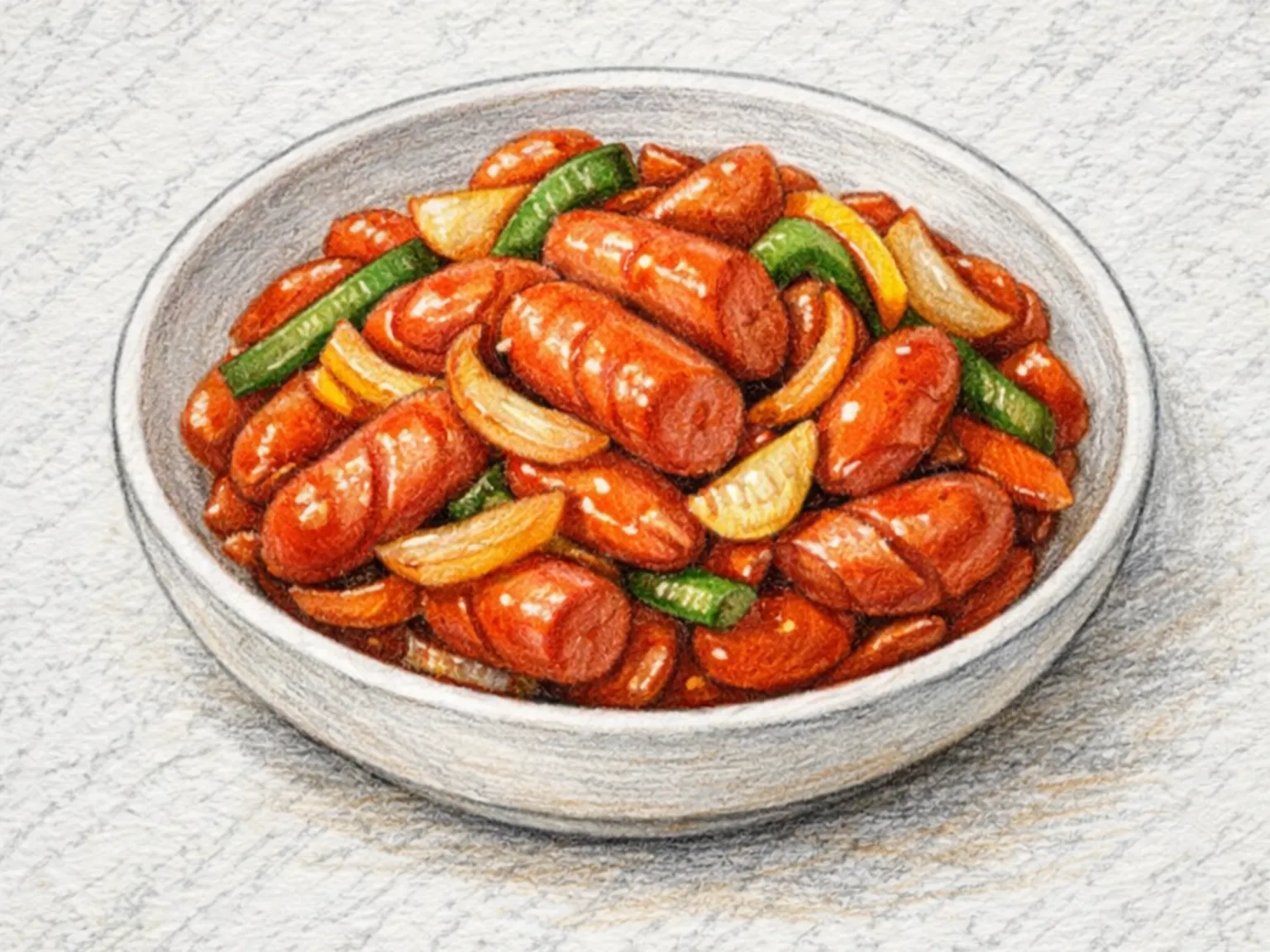
Sosegi-bokkeum is a Korean sausage stir-fry where scored Vienna sausages are dry-fried until golden, then tossed with onion in a sauce of ketchup, gochujang, oligosacchar...

What makes this special

  • Sosegi-bokkeum tosses scored Vienna sausages in a sweet-spicy ketchup and gochujang glaze for a classic side.
  • Scoring the sausages before stir-frying lets the sauce penetrate without the skin bursting
  • Balanced ketchup, soy sauce, and sugar creates a sweet-savory glossy sauce
Total time
15 min
Level
Easy
Servings
2 servings
Ingredients
9
Calories
310 kcal
Protein
12 g

Key ingredients

Vienna sausagesOnionGreen onionKetchupGochujang

Core cooking flow

  1. 1 Pat 200 g Vienna sausages dry, then score them shallowly so the sauce can cl...
  2. 2 Mix 2 tablespoons ketchup, 0.5 tablespoon gochujang, 1 tablespoon oligosacch...
  3. 3 Heat a dry pan over medium heat, add the sausages, and roll them around for about 2 minutes.

Sosegi-bokkeum is a Korean sausage stir-fry where scored Vienna sausages are dry-fried until golden, then tossed with onion in a sauce of ketchup, gochujang, oligosaccharide syrup, and soy sauce. Scoring the sausages lets the sweet-spicy glaze seep into every cut, so the flavor is consistent from edge to center. The sauce caramelizes quickly -- just two minutes of tossing coats the sausages in a glossy, clingy layer. Finished with sesame seeds and sliced green onion, it is a staple banchan that packs well in lunchboxes.

Prep 5min Cook 10min 2 servings

Instructions

Read the steps as a cooking flow: prep, heat, seasoning, doneness control, and finish.

6 steps
  1. 1
    Finish

    Pat 200 g Vienna sausages dry, then score them shallowly so the sauce can cling without splitting them apart.

    Cut the half onion into thick slices and slice the green onion for finishing.

  2. 2
    Season

    Mix 2 tablespoons ketchup, 0.5 tablespoon gochujang, 1 tablespoon oligosaccharide syrup, 0.5 tablespoon soy sauce, and 0.5 teaspoon minced garlic until smooth. Break up any gochujang lumps before the pan gets hot.

  3. 3
    Control

    Heat a dry pan over medium heat, add the sausages, and roll them around for about 2 minutes.

    Stop when the cuts open slightly and the outside turns lightly golden, not dark brown.

  4. 4
    Control

    Add the onion and stir-fry over medium heat for 1 more minute.

    Cook only until the edges start to look translucent so the onion keeps a little bite and does not water down the sauce.

  5. 5
    Season

    Lower the heat to medium-low, pour in the sauce, and toss quickly for 2 minutes.

    As the glaze thickens, keep turning the sausages so the ketchup and syrup caramelize without sticking or burning.

  6. 6
    Finish

    Turn off the heat and sprinkle with green onion and 0.5 teaspoon sesame seeds.

    Check that the sausages look glossy and that sauce has reached the scored cuts, then serve warm or pack after cooling slightly.

After the steps

Pick a recipe that fits this dish.

Continue with shared ingredients, meal pairings, or a similar method.

Recipes That Go Well With This

More Stir-fry →

Based on shared ingredients and meal pairing

Korean Gochujang Fish Cake Stir-fry
Shared ingredient: onion Stir-fry

Korean Gochujang Fish Cake Stir-fry

Gochujang eomuk bokkeum stir-fries chewy fish cake sheets in a glossy sauce of gochujang, soy sauce, oligosaccharide syrup, and minced garlic. Briefly blanching the fish cakes before they go into the pan removes excess grease, producing a cleaner-tasting dish where the spicy-sweet glaze clings evenly to each surface without any slipperiness. Onion lends natural sweetness that rounds out the chili heat, while diagonally sliced green onion adds a fresh, sharp finish. Sesame oil and toasted sesame seeds complete the dish with a nutty layer. Adding a small splash of water to the sauce keeps things moist if a softer finish is preferred. This is one of Korea's most reliable everyday banchan, equally suited to a weekday dinner and a packed lunchbox.

Korean Spicy Braised Tofu
Shared ingredient: onion Stir-fry

Korean Spicy Braised Tofu

Spicy dubu-jorim pan-sears firm tofu slabs cut 1.5 centimeters thick until golden on both sides, then braises them in a sauce of soy sauce, gochugaru, garlic, and sugar. Searing first firms the tofu so it holds its shape through the eight-minute simmer, during which onion and green onion cook alongside in the reducing liquid. The chili flakes deliver a direct, persistent heat that penetrates the tofu as the sauce thickens, balanced by the sugar's sweetness. A final circle of sesame oil ties the flavors together with a roasted, nutty aroma.

Korean Sweet Spicy Pollock Floss Stir-fry
Serve together Side dishes

Korean Sweet Spicy Pollock Floss Stir-fry

Myeongyeopchae-bokkeum stir-fries finely shredded dried pollock floss in gochujang and oligosaccharide syrup until each fiber strand is evenly coated and moist. Myeongyeopchae is thinner and softer-fibered than hwangtaechae, the wider dried pollock strips, arriving in a dense cotton-like bundle that must be loosened strand by strand before cooking. Running your fingers along the grain separates the fibers cleanly, allowing the seasoning to penetrate evenly and preventing the finished banchan from clumping together in the mouth. A dry toast of thirty seconds in an oil-free pan drives off residual moisture and coaxes out a toasted fish aroma before gochujang, gochugaru, oligosaccharide syrup, soy sauce, and minced garlic go in over the lowest heat for a rapid coating. The fine fibers absorb the sauce almost immediately and turn pliant and glistening, but heat held too long draws the moisture back out, leaving them tough and stiff, so the entire stir-fry must be completed within two minutes. A finishing drizzle of sesame oil and a scatter of sesame seeds deepen the nutty aroma. The resulting banchan occupies a middle ground between the chewier, more aggressively seasoned hwangtaechae-muchim and the bolder jinmichae-bokkeum, its mild sweet-spicy profile approachable enough for children. The relatively dry finish means the seasoning does not bleed into adjacent items in a lunchbox, and stored in an airtight container in the refrigerator the flavor holds well for up to five days.

Korean Stir-fried Fish Cake with Vegetables
Similar recipe Stir-fry

Korean Stir-fried Fish Cake with Vegetables

Eomuk-yachae-bokkeum is a Korean stir-fry that brings together fish cake sheets with onion, carrot, and green bell pepper in a soy-based glaze. Square eomuk is cut into bite-sized rectangles without any further preparation, and the vegetables are sliced to roughly matching dimensions so everything cooks through at the same rate. The textural contrast between the chewy fish cake and the crisp-tender vegetables is the defining quality of this dish - both elements are present in each chopstickful, preventing either from becoming monotonous. Soy sauce and oligosaccharide syrup form the base glaze, producing a glossy, lightly sweet and salty coating that clings evenly to each piece. Sesame oil and toasted sesame seeds stirred in at the end add a nutty finish. Adding a sliced cheongyang chili during the stir-fry introduces a sharp heat that prevents the overall flavor from reading as too sweet. The entire dish comes together in under ten minutes from prep to plate, making it a reliable candidate for packed lunches and weeknight tables that need a quick, universally liked side dish.

Serve with this

Korean Kimchi Fried Rice (Kimchi Bokkeumbap)
Rice Easy

Korean Kimchi Fried Rice (Kimchi Bokkeumbap)

Finely chopped aged kimchi is stir-fried together with ground pork until the fermentation tang of the kimchi and the fat rendered from the pork combine into a deep, layered umami base. Kimchi juice is added to the pan along with gochujang and a measured touch of sugar, glazing the rice in a spicy-sweet coating. High heat throughout the stir-fry is what keeps each grain separate and lightly crisp rather than soft and clumped; the pan also needs to be fully heated before the ingredients go in, or the rice will stick. A soft-fried egg placed on top lets the runny yolk temper the heat when it is broken and mixed in, and using well-fermented, deeply soured kimchi noticeably shifts the depth of the flavor. Adding spam or canned tuna are equally common household variations, and the dish adapts readily to whatever is available. A drizzle of sesame oil just before serving lifts a toasty, nutty fragrance over the finished bowl.

🏠 Everyday 🍱 Lunchbox
Prep 10min Cook 10min 2 servings
Korean Kimchi Mandu Jjigae (Kimchi Dumpling Stew)
Stews Easy

Korean Kimchi Mandu Jjigae (Kimchi Dumpling Stew)

Kimchi mandu jjigae drops whole frozen kimchi dumplings straight into a simmering pot of aged kimchi, tofu, and anchovy stock. The dumpling wrappers absorb the broth as they cook, swelling plump and moist, while the kimchi filling inside echoes the stew's tangy base and doubles the fermented depth. Gochugaru and soup soy sauce add a clean chili heat, and firm tofu cubes absorb the spiced broth for a softer textural contrast. Because the dumplings themselves carry seasoning, it is better to start with less sauce and adjust after tasting the broth. This is a filling, no-fuss meal that needs nothing more than a bowl of steamed rice alongside it.

🏠 Everyday ⚡ Quick
Prep 8min Cook 15min 2 servings
Korean Soft Tofu Soup (Mild Clear Broth with Silken Tofu)
Soups Easy

Korean Soft Tofu Soup (Mild Clear Broth with Silken Tofu)

Sundubu-guk is the gentler sibling of the more widely known sundubu-jjigae, trading the latter's fiery red broth for a clear, mild soup that puts silken tofu front and center. The base is a simple anchovy and kelp stock, seasoned with soup soy sauce and nothing more assertive, so the broth stays transparent and clean on the palate. Blocks of unpressed soft tofu are slipped into the simmering liquid and heated just until they are warmed through - overcooked sundubu loses the trembling, custard-like texture that defines the dish. Each spoonful collapses gently on the tongue, releasing a faint, sweet soybean flavor that pairs effortlessly with the umami-rich stock. A small addition of salted shrimp paste can be stirred in at the table to introduce a subtle marine depth without disrupting the soup's calm character. This is the soup Koreans turn to when appetite is low, digestion needs rest, or the body simply craves something warm and uncomplicated. It is equally suitable for young children and elderly diners, and its quiet simplicity is precisely its strength.

🏠 Everyday ⚡ Quick
Prep 5min Cook 15min 4 servings

Similar recipes

Tuna Potato Salad (Japanese Creamy Tuna and Potato Mix)
Salads Easy

Tuna Potato Salad (Japanese Creamy Tuna and Potato Mix)

Tuna potato salad mashes boiled potatoes while still hot, then folds in drained canned tuna, salt-pressed cucumber, carrot, and onion with mayonnaise and whole grain mustard. Mashing the potatoes warm keeps the starch active, which bonds more effectively with the mayonnaise for a creamier result - but over-mashing turns the texture gluey, so leaving some chunks is ideal. Salting the chopped vegetables for five minutes and squeezing out the released moisture is essential to prevent a watery salad. The tuna must also be drained thoroughly in a strainer to keep the flavor clean. Whole grain mustard adds a peppery sharpness that cuts through the richness of the mayonnaise, and a twenty-minute chill in the refrigerator lets all the flavors meld evenly.

🥗 Light & Healthy 🍱 Lunchbox
Prep 18min Cook 20min 4 servings
Korean Soy Braised Quail Eggs
Stir-fry Easy

Korean Soy Braised Quail Eggs

Al-jorim - soy-braised quail eggs - is one of Korea's most universal banchan, appearing in school cafeteria trays, packed office lunchboxes, and home refrigerators as a reliable standby. The dish belongs to the broader Korean jorim tradition of simmering proteins low and slow in a sweetened soy-based liquid until the glaze seeps through to the center. Peeled quail eggs go into a pan with soy sauce, water, sugar, cooking wine, and minced garlic, then simmer over medium-low heat for ten minutes. Turning the eggs occasionally is essential - it ensures the soy stain reaches every surface evenly rather than leaving pale patches. The liquid starts thin and gradually reduces as the eggs cook, concentrating into a sticky, glossy glaze that clings to the surface in the final two to three minutes over higher heat. The outside takes on a deep chestnut brown while the yolk inside stays vivid yellow. A sliced cheongyang chili added near the end introduces a low, slow heat that keeps the sweet-salty profile from becoming monotonous. Sesame oil and toasted sesame seeds scattered over the finished eggs add a nutty note against the soy base. Left overnight in the refrigerator, the seasoning penetrates further and the flavor deepens, making this one of the few banchan that genuinely improves after a day.

🏠 Everyday 🍱 Lunchbox
Prep 10min Cook 15min 2 servings
Korean Gochujang Grilled Anchovies
Grilled Easy

Korean Gochujang Grilled Anchovies

Myeolchi-gochujang-gui is a Korean gochujang-glazed anchovy side dish where medium-sized dried anchovies are first dry-toasted in a pan for one minute to reduce fishiness and drive off moisture, then tossed in a sauce of gochujang, soy sauce, oligosaccharide syrup, cooking wine, and minced garlic. The sauce is simmered briefly over low heat before the anchovies go in, cooking off the alcohol in the wine and thickening the glaze so it clings to each fish. Once the anchovies are added, the tossing should finish within two minutes-longer cooking hardens them rather than keeping them pleasantly chewy. Sesame oil and toasted sesame seeds folded in at the end round out the sweet-spicy-salty profile with a nutty finish.

🍺 Bar Snacks 🍱 Lunchbox
Prep 12min Cook 8min 2 servings

Tips

Scoring sausages helps sauce adhere and makes them look great in lunchboxes.
For kids, skip gochujang and use only ketchup.

Nutrition (per serving)

Calories
310
kcal
Protein
12
g
Carbs
18
g
Fat
22
g