Soto Ayam (Indonesian Golden Turmeric Chicken Noodle Soup)
Asian Medium

Soto Ayam (Indonesian Golden Turmeric Chicken Noodle Soup)

Quick answer

Soto ayam is Indonesia's beloved chicken soup, recognizable by its vivid golden broth colored with turmeric.

What makes this special

  • Soto Ayam highlights an Indonesian chicken noodle soup with a golden turmeric and garlic broth.
  • Garlic, turmeric, and galangal paste sauteed first to build the aromatic base
  • Lemongrass simmered 30 minutes with chicken yields a golden turmeric broth
Total time
60 min
Level
Medium
Servings
4 servings
Ingredients
8
Calories
350 kcal
Protein
30 g

Key ingredients

chicken piecesturmericlemongrassgalangalgarlic

Core cooking flow

  1. 1 Blend 5 garlic cloves, 2 teaspoons turmeric, and 15 g galangal into a fine paste.
  2. 2 Set the pot over medium low heat and fry the paste first.
  3. 3 When the chicken is coated yellow, pour in water and bring it to a boil.

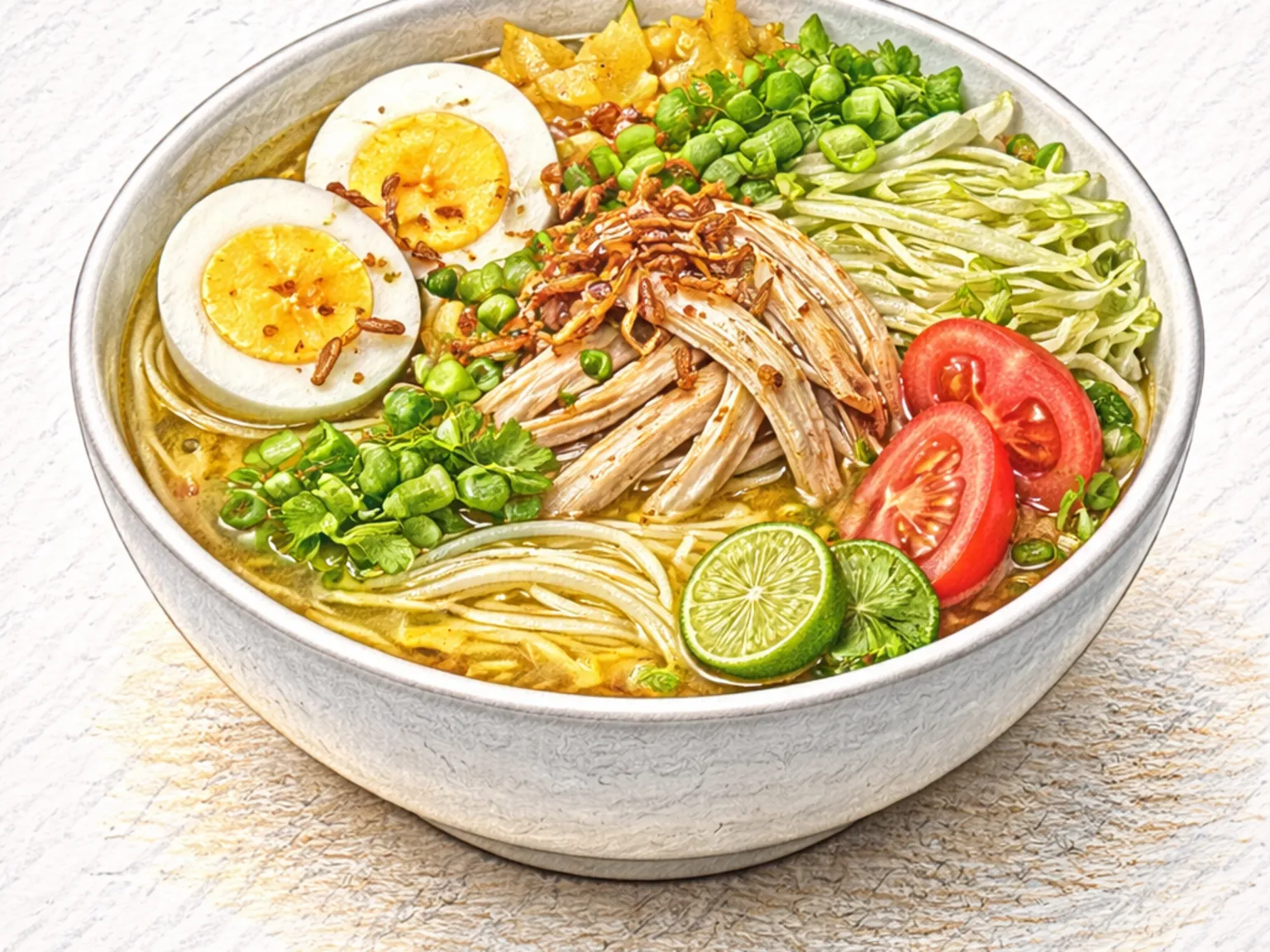
Soto ayam is Indonesia's beloved chicken soup, recognizable by its vivid golden broth colored with turmeric. The flavor base is a paste of garlic, turmeric, and galangal, fried until fragrant and then simmered with chicken pieces and lemongrass stalks for at least thirty minutes to build a deeply aromatic stock. The chicken is removed, shredded by hand, and returned to the bowl along with rice noodles, halved boiled eggs, and a handful of fresh bean sprouts. Each component adds its own texture-the silky noodles, the springy sprouts, the tender chicken-while the broth ties everything together with its warm, earthy spice profile. A squeeze of lime at the table brightens the bowl and lifts the heavier notes of galangal and turmeric. Soto ayam appears at breakfast stalls, family dinners, and celebrations across the Indonesian archipelago.

Prep 20min Cook 40min 4 servings
Recipes by ingredient → garlic egg

Instructions

Read the steps as a cooking flow: prep, heat, seasoning, doneness control, and finish.

6 steps
  1. 1
    Season

    Blend 5 garlic cloves, 2 teaspoons turmeric, and 15 g galangal into a fine paste.

    Keep working it until no large pieces remain, because coarse bits can float separately in the broth instead of seasoning it evenly.

  2. 2
    Control

    Set the pot over medium low heat and fry the paste first.

    When the turmeric smells fragrant and the color deepens, add 500 g chicken pieces and 2 lemongrass stalks, turning the chicken to coat the surface.

  3. 3
    Control

    When the chicken is coated yellow, pour in water and bring it to a boil.

    Once it bubbles, lower to medium low heat and simmer for at least 30 minutes, keeping the broth gently moving, not violently boiling.

  4. 4
    Heat

    Remove the chicken when it is cooked through and let it cool briefly.

    When it is safe to handle, shred it along the grain, discarding bones or any large tough pieces so the soup is easy to eat.

  5. 5
    Heat

    Prepare 200 g rice noodles until soft, and boil 4 eggs before cutting them in half.

    Keep 100 g bean sprouts ready for the bowl at the end, so they stay crisp instead of collapsing in the hot broth.

  6. 6
    Step

    Divide the rice noodles, shredded chicken, eggs, and bean sprouts among bowls.

    Pour over hot broth to warm everything through, then add lime juice just before serving to brighten the turmeric and galangal flavors.

After the steps

Pick a recipe that fits this dish.

Continue with shared ingredients, meal pairings, or a similar method.

Recipes That Go Well With This

More Asian →

Based on shared ingredients and meal pairing

Ayam Gulai (Indonesian Spiced Coconut Chicken Curry)
Shared ingredient: lemongrass Asian

Ayam Gulai (Indonesian Spiced Coconut Chicken Curry)

Traditional Indonesian cuisine from West Sumatra relies heavily on the complex application of spices and coconut milk. Ayam gulai serves as a primary example of this Minangkabau tradition. The process starts by grinding shallots, garlic, ginger, galangal, turmeric, and candlenuts into a wet paste called rempah. This mixture requires continuous stirring over low heat until the oil visibly separates from the solids. This separation indicates that the moisture has completely evaporated, allowing the aromatic compounds to develop fully. Skipping this step results in a sauce with an unpleasant raw texture. Once the base is ready, chicken pieces are braised in the spiced coconut liquid for at least thirty minutes. This duration ensures the meat becomes tender enough to fall off the bone while the sauce reduces to a bright yellow consistency that clings to the poultry. Turmeric and galangal establish an earthy base, while kaffir lime leaves contribute a sharp citrus scent to offset the heavy coconut milk. The natural fats in the coconut serve to carry these different aromatics across the palate, creating a long-lasting aftertaste. In a traditional Padang establishment, servers place numerous small plates on the table before any specific order is made. This service style reflects the local hospitality of the region. Diners are charged only for the dishes they touch, a practice that remains a defining element of the dining experience alongside the technical preparation of the curry itself.

Gado-Gado Salad (Indonesian Peanut Sauce Veggie Plate)
Shared ingredient: bean sprouts Salads

Gado-Gado Salad (Indonesian Peanut Sauce Veggie Plate)

Gado-gado salad is an Indonesian composed dish that brings together blanched cabbage, bean sprouts, boiled potato wedges, pan-seared firm tofu, and halved soft-boiled eggs on a single plate, then finishes them with a thick, glossy peanut sauce. The sauce combines peanut butter, lime juice, and soy sauce into a base that layers nuttiness over a sharp, salty-sour foundation, lifting the mild flavors of every vegetable and the tofu in a single pour. Each vegetable is blanched separately and pulled from the water at a different moment: cabbage stays crisp, while bean sprouts are allowed to soften just slightly, so the finished plate holds distinct textures rather than a uniform mush. The tofu must be pressed or patted completely dry before it goes into the pan; residual moisture prevents proper browning and causes the cubes to crumble when tossed with the sauce. If the peanut sauce thickens as it sits, a tablespoon of warm water at a time is all it takes to bring it back to a pourable, coating consistency that drapes over the vegetables rather than clumping on top.

Thai Soy Sauce Noodles (Wide Rice Noodles with Beef and Chinese Broccoli)
Serve together Noodles

Thai Soy Sauce Noodles (Wide Rice Noodles with Beef and Chinese Broccoli)

Pad see ew is a Thai stir-fried noodle dish built around wide rice noodles, beef, Chinese broccoli, and egg, all tossed in a sauce of soy sauce, oyster sauce, and dark sugar. The central technique is wok hei through extreme heat. Without a properly scorching pan, the sauce pools at the bottom rather than adhering to the noodles, and caramelization never happens. Beef goes into the hot pan first to develop a seared surface before anything else is added. Gai lan and cracked eggs follow, the eggs scrambled loose in the same pan, then the soaked noodles and the pre-mixed sauce go in together and the whole thing is tossed hard and fast. During those few seconds of high contact heat, the sauce binds to the noodle surface and develops a slightly charred, smoky-sweet aroma that is the defining character of the dish. The thick stems of Chinese broccoli keep a satisfying crunch and introduce a mild bitterness that cuts the sweetness of the sauce. Egg fragments distributed throughout the noodles add pockets of soft, creamy texture. The finished noodles are deeply stained, and every strand carries the sauce.

Soto Betawi (Jakarta Creamy Coconut Milk Beef Soup)
Similar recipe Asian

Soto Betawi (Jakarta Creamy Coconut Milk Beef Soup)

Soto Betawi is a Jakarta-born beef soup distinguished by its creamy, coconut-enriched broth and a layered spice profile. The aromatics begin with a paste of onion, garlic, and ginger, bloomed in oil alongside ground coriander and a cinnamon stick to build a warm, complex base. Beef brisket simmers in this fragrant liquid for forty minutes or more until it yields to the touch, its collagen enriching the stock. Coconut milk and fish sauce are stirred in toward the end, transforming the broth into something rich and velvety while rounding off the sharper spice edges. The finished soup is neither thin nor heavy-it sits in a satisfying middle ground, substantial enough to serve as a main course with steamed rice or crusty bread on the side. Soto Betawi is a point of pride for Jakarta's Betawi community and a fixture of the city's street-food landscape.

Serve with this

Korean Sea Squirt Mixed Rice
Rice Medium

Korean Sea Squirt Mixed Rice

Fresh sea squirt is tossed with vinegared gochujang and sesame oil over warm rice for a bold seafood bibimbap. The sea squirt carries an intense, distinctive ocean flavor that fills the palate, tempered by the tangy sweetness of the sauce. Julienned cucumber and torn lettuce provide crisp contrast, while roasted seaweed flakes and sesame seeds add a nutty undertone. Mixing should happen right before eating to preserve the sea squirt's volatile aroma. Serving it soon after cooking keeps the intended texture clearer, while brief resting lets the sauce or broth settle into the dish.

🎉 Special Occasion 🏠 Everyday
Prep 20min Cook 8min 2 servings
Korean Ssanghwa Herbal Tea
Drinks Hard

Korean Ssanghwa Herbal Tea

Ssanghwa-cha is a traditional Korean tonic tea made by slow-simmering astragalus root, angelica root, cinnamon bark, licorice, and jujube in approximately 1800 ml of water over low heat for more than fifty minutes. The prolonged extraction coaxes layered complexity from each herb, producing a brew that is simultaneously bitter, sweet, and warmly aromatic with cinnamon woven through every sip. Jujubes added during the simmer soften the sharpest herbal edges while contributing a mild natural sweetness that rounds the overall profile. Honey is stirred in after straining to let each person adjust the sweetness to taste. The tea is poured hot into a ceramic cup and finished with a small cluster of pine nuts whose oil blooms on contact with the steaming surface, releasing a gentle, nutty fragrance. The deep medicinal warmth lingers in the throat long after each sip, making the drink a reliable remedy for fatigue and cold weather.

🍺 Bar Snacks 🎉 Special Occasion
Prep 10min Cook 60min 4 servings

Similar recipes

Ayam Penyet (Javanese Smashed Fried Chicken with Sambal)
Asian Medium

Ayam Penyet (Javanese Smashed Fried Chicken with Sambal)

Ayam penyet means smashed chicken in Javanese and describes an East Javanese street dish in which the chicken is deliberately crushed with a pestle after frying. The process begins by braising the bird in turmeric and galangal-scented water until fully cooked through, then deep-frying until the skin blisters, darkens to mahogany, and turns properly crisp. The final press against a stone mortar cracks the skin open to expose the moist interior and creates irregular ridges and cavities across the surface that the sambal fills and clings to. That sambal - pounded fresh from bird eye chilies, shallots, tomato, and shrimp paste - is the defining element of the dish, delivering a ferocious heat alongside the deep, funky salinity of fermented shrimp paste. The two flavors hit at the same time and neither yields to the other. Served on a banana leaf with steamed rice, fried tofu, and raw vegetables, the full plate comes together the way street-stall food in Java typically does: quickly assembled, intensely seasoned, and eaten without ceremony.

🎉 Special Occasion 🍺 Bar Snacks
Prep 20min Cook 25min 2 servings
Ayam Goreng (Indonesian Spiced Fried Chicken Without Coating)
Asian Medium

Ayam Goreng (Indonesian Spiced Fried Chicken Without Coating)

Ayam goreng is Indonesia's answer to fried chicken, but the technique diverges sharply from Western versions - there is no flour coating. Instead, chicken pieces are simmered in a paste of garlic, ginger, coriander, turmeric, and coconut milk until the liquid reduces to almost nothing and the spices have permeated the meat to the bone. Only then does the chicken hit hot oil, where the coconut-milk residue on the skin fries into a thin, uneven crust with a deep golden hue. The flavor is aromatic rather than salty, with turmeric's earthiness and coriander's citrus notes layered into every bite. Street stalls across Jakarta and Yogyakarta serve it with sambal, lalapan (raw vegetables), and steamed rice.

🎉 Special Occasion 🍺 Bar Snacks
Prep 25min Cook 25min 4 servings
Korean Spicy Chicken Soup
Soups Medium

Korean Spicy Chicken Soup

Dakgaejang is a spicy Korean chicken soup modeled directly on beef yukgaejang, using a whole chicken simmered, then shredded as the protein base with the same cooking liquid reserved as stock. The shredded meat, rehydrated bracken fern, and bean sprouts are tossed together in a seasoning of gochugaru, soy sauce, and sesame oil before being returned to the broth and simmered until the chili flakes dissolve fully into the fat. The result is a broth that is fiery and layered rather than flat-hot, with the depth that comes from cooking raw chili through an oil base. Bracken adds a chewy, almost meaty resistance to the texture, contrasting clearly with the snappy bean sprouts, and preparing a separate chili oil beforehand and stirring it into the pot deepens the heat with a roasted undertone that gochugaru alone cannot produce.

🏠 Everyday
Prep 20min Cook 60min 4 servings

Tips

A squeeze of lime brightens all the flavors.

Nutrition (per serving)

Calories
350
kcal
Protein
30
g
Carbs
32
g
Fat
12
g