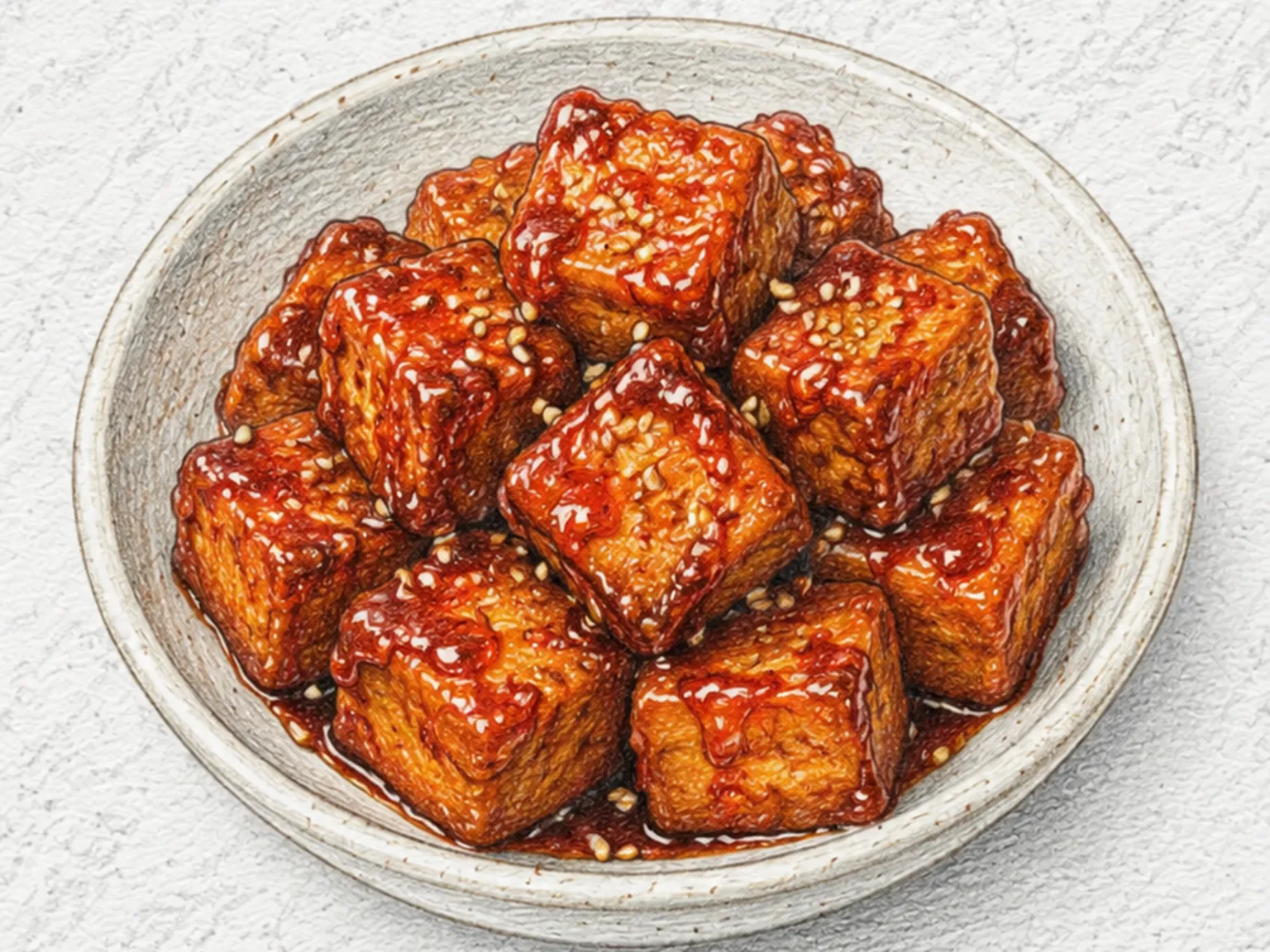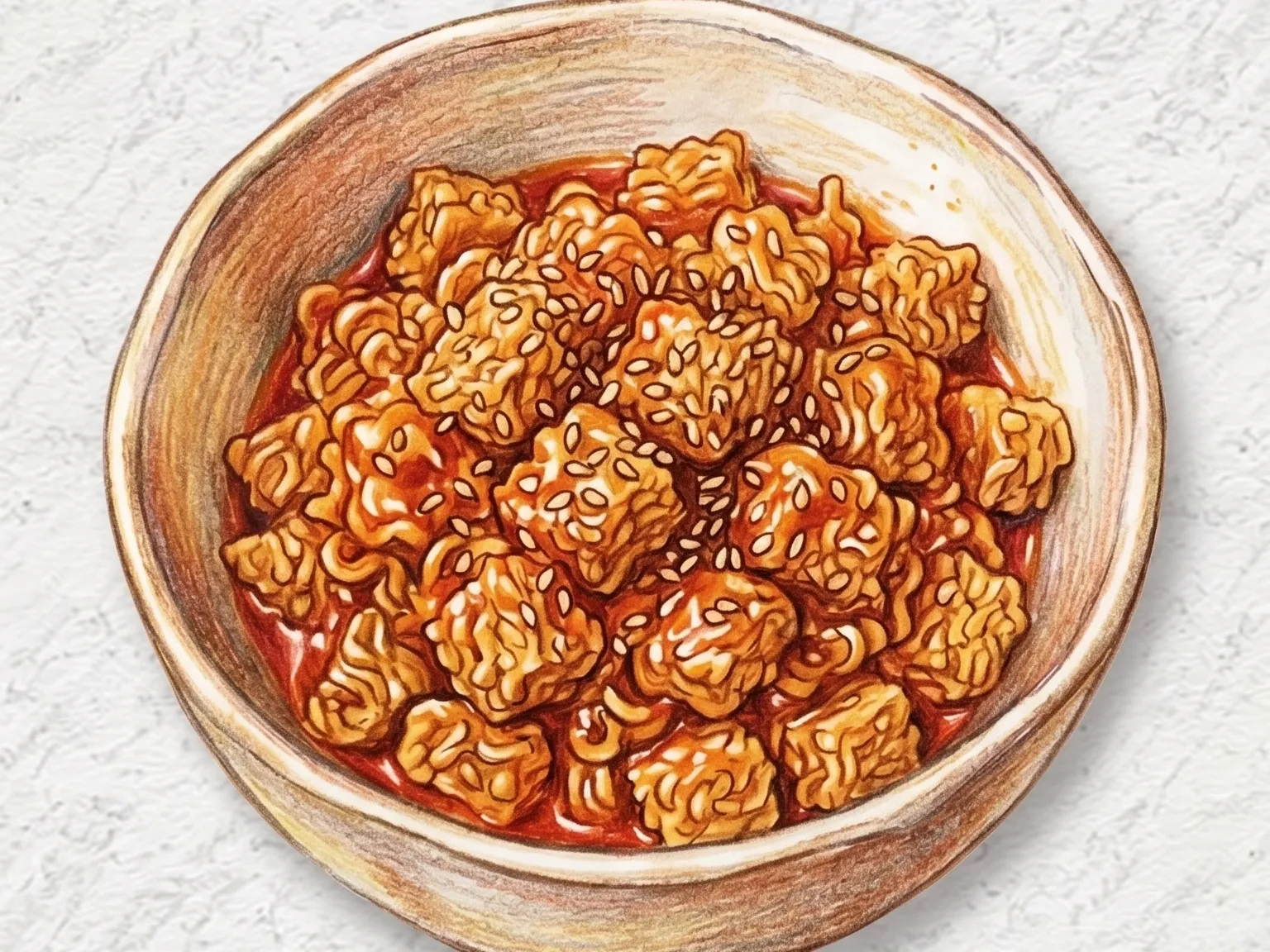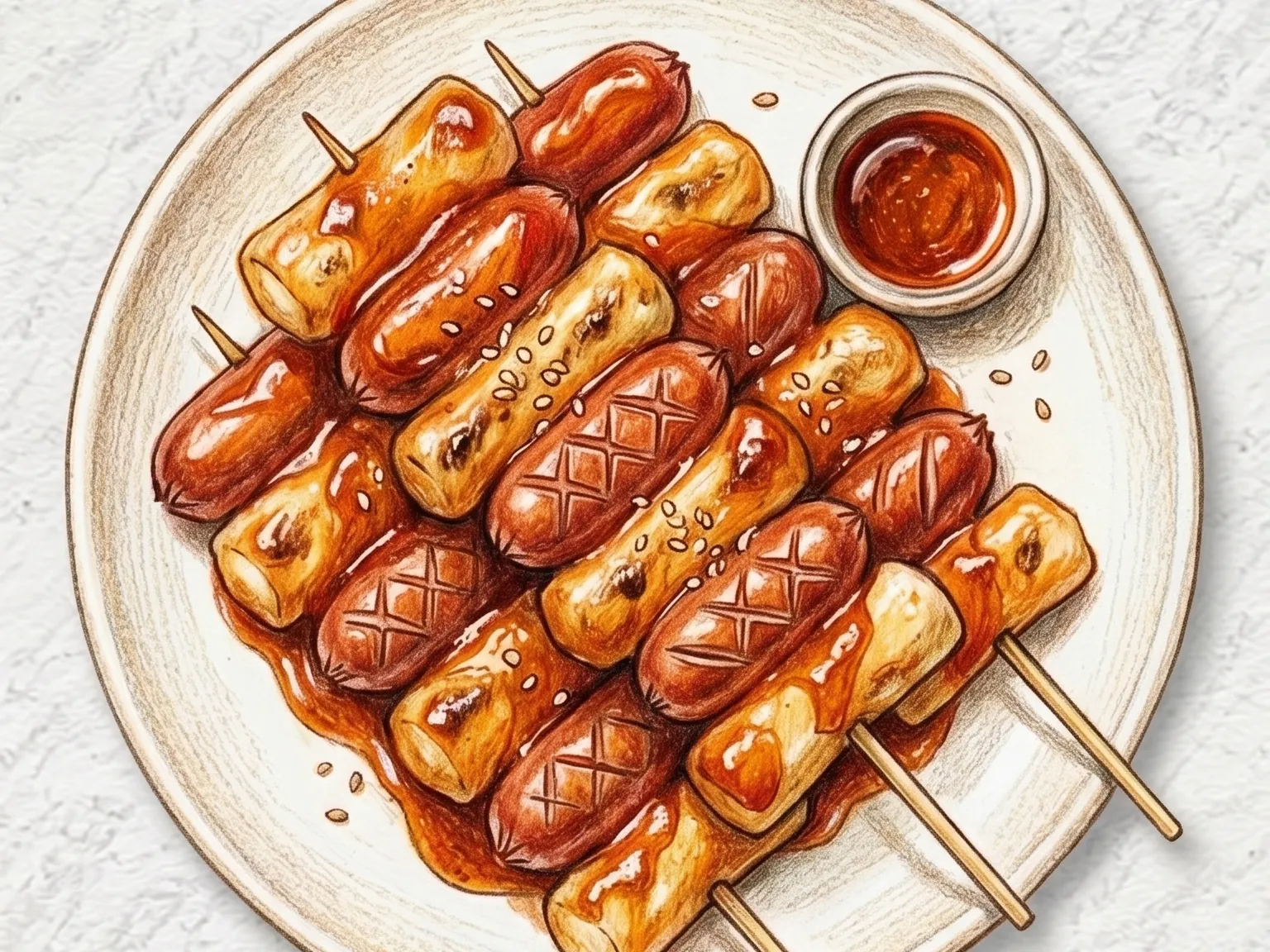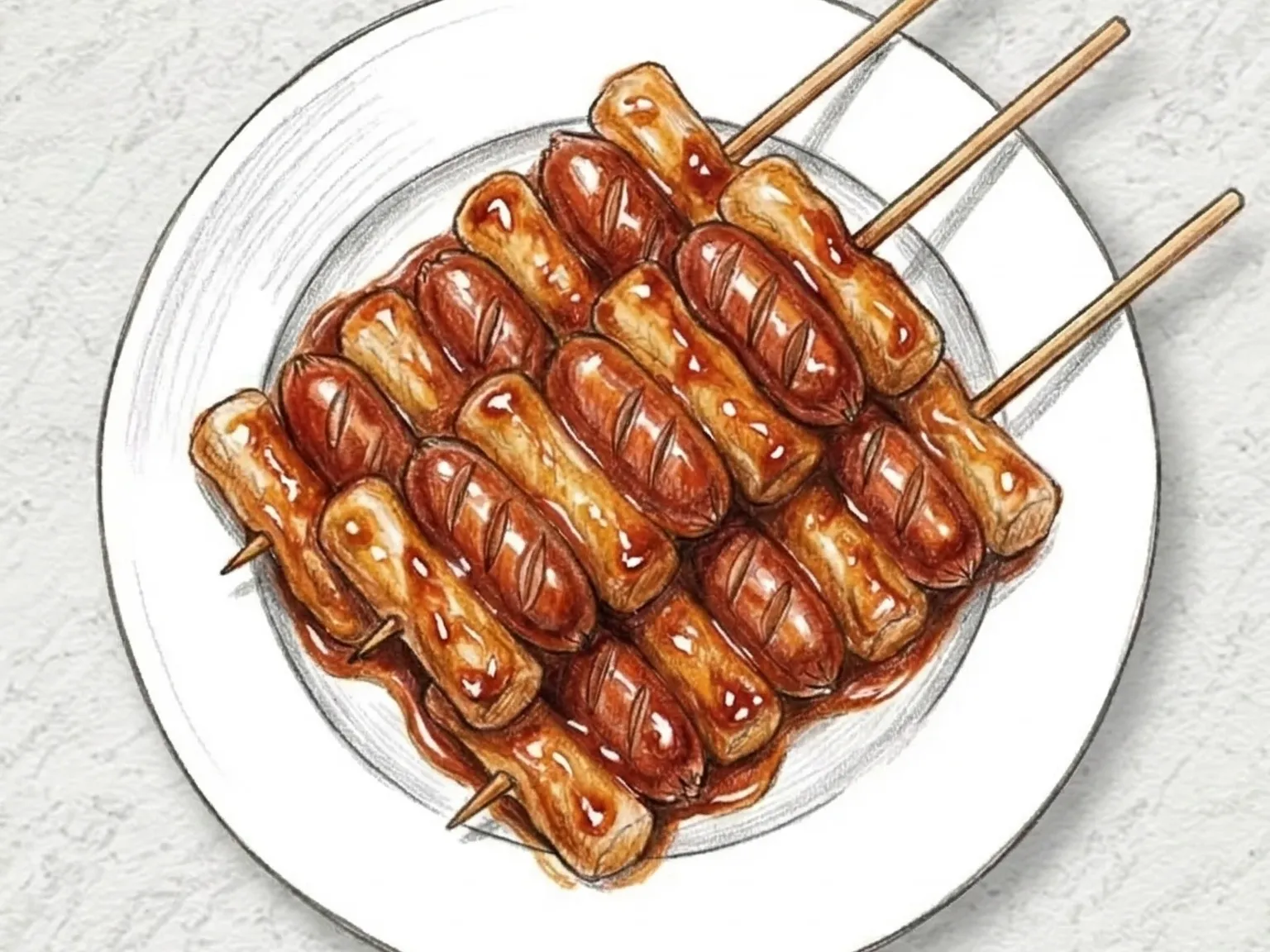
Korean Sotteok-Sotteok Skewers

Korean Sotteok-Sotteok Skewers

Quick answer

Cylinder-shaped rice cakes and mini sausages are skewered in alternating order, then pan-grilled for six to seven minutes until the surfaces turn golden.

What makes this special

  • Sotteok-sotteok-gui combines chewy rice cakes and mini sausages with a glossy gochujang-ketchup glaze.
  • One skewer alternates chewy rice cake and springy sausage in every bite
  • Sauce applied after browning, not before; prevents bitter char
Total time
29 min
Level
Easy
Servings
4 servings
Ingredients
10
Calories
430 kcal
Protein
14 g

Key ingredients

rice cake cylindersmini sausagesskewersgochujangketchup

Core cooking flow

  1. 1 If the rice cakes feel firm, soak them in lukewarm water for 10 minutes, then drain well.
  2. 2 Thread 300 g rice cake cylinders and 300 g mini sausages alternately onto 8 skewers.
  3. 3 Mix 2 tablespoons gochujang, 3 tablespoons ketchup, 1 tablespoon soy sauce...

Cylinder-shaped rice cakes and mini sausages are skewered in alternating order, then pan-grilled for six to seven minutes until the surfaces turn golden. A glaze made from gochujang, ketchup, soy sauce, oligosaccharide syrup, and minced garlic is brushed on and cooked for two to three more minutes until glossy and sticky. Each skewer delivers a contrast between the dense chew of rice cake and the snappy bite of sausage, unified by the sweet-spicy coating. Originally a Korean street-food staple, sotteok-sotteok is also popular for camping trips and can be made quickly in an air fryer.

Prep 15min Cook 14min 4 servings

Instructions

Read the steps as a cooking flow: prep, heat, seasoning, doneness control, and finish.

6 steps
  1. 1
    Step

    If the rice cakes feel firm, soak them in lukewarm water for 10 minutes, then drain well.

    Pat the surfaces dry so they do not splatter in the pan and can brown instead of steaming.

  2. 2
    Step

    Thread 300 g rice cake cylinders and 300 g mini sausages alternately onto 8 skewers.

    Leave a little space between pieces so the sides heat evenly and the rice cakes do not tear when turned.

  3. 3
    Season

    Mix 2 tablespoons gochujang, 3 tablespoons ketchup, 1 tablespoon soy sauce, 2 tablespoons oligosaccharide syrup, and 1 teaspoon minced garlic until smooth. Keep the glaze aside until the skewers are browned so the sweet sauce does not burn.

  4. 4
    Control

    Heat 1 tablespoon neutral oil in a pan over medium heat.

    Add the skewers in one layer and roll them for 6-7 minutes, until the rice cakes soften and the surfaces turn lightly golden.

  5. 5
    Season

    Lower the heat to medium-low and brush on a thin layer of glaze.

    Roll the skewers for 2-3 more minutes, adding sauce gradually, until the coating looks glossy and clings without scorching.

  6. 6
    Finish

    Transfer the skewers to a plate, brush lightly with any remaining glaze, and sprinkle with 1 teaspoon sesame seeds.

    Serve while warm, before the rice cakes firm up again as they cool.

After the steps

Pick a recipe that fits this dish.

Continue with shared ingredients, meal pairings, or a similar method.

Recipes That Go Well With This

More Grilled →

Based on shared ingredients and meal pairing

Korean Tteok Kkochi Yangnyeom Gui (Grilled Rice Cake Skewers)
Shared ingredient: ketchup Grilled

Korean Tteok Kkochi Yangnyeom Gui (Grilled Rice Cake Skewers)

Cylinder rice cakes are threaded onto skewers, lightly brushed with oil, and rolled on a grill pan over medium heat for six to seven minutes until the exterior turns golden. A sauce of gochujang, ketchup, oligosaccharide syrup, soy sauce, and minced garlic is applied in two rounds, building a glossy red glaze that clings to the surface. The outer layer develops a slight crispness while the inside remains stretchy and dense - that textural duality is the hallmark of this dish. A light dusting of cheese powder turns it into a kid-friendly snack, and it stands as one of the most iconic items in Korean street-food culture.

Korean Sotteok Sotteok Skewers
Shared ingredient: mini sausages Street food

Korean Sotteok Sotteok Skewers

Sotteok-sotteok is a Korean street snack of alternating mini sausages and cylinder rice cakes on a skewer, pan-grilled and coated in a sweet-spicy glaze of gochujang, ketchup, and oligosaccharide syrup. The rice cakes are soaked in warm water beforehand to soften them, ensuring they cook through on the pan and achieve maximum chewiness. Sausages are lightly scored to prevent splitting, and the skewers are rolled over medium heat until evenly browned. The glaze is tossed on quickly over low heat so it clings in a glossy layer, and the sauce gradually seeps into the rice cakes with each bite.

Korean Spicy Stir-Fried Anchovies
Serve together Side dishes

Korean Spicy Stir-Fried Anchovies

Spicy stir-fried anchovies (maeun myeolchi-bokkeum) toss medium-sized dried anchovies in a gochujang-gochugaru glaze, occupying the opposite end of the flavor spectrum from the sweet jiri-myeolchi version and targeting adult palates. Medium anchovies are larger and thicker than the tiny variety, requiring individual head-and-gut removal to eliminate bitterness - a tedious prep step that nonetheless determines the dish's clean finish. After dry-toasting to drive off moisture, the anchovies simmer in a sauce of gochujang, gochugaru, soy sauce, oligosaccharide, and minced garlic until each piece is coated in a rust-colored glaze. The gochujang's fermented heat combines with gochugaru's vivid red to create both flavor depth and visual appeal. The larger anchovy size delivers a satisfying crunch that lingers alongside a lasting savory umami. Heat intensity is adjustable via gochugaru quantity - adding chopped cheongyang chili ratchets it up another notch. This banchan doubles as a soju drinking snack, appearing as frequently on bar tables as on dinner tables.

Korean Grilled Fish Cake Skewers
Similar recipe Grilled

Korean Grilled Fish Cake Skewers

Eomuk kkochi gui are Korean grilled fish cake skewers, a staple of street food stalls that pair naturally with tteokbokki. Square fish cake sheets are folded in zigzag layers onto wooden skewers, grilled until the surface takes on color, then brushed with a glossy sauce of soy sauce, gochujang, sugar, and minced garlic. Folding the sheets before skewering multiplies the surface area that the sauce can grip and creates layered thickness that turns each bite into a dense, bouncy chew. Dry-grilling without oil first is important: it drives off moisture from the surface so that when the sauce is applied it clings and does not slide off. A second brief pass over heat after glazing caramelizes the sugars into a lacquered sheen and intensifies the savory aroma. Tucking pieces of green onion between the folds adds another layer of flavor -- the onion's moisture steams away as it grills, releasing a sweet, mellow fragrance that gradually infuses the fish cake.

Serve with this

Korean Fried Rice (Simple Leftover Rice Stir-Fry)
Rice Easy

Korean Fried Rice (Simple Leftover Rice Stir-Fry)

Korean fried rice is the ultimate utility dish, built to turn leftover rice and whatever vegetables remain in the refrigerator into a satisfying meal in under ten minutes. Green onion hits the hot oil first to create a fragrant scallion-infused base, followed by diced carrot and beaten egg that gets scrambled into rough curds before the rice goes in. Cold rice is essential here - its lower moisture content prevents clumping and allows a thin film of oil to coat each grain, carrying seasoning evenly through the whole pan. Soy sauce poured along the rim sizzles on contact with the hot metal, developing a toasted depth that distinguishes a well-made fried rice from a mediocre one. A crack of black pepper and a final swirl of sesame oil complete the seasoning. The recipe is intentionally open-ended: ham, kimchi, shrimp, canned tuna, or any leftover protein slots in without altering the basic method, which is why this dish appears on Korean dinner tables more often than almost any other. The total active cooking time rarely exceeds five minutes, making it the default choice on busy weekdays and late nights alike.

🏠 Everyday ⚡ Quick
Prep 5min Cook 10min 2 servings
Chicken Mu (Korean Fried Chicken Radish Pickle)
Kimchi Easy

Chicken Mu (Korean Fried Chicken Radish Pickle)

The crunchy, sweet-sour radish pickle served with every order of Korean fried chicken - now easy to make at home in under 15 minutes. Cubed radish is submerged in a cooled brine of vinegar, sugar, salt, and whole black peppercorns. Using fully cooled brine rather than hot is critical for maintaining the radish's firm, snapping crunch. Ready to eat after one day of refrigeration, its bright acidity cleanses the palate between bites of crispy chicken. Stored in a glass jar, this pickle keeps for over a week.

⚡ Quick 🏠 Everyday
Prep 10min Cook 5min 4 servings
Korean Seafood Hot Pot Soup
Soups Medium

Korean Seafood Hot Pot Soup

Haemul-tang is a Korean seafood hot pot that throws together crab, shrimp, clams, and squid in a fiery, brick-red broth. The liquid starts with gochugaru and plenty of garlic, building a spicy base that the seafood then amplifies with its own briny juices. Radish chunks soften as the pot bubbles, thickening the broth slightly and adding a cool sweetness behind the heat. Green onions and cheongyang peppers go in toward the end for a sharp, vegetal bite. The magic of haemul-tang lies in the convergence of flavors: crab shells release a sweet, crustacean stock; clams open to spill their liquor; shrimp and squid contribute distinct textures from snappy to chewy. The pot is brought to the table still at a rolling boil, and diners pick through the shells and tentacles while the broth continues to concentrate.

🏠 Everyday 🎉 Special Occasion
Prep 25min Cook 30min 4 servings

Similar recipes

Korean Blood Sausage Skewers
Street food Easy

Korean Blood Sausage Skewers

Soondae-kkochi are Korean blood sausage skewers threaded alternately with onion and green onion pieces, pan-grilled and glazed with a sauce made from gochujang, ketchup, oligosaccharide syrup, and soy sauce. Applying the glaze in two separate rounds rather than all at once is critical: the first coat caramelizes and sets, then a second layer is brushed on over low heat to build a glossy, deeply lacquered finish without burning. The sundae must be cooked slowly over low heat, rolling it gently so the casing does not split while the interior stays chewy throughout. Onion and scallion segments release their moisture on the grill, concentrating into a natural sweetness that balances the bold, iron-rich flavor of the sausage and provides a textural shift between bites. A scatter of toasted sesame seeds over the finished skewers adds a final layer of nutty fragrance.

🧒 Kid-Friendly ⚡ Quick
Prep 15min Cook 12min 2 servings
Korean Grilled Rice Cake Skewers
Street food Easy

Korean Grilled Rice Cake Skewers

Tteokkochi are pan-seared rice cake skewers glazed in a thick gochujang-based sauce that builds depth through a combination of ketchup, oligosaccharide syrup, soy sauce, and minced garlic simmered down until the sauce reduces and concentrates. The rice cakes are first seared in a thin layer of oil until a lightly crisp shell forms across the surface before any sauce is applied, creating a textural contrast between the outer crust and the soft, chewy interior that defines what a good tteokkochi should feel like. The ketchup introduces a mild tomato acidity that tempers and rounds the raw heat of the gochujang, while the syrup adds sweetness without the grainy texture of sugar. After the sauce is brushed on, rolling the skewers over low heat for another minute fuses the glaze to the rice cake surface so it adheres firmly and does not peel off as the skewers cool. Adjusting the ratio of ketchup to syrup shifts the balance between sweetness and acidity, making it straightforward to tailor the sauce to individual preference. Making the sauce in a larger batch and storing it separately saves time on repeat preparations.

🧒 Kid-Friendly 🌙 Late Night
Prep 10min Cook 10min 2 servings
Korean Spicy Octopus Skewers
Street food Easy

Korean Spicy Octopus Skewers

Blanched octopus is cut into bite-sized pieces, threaded onto skewers, and grilled on a pan or open flame while being basted repeatedly with a spicy sauce of gochujang, soy sauce, sugar, minced garlic, and sesame oil. Octopus toughens dramatically with prolonged heat, so high-temperature, quick grilling is essential. Adding a slice of ginger to the blanching water removes any fishiness before the octopus hits the grill. The layered sauce builds up with each basting: gochujang contributes heat, sugar balances it with sweetness, soy sauce deepens the umami, and sesame oil finishes with a nutty fragrance. Keeping the heat at medium-high and turning the skewers frequently prevents the sugar in the glaze from burning while still achieving light char marks. The result has a caramelized, sticky crust over a chewy, springy center. Equally at home as street food or as bar snacks alongside cold beer or soju, these skewers are a reliable crowd-pleaser.

🍺 Bar Snacks ⚡ Quick
Prep 15min Cook 10min 2 servings

Tips

Apply sauce near the end to prevent burning.
For air fryer: 180C for 8 minutes, glaze, then cook 3 more minutes.

Nutrition (per serving)

Calories
430
kcal
Protein
14
g
Carbs
45
g
Fat
21
g