Charim

2686 Korean & World Recipes

2686+ Korean recipes, clean and organized. Ingredients to instructions, all at a glance.

Sourdough Bread

Sourdough Bread

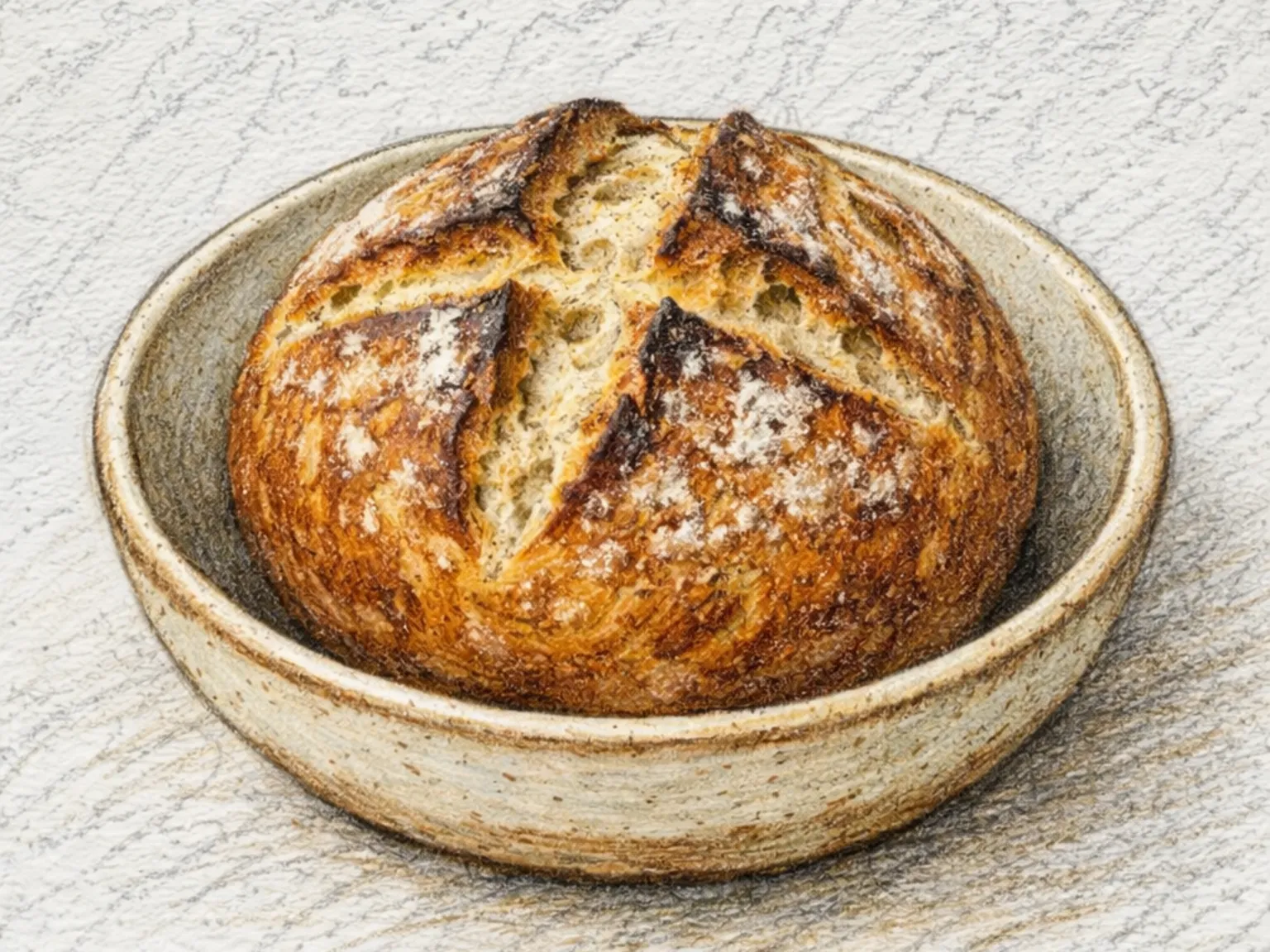
Sourdough bread is leavened entirely by a natural starter - a living culture of wild yeast and lactic acid bacteria maintained through regular feedings of flour and water - without any commercial yeast. The extended fermentation produces organic acids that give the bread its characteristic tangy flavor, a thick, blistered crust, and an open, irregular crumb structure. The process begins with an autolyse, where flour and water rest together before the starter and salt are incorporated. Four rounds of stretch-and-fold during a four-hour bulk fermentation develop gluten without intensive kneading. After shaping, the dough is cold-proofed in the refrigerator for twelve to sixteen hours, during which flavor compounds deepen and the structure firms for easier scoring. Baking in a preheated Dutch oven at 250 degrees Celsius traps steam around the loaf, allowing the crust to expand fully before setting into a thick, crackly shell. Removing the lid partway through finishes the crust to a deep, caramelized brown. The starter must be at peak activity - risen to its highest point and just beginning to dome - when mixed into the dough, or the loaf will not achieve adequate rise.

Prep 30min Cook 45min 1 servings

Adjust Servings

2servings
servings

Instructions

  1. 1

    Mix starter, water, flour and autolyse 30 minutes.

  2. 2

    Add salt and develop the dough.

  3. 3

    Bulk ferment 4 hours, folding every hour.

  4. 4

    Shape and cold-proof in refrigerator 12-16 hours.

  5. 5

    Bake in Dutch oven at 250C, 20 minutes covered then 25 minutes uncovered.

🛒Shop Ingredients on Amazon

As an Amazon Associate, we may earn from qualifying purchases.

Tips

Use starter at peak activity for best rise.

Nutrition (per serving)

Calories
190
kcal
Protein
7
g
Carbs
38
g
Fat
1
g

Goes Well With

Korean Makgeolli Punch (Rice Wine Yuja Citrus Bowl)
DrinksEasy

Korean Makgeolli Punch (Rice Wine Yuja Citrus Bowl)

Makgeolli punch is a fruity Korean rice wine cocktail that combines makgeolli with yuja marmalade, lemon juice, and lemon-lime soda in a large bowl over plenty of ice. The creamy grain character of makgeolli merges with the bright citrus of yuja to create a light, festive drink. Thinly sliced apple floated in the bowl adds crisp bites of fruit between each ladle. A single gentle stir just before serving keeps the carbonation intact and the flavors evenly distributed.

🍺 Bar Snacks🎉 Special Occasion
Prep 10min4 servings
Honey Ginger Ribbon Cookies
DessertsMedium

Honey Ginger Ribbon Cookies

Maejakgwa are traditional Korean ribbon cookies made from a firm dough of wheat flour, sesame oil, and ginger juice, rolled to 2 mm thickness, slit lengthwise through the center, and twisted through the opening into a knot shape before frying. Slow-frying at 160 degrees Celsius turns them light golden and crisp all the way through without darkening the surface unevenly. A warm coating of honey blended with rice syrup is applied while the cookies are still hot, adding a glossy, sweet shell that sets as it cools. The ginger lends a subtle warm bite that sits behind the nuttiness of sesame oil rather than announcing itself upfront, and a final dusting of pine nut powder contributes a soft, buttery fragrance that completes the layering of flavor. Each piece shatters lightly when bitten, yet the syrup-soaked sections at the twisted edges carry a slight chewiness that gives the cookie a layered texture unusual for a fried dough confection. Maejakgwa appear regularly on ritual food tables at memorial ceremonies and are commonly prepared for Lunar New Year and Chuseok.

🎉 Special Occasion🧒 Kid-Friendly
Prep 30minCook 25min4 servings
Avocado Eggs Benedict
WesternHard

Avocado Eggs Benedict

Avocado eggs Benedict reimagines the classic brunch dish by replacing the traditional Canadian bacon with ripe avocado, trading cured-pork saltiness for a creamy, grassy richness. A split English muffin is toasted until the cut face is golden and craggy, creating a sturdy base that holds up under the toppings without soaking through. Thick slices of avocado fan across each half before the poached egg is placed on top, its white set firm and the yolk still entirely liquid. Piercing the yolk releases a slow golden flow that runs over the avocado and settles into the muffin's porous surface. Hollandaise - made by emulsifying clarified butter with egg yolks and lemon juice - adds a tangy, buttery richness over the top. Many versions simplify by skipping the hollandaise in favor of a squeeze of lemon and flaky salt, relying on the egg yolk alone as a sauce. The dish spread from the brunch culture of Melbourne and Los Angeles during the 2010s avocado boom and has since become a fixture on cafe menus worldwide, particularly as a plant-leaning alternative to the original.

🎉 Special Occasion
Prep 15minCook 15min2 servings
Roasted Kabocha Miso Nut Salad
SaladsEasy

Roasted Kabocha Miso Nut Salad

Kabocha squash is sliced into half-moons and roasted in a hot oven until the cut surfaces caramelize and the flesh turns chestnut-soft and dry in the best possible way. The dressing combines white miso, rice vinegar, and maple syrup into a mixture where salt, acid, and a restrained sweetness reinforce each other and amplify the roasted squash underneath. Arugula provides the peppery, slightly bitter base that keeps the salad from tipping too sweet. Chickpeas add lean protein and a firm, satisfying chew that holds up against the tender squash. Walnuts, crushed roughly rather than chopped fine, contribute crunch and a deep, roasted nuttiness that layers well with the soft squash in each forkful. The contrast between textures, tender squash against resistant walnut, is what makes this salad interesting across every bite. Autumn kabocha, at the peak of its natural sugar content, delivers the most pronounced sweetness, and the dish is filling enough to stand as a vegetarian main course with nothing else alongside it. If using refrigerated squash, adjust oven time and temperature to ensure even caramelization.

🥗 Light & Healthy🎉 Special Occasion
Prep 15minCook 25min4 servings

More Recipes

Deulkkae Gamja Focaccia (Perilla Potato Focaccia)
BakingMedium

Deulkkae Gamja Focaccia (Perilla Potato Focaccia)

Mashed potato is kneaded into a yeasted dough enriched with olive oil and ground perilla seed, then stretched into a pan, dimpled, and baked into a golden Italian flatbread. The potato keeps the interior exceptionally moist and chewy long after cooling, while the perilla adds a nutty undertone that sets this focaccia apart from conventional versions. Rosemary sprigs and thin garlic slices pressed into the dimples before baking contribute herbal fragrance and visual appeal. Olive oil pooling in the finger indentations crisps those spots into pockets of crunch surrounded by soft, airy crumb. Mashing the potato while still hot ensures it integrates smoothly into the dough without lumps. A full sixty-minute first rise at warm room temperature develops large, open air pockets that define good focaccia.

🧒 Kid-Friendly
Prep 30minCook 30min4 servings
Lemon Pound Cake
BakingEasy

Lemon Pound Cake

A dense, buttery pound cake elevated by the brightness of fresh lemon zest and juice. Creaming the butter and sugar until light introduces air pockets that keep the heavy crumb from becoming leaden, and adding eggs one at a time ensures the emulsion stays stable. Rubbing the lemon zest into the flour before combining releases its essential oils evenly throughout the batter, so every slice carries the same citrus intensity. Lemon juice raises the batter's acidity just enough to maintain a tender, fine crumb rather than a tough one. During roughly an hour at 175 degrees Celsius, the top splits into the characteristic crack that signals a properly risen pound cake. After cooling completely, a glaze of powdered sugar and lemon juice is drizzled over the surface, hardening into a thin, translucent shell that adds sweetness and a subtle sheen. Wrapped and rested overnight, the lemon flavor deepens as the oils permeate every layer of crumb.

🧒 Kid-Friendly
Prep 20minCook 60min8 servings
Doenjang Maple Pull-Apart Bread
BakingHard

Doenjang Maple Pull-Apart Bread

Enriched yeast dough is rolled thin, spread with a mixture of doenjang and maple syrup, then stacked and packed into a loaf pan so that each layer bakes into a tearable, fluffy sheet loaded with flavor. The doenjang contributes a fermented saltiness that deepens the bread's own yeast character, while the maple syrup caramelizes during baking and pools at the bottom of the pan, forming a sticky glaze that coats the loaf when inverted. Butter in the dough provides a rich, tender crumb that pulls apart in long, soft strands. The interplay between salty fermented paste and sweet caramel sits in a zone that is neither strictly dessert nor savory bread, making it versatile enough to accompany a meal or stand on its own as an afternoon snack. Eating it warm, when the layers separate most easily, is the best way to experience the full range of textures.

🎉 Special Occasion
Prep 35minCook 30min4 servings
Ciabatta Bread
BakingMedium

Ciabatta Bread

Ciabatta is a flat Italian bread developed in Veneto in 1982 by baker Arnaldo Cavallari, whose name translates to slipper in Italian - a nod to the bread's wide, flat shape. Its defining characteristic is an exceptionally high hydration level, with water making up 70 to 80 percent of the flour's weight. The dough is too slack and sticky to knead by hand in the traditional sense and instead requires a folding technique or stand mixer to develop structure, but this excess moisture is precisely what creates the bread's signature open crumb: large, irregular holes distributed throughout the interior that give the crumb a lacey, almost Swiss-cheese quality. The crust is thin and crackly, shattering lightly when pressed, while the interior crumb is chewy and moist with a mild wheaty sweetness that develops as you chew. A long cold bulk fermentation in the refrigerator builds mild acidity and a more complex flavor than a quick room-temperature proof can produce. Because of its high moisture content, ciabatta stales faster than denser breads and is best eaten the same day it is baked. The contrast between its crackly exterior and open, absorbent interior makes it ideal for panini sandwiches, where the crust crisps further under heat, and for dipping in good olive oil, which pools in the holes of the crumb. It is also an excellent companion to soups, where the open crumb soaks up broth without falling apart.

🧒 Kid-Friendly
Prep 20minCook 25min2 servings
Grilled Lamb Chops
GrilledMedium

Grilled Lamb Chops

Lamb chop gui is a grilled lamb rib chop dish where a French rack is marinated for at least one hour in olive oil, crushed garlic, freshly chopped rosemary, salt, and black pepper before being seared on a blazing-hot grill. The rosemary's piney, resinous aroma tempers the lamb's gaminess effectively, while the garlic caramelizes gently on contact with the hot surface and builds a concentrated savory layer on the meat. Grilling each side for three to four minutes targets an internal temperature of 55 to 60 degrees Celsius for medium-rare, the point at which the intramuscular fat renders just enough to release abundant juices without drying the meat out. A squeeze of fresh lemon juice immediately after removing from the grill cuts through the richness of the rendered fat and brightens the overall flavor. The most satisfying way to eat these is holding the exposed rib bone and taking bites directly off it, and they pair naturally with mint yogurt sauce or a simple chimichurri-style accompaniment.

🍺 Bar Snacks
Prep 60minCook 15min2 servings
Herb Roasted Whole Chicken
WesternMedium

Herb Roasted Whole Chicken

Herb roasted whole chicken is prepared by tucking herb butter - made with rosemary, thyme, and garlic - under the skin and stuffing the cavity with lemon and remaining herbs before roasting. Starting at 220 degrees Celsius for twenty minutes gives the skin an initial sear, then dropping to 180 degrees for sixty more minutes cooks the interior through while the skin crisps to a deep golden brown. The herb butter placed directly under the skin melts during roasting, basting the breast meat with fat and herb flavor from the inside, which prevents even the lean breast from drying out. Resting for fifteen minutes after roasting lets the juices redistribute into the muscle fibers so they stay inside when carved. The pan drippings left behind can be deglazed into a quick gravy that doubles the depth of flavor at the table.

🎉 Special Occasion
Prep 20minCook 80min4 servings
More Baking →