Korean Soy Garlic Dakgangjeong

Korean Soy Garlic Dakgangjeong

Quick answer

Soy-garlic dakgangjeong is Korean fried chicken made from boneless thigh pieces coated in potato starch and fried twice before being tossed in a soy-garlic glaze.

What makes this special

  • Twice-fried boneless chicken tossed in soy-garlic glaze maintains a long-lasting crunch.
  • Potato starch coat plus double-fry keeps crunch long after cooling
  • Brief reduction of soy, vinegar, and syrup stays sweet without oversalting
Total time
45 min
Level
Medium
Servings
4 servings
Ingredients
10
Calories
540 kcal
Protein
31 g

Key ingredients

Boneless chicken thighPotato starchSaltBlack pepperSoy sauce

Core cooking flow

  1. 1 Cut 600 g boneless chicken thigh into bite-sized pieces and pat the surface dry.
  2. 2 Press 1 cup potato starch lightly onto the chicken so every surface is covered.
  3. 3 Heat 900 ml cooking oil to 170°C and add the chicken without crowding the pot.

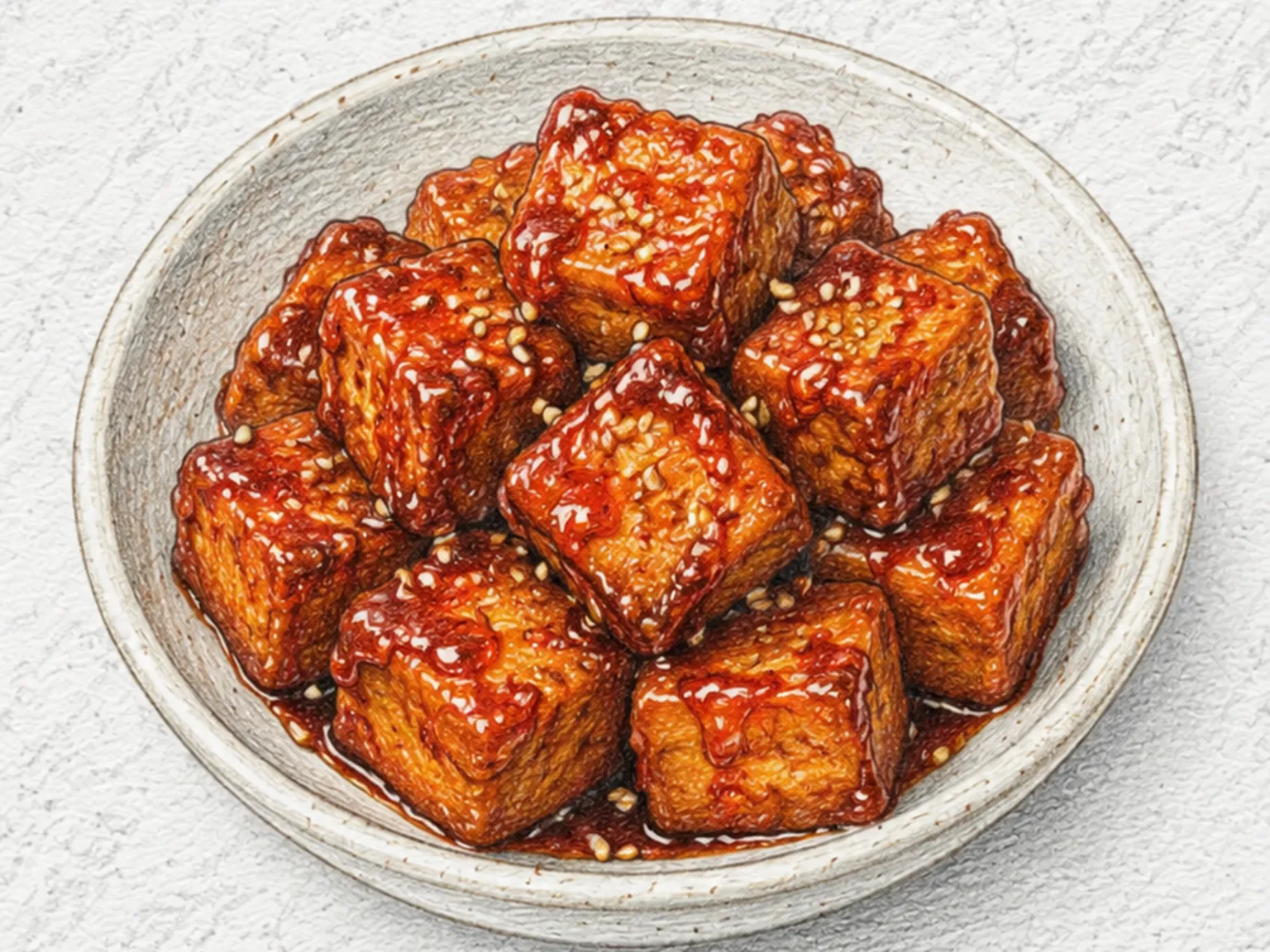
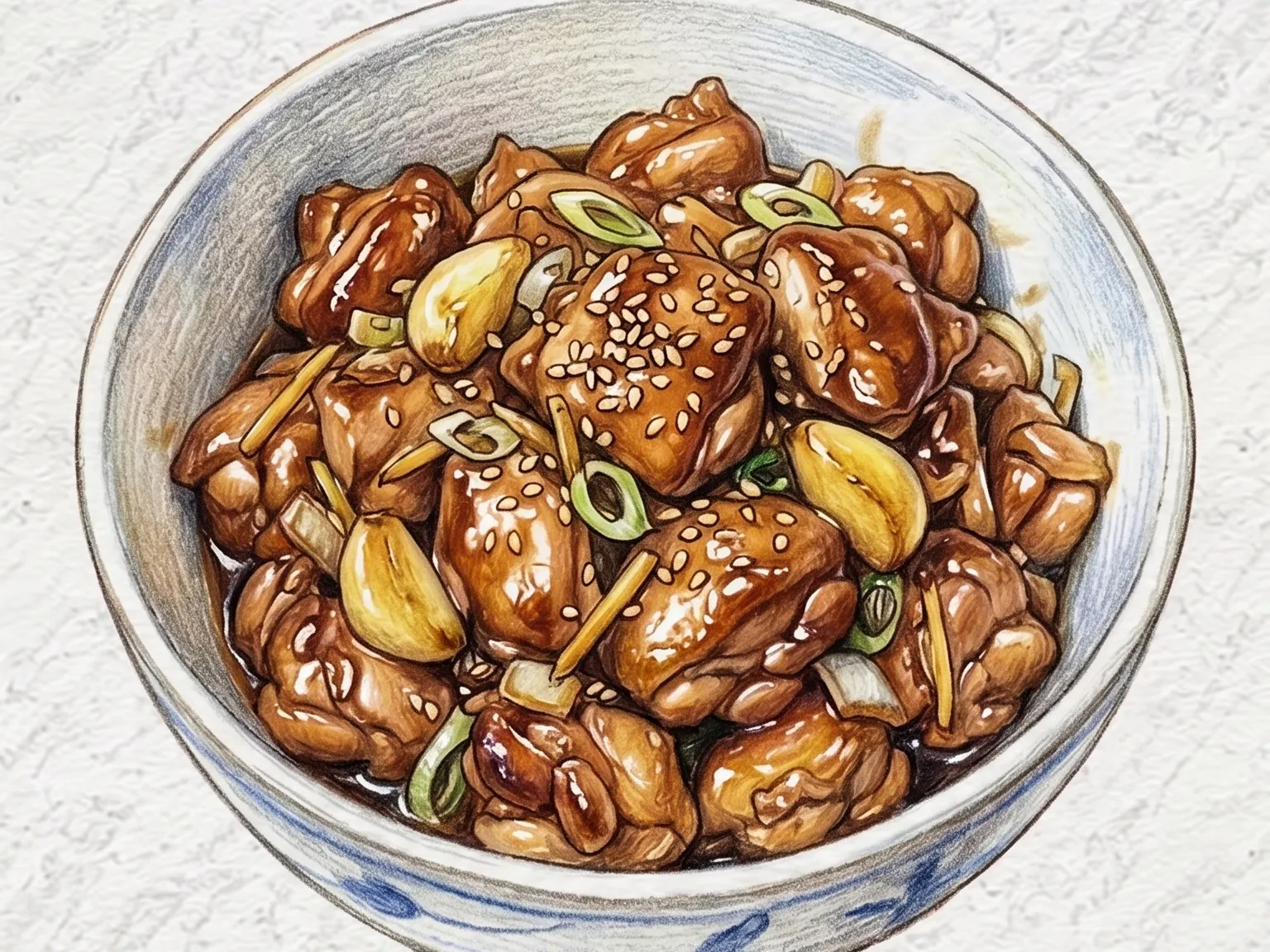
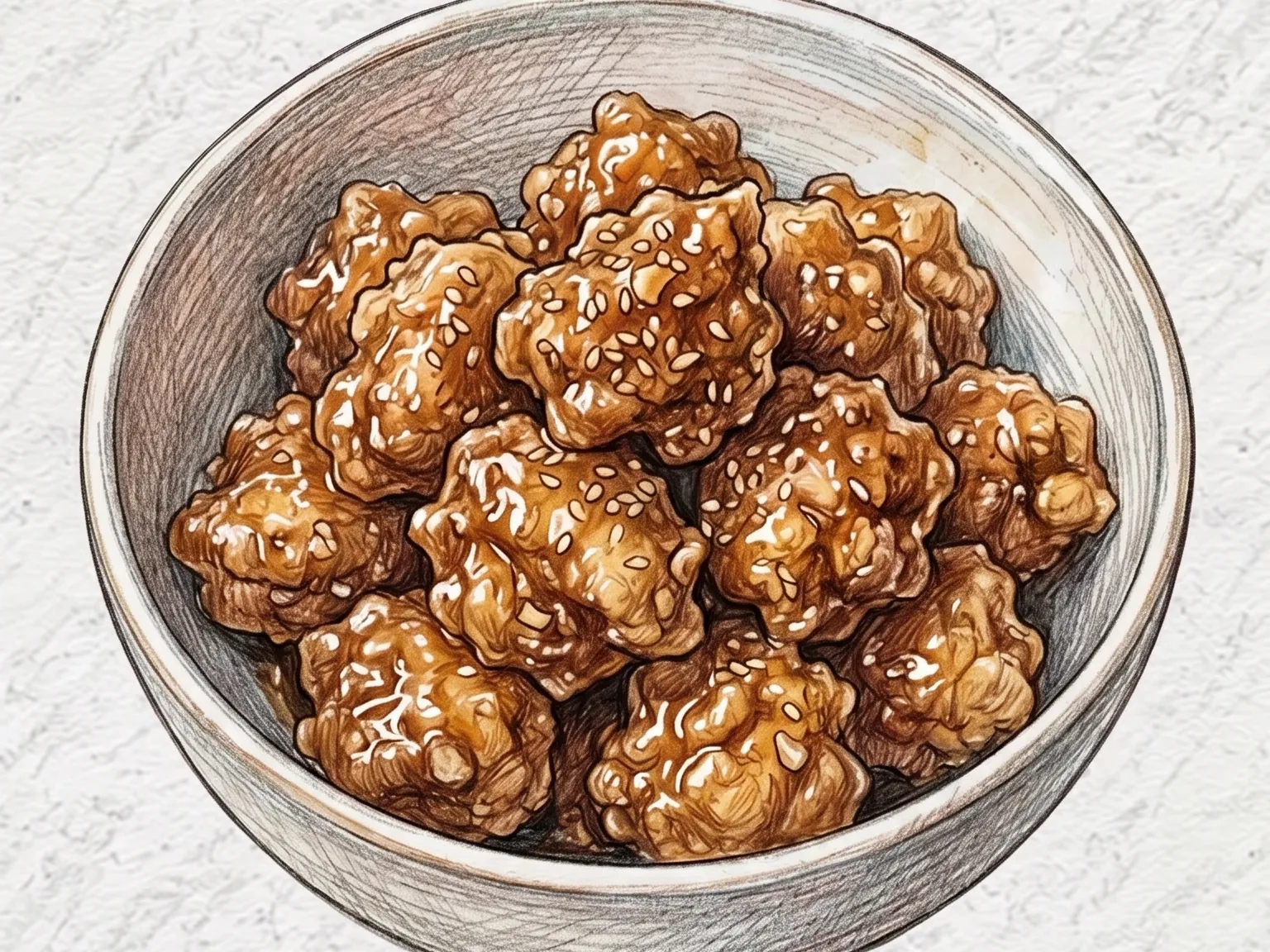
Soy-garlic dakgangjeong is Korean fried chicken made from boneless thigh pieces coated in potato starch and fried twice before being tossed in a soy-garlic glaze. The first fry runs at 170 degrees Celsius for five minutes to cook the meat through to the center. The second fry raises the temperature to 190 degrees and runs for two minutes to push residual moisture out of the crust and harden the surface. Both fries are necessary to achieve a crust firm enough to stay crisp under the wet glaze. Using only potato starch rather than a wheat-starch blend produces a thinner, more transparent coating that crisps harder and absorbs less oil. The sauce is reduced for no more than thirty seconds to one minute so the saltiness does not concentrate excessively. Vinegar is a key component: it cuts through the grease and leaves the palate clean after each bite. The fried chicken must go into the sauce while it is still loose, then be tossed over high heat quickly so the coating never has time to steam and soften. Sesame seeds scattered on top add a nutty fragrance and a textural contrast against the lacquered surface.

Prep 20min Cook 25min 4 servings

Instructions

Read the steps as a cooking flow: prep, heat, seasoning, doneness control, and finish.

6 steps
  1. 1
    Season

    Cut 600 g boneless chicken thigh into bite-sized pieces and pat the surface dry.

    Season evenly with 1/2 teaspoon salt and 1/2 teaspoon black pepper, then let it stand for 5 minutes.

  2. 2
    Control

    Press 1 cup potato starch lightly onto the chicken so every surface is covered.

    Shake off dry white patches of excess starch, then rest the coated pieces for 5 minutes so the coating adheres before frying.

  3. 3
    Heat

    Heat 900 ml cooking oil to 170°C and add the chicken without crowding the pot.

    Fry for 5 minutes, turning once midway, then remove when the pieces look pale golden and are cooked through.

  4. 4
    Heat

    Raise the oil to 190°C and return the chicken to the oil.

    Fry about 2 minutes, until bubbling slows and the crust feels firm and dry, then lift it out and drain well.

  5. 5
    Control

    Add 3 tablespoons soy sauce, 1 tablespoon minced garlic, 3 tablespoons oligosaccharide syrup, and 1 tablespoon vinegar to a pan.

    Simmer over medium heat for only 30 seconds to 1 minute, before the sauce becomes overly salty.

  6. 6
    Finish

    Add the fried chicken while the glaze is still loose and turn the heat to high.

    Toss for no more than 30 seconds, just until glossy, then sprinkle with 1 tablespoon sesame seeds and serve immediately.

After the steps

Pick a recipe that fits this dish.

Continue with shared ingredients, meal pairings, or a similar method.

Recipes That Go Well With This

More Street food →

Based on shared ingredients and meal pairing

Korean Lemon Pepper Dakgangjeong
Shared ingredient: boneless chicken thigh Street food

Korean Lemon Pepper Dakgangjeong

Boneless chicken thigh pieces are cut bite-size, coated thoroughly in potato starch, and double-fried at 170 then 180 degrees Celsius to build a shell that stays crunchy through the glazing step. The fried chicken goes straight into a reduction of lemon juice, honey, soy sauce, and butter, where the bright citrus acidity cuts cleanly through the rendered fat and cracked black pepper settles in as a slow, lingering finish. The entire tossing step must be completed in under twenty seconds before the steam softens the crust. Adding lemon zest directly into the glaze intensifies the citrus note considerably, and finished slices of lemon on the side make for a clean, vivid presentation.

Korean Sweet Spicy Dakgangjeong
Shared ingredient: boneless chicken thigh Street food

Korean Sweet Spicy Dakgangjeong

Yangnyeom dakgangjeong is Korean sweet-spicy fried chicken made by cutting boneless thigh meat into bite-size pieces, dredging them in potato starch, and running them through a two-stage fry. The first fry at 170 degrees Celsius cooks the meat through; the second fry at 185 degrees drives off the residual moisture the crust absorbed during the first pass, hardening the exterior into a shell that can withstand sauce tossing without collapsing. The glaze is a reduction of gochujang, gochugaru, corn syrup, and soy sauce, simmered down until the mixture is thick enough to coat a spoon without dripping off. Tossing the finished chicken in the hot glaze must happen off the heat and within twenty seconds, because the steam trapped between sauce and crust will turn the coating soggy if the process drags on. When done correctly, the result is a glossy, sticky exterior that crackles audibly at first bite even after the dish has cooled to room temperature, surrounding thigh meat that stays juicy inside.

Korean Kimchi Soy Milk Tantan Noodles
Serve together Noodles

Korean Kimchi Soy Milk Tantan Noodles

Kimchi duyu tantan myeon takes the structural logic of Chinese dandan noodles and rebuilds it around Korean pantry ingredients. Garlic and green onion are stir-fried in chili oil first to infuse the fat with fragrance, then ground pork goes in along with doenjang and soy sauce and stays on the heat until it browns and the fermented paste base deepens. Finely chopped kimchi is added and cooked for two more minutes, which softens the raw acidity of the kimchi and melds it into the meat mixture. Unsweetened soy milk is poured in at that point and heated gently, just below a boil, so it blends into a smooth, lightly creamy broth without breaking. The noodles are boiled separately and placed in the bowl before the broth is ladled over. Ground peanuts sprinkled on top at the end contribute a nutty finish, and the amount can be adjusted to thicken the broth to a preferred consistency.

Korean Gochujang Honey Dakgangjeong
Similar recipe Street food

Korean Gochujang Honey Dakgangjeong

Gochujang honey dakgangjeong starts with bite-sized boneless chicken thigh pieces coated in potato starch and double-fried, first at 170 degrees Celsius and then at 180 degrees, before being tossed in a glaze of gochujang, honey, soy sauce, and garlic. The two-stage frying builds a rigid starch shell that stays crunchy even after the sauce is applied, while the natural fat in thigh meat keeps the interior juicy throughout the process. Gochujang's fermented heat contrasts directly with honey's thick sweetness, and soy sauce anchors the salt level so neither sweetness nor spice dominates. Garlic sharpens the aroma of the sauce, and sesame seeds scattered at the end add a finishing layer of nuttiness. The sauce must be reduced quickly on high heat, under one minute, to achieve a glossy coat without burning. The chicken should be sauced and eaten immediately after frying for the maximum contrast between the crackling crust and the tender, glazed interior.

Serve with this

Korean Spicy Stir-fried Cartilage
Drinks Medium

Korean Spicy Stir-fried Cartilage

Odolppyeo-bokkeum is a fiery Korean stir-fry of chicken cartilage marinated in a sauce of gochujang, gochugaru, soy sauce, garlic, and sugar, then cooked at maximum heat for a short burst. The cartilage delivers a distinctive crunch-then-chew that no other cut can replicate, and thorough drying with paper towels before marinating ensures the sauce clings directly to the surface. After ten minutes of marinating, the cartilage hits a ripping-hot oiled pan to pick up smoky wok char, followed by onion, green onion, and hot green chilies that are tossed until all moisture evaporates and the glaze turns glossy. Keeping the total stir-fry time brief is critical, since prolonged cooking turns the cartilage from pleasantly crunchy to unpleasantly tough.

🍺 Bar Snacks 🌙 Late Night
Prep 15min Cook 12min 2 servings
Candied Sweet Potato
Desserts Easy

Candied Sweet Potato

Goguma mattang is a Korean candied sweet potato snack made by cutting peeled sweet potatoes into large chunks and deep-frying them at 170 degrees Celsius until the interior turns floury and soft. A syrup of sugar, corn syrup, water, and a measured splash of soy sauce is cooked separately until large, foamy bubbles form - the visual cue for adding the fried sweet potatoes. Everything must be coated within thirty seconds to lock in a thin, glass-like caramel shell that crisps and turns translucent as it cools. The soy sauce shifts the flavor from purely sweet to a rounded, slightly savory depth. Pre-draining surface moisture from the cut sweet potatoes reduces oil splatter during frying and helps the syrup grip the pieces evenly. Black sesame seeds are scattered over the finished pieces for a toasted, nutty note, and each piece is spread individually on parchment paper while still warm so they cool without sticking together.

🏠 Everyday 🧒 Kid-Friendly
Prep 15min Cook 20min 4 servings
Korean Stir-Fried Taro Stems
Side dishes Medium

Korean Stir-Fried Taro Stems

Boiled taro stems are stir-fried in perilla oil with soy sauce and garlic to create a banchan prized for its uniquely chewy texture. Dried taro stems, once soaked and simmered, lose their rawness but retain a springy, almost rubbery bite along the center of each stalk, setting them apart from softer namul greens. Stir-frying in perilla oil first builds a nutty base note, and soy sauce with minced garlic layers savory depth onto the stems' neutral flavor. A splash of stock added mid-cook allows the seasoning to penetrate the fibrous interior during a brief simmer. Sliced green onion introduces a fresh aromatic accent, and a finishing spoonful of ground perilla seeds dissolves into the residual moisture, creating a creamy coating that clings to each piece. Mixed into a bowl of steamed rice, the chewy stems provide satisfying resistance with every bite, and their mild character lets them complement bolder dishes like doenjang jjigae without competing for attention.

🏠 Everyday 🍱 Lunchbox
Prep 15min Cook 12min 4 servings

Similar recipes

Korean Mozzarella Cheese Sticks
Street food Medium

Korean Mozzarella Cheese Sticks

Mozzarella blocks are cut into sticks, double-coated in flour, beaten egg, and parsley-seasoned breadcrumbs, then frozen for 20 minutes before a brief deep-fry at 170 degrees Celsius. The double coating and freezing step prevent the cheese from bursting out during frying, and pulling the sticks from the oil within one and a half to two minutes keeps the shell crunchy while the cheese inside remains stretchy rather than fully melted out. A touch of dried parsley in the breadcrumbs adds a mild herbal note, and dipping into tomato sauce or sweet chili sauce provides a pleasant contrast to the salty, crispy coating.

🧒 Kid-Friendly 🏠 Everyday
Prep 20min Cook 10min 2 servings
Korean Soy-Garlic Grilled Chicken Legs
Grilled Medium

Korean Soy-Garlic Grilled Chicken Legs

Chicken leg meat is scored at the thickest points for even cooking, then marinated in soy sauce, oligosaccharide syrup, minced garlic, cooking wine, sesame oil, and black pepper. Starting skin-side down in a covered pan for ten minutes, then flipping for another eight to ten minutes, the skin renders its fat and crisps up while the interior cooks through. A final brush of the remaining marinade reduces into a dark, glossy glaze that carries concentrated garlic and soy flavor. Finished with a sprinkle of sesame seeds, this dish yields four generous servings as a main course alongside rice.

🍺 Bar Snacks
Prep 20min Cook 30min 4 servings
Soy-Garlic Chicken Parmesan Spaghetti
Pasta Medium

Soy-Garlic Chicken Parmesan Spaghetti

Soy garlic chicken Parmesan spaghetti represents a fusion of culinary traditions, integrating a marinade rooted in Korean flavors with the structural framework of a classic Italian pasta dish. For the protein component, chicken thigh pieces undergo a marination process involving a mixture of soy sauce, finely minced garlic, and honey. During the subsequent cooking phase, these ingredients are pan seared at a high temperature. This heat causes the natural sugars found in both the honey and the soy sauce to undergo caramelization, resulting in the formation of a dark and sticky glaze that coats the exterior of the meat. Garlic serves as a recurring element in the preparation, being used first within the initial marinade and then again when it is sauteed directly into the tomato sauce base. This repetition ensures that a consistent aromatic quality is maintained throughout the various layers of the meal from the start of cooking to the final assembly. The acidity inherent in the tomato sauce introduces a bright fruit character to the profile. This sharpness functions to balance the density of the sweet and salty glaze on the chicken, preventing the richness of the marinade from becoming overwhelming. A generous amount of grated Parmesan cheese is applied over the dish to introduce a nutty and salty depth. This cheese layer acts as a bridge between the Korean seasoning applied to the chicken and the Italian pasta that serves as the foundation of the plate. The choice of chicken thigh is intentional because this specific cut retains its internal moisture even during a hard sear. It remains succulent in a way that chicken breast meat often does not when subjected to similar levels of heat. The final preparation is completed with a garnish of thinly sliced scallions, which provides a clean green finish to the presentation.

🎉 Special Occasion 🧒 Kid-Friendly
Prep 20min Cook 25min 4 servings

Tips

Double-frying keeps it crispy even after cooling.
Reduce sauce briefly to avoid over-salting.

Nutrition (per serving)

Calories
540
kcal
Protein
31
g
Carbs
29
g
Fat
33
g