Spaghetti alle Vongole
Quick answer
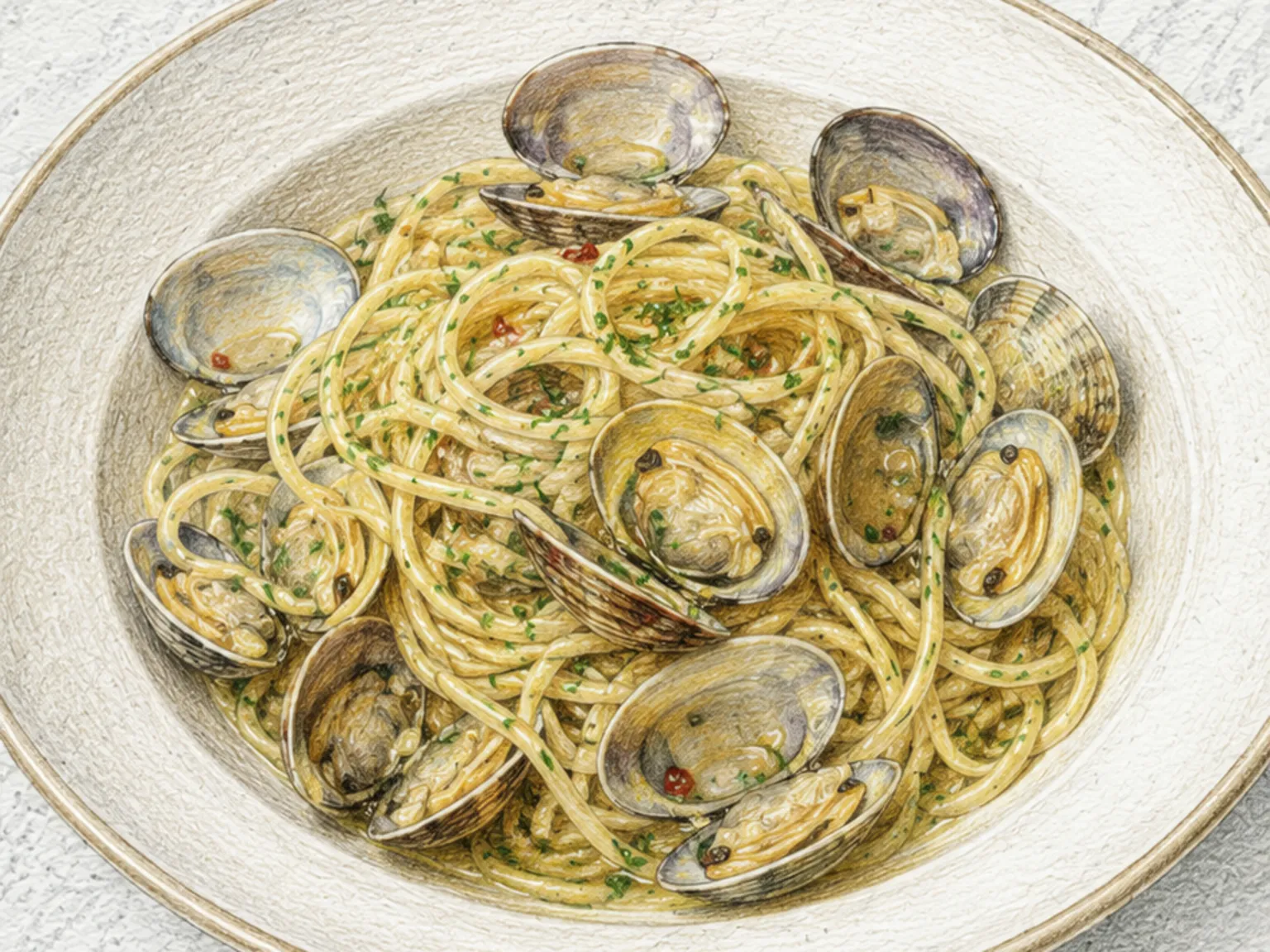
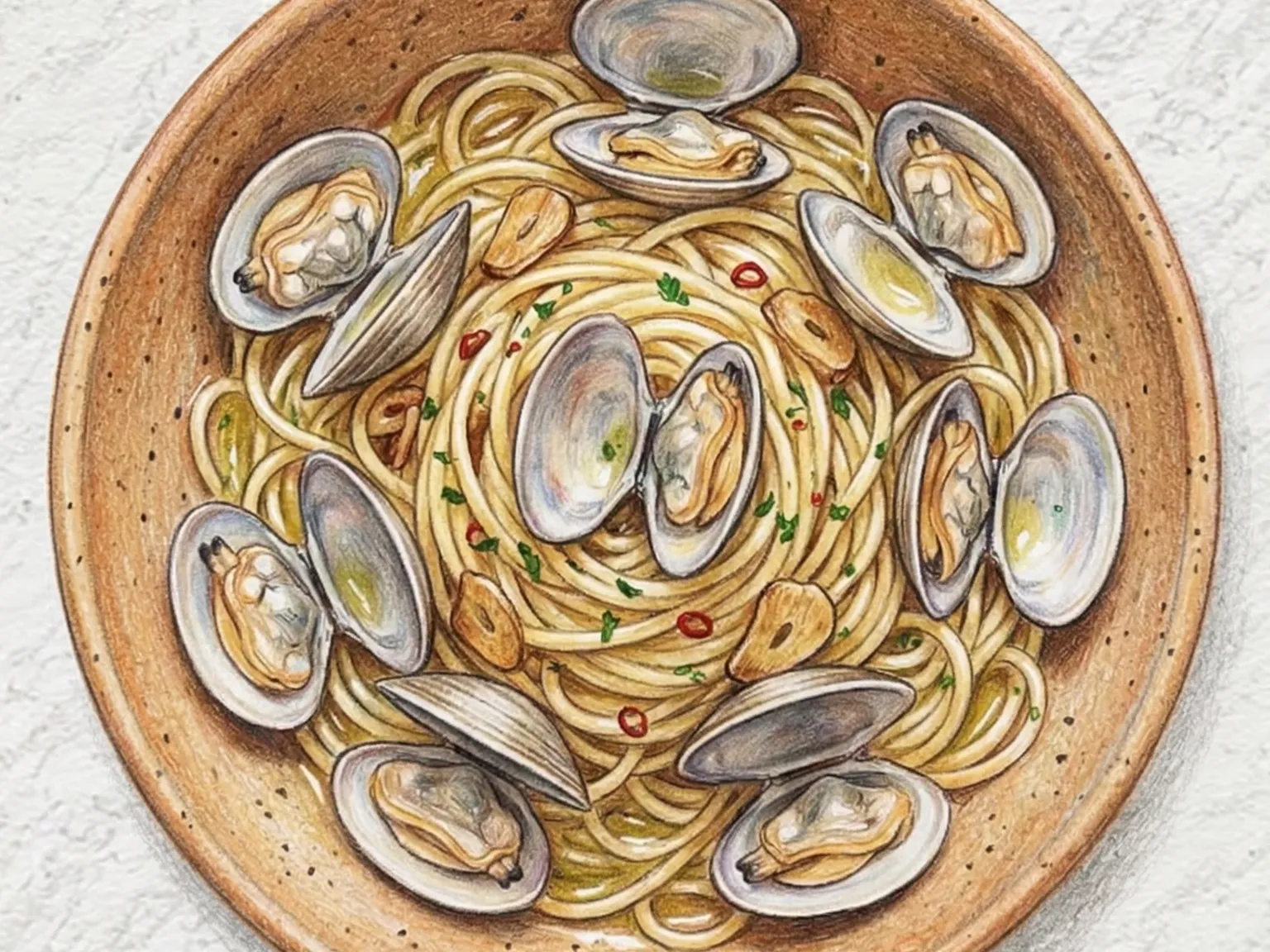
Spaghetti alle vongole is an Italian pasta where clams are cooked in olive oil with sliced garlic, chili flakes, and dry white wine until they open and release their briny juices.
What makes this special
- Briny clams release juice into a garlic and white wine sauce for this classic Italian pasta.
- Sliced garlic slowly cooked in oil builds deep flavor before clams go in
- High heat with lid on draws out briny clam liquor in 3 to 4 minutes
Key ingredients
Core cooking flow
- 1 Boil 180 g spaghetti in plenty of salted water until 1 minute short of the package time.
- 2 Slice 5 garlic cloves thinly and chop the parsley finely.
- 3 Put 3 tbsp olive oil and the sliced garlic in a wide pan over low heat.
Spaghetti alle vongole is an Italian pasta where clams are cooked in olive oil with sliced garlic, chili flakes, and dry white wine until they open and release their briny juices. The spaghetti is boiled one minute short of al dente, then finished in the clam pan with a few tablespoons of starchy pasta water to create an emulsified sauce. Vigorous tossing for about a minute binds the oil and clam liquid into a glossy coating around each strand. Fresh parsley is added at the end for color and herbal freshness.
Instructions
Read the steps as a cooking flow: prep, heat, seasoning, doneness control, and finish.
- 1Finish
Boil 180 g spaghetti in plenty of salted water until 1 minute short of the package time.
Before draining, reserve 1 cup of the starchy water so the sauce can be adjusted without becoming oily.
- 2Prep
Slice 5 garlic cloves thinly and chop the parsley finely.
Check 500 g purged clams, discard broken shells, and drain off excess water so the pan does not cool too much when the clams go in.
- 3Control
Put 3 tbsp olive oil and the sliced garlic in a wide pan over low heat.
Cook for about 2 minutes, stirring often, and stop when the garlic edges turn pale gold, not brown.
- 4Step
Add 0.5 tsp dried chili flakes and stir for only 20 seconds so they perfume the oil without burning.
Add the clams and 80 ml dry white wine, then raise the heat to high.
- 5Control
Cover and cook for 3-4 minutes until most clams open and the wine smells less sharp.
Shake the pan once during cooking, then remove any clams that stay closed or have broken shells.
- 6Finish
Add the spaghetti with 3-4 tbsp reserved pasta water and toss hard for about 1 minute, lowering the heat if it looks greasy.
When glossy, taste first, then finish with parsley, pepper, and a little salt only if needed.
After the steps
Pick a recipe that fits this dish.
Continue with shared ingredients, meal pairings, or a similar method.
Recipes That Go Well With This
More Noodles →Based on shared ingredients and meal pairing
Gochujang Vongole Linguine
Gochujang vongole linguine brings together the briny liquor of Manila clams and the fermented heat of Korean red chili paste in a single pan. White wine steams the clams open and releases their cooking juices, which form the base of the sauce; dissolving gochujang into that liquid adds a layer of thick, complex spice that standard vongole never carries. Stirring in a knob of butter just before the heat goes off gives the sauce a glossy finish and a smooth coating texture, while parsley and black pepper anchor the flavors at the end. The most important step in the process is slicing garlic as thin as possible and frying it slowly in olive oil until the raw sharpness converts entirely into a sweet, penetrating fragrance that defines the aromatic foundation of the sauce.
Garlic Olive Oil Pasta
Aglio e olio - garlic and oil - is the pasta Italians make at midnight with nothing in the kitchen but pantry staples. It originated in Naples, where olive oil was abundant and elaborate sauces were a luxury that working-class cooks could not afford. The entire dish depends on technique: garlic must be sliced thin and toasted slowly in generous olive oil over low heat until fragrant and barely golden - a matter of seconds past that point and it turns acrid and bitter. Peperoncino flakes go in briefly to release their capsaicin into the oil before the heat is adjusted. The real transformation happens when starchy pasta water hits the hot oil: it emulsifies into a silky, clinging sauce that coats every strand of spaghetti with a thin, even film rather than pooling at the bottom of the bowl. No cream, no cheese in the traditional version - just the clean triad of garlic, chili, and good olive oil. Flat-leaf parsley scattered on at the end contributes a fresh herbal brightness that lifts the whole dish.
Citrus Fennel Salad (Orange & Shaved Fennel with Arugula)
Fennel is shaved thin to highlight its anise-scented crunch, then paired with segmented orange for juicy acidity. Arugula contributes a peppery bite that offsets the citrus sweetness, and sliced almonds add a toasted crunch. The dressing stays minimal - olive oil and white wine vinegar - so the raw ingredients come through clearly without interference. Dressing should be added just before serving to prevent the fennel from wilting. The salad works well before rich meat or fish courses, since the citrus and fennel combination opens the palate rather than dulling it.
Squid Ink Seafood Linguine
Squid ink seafood linguine dissolves squid ink in reserved pasta water before adding it to the pan, ensuring even distribution without clumping. Shrimp and squid rings are seared quickly over high heat to set their surfaces, then finished during the final emulsification step so they stay springy rather than rubbery. Sliced garlic infused slowly in olive oil forms the aromatic base, and white wine with halved cherry tomatoes introduces a gentle acidity once the alcohol cooks off. The ink coats linguine in a glossy black sauce that carries concentrated brininess, and chopped parsley scattered on top provides a fresh herbal contrast. A small squeeze of lemon juice added at the end brightens the deep, saline richness of the squid ink and makes the oceanic flavors more vivid with each bite.
Serve with this
Korean Chive Clam Jeon (Garlic Chive and Clam Seafood Pancake)
Buchu-bajirak-jeon is a seafood pancake of garlic chives and clam meat, pan-fried in a batter made with a mix of all-purpose pancake flour and rice flour. The rice flour addition increases the chew and gives the finished jeon a slightly more resilient texture than plain flour batters. Clam meat releases a briny, oceanic liquid as it cooks that seeps into the batter and flavors it throughout, while the chives add a sharp, grassy counterpoint. Minced garlic and diagonally sliced cheongyang chili worked into the batter suppress any fishiness and build a layered fragrance. A generous amount of oil in the pan over medium heat produces edges that crisp and brown like the outside of a fritter. Waiting until the bottom is fully set before flipping prevents the pancake from tearing. Served with soy dipping sauce or a seasoned soy mixture, the clean salinity of the clams comes through clearly.
Korean Stir-fried Potato and Shrimp
Gamja-saeu-bokkeum pairs julienned potatoes with shell-on medium shrimp in a clean, garlic-forward stir-fry. The potatoes are soaked in cold water first to remove surface starch, as skipping this step leads to clumping in the pan and a starchy, heavy texture. Garlic sizzles in oil to build an aromatic base before the shrimp go in, cooking until half-done so their natural sweetness transfers to the potato strips when the two are combined. Seasoned with nothing more than salt, pepper, and a finish of sesame oil, this banchan lets the contrast between the potato's floury bite and the shrimp's springy snap carry the dish. Thin slices of Cheongyang chili pepper can be added for a clean, sharp heat that makes the stir-fry even more compatible as a rice side dish. The combination of orange shrimp, pale yellow potato, and green chili also gives the finished plate a natural visual balance.
Chicken Mu (Korean Fried Chicken Radish Pickle)
The crunchy, sweet-sour radish pickle served with every order of Korean fried chicken - now easy to make at home in under 15 minutes. Cubed radish is submerged in a cooled brine of vinegar, sugar, salt, and whole black peppercorns. Using fully cooled brine rather than hot is critical for maintaining the radish's firm, snapping crunch. Ready to eat after one day of refrigeration, its bright acidity cleanses the palate between bites of crispy chicken. Stored in a glass jar, this pickle keeps for over a week.
Similar recipes
Buchu Vongole Spaghetti (Korean Garlic Chive and Clam Pasta)
Buchu vongole spaghetti takes the Italian vongole format and finishes it with a fistful of Korean garlic chives, combining a briny shellfish sauce with the sharp, vegetal fragrance that buchu brings. Garlic slices and dried chili flakes are first infused in olive oil until fragrant, then white wine goes in and the alcohol burns off quickly, leaving only the wine's fruity character in the base. Manila clams added to the pan steam open in two to three minutes under a lid, releasing their liquor into the oil and wine. That clam broth carries enough salinity and umami to season the entire sauce - no added salt required at any point. A ladleful of pasta water stirred in while shaking the pan hard creates an emulsion that bonds the clam broth with the olive oil and coats every strand. The garlic chives are added off heat so they stay bright green and fragrant rather than going soft and losing their character. A scatter of chopped Italian parsley over the finished bowl adds a last note of herbal freshness.
Vongole Bianco (Italian Spaghetti Dish)
This oil-based pasta uses clams, garlic, and white wine for a clean but savory profile. Briny clam juices soak into the noodles for layered flavor.
Pasta Puttanesca (Neapolitan Anchovy Olive Caper Tomato Sauce)
Pasta puttanesca is a Neapolitan pasta sauce built from anchovies melted into olive oil, crushed whole tomatoes, black olives, capers, and peperoncino. The anchovies dissolve completely during cooking, leaving behind a deep umami foundation rather than a fishy taste. Olives and capers provide enough salt that additional seasoning is rarely needed. The entire sauce comes together in under twenty minutes using shelf-stable pantry ingredients.