Korean Spicy Braised Tofu
Quick answer
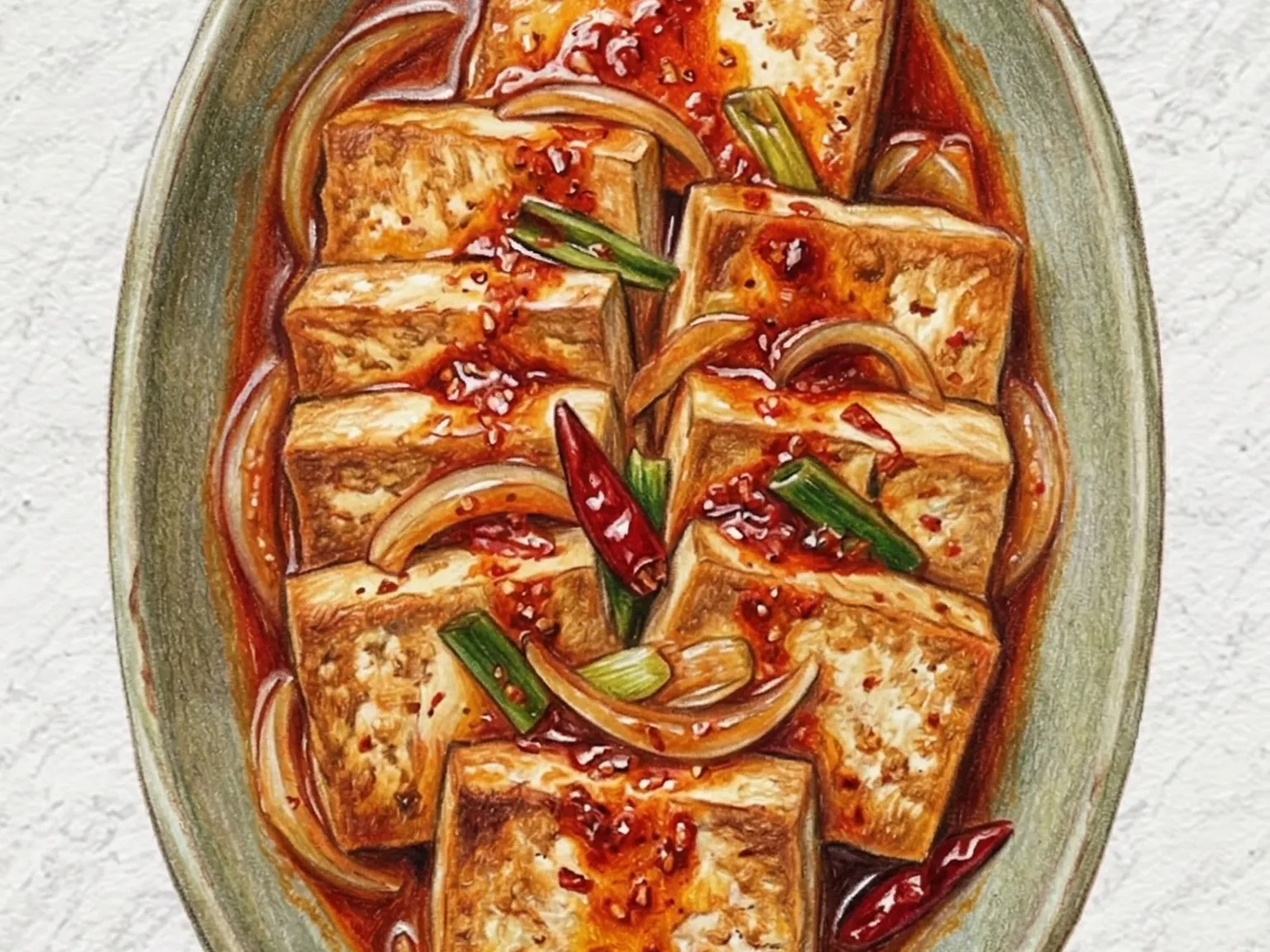
Spicy dubu-jorim pan-sears firm tofu slabs cut 1.5 centimeters thick until golden on both sides, then braises them in a sauce of soy sauce, gochugaru, garlic, and sugar.
What makes this special
- Pan-seared firm tofu slabs braise in a gochugaru-soy broth until the chili seasoning penetrates each cube.
- Pan-frying the tofu first firms the surface so it holds together when braised
- 5-minute brine soak draws out excess moisture before searing
Key ingredients
Core cooking flow
- 1 Cut 400 g firm tofu into 1.5 cm slabs and soak them in lightly salted water for 5 minutes.
- 2 Heat a pan over medium heat, then arrange the tofu in one layer without overlapping.
- 3 Mix 2 tbsp soy sauce, 1 tbsp gochugaru, 1 tsp minced garlic, 0.5 tbsp sugar, and 120 ml water.
Spicy dubu-jorim pan-sears firm tofu slabs cut 1.5 centimeters thick until golden on both sides, then braises them in a sauce of soy sauce, gochugaru, garlic, and sugar. Searing first firms the tofu so it holds its shape through the eight-minute simmer, during which onion and green onion cook alongside in the reducing liquid. The chili flakes deliver a direct, persistent heat that penetrates the tofu as the sauce thickens, balanced by the sugar's sweetness. A final circle of sesame oil ties the flavors together with a roasted, nutty aroma.
Instructions
Read the steps as a cooking flow: prep, heat, seasoning, doneness control, and finish.
- 1Season
Cut 400 g firm tofu into 1.5 cm slabs and soak them in lightly salted water for 5 minutes.
Lift them out carefully, then press with paper towels until the surface feels dry enough to sear without splattering.
- 2Control
Heat a pan over medium heat, then arrange the tofu in one layer without overlapping.
Sear until both sides are golden and the edges feel firmer, turning gently so the slabs do not break.
- 3Control
Mix 2 tbsp soy sauce, 1 tbsp gochugaru, 1 tsp minced garlic, 0.5 tbsp sugar, and 120 ml water.
Stir until the sugar dissolves so the sauce reduces evenly instead of burning in spots.
- 4Season
Spread 0.5 onion and 0.5 green onion evenly over the seared tofu.
Pour the braising sauce around the edges first, letting it flow between the pieces so the tofu stays in place.
- 5Control
Lower the heat to medium-low and simmer for about 8 minutes, until the liquid looks slightly reduced but still moist.
Spoon the sauce over the tofu often so the seasoning coats the top evenly.
- 6Finish
Turn off the heat when a shallow layer of sauce remains in the pan.
If it tastes too salty, add 1-2 tbsp water and loosen briefly, then finish with 1 tsp sesame oil.
After the steps
Pick a recipe that fits this dish.
Continue with shared ingredients, meal pairings, or a similar method.
Recipes That Go Well With This
More Stir-fry →Based on shared ingredients and meal pairing
Korean Doenjang Braised Tofu
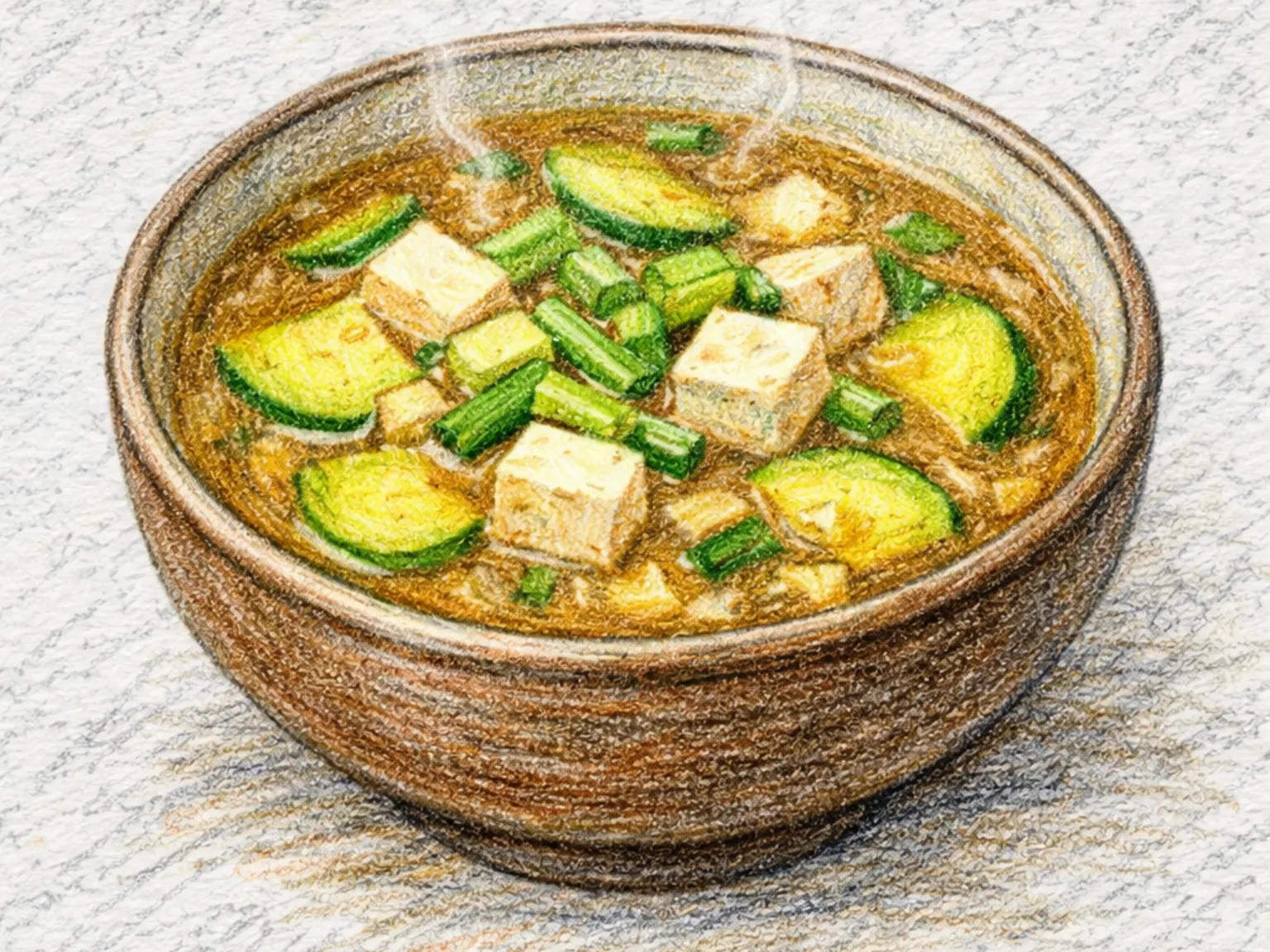
Doenjang-dubu-jorim is a braised tofu banchan in which tofu slices are simmered in a broth of fermented soybean paste, water, and aromatics until the liquid reduces and the seasoning permeates the tofu throughout. Doenjang is a Korean fermented soybean paste with a deeply savory, earthy character distinct from Japanese miso, and its slow penetration into the porous interior of the tofu produces a richness that simple soy-seasoned tofu does not achieve. Zucchini and onion are added to the same pot, and their natural sweetness tempers the salt of the paste, giving the final braise a more balanced flavor. The tofu is braised until its surface firms slightly, which helps it hold its shape while the interior stays soft and fully seasoned. Any remaining braising liquid is well-seasoned and pairs naturally with a bowl of rice. It is an economical banchan that requires minimal preparation and stores in the refrigerator for several days.
Korean Braised Tofu and Mushrooms
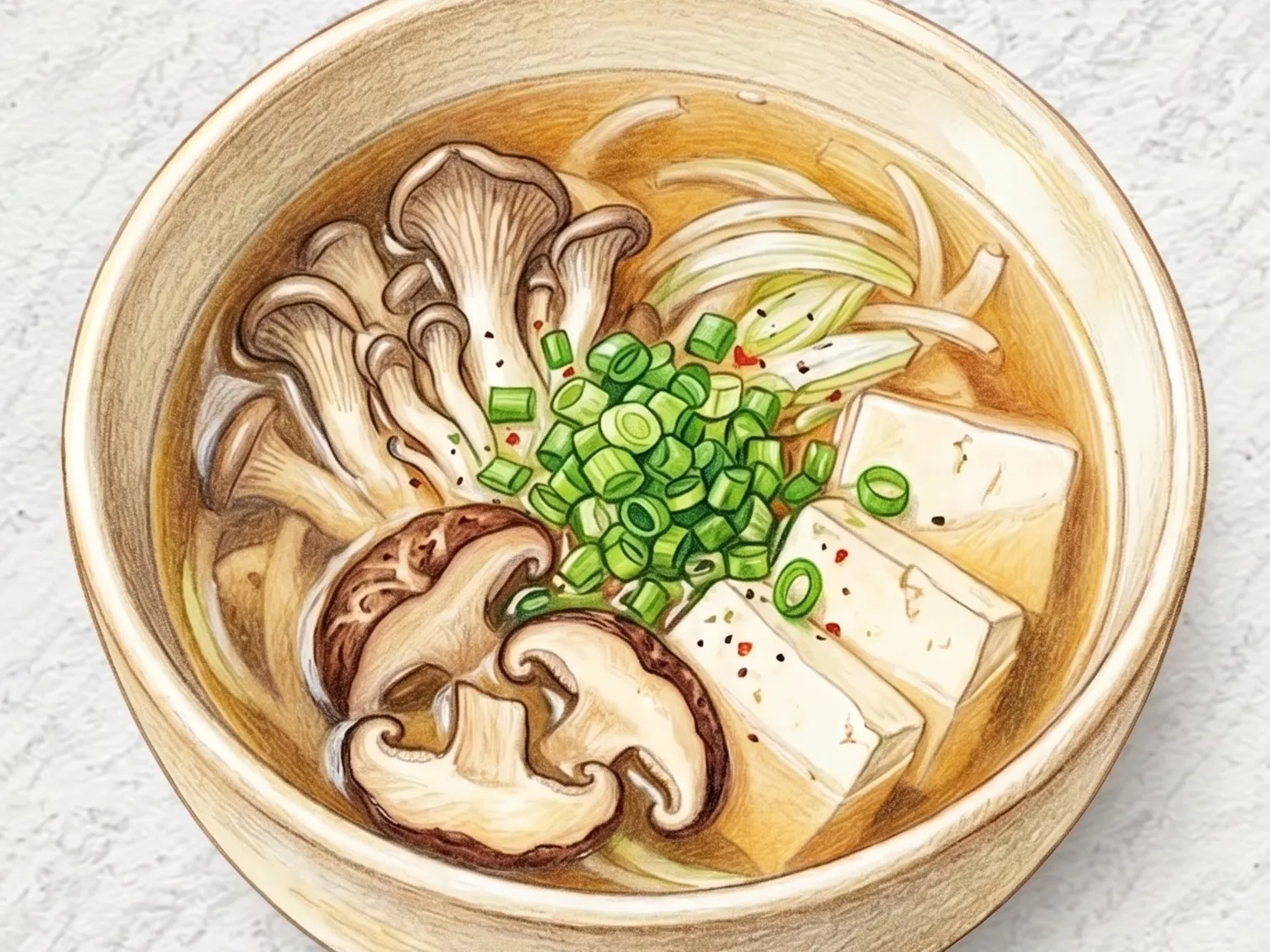
Dubu-beoseot-jorim is a Korean braised side dish of firm tofu and oyster mushrooms simmered in a soy-based sauce until the liquid reduces to a glossy, clinging coat. The tofu is pan-fried first in a lightly oiled skillet to form a firm outer crust before braising begins, which allows it to absorb the seasoned liquid without crumbling or losing its structure during cooking. The result is a cube with a slightly firmer exterior and a soft, custardy interior that holds together through each bite. Oyster mushrooms, torn along their natural grain rather than cut, contribute a pleasantly chewy texture and release their inherent umami into the braising liquid as they cook, adding depth without the need for separate stock. The sauce requires only soy sauce, water, garlic, gochugaru, and sesame oil, making this a straightforward braise that rewards careful heat management over elaborate preparation. When the sauce has reduced to just a small pool at the bottom of the pan, the dish is ready, well-seasoned enough to serve alongside plain rice or pack into a lunchbox.
Korean Beef Fried Rice (Soy-Marinated Ground Beef Stir-fried Rice)
Sogogi bokkeumbap stir-fries soy-marinated ground beef with diced vegetables and day-old rice over high heat for a deeply savory fried rice. The beef goes in first, rendering its fat and leaving behind a flavorful fond that coats the pan. Onion, carrot, and zucchini follow, cooking just until their edges soften and their natural sugars begin to caramelize. Cold rice is added and tossed vigorously to break up clumps, picking up the soy seasoning and meat juices as it fries. A final drizzle of sesame oil right before plating adds a fragrant, nutty finish. The beef infuses the rice with a meaty depth while the vegetables keep the dish from feeling heavy, making it a quick, satisfying meal from everyday pantry ingredients.
Korean Soy Braised Eggplant
Gaji-jorim is a Korean braised eggplant dish where the eggplant is simmered in a soy sauce-based seasoning until the flesh becomes thoroughly tender and saturated with flavor throughout. Eggplant has a sponge-like cellular structure that draws in liquid as it cooks, and the longer it simmers in the seasoning, the deeper the sweet-salty flavor penetrates into each piece. The sauce reduces as the eggplant cooks, concentrating around the flesh rather than pooling at the bottom of the pan, which means every bite carries the full seasoning. A finishing drizzle of sesame oil and a scattering of sesame seeds add a nutty aroma that rounds out the savory base. Despite using only eggplant as the main ingredient, the slow braising process concentrates the flavors into a compelling side dish that makes plain rice easy to eat in quantity. The seasoning adheres to the eggplant even after cooling, making it a practical addition to a packed lunch as well as a fresh rice accompaniment.
Serve with this
Manduguk (Korean Dumpling Clear Broth Soup)
Manduguk is a Korean dumpling soup in which hand-folded dumplings stuffed with ground pork, tofu, scallion, and garlic are dropped into a clear, simmering broth, typically anchovy-kelp stock or beef broth, and cooked until they float. As the dumplings cook, their thin wheat-flour wrappers release a subtle starch that gives the broth a barely perceptible body, while the filling leaks savory juices that enrich the liquid gradually. A thin drizzle of beaten egg stirred in near the finish creates silken wisps on the surface of the broth and gives the bowl a more finished appearance. Shredded egg strips and crumbled dried seaweed scattered on top add a pleasant contrast in color and a faint oceanic note to the flavor. Many Korean households serve manduguk on Lunar New Year as an alternative to tteokguk, and some combine the two by adding sliced rice cakes alongside the dumplings. Dumplings can be made in large batches and frozen raw, which means this soup can be pulled together quickly on weeknights without sacrificing any of the flavor that comes from homemade filling. A small dish of soy-vinegar dipping sauce served alongside lets each person adjust the seasoning at the table, and the light acidity of the sauce cuts through the mild broth in a way that makes the contrast between the two worth trying.
Korean Crumbled Tofu Stir-fry
Dubu seoboro - crumbled tofu stir-fry - is a Korean banchan that transforms a block of tofu into something resembling a dry, granular scramble. The tofu is crumbled by hand into rough, irregular pieces rather than diced, creating a range of textures from large curds to fine crumbs that hold seasoning differently. Squeezed thoroughly in a cloth to remove as much moisture as possible, it then goes into a hot pan with diced carrot, onion, and zucchini. The key technique is cooking on high heat without stirring too often, allowing the tofu crumbles to develop lightly golden edges before soy sauce and sesame oil go in at the end. The result is a fluffy, granulated side dish that soaks into rice like a savory topping - satisfying without being rich. Popular in Korean daycare and school lunches because it delivers plant protein in a form that children eat willingly, and it travels cleanly in lunchboxes without leaking. The ingredient cost is low and the cooking time short, which makes it one of the first recipes to reach for when the refrigerator is running low on banchan.
Korean Mushroom Dumpling Hot Pot
Mandu jeongol is a generous hot pot of twelve large dumplings simmered with napa cabbage, shiitake mushrooms, oyster mushrooms, and bok choy in anchovy-kelp stock. The two varieties of mushroom add layers of umami to the clear broth, while the cabbage and bok choy soften and release their natural sweetness as they cook. The dumplings cook directly in the simmering stock, their wrappers gradually turning chewy as the filling flavors seep into the surrounding liquid. Soup soy sauce and garlic provide a clean, understated seasoning that keeps the broth from overshadowing any single ingredient. The right moment to eat is when the vegetables have wilted and the dumplings float to the surface, signaling they are cooked through. The absence of any spice or strong seasoning makes this one of the more universally approachable hot pots, suited for all ages. Leftover broth absorbs cooked rice or soaked glass noodles easily, turning what remains into a satisfying finish to the meal.
Similar recipes
Korean Perilla Braised Tofu
Deulkkae dubu-jorim is a Korean braised tofu side dish finished with ground perilla seeds for a distinctly nutty, creamy character. Firm tofu slabs are lightly pan-seared, then simmered in a soy sauce and garlic broth with sliced onion. Ground perilla powder is stirred in toward the end, thickening the sauce into a pale, velvety coating that clings to each piece. A final drizzle of sesame oil and a scattering of green onion rounds out the dish with fragrant warmth.
Korean Braised Tofu in Spicy Sauce
Dubu-jorim is one of the most reliably prepared tofu dishes in Korean home cooking, made from ingredients that are almost always on hand, yet the sequence of steps makes a significant difference to the result. Before the tofu ever touches the braising sauce, it must be fried in a dry pan until each face develops a thin, golden crust. That crust serves two purposes simultaneously: it keeps the tofu slabs intact as the sauce reduces around them, and it acts as a permeable layer through which the seasoning gradually penetrates toward the center during braising. The sauce - soy sauce, gochugaru, minced garlic, sugar, and water - simmers around the tofu for eight to ten minutes until it has reduced by roughly half and thickened into a glossy, spicy-sweet glaze that coats the exterior in a dark, caramelized layer. The finished tofu has three distinct zones in every slice: the outermost layer where the sauce has caramelized and taken on a slightly chewy quality, a middle band where the seasoning has fully soaked in, and a white, creamy center that provides a bland, soft contrast to the intensely flavored exterior. All three zones are present in a single bite, which is what makes this dish more texturally interesting than a standard braise. Korean home cooks typically double the recipe and refrigerate half for weekday meals, where the flavors deepen further after a night in the cold.
Korean Braised Tofu with Shrimp
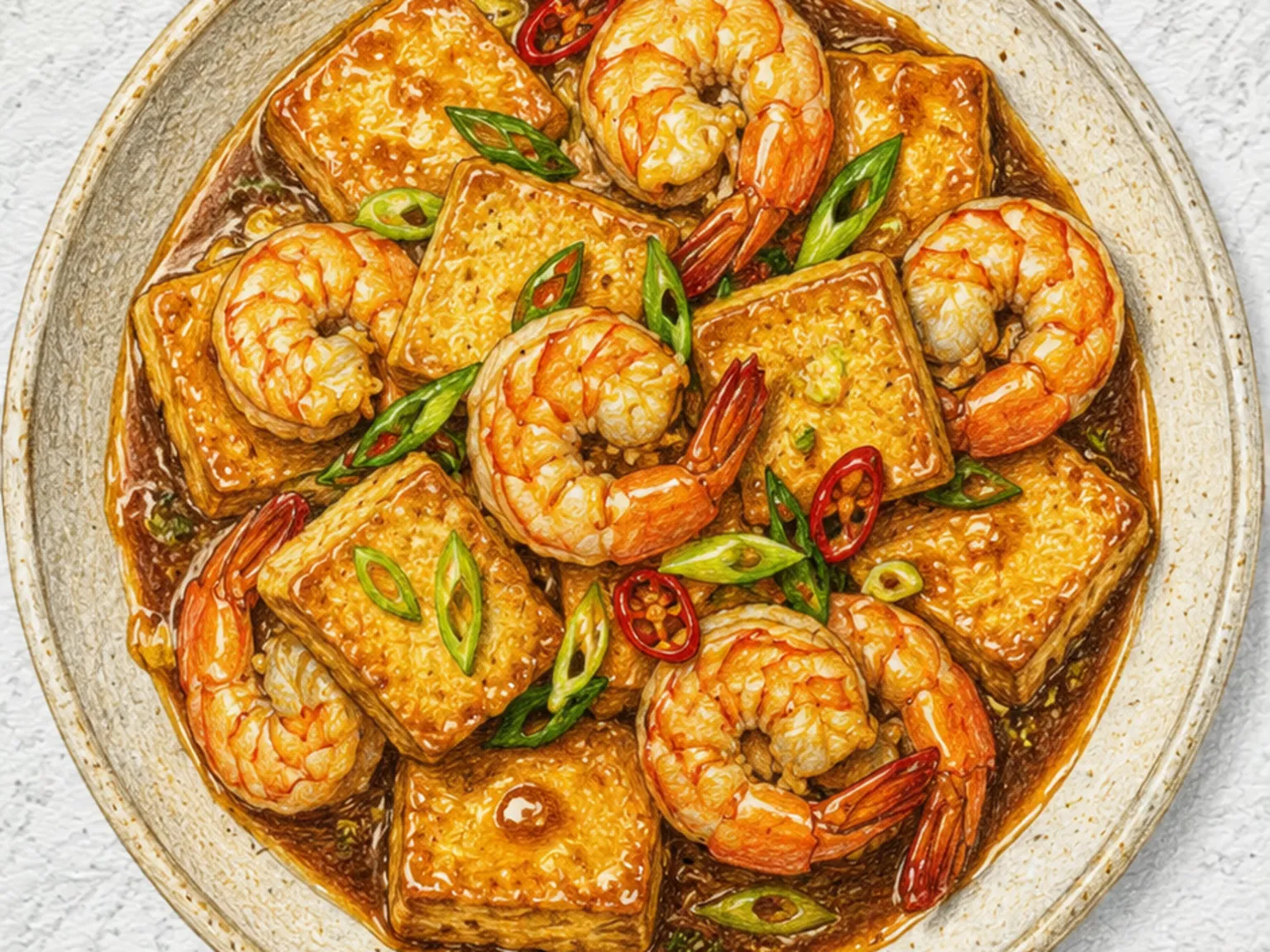
Dubu-saeu-jorim pairs pan-seared tofu with whole shrimp in a soy-based braising sauce, stepping well beyond the usual tofu-only preparations that appear in everyday banchan. The tofu is seared first until golden on both sides to develop a lightly firm crust that resists breaking apart during the braising stage, then set aside while shrimp cook briefly in the same pan, picking up the fond left by the tofu. The braising liquid -- soy sauce, minced garlic, sugar, cooking wine, and a touch of gochugaru -- goes in next, and both proteins return to the pan to simmer together for five minutes over medium heat. The shrimp release their marine sweetness into the sauce as they tighten and curl, and the porous interior of the tofu absorbs that combined soy-seafood flavor throughout each cube. Adjusting the simmer time controls the final sauce concentration: shorter for a looser, silkier coat; longer for a more intensely reduced glaze. The textural pairing is the dish's central appeal -- yielding, custardy tofu against the springy, snapping bite of the shrimp. Adding sliced green onion or fresh chili introduces another layer of fragrance, and scaled up in quantity, the dish works just as well spooned over steamed rice as a satisfying one-bowl meal.