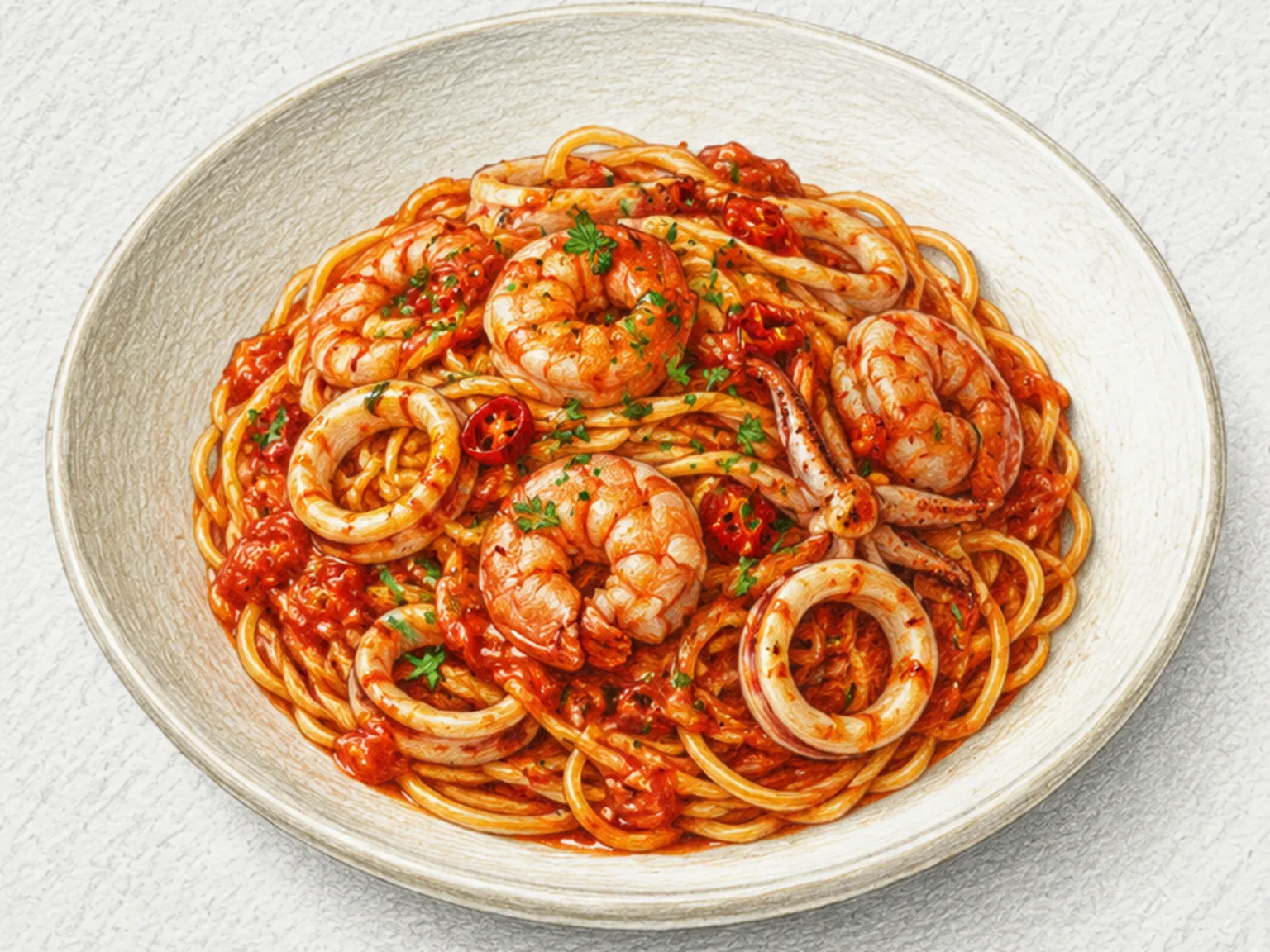
Spicy Seafood Tomato Pasta
Spicy seafood tomato pasta starts by building a chili-infused oil base - garlic, onion, and red pepper flakes sauteed in olive oil until fragrant. Shrimp and squid are seared briefly until just opaque on the outside, then hand-crushed whole tomatoes are added and the sauce simmers for six to seven minutes, during which the tomato reduces and absorbs the juices released by the seafood. Cooking the seafood only until the surface turns white is critical, as the residual heat from the simmering sauce finishes them gently without making them rubbery. The spaghetti is boiled one minute short of al dente and tossed in the sauce pan with a splash of pasta water over high heat, which emulsifies the sauce and binds it to each strand. The chili heat cuts cleanly through the tomato's acidity and the seafood's brininess, and chopped parsley adds a final fresh herbal note.
Adjust Servings
Instructions
- 1
Cook spaghetti in salted boiling water 1 minute less than package directions.
- 2
Saute garlic and onion in olive oil over medium heat until fragrant.
- 3
Add chili flakes, then quickly cook shrimp and squid until just opaque.
- 4
Crush in the tomatoes and simmer for 6-7 minutes to build the sauce.
- 5
Add pasta and 2 tbsp pasta water, tossing over high heat for 1 minute.
- 6
Finish with parsley and serve immediately.
As an Amazon Associate, we may earn from qualifying purchases.
Tips
Nutrition (per serving)
More Recipes

Spaghetti alla Puttanesca
Spaghetti alla puttanesca melts anchovy fillets into olive oil with sliced garlic over low heat, creating a deeply savory base before any tomato is added. Hand-crushed whole tomatoes, halved black olives, capers, and red pepper flakes go in next and simmer for eight minutes, during which the sauce reduces and the briny, salty, and spicy elements fuse into a bold, cohesive flavor. The anchovies dissolve completely, leaving no trace of fish but contributing an intense umami backbone. Because capers and anchovies are already heavily salted, seasoning is adjusted only at the very end by taste. The spaghetti is pulled one minute short of al dente and finished in the sauce pan with a splash of pasta water, which allows the starch to bind the sauce tightly to each strand.

Meat Sauce Pasta
Meat sauce pasta cooks ground beef in olive oil until deeply browned for a strong Maillard reaction, then builds flavor with diced onion and garlic before adding tomato sauce and tomato paste. Simmering the sauce on low heat for at least 15 minutes allows the tomato acidity to mellow and the meat juices to concentrate. Salting the pasta water generously - as salty as the sea - seasons the noodles from the inside. Tossing the drained spaghetti directly into the sauce pan for a minute or two lets the surface starch bind with the sauce for better coating. A splash of red wine adds acidity and depth, while grated Parmesan and fresh basil at the end bring a savory-herbal finish. The dish is straightforward but rewards patience during the simmer.

Penne all'Arrabbiata (Spicy Tomato and Garlic Pasta)
Arrabbiata - meaning 'angry' in Italian - is a Roman pasta sauce whose fiery reputation comes from the liberal use of dried peperoncino chili flakes. The sauce descends from the cucina povera tradition of Lazio, where tomatoes, garlic, olive oil, and chili were the only ingredients a working kitchen could afford. Garlic is sliced thin and toasted in olive oil until fragrant, then chili flakes bloom in the hot fat for just seconds before crushed tomatoes go in. The sauce simmers uncovered for fifteen to twenty minutes, reducing until it thickens enough to coat each tube of penne. The heat builds gradually - not aggressive on the first bite but persistent, lingering at the back of the throat after several forkfuls. A shower of fresh parsley at the end adds a green, herbal brightness that cuts the chili's warmth. No cream, no cheese in the purist version - just the clean triad of tomato acidity, garlic depth, and chili fire.

Spaghetti Aglio e Olio (Garlic and Olive Oil Pasta)
Spaghetti aglio e olio is among the oldest recipes in the Italian pasta canon, documented in cookbooks as early as the 19th century. The dish is a study in restraint - five core ingredients, no sauce in the traditional sense, and a total cooking time under twenty minutes. Extra virgin olive oil heated gently with sliced garlic and dried chili flakes becomes the medium that carries flavor to every strand of pasta. The critical step is adding starchy pasta water to the pan and tossing aggressively over high heat, which emulsifies the oil and water into a glossy, clinging coat. Parmesan - not strictly traditional but widely adopted - adds a salty, crystalline crunch when shaved on top. The finished plate should look barely dressed, each strand glistening with oil rather than drowning in sauce. It is the dish that separates cooks who understand heat control from those who do not.

Gochugaru Anchovy Broccolini Orecchiette
Gochugaru anchovy broccolini orecchiette melts anchovy fillets into olive oil with garlic over low heat, creating a salty umami base free of fishiness. Korean chili flakes are briefly toasted in the anchovy oil, releasing a warm, aromatic heat rather than sharp spiciness. Broccolini is blanched in the pasta cooking water during the last two minutes, which saves a separate pot and keeps the florets crisp with a pleasantly bitter edge. Breadcrumbs toasted separately until golden are scattered over the finished dish, adding a crunchy contrast to the soft, cupped orecchiette shapes. A final squeeze of lemon juice cuts through the oil-rich sauce and brightens the overall flavor. Parmesan shaved on top adds a sharp, salty finish.

Gochujang Vongole Linguine
Gochujang vongole linguine pairs briny Manila clams with the fermented kick of Korean red chili paste in a single pan sauce. White wine steams the clams open and creates a seafood liquor that becomes the foundation of the sauce, while gochujang dissolves into it, adding a layer of spicy complexity absent from traditional vongole. A knob of butter stirred in at the end gives the sauce a glossy sheen, and parsley plus black pepper sharpen the finish. Slicing garlic thin and toasting it slowly in olive oil is key to building the aromatic backbone.