Korean Seasoned Bitter Lettuce
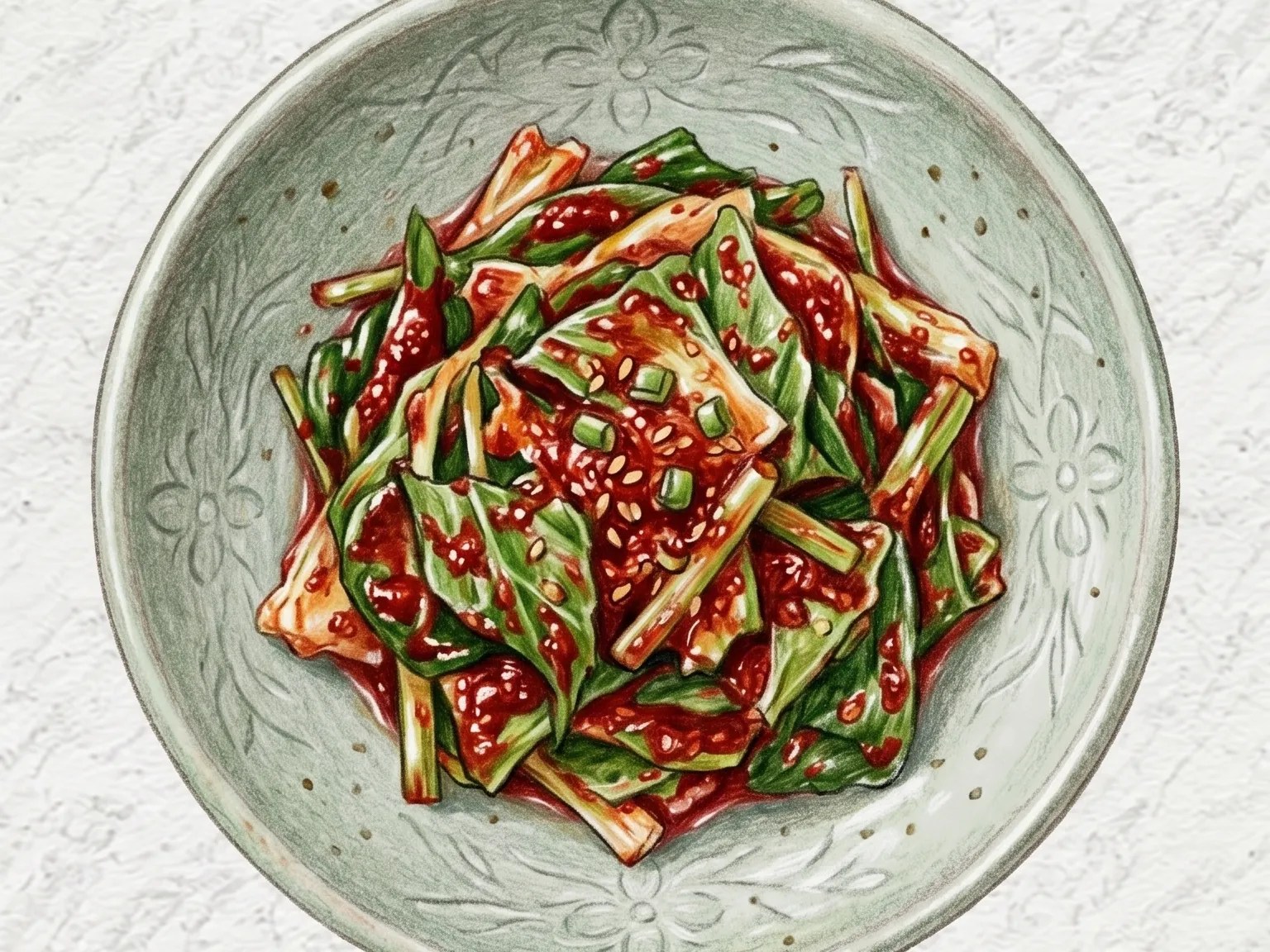
Wild sseumbagui, a bitter green foraged in Korean spring fields, is dressed in a gochujang vinaigrette that transforms its sharp bitterness into a layered, complex side dish. The intrinsic bitterness of the leaves works as a palate cleanser, and the gochujang's heat and vinegar's acidity wrap around it to build depth rather than mask it. Sugar smooths the rough edges of the combined flavors, while a drizzle of sesame oil closes each bite with a warm, nutty finish. Soaking the greens in salt water draws out enough bitterness to make them approachable without erasing the vegetal character that defines this namul. Over-soaking strips the personality entirely, leaving a flat, unremarkable green. Garlic folded into the dressing adds a pungent undercurrent, and a gentle tossing motion keeps the fragile leaves intact. The flavor progresses from bitter opening to spicy-sour middle to a sesame-scented close, a sequence that captures the taste of Korean spring.
Adjust Servings
Instructions
- 1
Wash sseumbagui thoroughly to remove all dirt.
- 2
Soak in cold water for 20-30 minutes to reduce bitterness.
- 3
Drain and cut into bite-sized pieces.
- 4
Mix gochujang, vinegar, sugar, minced garlic, and sesame oil for the sauce.
- 5
Gently toss with the sauce and sprinkle sesame seeds.
As an Amazon Associate, we may earn from qualifying purchases.
Tips
Nutrition (per serving)
More Recipes

Seasoned Korean Wild Lettuce
A bold, bitter-meets-spicy Korean side dish that wakes up the entire meal - foraged wild lettuce tossed in a fiery gochujang-vinegar dressing. Godeulppaegi (Ixeris dentata) is blanched briefly, then soaked in cold water for at least thirty minutes to tame its sharp bitterness. Dressed in gochujang, gochugaru, vinegar, sugar, garlic, and sesame oil, the remaining edge transforms into a complex, layered flavor. In season from spring through early summer, this is a prized banchan at rural markets across southern Korea.

Korean Seasoned Shepherd's Purse
Naengi-namul-muchim is a fragrant spring banchan made from shepherd's purse (naengi), a wild green foraged from rice paddy edges and field margins in early spring. The root is eaten along with the leaves - its distinctive earthy, almost truffle-like aroma defines the dish, and discarding it halves the point of using naengi at all. Cleaning the roots of clinging soil is the most time-consuming prep step, requiring careful scraping with a knife. Blanching must stay under thirty seconds to preserve the volatile aromatics, with immediate cold-water shocking to lock in color and fragrance. Doenjang, soup soy sauce, minced garlic, and sesame oil form the dressing - the fermented paste's earthy depth meets the herb's soil-scented fragrance to create a layered spring flavor. Doenjang rather than gochujang is the traditional choice because chili heat would overwhelm naengi's delicate perfume. Available at Korean markets only during the brief February-to-March window, it is one of the most anticipated seasonal namul.

Korean Seasoned Chamnamul Greens
Chamnamul - Korean pimpinella - grows wild in central Korea's mountain valleys and has been foraged since the Goryeo period. Its leaves carry a celery-like fragrance with a faint peppery finish. Blanched under a minute to preserve crispness, the greens are cut to 5 cm lengths and tossed with soy sauce, sesame oil, and garlic. Stems stay slightly firm while thinner leaves wilt just enough to absorb the dressing. A spring-only banchan, sometimes served raw when leaves are very young.

Korean Seasoned Butterbur Stems
Meoui-namul-muchim is a seasonal spring namul made by blanching butterbur (meowi) stems and dressing them with doenjang and ground perilla seeds. Butterbur grows wild along hillsides and stream banks throughout Korea. The stems are the edible part - the leaves contain pyrrolizidine alkaloids and are generally not consumed. Peeling the tough outer skin from each stem is a mandatory prep step; unpeeled stems leave unchewable fibers in the mouth. Blanching removes about half of the plant's inherent bitterness, leaving a subtle astringent quality that creates a complex interplay between the earthy doenjang and nutty perilla seed powder. Adding perilla generously softens the bitter edge, making the dish more approachable. March through April is peak season, when fresh butterbur appears briefly at Korean markets. Dried butterbur rehydrated year-round is an alternative but cannot match the fragrance of the fresh spring harvest.

Korean Chamnamul Jangajji (Pimpinella Pickles)
A fragrant Korean spring pickle that captures chamnamul's unique herbal aroma in a gentle soy-and-apple-vinegar brine - ready to eat in just one day. The greens are loosely packed in a jar and covered with warm (not boiling) brine to preserve the volatile aromatics. Apple vinegar produces a rounder, softer acidity than standard rice vinegar, complementing the grassy sweetness of chamnamul. A squeeze of lemon juice brightens the finish. Best consumed within five days for peak fragrance.

Korean Lettuce Root Kimchi
Godeulppaegi kimchi is a seasonal Korean kimchi made from the bitter wild herb godeulppaegi (Korean lettuce root), which is soaked in salted water for about a week to extract most of its sharp bitterness before being dressed in gochugaru, anchovy fish sauce, and glutinous rice paste for fermentation. The extended soak rounds off the bitter edge so that only a pleasant, lingering bitterness remains after fermentation, creating a complex interplay with the lactic acidity. The roots have a chewy, fibrous bite while the leaves turn soft, giving each stalk a dual texture. This is a regional autumn kimchi from the Jeolla and parts of Gyeongsang provinces, traditionally prepared to last through winter.