Korean Ssuk Deulkkae Jjigae (Mugwort Perilla Stew)
Stews Medium

Korean Ssuk Deulkkae Jjigae (Mugwort Perilla Stew)

Quick answer

This seasonal Korean stew combines fresh mugwort and perilla seed powder in a base of rice-rinse water.

What makes this special

  • Bitter mugwort meets nutty perilla powder in this seasonal ssuk deulkkae jjigae recipe.
  • Mugwort's bitter edge rises subtly through the perilla's nuttiness, a spring-only pairing
  • Perilla powder dissolved in water first for smooth, lump-free creamy broth
Total time
35 min
Level
Medium
Servings
2 servings
Ingredients
8
Calories
298 kcal
Protein
13 g

Key ingredients

fresh mugwortperilla seed powderpotatooyster mushroomsfirm tofu

Core cooking flow

  1. 1 Pull off the tough stems from 70g of mugwort by hand, rinse in cold water 2...
  2. 2 Cut 150g of potato into large 2cm cubes and tear 80g of oyster mushrooms alo...
  3. 3 Pour 700ml of rice washing water into a pot, add the potato first, and bring...

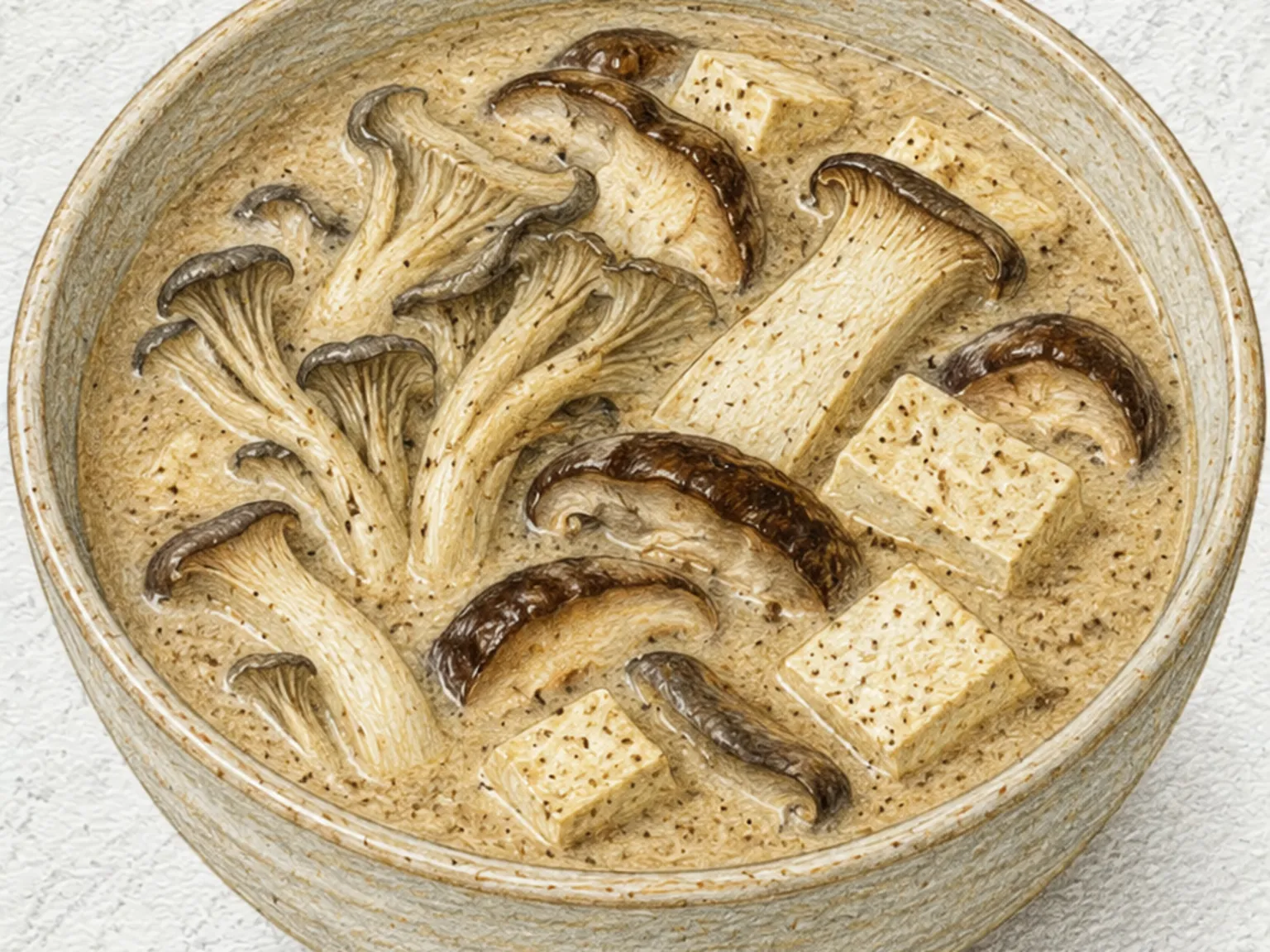
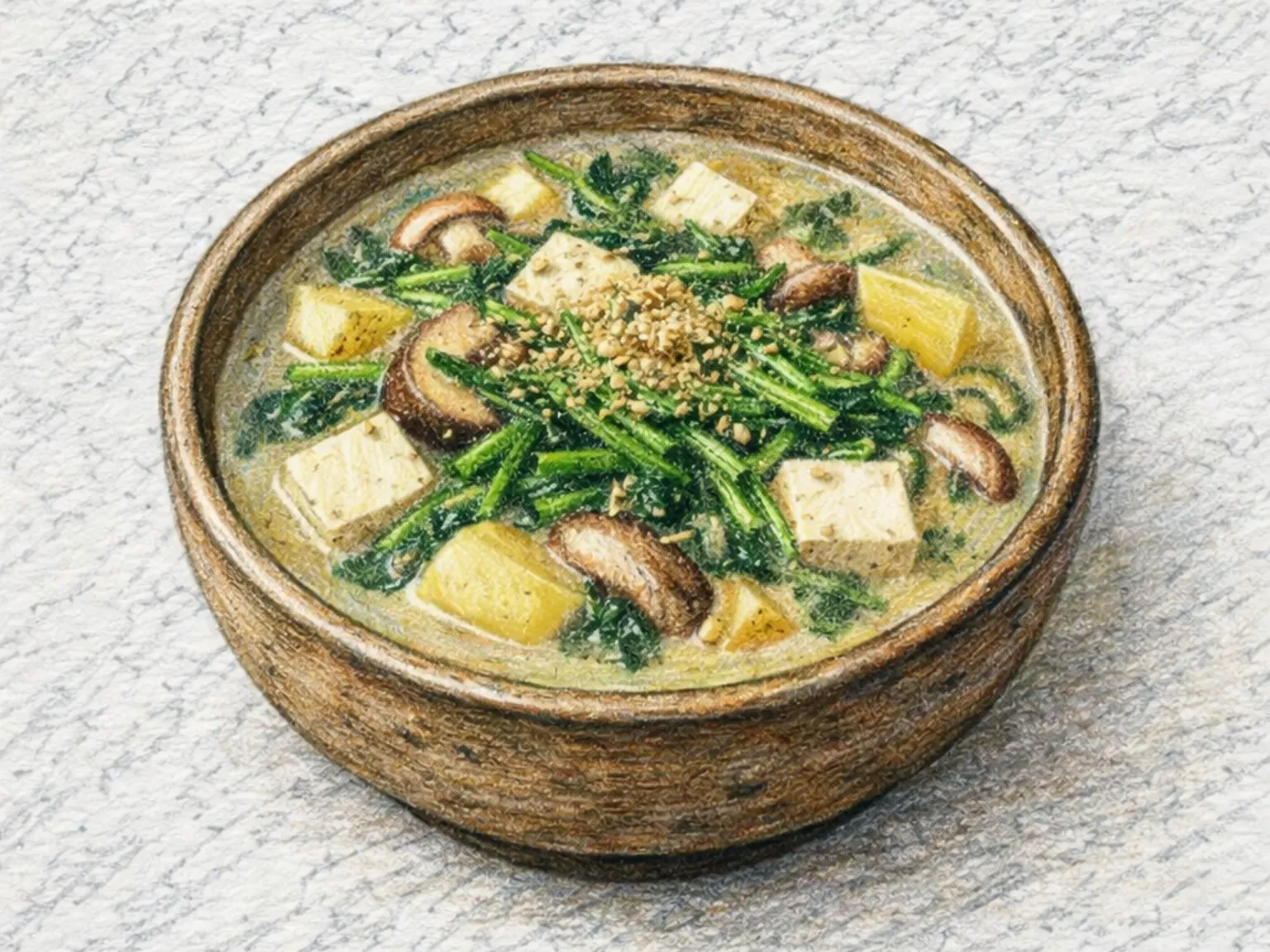
This seasonal Korean stew combines fresh mugwort and perilla seed powder in a base of rice-rinse water. The preparation begins by boiling cubed potatoes in the rice water to create a hearty foundation. Oyster mushrooms and firm tofu are added next, seasoned with soup soy sauce and minced garlic. To achieve a smooth consistency, the perilla seed powder is mixed with a small amount of water to form a slurry before it is stirred into the hot broth. The fresh mugwort, with its tough stems removed, is added during the final two minutes of cooking. This brief exposure to heat preserves both its green color and its aromatic, slightly bitter herbal notes. Simmering on medium-low heat at the very end ensures the delicate mugwort fragrance is not lost, resulting in a comforting dish where the nutty perilla broth balances the earthy herbs.

Prep 15min Cook 20min 2 servings

Instructions

Read the steps as a cooking flow: prep, heat, seasoning, doneness control, and finish.

6 steps
  1. 1
    Step

    Pull off the tough stems from 70g of mugwort by hand, rinse in cold water 2 to 3 times to remove soil and debris, then drain in a colander.

  2. 2
    Prep

    Cut 150g of potato into large 2cm cubes and tear 80g of oyster mushrooms along the grain to a consistent thickness.

  3. 3
    Control

    Pour 700ml of rice washing water into a pot, add the potato first, and bring to a boil over high heat, then reduce to medium and simmer for 8 minutes. The potato should be halfway cooked before adding the next ingredients.

  4. 4
    Control

    Add mushrooms, 150g of tofu, 1 teaspoon of minced garlic, and 1 tablespoon of soup soy sauce and simmer for 5 more minutes.

  5. 5
    Step

    Pre-dissolve 3 tablespoons of ground perilla seeds in 2 tablespoons of cold water to eliminate lumps, then stir into the broth.

  6. 6
    Finish

    Add the mugwort and cook for only 2 minutes, then turn off the heat while the aroma is still vivid.

    Mugwort must go in last to preserve its green color and fragrance.

After the steps

Pick a recipe that fits this dish.

Continue with shared ingredients, meal pairings, or a similar method.

Recipes That Go Well With This

More Stews →

Based on shared ingredients and meal pairing

Korean Turnip Perilla Seed Stew
Shared ingredient: oyster mushrooms Stews

Korean Turnip Perilla Seed Stew

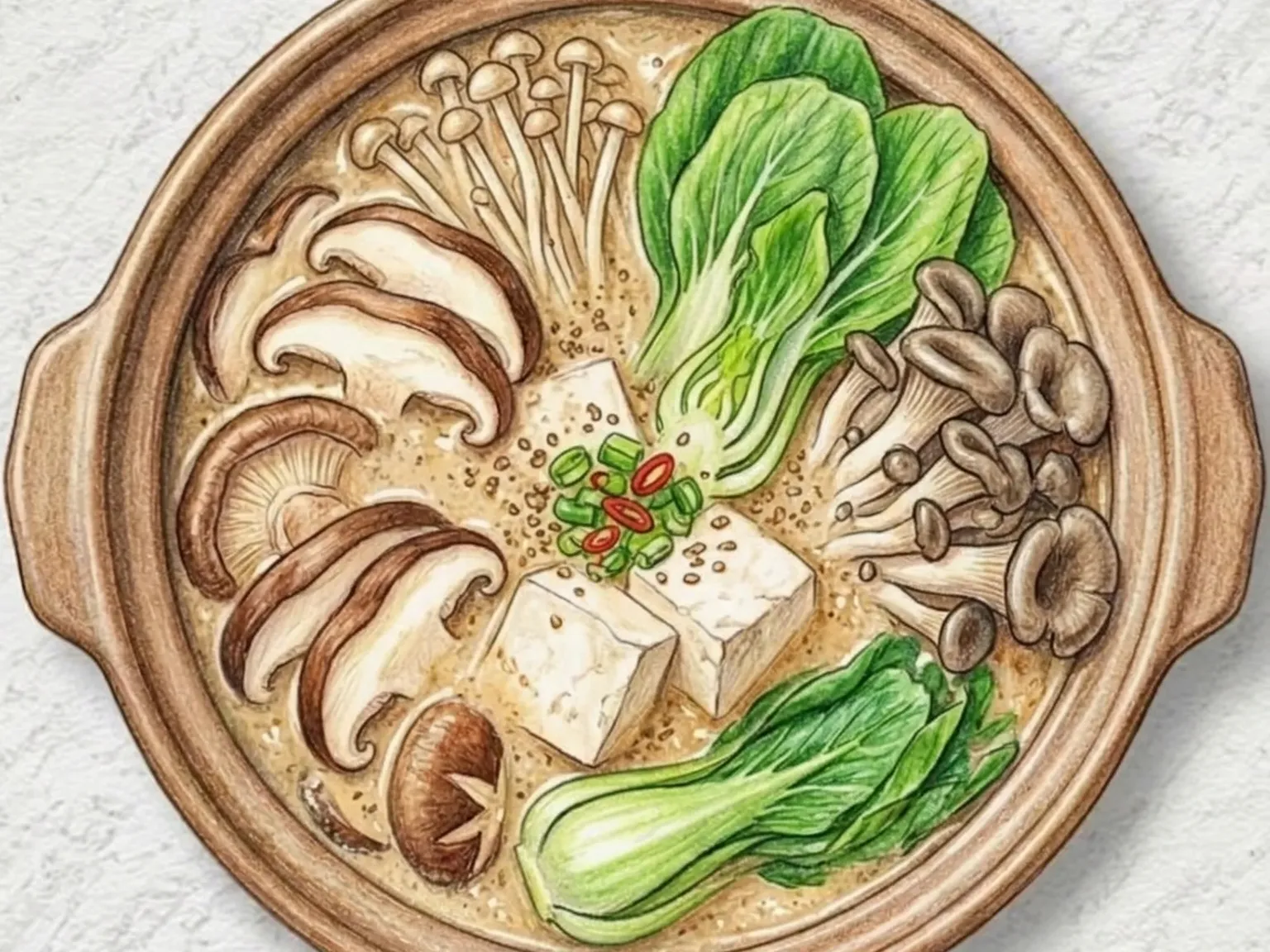
Sunmu deulkkae jjigae is a gentle Korean stew that simmers turnip with ground perilla seed in a kelp stock base. As the turnip cooks slowly, it softens and releases a quiet natural sweetness, while the perilla powder thickens the broth into a creamy, nutty layer that coats each spoonful. Oyster mushrooms add a chewy bite and soft tofu contributes protein, rounding out the bowl into a balanced meal on its own. Adding the perilla powder late in the cooking process preserves its aroma, and the stew should be finished within two to three minutes of the broth returning to a boil to prevent any bitterness from developing. Seasoned with soup soy sauce and a drizzle of sesame oil at the end, the result is a clean, quietly satisfying stew that is easy on the stomach.

Korean Burdock Perilla Seed Stew
Shared ingredient: potatoes Stews

Korean Burdock Perilla Seed Stew

Ueong-deulkkae-jjigae is a Korean stew built on burdock root, potatoes, and oyster mushrooms simmered in an anchovy-kelp broth and thickened with perilla seed powder. The burdock root holds a firm, earthy crunch through the cooking while the potatoes soften and begin to break at the edges, and the oyster mushrooms add a pulling, fibrous chew that makes the stew feel substantial without any meat. Anchovy-kelp broth forms a clean, savory base, and a generous measure of perilla seed powder stirred in at the end creates a creamy, nutty consistency that coats every piece of vegetable and makes each spoonful feel round and warming. Soaking the burdock in cold water before cooking draws out bitterness and prevents the cut surfaces from darkening, which keeps the broth clear. Adding the potatoes after the burdock has partly cooked prevents them from collapsing entirely. Perilla seed powder should go in just before the heat is turned off so the toasted, nutty fragrance stays sharp rather than cooking away.

Korean Geomeun Kong Juk (Black Bean Porridge)
Serve together Rice

Korean Geomeun Kong Juk (Black Bean Porridge)

Black beans are soaked for at least four hours, then boiled until the skins wrinkle and the flesh softens through to the center. They are blended with their cooking liquid into a thick, smooth slurry that forms the base of the porridge. This bean puree is combined with separately soaked rice and the mixture is simmered over low heat, stirred regularly to prevent the starch from catching on the bottom of the pot. As the rice breaks down and the starch gelatinizes, the porridge thickens gradually into a smooth, velvety consistency. The anthocyanins in the black bean skins stain the porridge a deep purple-gray, and the flavor is earthy and distinctly nutty, unlike the lighter taste of plain rice porridge. Passing the finished porridge through a sieve removes the bean skins for a cleaner texture. Seasoned with salt alone, it reads as a savory meal; a tablespoon of sugar shifts it toward something gently sweet. Pine nuts and sesame scattered on top layer in additional nuttiness, and the porridge is frequently made as restorative food given the beans nutritional density.

Korean Perilla Seed and Potato Stew
Similar recipe Stews

Korean Perilla Seed and Potato Stew

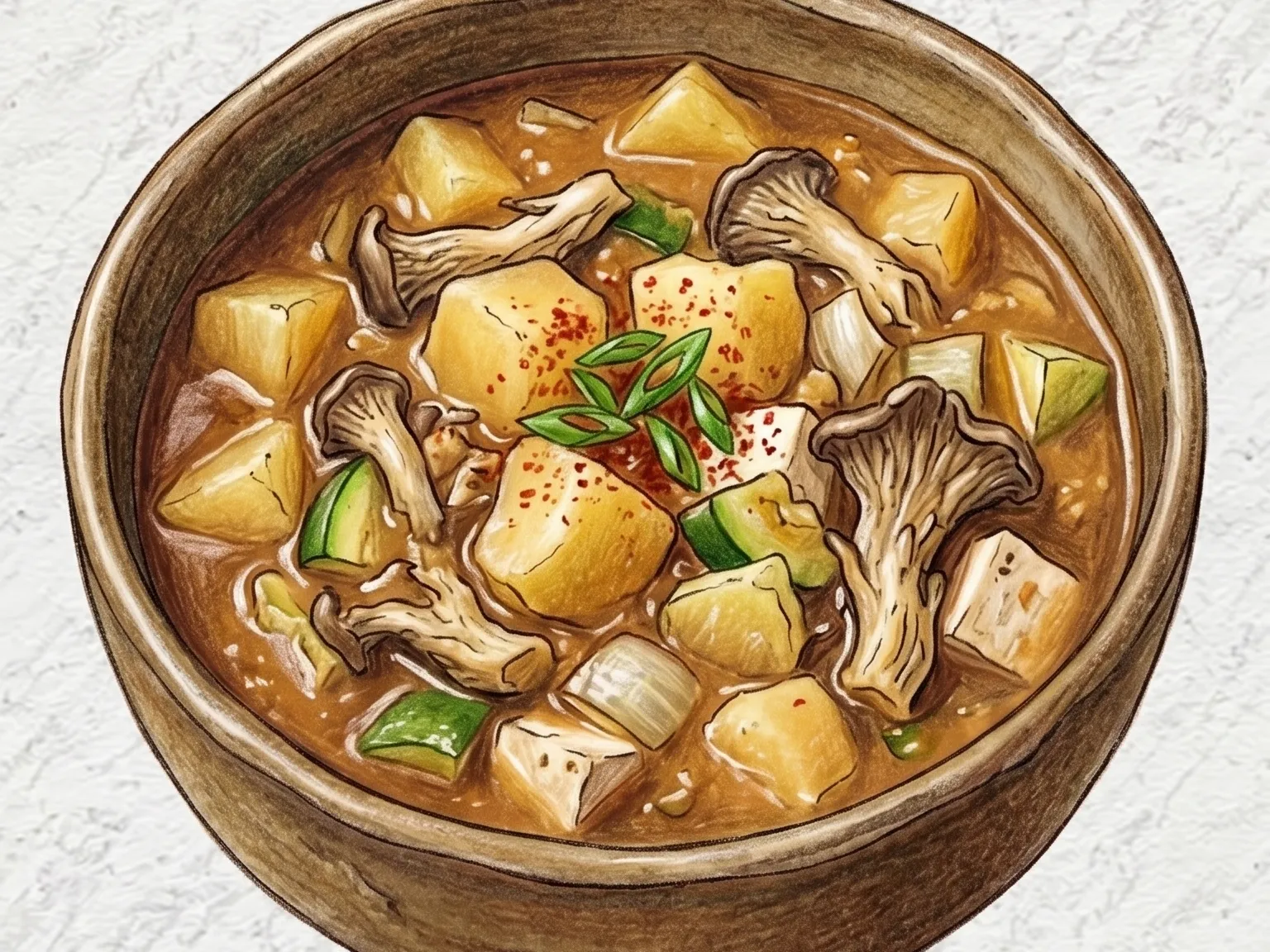
Deulkkae gamja jjigae is a potato stew enriched with ground perilla seeds, which give the broth a distinctly nutty thickness reminiscent of a light porridge. Potato wedges and sliced zucchini simmer in anchovy stock until the potatoes begin to soften and partially break down, naturally thickening the liquid. A generous amount of perilla seed powder stirred in near the end creates the signature creamy, toasty quality that defines this dish. Seasoned simply with soup soy sauce and garlic, it demonstrates how a short list of humble pantry ingredients can produce a deeply satisfying, filling bowl without any meat.

Serve with this

Korean Seasoned Sea Grapes Salad
Side dishes Easy

Korean Seasoned Sea Grapes Salad

Kkosiraegi-muchim is a tangy, low-calorie banchan made from kkosiraegi, a red algae seaweed whose thin, noodle-like strands snap with a distinctive crunch that no other seaweed can replicate. Blanching must not exceed twenty seconds, as anything longer collapses the characteristic texture, so a timer is essential. The seaweed goes straight from the boiling water into cold water to stop the heat and lock in elasticity. The dressing brings together gochugaru, soup soy sauce, vinegar, maesil-cheong, garlic, and sesame oil; the green plum extract layering in a fruity acidity that lifts the dish beyond simple sour-spicy flavoring. Julienned cucumber threaded through the seaweed strands provides a crisp, garden counterpoint to the oceanic depth. At roughly 72 kilocalories per serving with high dietary fiber content, this banchan appears frequently in Korean diet meal plans because it satisfies without adding much to the calorie count. Eating it promptly after seasoning prevents the cucumber from releasing water and diluting the dressing. Served cold in summer, it doubles as a refreshing side that pairs well with grilled meat or plain rice.

🥗 Light & Healthy 🏠 Everyday
Prep 10min Cook 2min 4 servings
Korean Thistle Greens Pickles
Kimchi Medium

Korean Thistle Greens Pickles

Gondre-jangajji is a pickled banchan made from gondre, a Korean mountain thistle foraged in Gangwon Province each spring. The greens are blanched briefly to soften the fibrous stems before being submerged in a curing liquid of dark soy sauce, brown rice vinegar, rice syrup, minced garlic, and ginger. The blanching step is essential: raw gondre has a toughness that pickling liquid alone cannot fully penetrate, and a short time in boiling water opens the cell structure just enough to allow the marinade to work through without turning the greens limp. Rice syrup wraps the combined salt and acid in a mild sweetness that prevents the sharpness of either from dominating. A cheongyang chili adds a gentle heat at the finish that keeps the overall flavor from reading as one-dimensional. Because the fibrous texture holds the liquid within the grain of the vegetable, the jangajji stays moist and pliable throughout a week or more of refrigerated storage.

🍱 Lunchbox 🏠 Everyday
Prep 18min Cook 10min 4 servings
Korean Beoseot Deulkkae Jeon (Mushroom Perilla Pancake)
Pancakes Easy

Korean Beoseot Deulkkae Jeon (Mushroom Perilla Pancake)

Mushroom and perilla seed jeon brings together oyster mushrooms and shiitake, sliced thin and folded into a batter built on perilla seed powder and a splash of soy sauce. Perilla seeds carry a heavier, slightly bitter nuttiness compared to sesame, and that quality anchors the earthy depth of the mushrooms rather than competing with it. Seasoning the batter directly with soy sauce means the pancake holds its own without a dipping sauce, though one on the side does not go amiss. Frying with enough oil gives the exterior a thin, crisp shell while the mushroom filling stays moist inside. Oyster mushrooms torn along their grain develop a pleasantly chewy bite as they cook; shiitake sliced fine distribute evenly so the whole pancake cooks at the same rate. It works as a makgeolli pairing or a straightforward side, and holds up well at room temperature - the perilla aroma actually deepens as it cools.

🍺 Bar Snacks 🏠 Everyday
Prep 18min Cook 14min 2 servings

Similar recipes

Korean Dried Radish Greens Perilla Stew
Stews Medium

Korean Dried Radish Greens Perilla Stew

This stew simmers rehydrated dried radish greens in rice-rinse water thickened with a generous four tablespoons of perilla seed powder. A small amount of doenjang and gochujang provides savory depth, and using rice-rinse water instead of plain water adds a natural starchiness that helps the perilla powder integrate into the broth more smoothly. The perilla powder creates a creamy, nutty soup with a pale beige hue, and the chewy, fibrous texture of the radish greens contrasts with the richness of the liquid. The radish greens need to be fully rehydrated and pre-boiled so they absorb the broth evenly during cooking rather than remaining tough. Onion and green onion add layers of sweetness and fragrance, and seasoning gradually while the stew cooks produces a more balanced result than adding everything upfront. Served bubbling in an earthenware pot on cold days, this is one of the most comforting staples in Korean winter home cooking.

🏠 Everyday
Prep 25min Cook 30min 4 servings
Korean Perilla Radish Soup
Soups Easy

Korean Perilla Radish Soup

Deulkkae mu-guk is a Korean radish and perilla seed soup that belongs firmly to the cool-weather calendar. Sliced daikon simmers in anchovy stock for ten minutes first, releasing its clean sweetness into the broth before anything else goes in. Perilla seed powder, stirred in toward the end, thickens the liquid noticeably - its heavier, earthier fat behaves differently from sesame and coats the palate in a way plain radish broth cannot. Garlic simmers alongside the radish to build the underlying savory base. The powder must go in just before the heat is cut; leave it in too long and the toasted fragrance dissolves into the broth and disappears.

🏠 Everyday 🥗 Light & Healthy
Prep 10min Cook 20min 4 servings
Korean Mugwort Pancake (Spring Herb Savory Thin Pancake)
Grilled Easy

Korean Mugwort Pancake (Spring Herb Savory Thin Pancake)

Young mugwort leaves, harvested in early spring, are stripped of tough stems, washed, and folded into a batter of Korean pancake mix, water, and salt. Thinly sliced onion adds a mild sweetness that balances the herb's earthy bitterness. The batter is spread thin in an oiled pan and fried on both sides until crisp - thickness is the enemy here, as a thick pancake traps steam and mutes the mugwort's fragrance. Dipped in a vinegar-soy sauce, the acidity rounds out any lingering bitterness, making ssuk-jeon one of the most distinctive seasonal pancakes in Korean cuisine.

🍺 Bar Snacks ⚡ Quick
Prep 15min Cook 10min 2 servings

Tips

Slurry perilla powder first to keep the broth smooth.
Finish on medium-low heat to preserve mugwort aroma.

Nutrition (per serving)

Calories
298
kcal
Protein
13
g
Carbs
27
g
Fat
17
g