Korean Mugwort Soup (Spring Mugwort in Savory Doenjang Broth)
Soups Easy

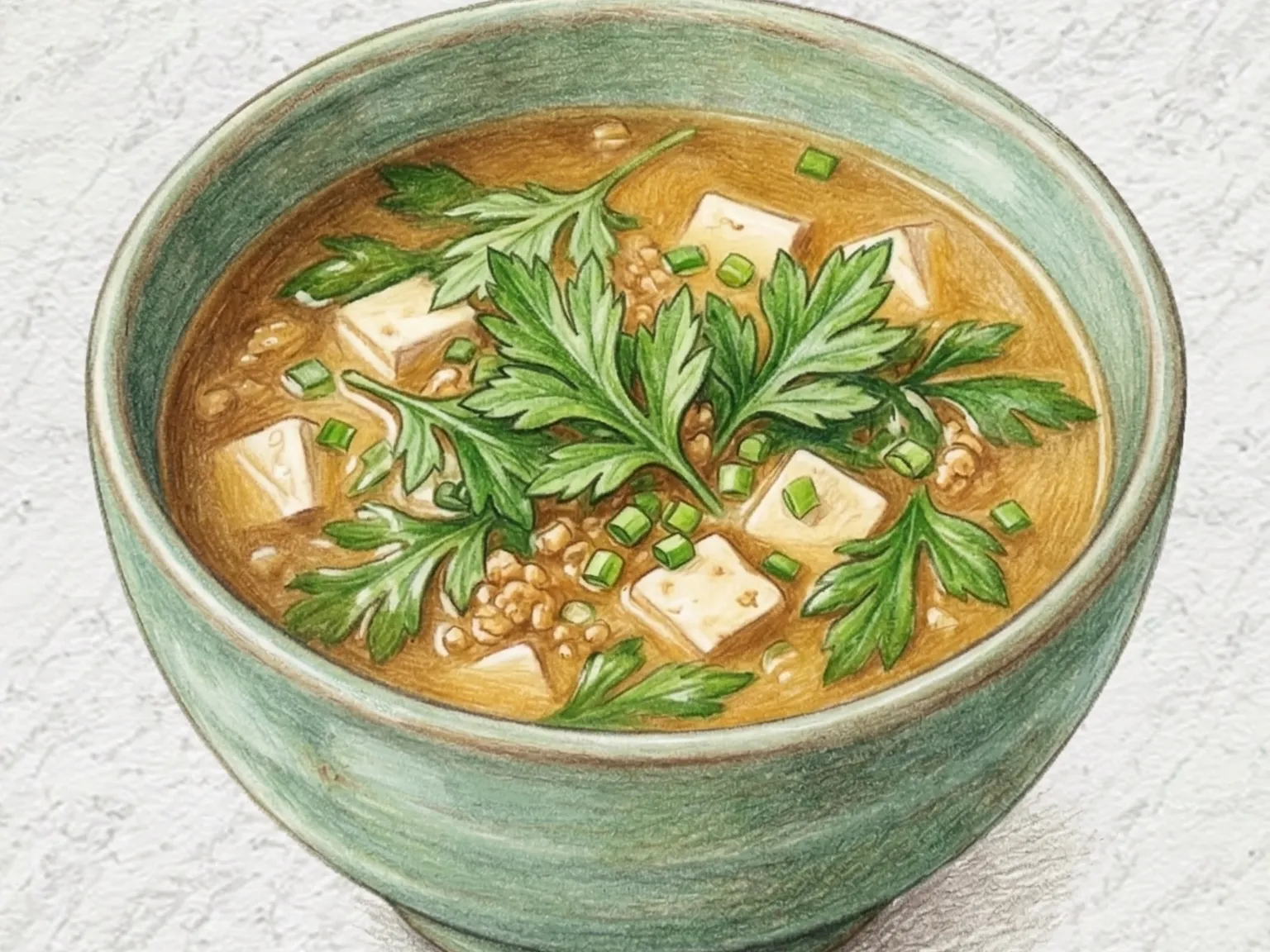
Korean Mugwort Soup (Spring Mugwort in Savory Doenjang Broth)

Quick answer

Ssuk-guk is a seasonal doenjang soup that appears on Korean tables during early spring, when young mugwort shoots are tender enough to eat.

What makes this special

  • Ssuk-guk appears in early spring with young mugwort and a signature herbal fragrance.
  • Spring-only soup using young mugwort with signature bitter herbal fragrance
  • Mugwort added right at boiling point to lock in vivid green color and scent
Total time
25 min
Level
Easy
Servings
2 servings
Ingredients
5
Calories
75 kcal
Protein
6 g

Key ingredients

MugwortDoenjangClam meatMinced garlicAnchovy broth

Core cooking flow

  1. 1 Pick over 100 g mugwort, removing tough stems and wilted leaves.
  2. 2 Pour 500 ml anchovy broth into a pot and set it over medium heat.
  3. 3 Place 2 tablespoons doenjang in a fine sieve over the pot and ladle hot broth through it little by little.

Ssuk-guk is a seasonal doenjang soup that appears on Korean tables during early spring, when young mugwort shoots are tender enough to eat. The base is an anchovy-kelp stock into which soybean paste is strained, creating a mellow, savory foundation. Fresh mugwort is added only at the very end of cooking - just long enough for the leaves to wilt - because extended heat dulls their vivid green color and drives off the fragrance that makes this soup worth making. When timed correctly, each spoonful delivers the herb's distinctive bittersweet aroma, somewhere between sage and chrysanthemum, layered over the fermented depth of the doenjang. Cubed tofu softens in the hot broth and provides a neutral, creamy texture that balances the herbal intensity. A scattering of sliced scallion on top adds a mild sharpness. The soup is deliberately simple, designed to let mugwort take center stage as a reminder that the long winter is finally over.

Prep 10min Cook 15min 2 servings
Recipes by ingredient → doenjang garlic anchovy stock

Instructions

Read the steps as a cooking flow: prep, heat, seasoning, doneness control, and finish.

6 steps
  1. 1
    Step

    Pick over 100 g mugwort, removing tough stems and wilted leaves.

    Rinse it in cold water two or three times, gently swishing to release grit, then drain it well in a sieve.

  2. 2
    Control

    Pour 500 ml anchovy broth into a pot and set it over medium heat.

    When small bubbles gather around the edge, lower the heat slightly so the broth stays clear instead of boiling hard.

  3. 3
    Step

    Place 2 tablespoons doenjang in a fine sieve over the pot and ladle hot broth through it little by little.

    Press the paste to dissolve it smoothly, leaving coarse bits behind.

  4. 4
    Control

    When the broth returns to a gentle boil, add 80 g clam meat and 1 teaspoon minced garlic.

    Cook over medium-low heat for about 2 minutes, just until the clam meat firms without becoming tough.

  5. 5
    Control

    Reduce the heat to low and add the prepared mugwort, gently pressing it under the broth.

    Cook only until the leaves wilt and turn vivid green, about 30 to 60 seconds.

  6. 6
    Finish

    Taste once and turn off the heat as soon as the salinity and savory depth feel balanced.

    Serve the soup hot right away, before the mugwort aroma fades from lingering heat.

After the steps

Pick a recipe that fits this dish.

Continue with shared ingredients, meal pairings, or a similar method.

Recipes That Go Well With This

More Soups →

Based on shared ingredients and meal pairing

Korean Mallow Soup (Joseon-Era Doenjang Mallow Soup)
Shared ingredient: anchovy stock Soups

Korean Mallow Soup (Joseon-Era Doenjang Mallow Soup)

Auk-guk - mallow doenjang soup - has been part of Korean home cooking since the Joseon era, when auk (mallow) was among the most commonly grown leafy greens in household kitchen gardens. An anchovy-kelp stock provides the base, and doenjang is pushed through a sieve directly into the simmering liquid so it dissolves without lumps. Garlic contributes a quiet, pungent undercurrent beneath the fermented paste. Mallow leaves, torn roughly by hand, wilt into the broth in under a minute. What separates auk-guk from other doenjang-guks is textural: the mallow's natural mucilage thickens the soup slightly and gives it a slippery, almost coating quality on the tongue, unlike the clean, transparent broth of spinach or radish versions. Korean folk tradition holds that nursing mothers ate auk-guk to support milk production, a belief that reflects how deeply the plant was embedded in everyday domestic life. The soup reaches its best in early summer when fresh mallow leaves are at their most tender.

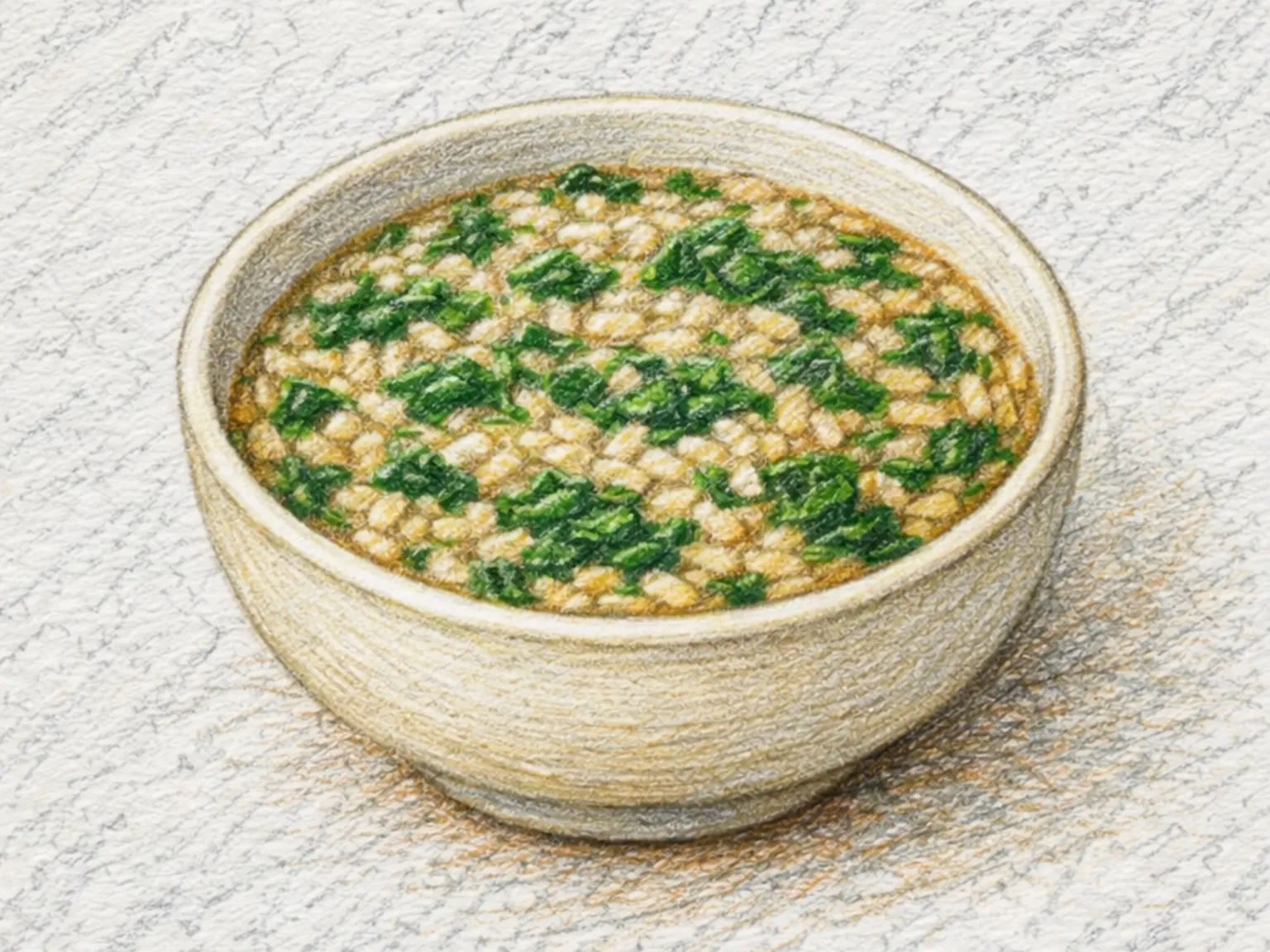
Korean Hemp Seed Rice (Nutty Protein-Rich Grain Rice)
Serve together Rice

Korean Hemp Seed Rice (Nutty Protein-Rich Grain Rice)

Cheongsam bap is a Korean nutritional rice cooked with toasted hemp seeds. The hemp seeds contribute a nutty, subtly grassy aroma and a gentle popping texture that transforms plain short-grain rice into something more layered. Hemp seeds are nutritionally notable for their high plant protein content and a well-balanced ratio of omega-3 to omega-6 fatty acids, which is why they have attracted attention as a functional food in Korea. The preparation requires no extra technique beyond standard rice cooking - the seeds and a small amount of salt go in with the rice before the cooker starts. Lightly toasting the seeds in a dry pan for about five minutes before adding them deepens their fragrance noticeably compared to untoasted seeds. The finished rice pairs well with virtually any Korean side dish, and the mild, toasty flavor holds up equally well when the rice is eaten on its own as a simple, wholesome bowl.

Korean Young Radish Kimchi
Serve together Side dishes

Korean Young Radish Kimchi

Young radish greens and their slender stems are salted briefly, dressed in a gochugaru-based paste, and fermented into a kimchi that defines Korean summer eating. The greens are more delicate than mature radish, absorbing the seasoning quickly while retaining a refreshing crunch that lasts well into fermentation. Gochugaru and anchovy fish sauce form the backbone of the paste, delivering heat and deep umami in equal measure, while garlic lends a pungent undercurrent that mellows as the fermentation progresses. Once dressed, the radish greens release their own moisture, creating a naturally occurring brine that becomes the hallmark of yeolmu kimchi: a tangy, chili-flecked liquid that can be spooned over cold noodles or rice. Even half a day at room temperature kicks off the fermentation, introducing a sharp, fizzy acidity that signals the kimchi is alive. Transferring it to the refrigerator slows the process and stabilizes the flavor at a bright, appetizing sourness. Draped over bibim-guksu or naengmyeon, it brings a cooling, spicy bite that defines the Korean summer table.

Korean Clam Doenjang Soup
Similar recipe Soups

Korean Clam Doenjang Soup

Bajirak doenjang guk is a Korean home-style soup that brings together manila clams and doenjang to layer oceanic umami with fermented soybean depth in a single, clean broth. Starting the clams in cold water and bringing everything slowly to a boil draws flavor from the shells gradually rather than shocking them, building a stock base that grows richer as the temperature rises. The doenjang must be dissolved through a strainer rather than stirred in directly, because undissolved paste left in the soup creates a grainy texture and uneven seasoning. Since clams carry their own salt, the quantity of doenjang should be noticeably less than usual to prevent the finished soup from becoming over-salted; seasoning should always be adjusted at the end after tasting. Soft tofu cut into cubes adds a gentle, yielding protein bite, and Korean zucchini releases a quiet sweetness into the broth as it cooks through, softening the overall profile. Minced garlic introduced mid-cooking harmonizes with the fermented aroma of the doenjang without overpowering it. Scallion added in the final minute preserves its fresh, sharp note rather than turning limp and faded. No anchovy stock, no dried kelp, and no dashi of any kind is needed here, because the clams alone provide enough umami to build genuine depth. That restraint is what defines the soup: when the ingredients are kept simple, the natural sweetness and marine character of good clams come through cleanly, producing a broth that tastes more substantial than its short ingredient list suggests.

Serve with this

Korean Garlic Scape Soy Pickles
Kimchi Easy

Korean Garlic Scape Soy Pickles

Maneul jong jangajji is a Korean garlic scape pickle made by cutting fresh scapes into 5 cm lengths, packing them into a sterilized jar along with cheongyang chili peppers, and pouring over a freshly boiled brine of soy sauce, vinegar, sugar, and dried kelp. The scapes' sharp garlic bite melds gradually with the soy's salty, savory depth to produce a flavor that builds with every chew, while the kelp dissolves a subtle seaweed umami into the brine over the course of steeping. The vinegar keeps the salt in check so the overall taste stays clean rather than heavy, and the cheongyang chili adds a slow, lingering warmth at the end of each bite that prevents the pickle from tasting one-dimensional. Reboiling the brine and pouring it back over the scapes after two days is an important step for both preservation and even pickling, and repeating this process once more ensures the scapes absorb flavor uniformly throughout. Handled this way, the finished banchan keeps reliably for over a month in the refrigerator.

🍱 Lunchbox 🏠 Everyday
Prep 20min Cook 10min 4 servings
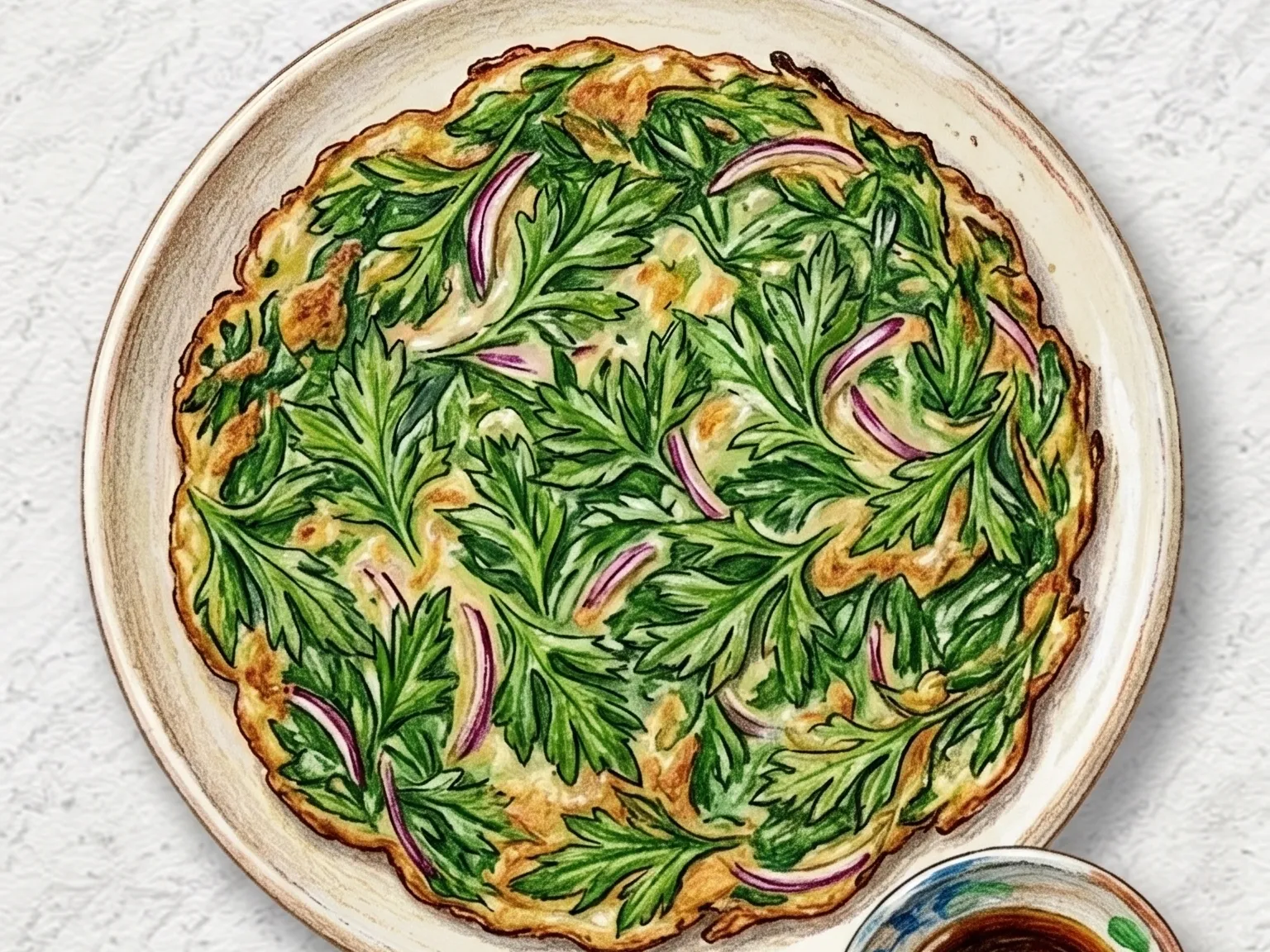
Korean Dried Radish Greens Pancake
Pancakes Easy

Korean Dried Radish Greens Pancake

Boiled dried radish greens are combined with doenjang and pan-fried into a dense, rustic jeon with deep fermented character. The fibrous texture of the radish greens gives the pancake a satisfying chew, and the soybean paste saturates the batter so thoroughly that no dipping sauce is necessary. Buckwheat flour adds an earthy coarseness that suits the greens well. Cheongyang chili provides a spicy accent throughout. Minced garlic benefits from a brief saute in oil before being mixed into the batter-the raw edge cooks off and the garlic's savory depth integrates fully into the finished pancake. Cooking over low heat lets the inside set without burning the outside, producing a crisp surface and a tender, flavorful center.

🍺 Bar Snacks ⚡ Quick
Prep 18min Cook 10min 2 servings

Similar recipes

Korean Spicy Chicken Soup
Soups Medium

Korean Spicy Chicken Soup

Dakgaejang is a spicy Korean chicken soup modeled directly on beef yukgaejang, using a whole chicken simmered, then shredded as the protein base with the same cooking liquid reserved as stock. The shredded meat, rehydrated bracken fern, and bean sprouts are tossed together in a seasoning of gochugaru, soy sauce, and sesame oil before being returned to the broth and simmered until the chili flakes dissolve fully into the fat. The result is a broth that is fiery and layered rather than flat-hot, with the depth that comes from cooking raw chili through an oil base. Bracken adds a chewy, almost meaty resistance to the texture, contrasting clearly with the snappy bean sprouts, and preparing a separate chili oil beforehand and stirring it into the pot deepens the heat with a roasted undertone that gochugaru alone cannot produce.

🏠 Everyday
Prep 20min Cook 60min 4 servings
Korean Flounder Seaweed Soup
Soups Easy

Korean Flounder Seaweed Soup

Gajami miyeok-guk is a seaweed soup built around a whole flounder simmered directly in the pot. Rehydrated miyeok is stir-fried in sesame oil before the liquid is added, a step that transforms the raw seaweed fragrance into something richer and more rounded. Once the flounder is added and the pot comes to a simmer, the mild, subtly sweet flesh of the white fish slowly infuses the broth, while the collagen released from the bones gives the soup a quiet viscosity and depth that water alone cannot produce. Soy sauce and garlic are the only seasonings needed, allowing the natural flavor of the fish and seaweed to carry the soup without interference. Blanching the flounder briefly in boiling water before adding it to the pot draws out blood and removes any trace of fishiness, resulting in a cleaner, more delicate broth. Along the East Sea coast, gajami miyeok-guk has traditionally been served as postpartum recovery food in place of the more common beef seaweed soup, valued for its lightness, digestibility, and the clean nourishment provided by the fish broth.

🏠 Everyday 🥗 Light & Healthy
Prep 20min Cook 20min 2 servings
Korean Aster Herb Namul (Blanched Mountain Greens Seasoned)
Side dishes Easy

Korean Aster Herb Namul (Blanched Mountain Greens Seasoned)

Chwinamul - aster scaber - is among Korea's most prized mountain herbs, foraged from hillsides every spring. Its broad leaves carry a distinctly bitter, herbaceous edge that sets it apart from milder greens. A one-to-two minute blanch in salted boiling water tames rawness while keeping the woodland scent intact. Using perilla oil rather than sesame oil is the key step: sauteing in perilla oil lifts and deepens the herb's wild character in a way sesame cannot replicate. The seasoning is simple - garlic and salt - whether the greens are dressed as a cold namul or briefly stir-fried. A staple of bibimbap and temple cuisine across Korea, dried chwinamul is rehydrated in cold water and cooked the same way through winter, making it a reliable pantry ingredient beyond the spring harvest.

🏠 Everyday 🍱 Lunchbox
Prep 10min Cook 5min 2 servings
Korean Ox Bone Broth (Milky Collagen-Rich Marrow Soup)
Stews Medium

Korean Ox Bone Broth (Milky Collagen-Rich Marrow Soup)

Sagol-guk is a Korean bone broth soup made by simmering beef marrow bones for six hours or longer until the dissolved collagen and marrow turn the liquid a dense, opaque white that looks closer to milk than water. The seasoning is intentionally minimal, limited to green onion, garlic, and salt, because the entire point of the dish is the bone itself and what slow heat extracts from it over time. Before the long simmer begins, the bones are soaked in cold water to draw out the blood and then briefly blanched to remove any remaining impurities that would cloud or bitter the broth. The same bones can be reboiled three or four times, with each successive batch yielding a progressively lighter and cleaner-tasting liquid. The soup is served piping hot alongside rice, with salt and white pepper passed at the table so each person can season according to preference. Alongside seolleongtang and gomtang, sagol-guk forms one of the three pillars of Korea's long bone broth tradition, and its restorative reputation makes it a natural choice on cold days or when the body needs warmth and something uncomplicated.

🏠 Everyday 🎉 Special Occasion
Prep 60min Cook 480min 4 servings

Tips

Serve quickly after adding mugwort to preserve its delicate herbal aroma.

Nutrition (per serving)

Calories
75
kcal
Protein
6
g
Carbs
8
g
Fat
2
g