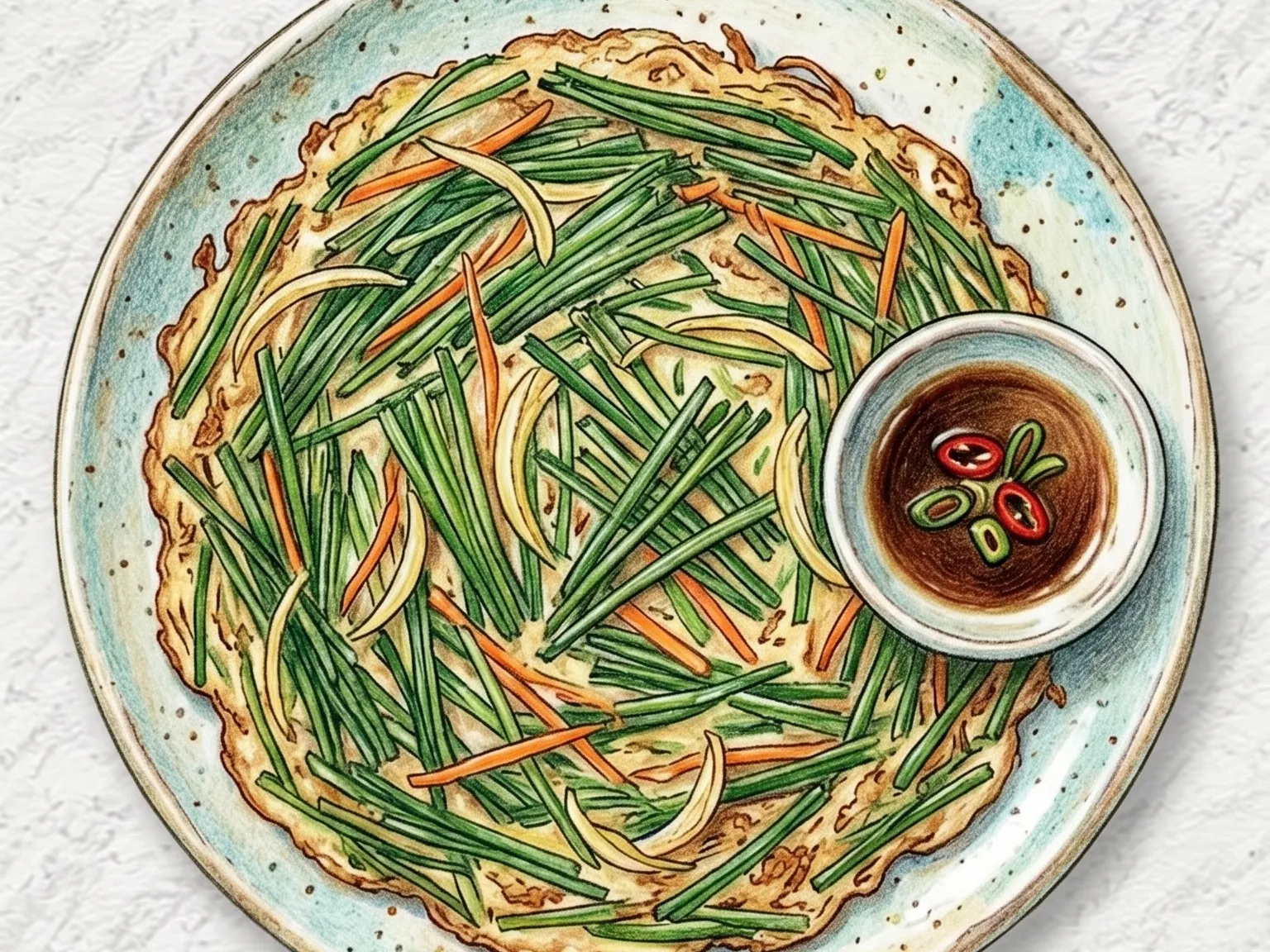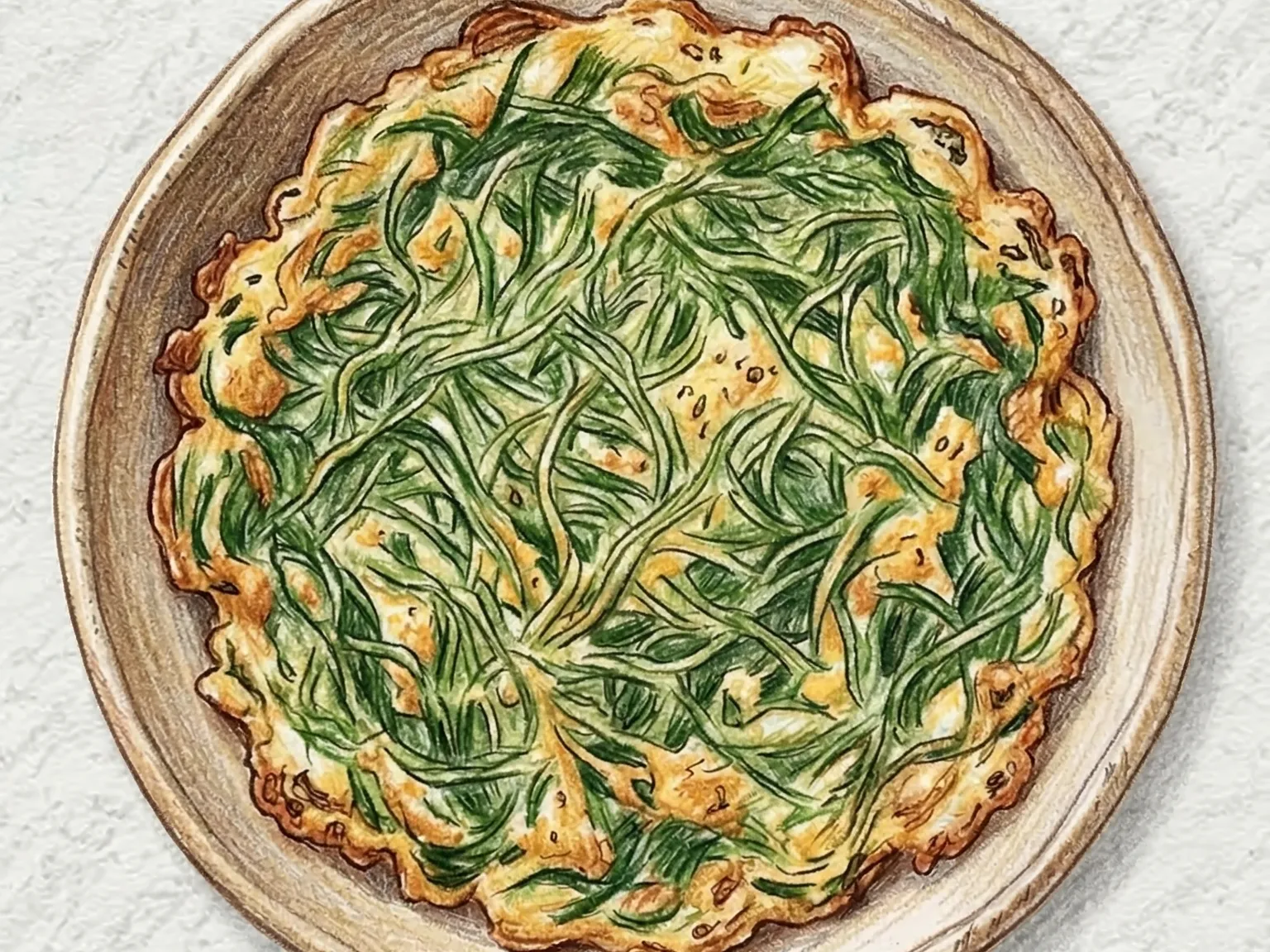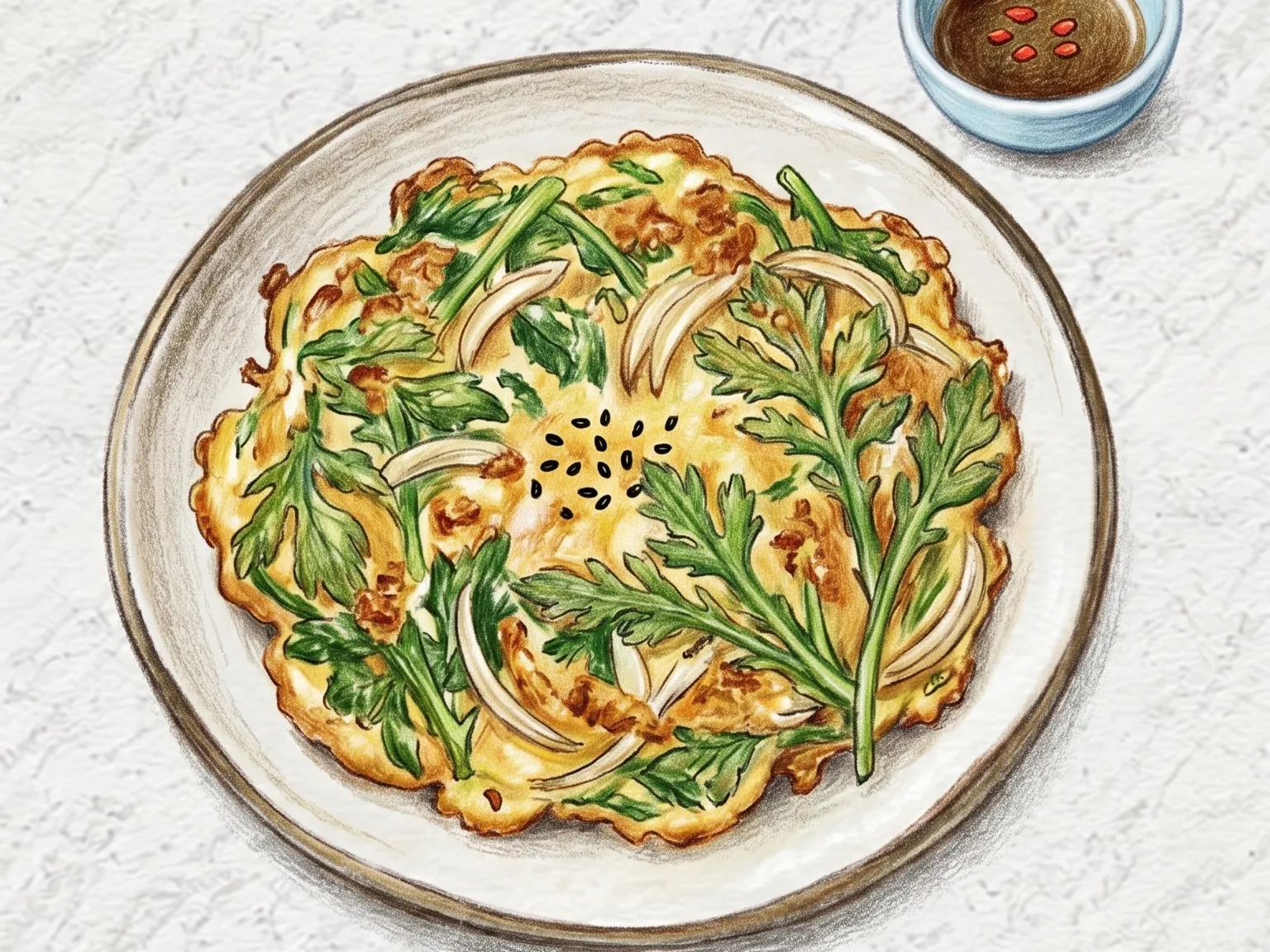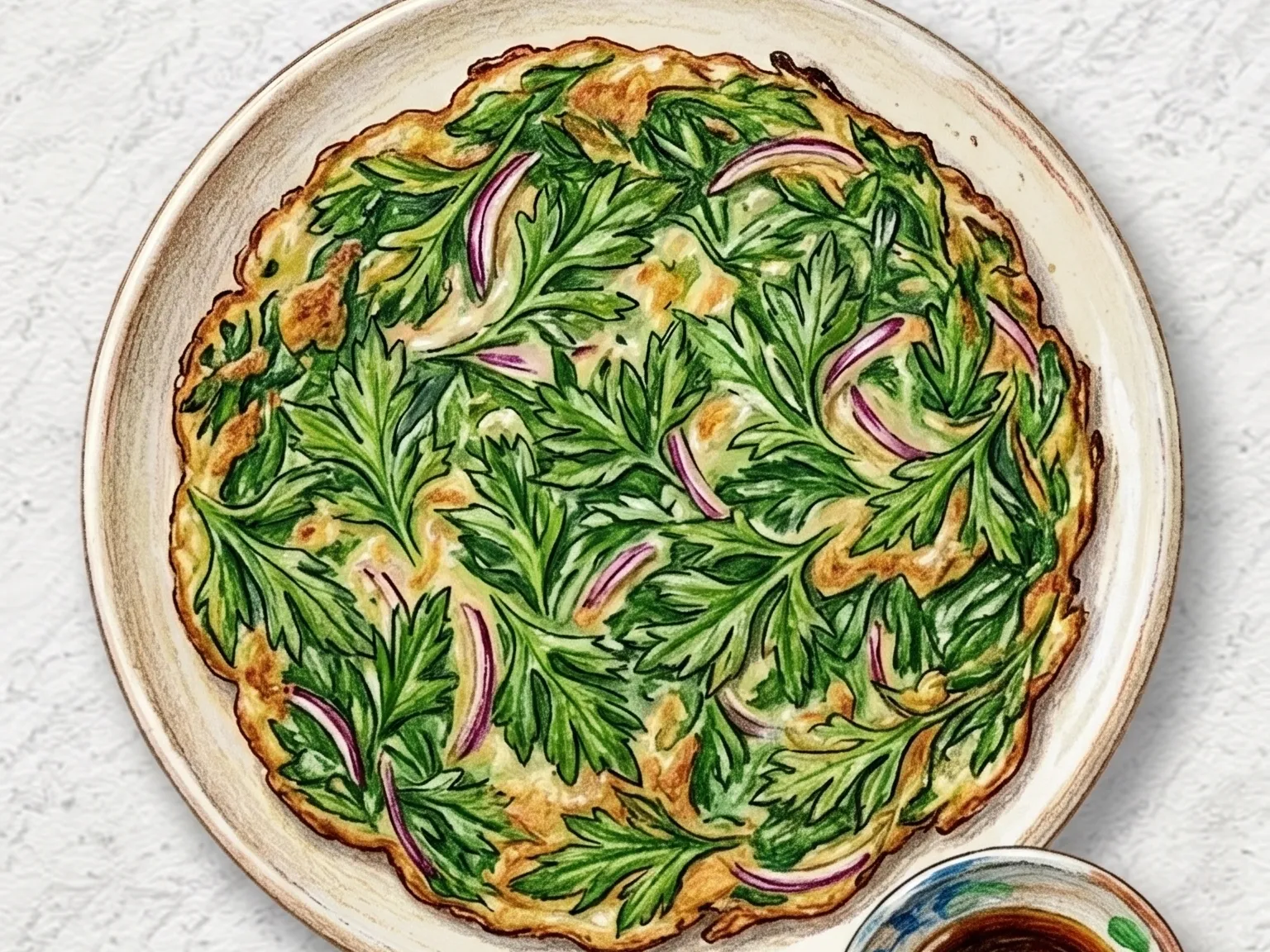
Korean Mugwort Pancake (Spring Herb Savory Thin Pancake)
Quick answer
Young mugwort leaves, harvested in early spring, are stripped of tough stems, washed, and folded into a batter of Korean pancake mix, water, and salt.
What makes this special
- Ssuk-jeon highlights the herbal scent of young spring mugwort leaves balanced by mild onion sweetness.
- Removing tough stems before mixing keeps mugwort's herbal scent clean
- Thin spread is essential; thick batter buries the aroma and turns soggy inside
Key ingredients
Core cooking flow
- 1 Sort 120 g mugwort carefully, removing tough stems and wilted leaves.
- 2 Slice 1/2 onion very thinly. If the pieces are thick, they lift the batter a...
- 3 In a bowl, combine 1 cup Korean pancake mix, 180 ml water, and 0.3 teaspoon salt.
Young mugwort leaves, harvested in early spring, are stripped of tough stems, washed, and folded into a batter of Korean pancake mix, water, and salt. Thinly sliced onion adds a mild sweetness that balances the herb's earthy bitterness. The batter is spread thin in an oiled pan and fried on both sides until crisp - thickness is the enemy here, as a thick pancake traps steam and mutes the mugwort's fragrance. Dipped in a vinegar-soy sauce, the acidity rounds out any lingering bitterness, making ssuk-jeon one of the most distinctive seasonal pancakes in Korean cuisine.
Instructions
Read the steps as a cooking flow: prep, heat, seasoning, doneness control, and finish.
- 1Step
Sort 120 g mugwort carefully, removing tough stems and wilted leaves.
Rinse it several times under running water, then shake off excess moisture so the batter does not become watery.
- 2Heat
Slice 1/2 onion very thinly.
If the pieces are thick, they lift the batter away from the pan and take longer to soften, making the pancake harder to cook evenly.
- 3Season
In a bowl, combine 1 cup Korean pancake mix, 180 ml water, and 0.3 teaspoon salt.
Stir only until the dry lumps disappear, keeping the batter loose enough to spread thinly.
- 4Prep
Add the mugwort and onion to the batter, then fold lightly with chopsticks or a spatula.
Stop once the leaves are coated, because overmixing or crowding with too much mugwort makes spreading difficult.
- 5Control
Heat a pan over medium heat and add 2 tablespoons cooking oil.
Pour in one ladle of batter, then spread it thinly to the edges so steam can escape and the mugwort aroma stays clear.
- 6Finish
Flip when the edges look dry and the bottom is golden.
Cook the second side for about 2 minutes until crisp, then cut into pieces and serve hot with vinegar-soy dipping sauce.
After the steps
Pick a recipe that fits this dish.
Continue with shared ingredients, meal pairings, or a similar method.
Recipes That Go Well With This
More Grilled →Based on shared ingredients and meal pairing
Korean Water Parsley Shrimp Pancake
This Korean pancake combines fresh water parsley and cocktail shrimp in a light, seasoned batter. The preparation starts by cutting cleaned water parsley into five-centimeter pieces, slicing onions thinly, and drying the shrimp to prevent oil splattering. The batter is mixed using pancake flour, cold water, an egg, and a pinch of salt until smooth. The vegetables and shrimp are folded in gently with chopsticks to keep the texture light. Cooking the batter in a well-oiled pan over medium heat for two to three minutes on each side produces a pancake with thin, crispy edges. The water parsley stems retain their crispiness even after frying, contrasting with the tender shrimp. The herbal fragrance of the parsley blends with the clean sweetness of the shrimp. It is typically cut into bite-sized pieces immediately after cooking and served warm with a soy sauce and vinegar dipping sauce.
Korean Scallion Pancake
Pa-jeon is a Korean scallion pancake made by cutting scallions into six-to-seven-centimeter lengths, laying them across an oiled pan, and pouring a batter of Korean pancake mix, water, egg, and salt directly over them before frying on medium heat. The method of placing the scallions first and covering them with batter means one side of each scallion presses against the hot pan surface, which caramelizes them and coaxes out a sweet, aromatic fragrance that would not develop if the scallions were simply mixed into the batter. Batter consistency is a meaningful variable: the mixture should flow off a spoon in a continuous stream rather than plopping, because anything thicker makes the pancake bready and reduces the proportion of scallion in each bite, while anything too thin prevents the distinctive crispy rim from forming around the edges. Adding an extra drizzle of oil around the perimeter before flipping fries the outer edge like a fritter, creating a sharp contrast between the crunchy border and the soft, scallion-loaded interior when dipped into a soy-based dipping sauce. Pa-jeon is also known in Korean culture as a dish that people instinctively crave on rainy days, a reputation closely tied to the sound of batter hitting a hot oiled pan.
Korean Spicy Stir-Fried Anchovies
Spicy stir-fried anchovies (maeun myeolchi-bokkeum) toss medium-sized dried anchovies in a gochujang-gochugaru glaze, occupying the opposite end of the flavor spectrum from the sweet jiri-myeolchi version and targeting adult palates. Medium anchovies are larger and thicker than the tiny variety, requiring individual head-and-gut removal to eliminate bitterness - a tedious prep step that nonetheless determines the dish's clean finish. After dry-toasting to drive off moisture, the anchovies simmer in a sauce of gochujang, gochugaru, soy sauce, oligosaccharide, and minced garlic until each piece is coated in a rust-colored glaze. The gochujang's fermented heat combines with gochugaru's vivid red to create both flavor depth and visual appeal. The larger anchovy size delivers a satisfying crunch that lingers alongside a lasting savory umami. Heat intensity is adjustable via gochugaru quantity - adding chopped cheongyang chili ratchets it up another notch. This banchan doubles as a soju drinking snack, appearing as frequently on bar tables as on dinner tables.
Korean Water Parsley Pancake
Minari-jeon is a Korean spring pancake made by cutting water parsley into five-centimeter lengths and mixing them into a batter of Korean pancake mix, water, egg, and salt, then pan-frying in oil until golden on both sides. Water parsley's cool, herbaceous fragrance permeates the entire pancake, and its stems provide a fresh, snappy bite against the soft batter. Spreading the mixture thin and cooking over medium heat for three to four minutes per side ensures crisp, almost fried edges, while overcooking quickly diminishes the herb's distinctive aroma. Dipping slices in cho-ganjang-soy sauce mixed with vinegar-balances the subtle bitterness of the parsley with sharp acidity.
Serve with this
Korean Egg Fried Rice (Quick Wok-Tossed Grain Bowl)
Gyeran-bokkeumbap is the most fundamental Korean fried rice, built from two beaten eggs and one bowl of cooked rice and finished in under ten minutes. The eggs go into a smoking-hot oiled pan, and the rice is added the moment they are half-set, then tossed rapidly so every grain picks up an individual egg coating that makes the rice fluffy and lightly glossy rather than clumped. Cold leftover rice performs best because its lower moisture lets the grains separate cleanly during stir-frying, but freshly cooked rice spread out and briefly cooled reduces sticking enough to be workable. A thin line of soy sauce poured along the rim of the pan caramelizes on contact and carries a trace of smokiness through the rice. A finishing drizzle of sesame oil and a scattering of sliced green onion add a toasty fragrance that completes this simple but satisfying base. The ratio of egg to rice is sturdy enough that a handful of kimchi, diced ham, or refrigerator scraps can be stirred in without changing the essential character of the dish.
Chicken Mu (Korean Fried Chicken Radish Pickle)
The crunchy, sweet-sour radish pickle served with every order of Korean fried chicken - now easy to make at home in under 15 minutes. Cubed radish is submerged in a cooled brine of vinegar, sugar, salt, and whole black peppercorns. Using fully cooled brine rather than hot is critical for maintaining the radish's firm, snapping crunch. Ready to eat after one day of refrigeration, its bright acidity cleanses the palate between bites of crispy chicken. Stored in a glass jar, this pickle keeps for over a week.
Ojingeo-muguk (Korean Squid Radish Soup)
Ojingeo-muguk is a clear Korean soup that pairs squid and radish in a gently sweet, clean-tasting broth built without any chili or strong seasoning. Radish is added to cold water from the start and simmered for at least eight minutes, during which the vegetable slowly releases a natural sweetness that forms the flavor foundation of the soup. Squid is cleaned, sliced into rings, and added only after the radish has softened, and the timing here is critical: five minutes in the hot broth is enough for the flesh to turn fully opaque and pleasantly firm, but even a minute or two beyond that causes the proteins to tighten and the rings to turn rubbery and tough. Soup soy sauce seasons the broth without darkening it, and minced garlic provides depth without heat. Sliced green onion stirred in at the end neutralizes any residual seafood aroma and leaves the broth tasting bright and clean. The simplicity of the combination is the point: the radish's sweetness and the squid's umami reinforce each other in a broth that is light in body but surprisingly satisfying.
Similar recipes
Korean Flower Crab Pancake
Fresh blue crab meat is picked clean, coated in a mixture of all-purpose flour and Korean pancake mix, dipped in beaten egg, and pan-fried until the surface turns golden. The crab's natural sweetness and mild brininess stay intact throughout the process, and minced ginger cuts through any residual fishiness without announcing itself in the finished jeon. Black pepper is added in small amounts - just enough to clean up the aftertaste without competing with the delicate crab. The egg coating holds moisture inside, keeping the meat tender while the outside crisps to a light, golden crust. A generous amount of crab filling in each piece is what makes the texture satisfying.
Korean Kimchi Potato Jeon
Kimchi-gamja-jeon is a pan-fried Korean pancake made from grated potatoes combined with chopped napa kimchi, Korean pancake mix, green onion, and Cheongyang chili. The grating releases starch along with water, and the key step is letting the mixture settle so the starch sinks, then pouring off the liquid and recombining only the starch with the rest of the batter. This starch concentration creates the contrast between a shattering crust and a moist, soft interior that marks a well-made potato pancake. The batter is spread thin in a preheated oiled pan and fried on both sides over medium-high heat. Keeping the temperature high enough that the exterior sets quickly before oil soaks in is essential, as a pan that is too cool produces a greasy, soft result. Kimchi juice that hits the hot pan caramelizes at the edges, creating pockets of deep savory crust alongside the sharp fermentation flavor. The tangy acidity of the kimchi and the mild sweetness of the potato create a defined contrast in each bite. Dipped in vinegared soy sauce spiked with sliced Cheongyang chili, the pancake is a classic makgeolli pairing.
Korean Gangwon-style Potato Pancake
Gangwon-gamja-jeon is a traditional potato pancake from the mountainous Gangwon province, made by finely grating potatoes and incorporating the settled starch sediment back into the batter to achieve a uniquely chewy, mochi-like center with crisp edges. After grating, the potato liquid is left to sit until white starch settles at the bottom. The water on top is poured off and the dense starch is folded back in. Skipping this step produces a flat, crumbly pancake instead of the trademark sticky pull. Finely chopped Cheongyang chili peppers add a clean, sharp heat that cuts through the potato's natural sweetness, while minced onion reinforces that sweetness without adding excess moisture. The batter must be spread thin in a generously oiled pan and cooked patiently until the edges darken to deep golden brown. Rushing the process leaves the interior gummy and causes the pancake to fall apart when flipped. Even when the batter still looks soft and undercooked on top, waiting until the underside is fully set is what makes the flip clean. Makgeolli is the traditional pairing.