Korean Mugwort Rice Cake Latte
Quick answer
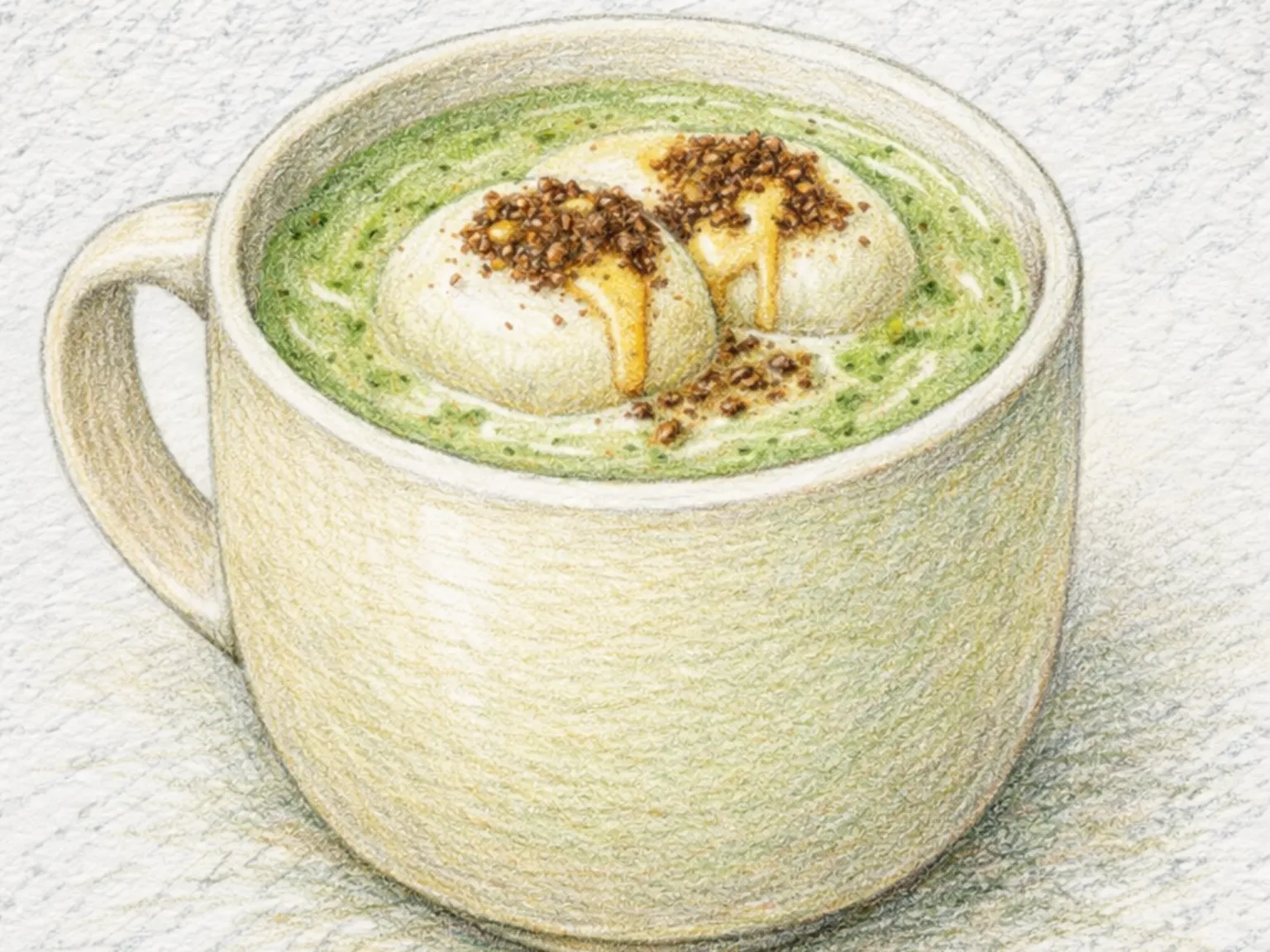
Ssuk-tteok latte is a Korean dessert drink that tops a warm mugwort milk base with chewy bite-size rice cakes.
What makes this special
- Ssuk-tteok-latte tops warm mugwort milk with chewy rice cakes and deep, caramel-like brown sugar notes.
- Brown sugar dissolves into milk creating a deep caramel-like sweetness
- Microwaved 20 seconds, the rice cake stays chewy in hot latte
Key ingredients
Core cooking flow
- 1 Cut 80 g sweet rice cake into 1.5 cm cubes and spread them in a microwave-safe dish.
- 2 Sift 2 tablespoons mugwort powder into 450 ml cold milk in a saucepan.
- 3 Place the pan over medium-low heat and warm for about 3 minutes, stirring slowly and scraping the bottom.
Ssuk-tteok latte is a Korean dessert drink that tops a warm mugwort milk base with chewy bite-size rice cakes. Dark brown sugar dissolves into the milk to provide a deep, almost caramel-like sweetness, layered further with a spoonful of condensed milk. The sweet rice cake pieces are briefly microwaved to soften before being placed on top, so they remain pleasantly chewy even as they sit in the hot latte. Each sip and bite brings together the grassy fragrance of mugwort, the molasses-like richness of brown sugar, and the sticky, satisfying pull of glutinous rice cake.
Instructions
Read the steps as a cooking flow: prep, heat, seasoning, doneness control, and finish.
- 1Prep
Cut 80 g sweet rice cake into 1.5 cm cubes and spread them in a microwave-safe dish.
Microwave for 20 seconds, then press one piece gently to check that it feels soft, warm, and still springy.
- 2Season
Sift 2 tablespoons mugwort powder into 450 ml cold milk in a saucepan.
Whisk from the bottom until the powder is fully dispersed, because heating before smoothing out the mixture can set small lumps.
- 3Control
Place the pan over medium-low heat and warm for about 3 minutes, stirring slowly and scraping the bottom.
When tiny bubbles gather around the edge, lower the heat before the milk boils or foams over.
- 4Season
Add 2 tablespoons dark brown sugar and a pinch of salt, then stir for 1 more minute.
The latte base is ready when no sugar grains remain and the color looks evenly deeper.
- 5Control
Reduce the heat to low, add 1 tablespoon condensed milk, and stir just until blended.
Turn off the heat right away, since prolonged simmering can dull the milk flavor and make the drink heavier.
- 6Finish
Pour the latte into cups until they are about eighty percent full, then top with the warm rice cake pieces.
Serve hot with a spoon before the rice cake firms up again in the cooling drink.
After the steps
Pick a recipe that fits this dish.
Continue with shared ingredients, meal pairings, or a similar method.
Recipes That Go Well With This
More Drinks →Based on shared ingredients and meal pairing
Korean Mugwort Latte (Herbal Mugwort Condensed Milk Drink)
Ssuk latte is a Korean mugwort milk drink built on a simple technique: mugwort powder is first dissolved in a small amount of water to form a smooth paste before being whisked into warm milk. Adding the powder directly to cold milk tends to produce lumps, so dissolving it into a paste first is the step that determines whether the finished drink is silky or gritty. Condensed milk and honey soften the herb's inherent bitterness, the quality that characterizes mugwort most distinctly, while a small pinch of salt sharpens the contrast between sweet and earthy and adds a layer of depth that sugar alone cannot provide. The milk is heated on medium-low heat until the surface begins to tremble and small bubbles appear at the edges, just before boiling, which is enough warmth for the powder to integrate fully and produce a uniform, jade-green color without scorching. Served hot, the drink carries a lingering herbal warmth and a faint bitter note in the back of the throat that traditional Korean drinks often feature. Served over ice and shaken, the same base transforms into a lighter, more refreshing version with a cleaner mouthfeel. Mugwort has been a seasonal spring ingredient in Korean food culture for centuries, valued for its distinctive fragrance and tonic properties. Those unfamiliar with the flavor can start with a smaller amount of powder and increase gradually until the intensity suits their taste.
Korean Black Rice Latte (Purple Grain Milk Drink)
Heukmi latte is a grain-based drink made by soaking black rice for at least two hours, boiling it until completely soft, and then blending it smooth with milk. Without adequate soaking, the rice does not cook through evenly, and the blended result will be grainy rather than silky. Glutinous rice flour stirred into the blender adds viscosity, giving the drink a fuller, creamier body that coats the palate as it goes down. Maple syrup contributes a caramel-like sweetness that sits comfortably over the toasted, earthy character of the grain, while vanilla extract rounds out the aromatic range and keeps the flavor from smelling too starchy. A pinch of salt added at the very end prevents the sweetness from dominating and pulls the flavors into balance. The deep purple color comes naturally from the anthocyanin pigments in the black rice bran, making the drink visually striking before the first sip. It can be served warm straight from the blender or refrigerated and enjoyed cold.
Gotgam Cream Cheese Roll (Dried Persimmon Rolls)
Gotgam cream cheese roll is a no-cook Korean dessert that requires nothing more than a knife, a bowl, and a refrigerator. Dried persimmons are slit open and flattened into thin sheets, each one acting as the outer wrapper. The filling is cream cheese mixed with honey and fresh lemon juice to balance its natural richness with acidity, and finely chopped walnuts are folded in throughout to add a crunchy, nutty element to every bite. The filling is spread across the opened persimmon, which is then rolled tightly and wrapped in plastic wrap. Twenty minutes in the refrigerator firms the roll enough to slice cleanly. Dipping the knife in warm water and wiping it dry before each cut produces the smoothest cross-sections. The finished slices reveal clearly defined layers: the chewy, caramel-sweet dried persimmon on the outside, the tangy cream cheese in the middle, and flecks of walnut distributed throughout. The combination makes it a natural pairing with wine or a polished addition to a traditional holiday table.
Mugwort Crumble Rice Cake
Ssuk beomuri is a traditional Korean spring rice cake made by tossing chopped fresh mugwort into a dry blend of rice flour, glutinous rice flour, and sugar, then steaming the loose mixture in a cloth-lined steamer. Water is worked in gradually by hand rather than poured all at once, a step that produces a texture that crumbles apart lightly while remaining moist inside rather than turning dense or gummy. Glutinous rice flour accounts for about a quarter of the blend and provides enough stickiness to hold the pieces together without making them chewy throughout. Using raw mugwort without blanching preserves the volatile aromatic compounds that would otherwise be lost in hot water, resulting in a deep, grassy fragrance that defines the cake. Steaming at full heat for fifteen minutes followed by a three-minute resting period with the lid on ensures the center cooks through evenly without the surface drying out. A generous topping of sweetened red bean crumble adds a thick, earthy sweetness that complements the clean herbal notes of mugwort. Young spring mugwort harvested between late March and April carries the most concentrated aroma, making that window the ideal season for this cake.
Serve with this
Korean Spicy Rice Cakes (Gochujang Braised Chewy Tteok with Fish Cake)
Simmering cylindrical rice cakes and thin fish cake sheets in a spicy base of gochujang, red chili flakes, sugar, and soy sauce creates a sticky, glossy coating. The starch released from the rice cakes as the liquid reduces acts as a natural thickener, ensuring the sauce clings tightly to each ingredient. While the fish cakes soak up the heat from the surrounding liquid, they release a subtle seafood essence into the pan, and the addition of green onions at the final stage provides a crisp contrast to the underlying sweetness. Preparing a stock from dried anchovies and kelp rather than using plain water establishes a solid savory foundation for the entire dish. It helps to start with only half the seasoning paste, adding the remainder gradually to manage the final intensity and texture as the volume decreases. If the liquid evaporates too quickly, adding small amounts of water prevents the sugars in the sauce from scorching before the rice cakes reach the desired softness. For rice cakes that have been chilled or feel exceptionally firm, a short soak in cool water or a quick blanch in boiling water helps them cook through evenly. Serving the finished dish with boiled eggs, blood sausage, or assorted fried items replicates the setup found at traditional street stalls. This recipe scales easily into different versions by incorporating heavy cream or tomato-based sauces, resulting in the rose and cream variations often found in modern snack shops.
Shredded Chili Pickle
Shredded chili pickle is a spicy and sour side dish that pairs exceptionally well with grilled meat dishes. This recipe combines hot Cheongyang chilies and mild, crunchy cucumber peppers to balance the heat level and texture. The chilies are washed, dried, and cleaned of their seeds to eliminate any bitter taste. Slicing them into thin strips of two to three millimeters ensures that the brine penetrates quickly and evenly. The pickle liquid is made by boiling equal parts of soy sauce, vinegar, sugar, and water. Once boiled, the brine is cooled for ten to fifteen minutes to release the steam before being poured over the shredded chilies in an airtight container. The mixture is left at room temperature for four to six hours to cool, then sealed and kept in the refrigerator to be served from the next day.
Dasik (Korean Honey-Pressed Roasted Grain Confection)
Dasik is a traditional Korean pressed confection made by kneading roasted grain or nut powders with honey and pressing the mixture into carved wooden molds. Unlike baked goods, dasik holds its shape entirely through the binding power of honey, with no heat applied during preparation. This technique produces a texture that is slightly resistant at first contact, then dissolves gently at body temperature in a way that releases the full aroma of the main ingredient. Roasted soybean powder yields a nutty version, black sesame produces a deeply aromatic one, and additions of pine nut powder or cinnamon develop the flavor in different directions. The wooden molds carve decorative patterns into the surface of each piece, giving dasik a visual refinement that matches its restrained sweetness. For centuries, dasik has been a standard offering at Korean tea gatherings, and its subtle flavor remains a natural match for the gentle bitterness of green tea.
Similar recipes
Cinnamon Rice Cake (Layered Korean Steamed Rice Cake)
Gyepi-tteok is a layered Korean steamed rice cake made from non-glutinous and glutinous rice flours combined in the same batch. Water is added gradually and the mixture is rubbed by hand until it reaches a fine, damp-sand texture. Half the batch is mixed with cinnamon powder, and the plain and cinnamon portions are layered alternately in a steamer tray. Sieving the flour twice before steaming is the step that ensures even moisture distribution and a smooth, fine grain in the finished cake. High heat for twenty minutes, followed by a five-minute rest off the heat, cooks the cake all the way through. Julienned jujubes and whole pine nuts pressed into the top surface add color, a gentle date-like sweetness, and a resinous, fatty aroma. The non-glutinous rice keeps the crumb light, and the glutinous rice adds a soft, resilient chew.
Steamed White Rice Cake (Soft Crumbly Korean Traditional Rice Dessert)
Baekseolgi is a white steamed rice cake made entirely from non-glutinous rice flour, with modest sugar and salt added. The ingredient list is short, which means technique determines the result. Sifting the flour two to three times builds air into the fine particles; that incorporated air produces the characteristic crumbly, soft texture after steaming. Skip the sifting and the cake steams dense and coarse. Moisture level is checked by hand: the flour should clump when squeezed but fall apart with a light touch. Too dry and the inside comes out powdery even after steaming; too wet and the surface turns sticky. The steamer must be fully boiling before the flour goes in, and strong steam maintained continuously for twenty to twenty-five minutes without lifting the lid. A cotton cloth laid under the lid catches condensation before it can drip onto the surface - those drops create wet patches that spoil the even white finish. Sugar is kept low, letting the clean, neutral sweetness of the rice come through. The cake firms up as it cools, so it is best eaten warm. Dried jujube slices or pumpkin seeds pressed into the surface before steaming add color to the otherwise plain white top.
Korean Scorched Rice Latte
Nurungji-latte is a Korean grain latte built from scorched rice that is dry-toasted an extra minute in a pan to intensify its roasted aroma before being simmered in water to extract a deeply nutty infusion, which is then blended with milk. The toasting step caramelizes residual starch on the rice crust, generating a toasty depth that persists even after milk is added. Rice syrup provides sweetness with a rounder, more subdued quality than refined sugar, and a pinch of salt sharpens the overall flavor profile and brings the grain notes into focus. A small measure of vanilla extract weaves a subtle fragrance that complements rather than competes with the base. A brief pass with an immersion blender leaves fine rice particles suspended in the drink, giving it a slightly grainy texture that sets it apart from a conventional latte; blending longer produces a smoother, creamier result. A dusting of ground cinnamon over each cup adds a warm aromatic layer on top. The latte works equally well served warm in a mug or poured over ice for a chilled version.