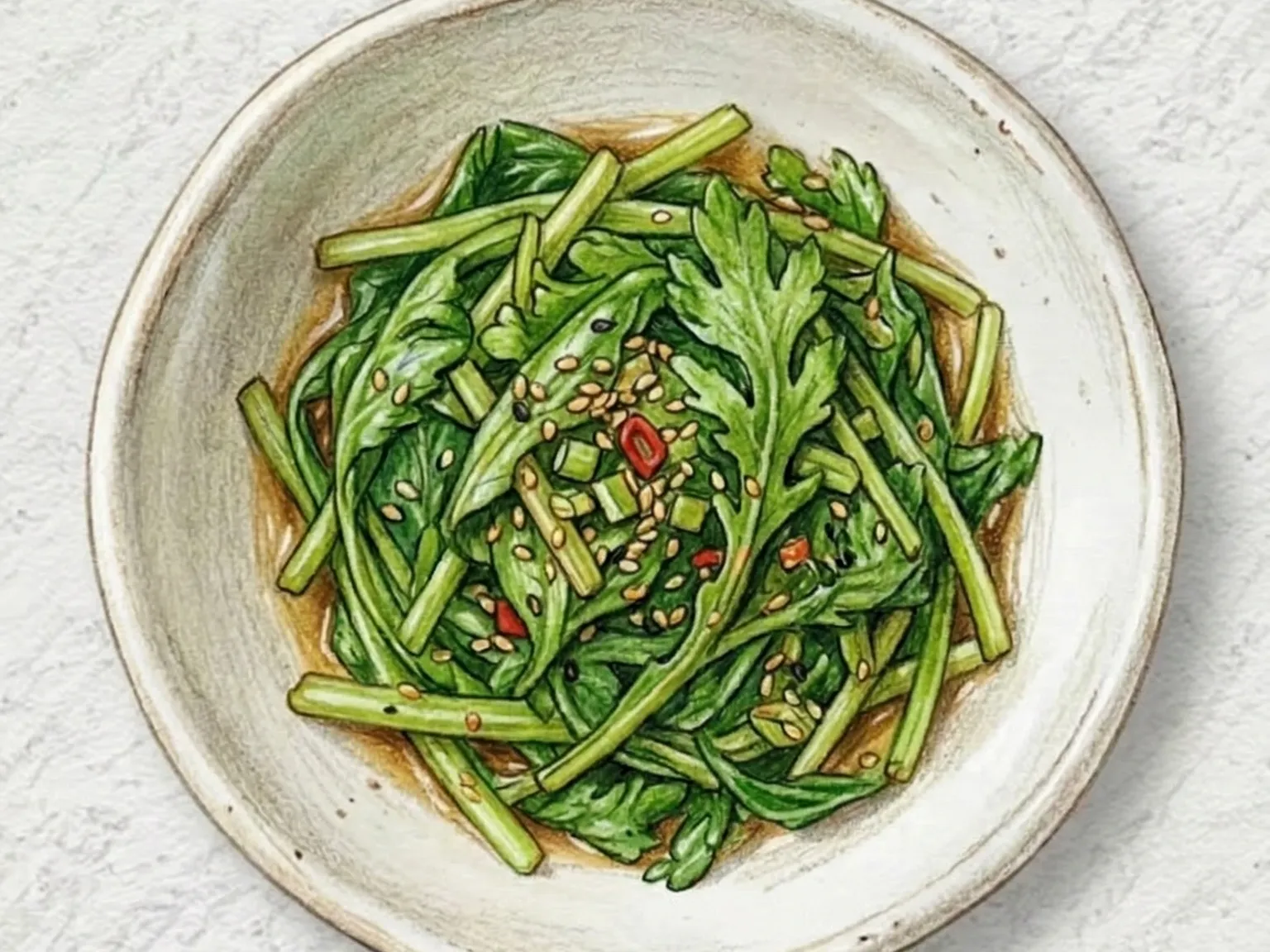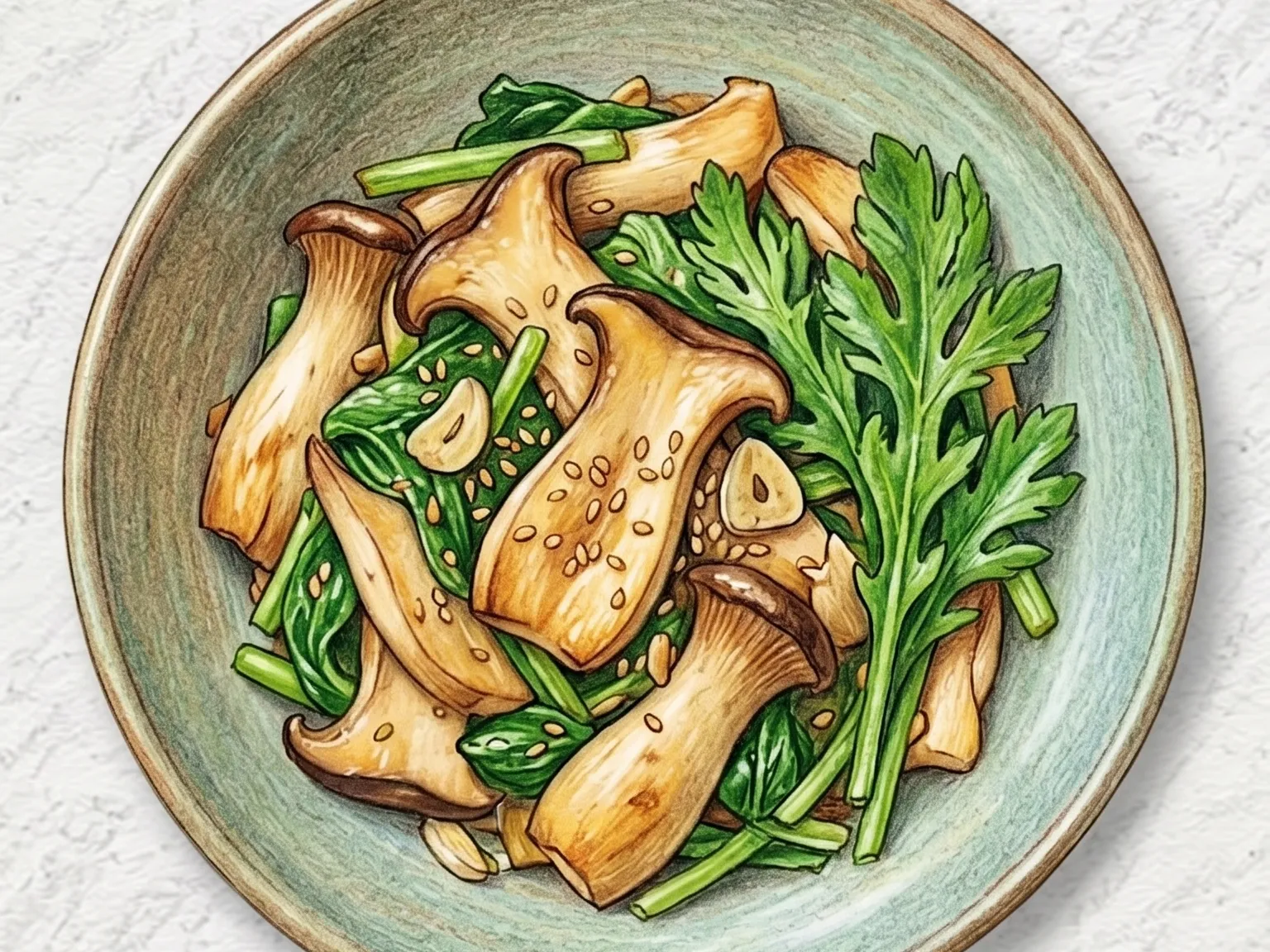
Korean Stir-fried Crown Daisy and Mushrooms
Ssukgat-beoseot-bokkeum is a quick stir-fry of oyster mushrooms and crown daisy (ssukgat) cooked in a garlic-infused pan. The mushrooms are seared over high heat to drive off moisture and develop a chewy bite, while the crown daisy stems and leaves go in at staggered intervals to preserve their crunch and aroma. Soy sauce and cooking wine provide the seasoning base, finished with sesame oil and toasted sesame seeds. The slightly bitter, herbal character of the crown daisy plays off the mild earthiness of the mushrooms for a clean, well-defined flavor.
Adjust Servings
Instructions
- 1
Separate crown daisy stems and leaves into 4 cm pieces; tear mushrooms by hand.
- 2
Heat oil and sauté garlic for 30 seconds until fragrant.
- 3
Add mushrooms and stir-fry on high heat for 3 minutes to reduce moisture.
- 4
Add soy sauce and cooking wine, then stir-fry 1 more minute.
- 5
Add stems first for 40 seconds, then leaves for 20 seconds.
- 6
Turn off heat and toss with sesame oil and sesame seeds.
As an Amazon Associate, we may earn from qualifying purchases.
Tips
Nutrition (per serving)
More Recipes

Korean Stir-Fried Bok Choy and Tofu with Doubanjiang
Firm tofu is patted completely dry and pan-seared in oil for three minutes until golden on each side, then set aside while green onion and garlic are stir-fried in the same pan to build an aromatic base. Doubanjiang, soy sauce, sugar, and water are combined into a sauce directly in the pan; the fermented chili bean paste brings both salt and heat in high concentration, so the soy sauce should be added sparingly and adjusted only after a final taste. Bok choy stems and leaves are separated and added at different stages: stems first for two minutes of direct heat, leaves last for just one minute, so the stalks remain firm while the greens wilt to a silky texture. One teaspoon of sugar softens the sharp salinity of the doubanjiang, rounding the finish into something warm rather than aggressive. When the seared tofu cubes return to the pan, their crisp exterior absorbs the sauce like a sponge, releasing a burst of spicy, fermented flavor with each bite. At 290 calories and 17 grams of protein, the dish proves that a satisfying protein intake does not require meat.

Korean Stir-fried Aged Kimchi and Tofu
Mukeunji-dubu-bokkeum brings together aged kimchi's deep sourness and firm tofu's neutral mildness in a single pan. The tofu is pan-fried to golden first, building a crust that prevents breakage and absorbs sauce more effectively. Meanwhile, onion and aged kimchi are stir-fried with gochugaru until the kimchi's moisture evaporates and its flavor concentrates, then soy sauce and sugar balance the acidity. The tofu returns to the pan to soak up the seasoning, and a final addition of perilla oil softens the kimchi's sharpness while green onion lifts the aroma.

Korean Stir-Fried Mung Bean Sprouts and Mushrooms
Mung bean sprouts and oyster mushrooms are tossed together in a hot pan for a stir-fry that contrasts the sprouts' crisp snap with the mushrooms' tender chew. Speed is critical: the sprouts lose their crunch within seconds of overcooking, so the entire process finishes in under a minute once the ingredients hit the oil. Tearing the oyster mushrooms along their natural grain rather than chopping them exposes more surface area, allowing the seasoning to penetrate each strand. Soup soy sauce seasons the dish with depth while keeping the color clean and light, and minced garlic and sliced green onion provide an aromatic backbone that fills the kitchen as the pan sizzles. Sesame oil is added just before removing from heat so its fragrance survives intact, and a scattering of toasted sesame seeds supplies a nutty accent. Both ingredients release significant moisture, so either salting them briefly beforehand or ensuring the pan is blazing hot prevents the stir-fry from turning soggy.

Korean Soy Sauce Stir-Fried Mushrooms
King oyster and shiitake mushrooms, torn and sliced for maximum surface area, are stir-fried hard over high heat to drive off moisture before soy sauce goes in. The high heat creates lightly charred edges on king oyster pieces, giving them a firm, almost meaty texture. Soy sauce caramelizes against the hot pan, leaving a dark, lacquered glaze. Sesame oil and green onion finish it off heat. Concentrated and umami-forward with clean soy saltiness.

Korean Oyster Water Parsley Stir-fry
Gul-minari-bokkeum stir-fries plump raw oysters with fragrant water parsley (minari), gochugaru, and light soy sauce over high heat. The oysters cook just enough to firm up while keeping their juicy brine, and the minari retains its crunch and herbal freshness. The briny sweetness of the oysters meets the clean, grassy note of minari, creating a balanced and refreshing dish. It is best prepared in winter when oysters are at their plumpest and most flavorful.

Korean Pork and Asparagus Stir-fry
A Korean weeknight stir-fry that pairs pork shoulder or belly with asparagus and red bell pepper in a soy-garlic sauce. The pork is sliced thin and marinated in soy sauce, minced garlic, and a pinch of sugar to coax out caramelization on the hot pan. Cooking the meat first over high heat renders out its fat, which becomes the medium for stir-frying the vegetables. Asparagus goes in next for barely a minute - just enough to turn its raw starchiness into a clean, grassy snap. Bell pepper adds pops of natural sweetness and color contrast. The sauce is restrained: soy, a touch of oyster sauce, and sesame oil, keeping the focus on the interplay between the pork's umami depth and the vegetables' brightness. The entire cook from cold pan to finished plate takes under twelve minutes, making it one of the fastest protein-and-vegetable banchan in the Korean home repertoire.