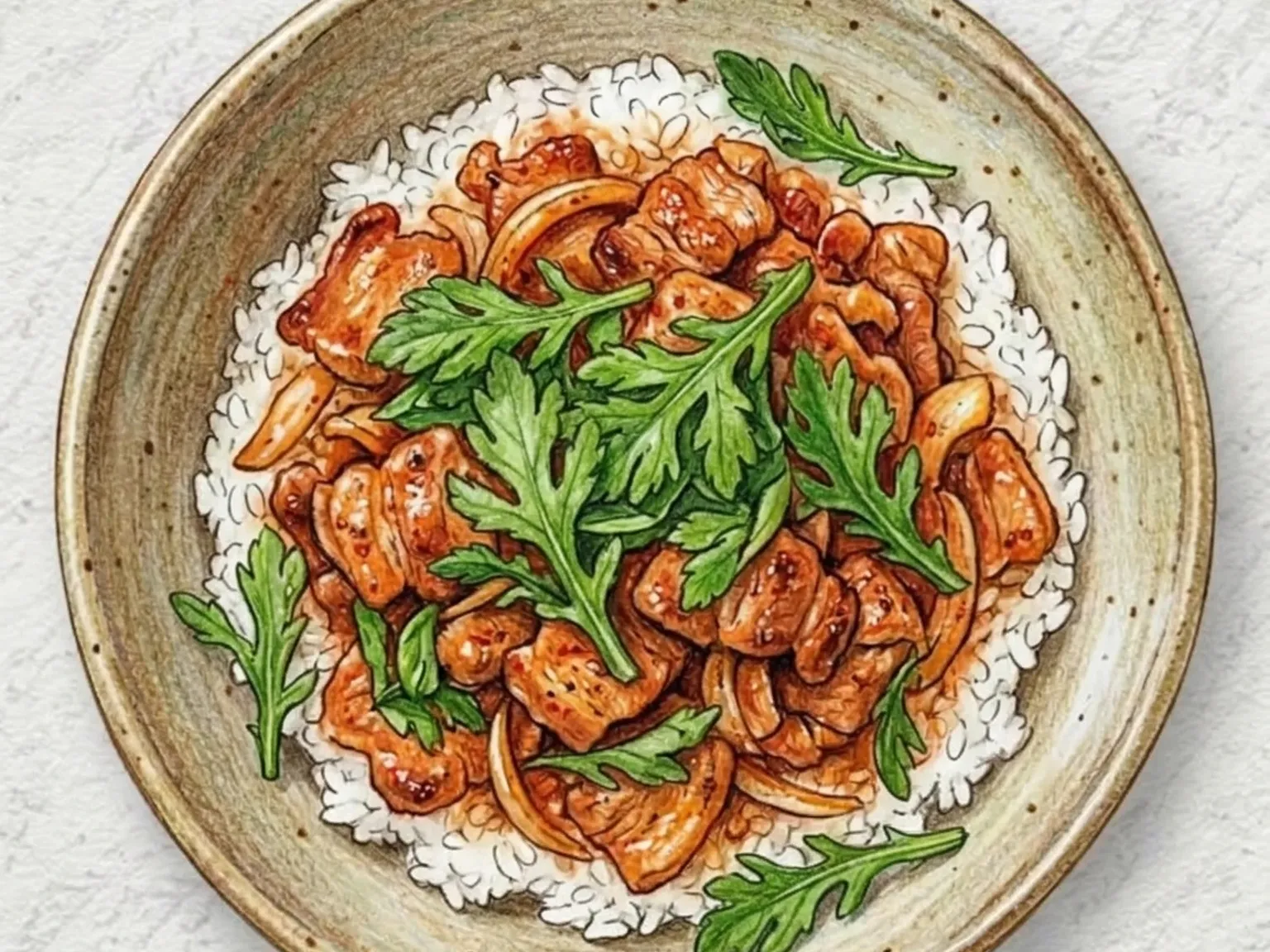
Korean Pork & Crown Daisy Stir-fry
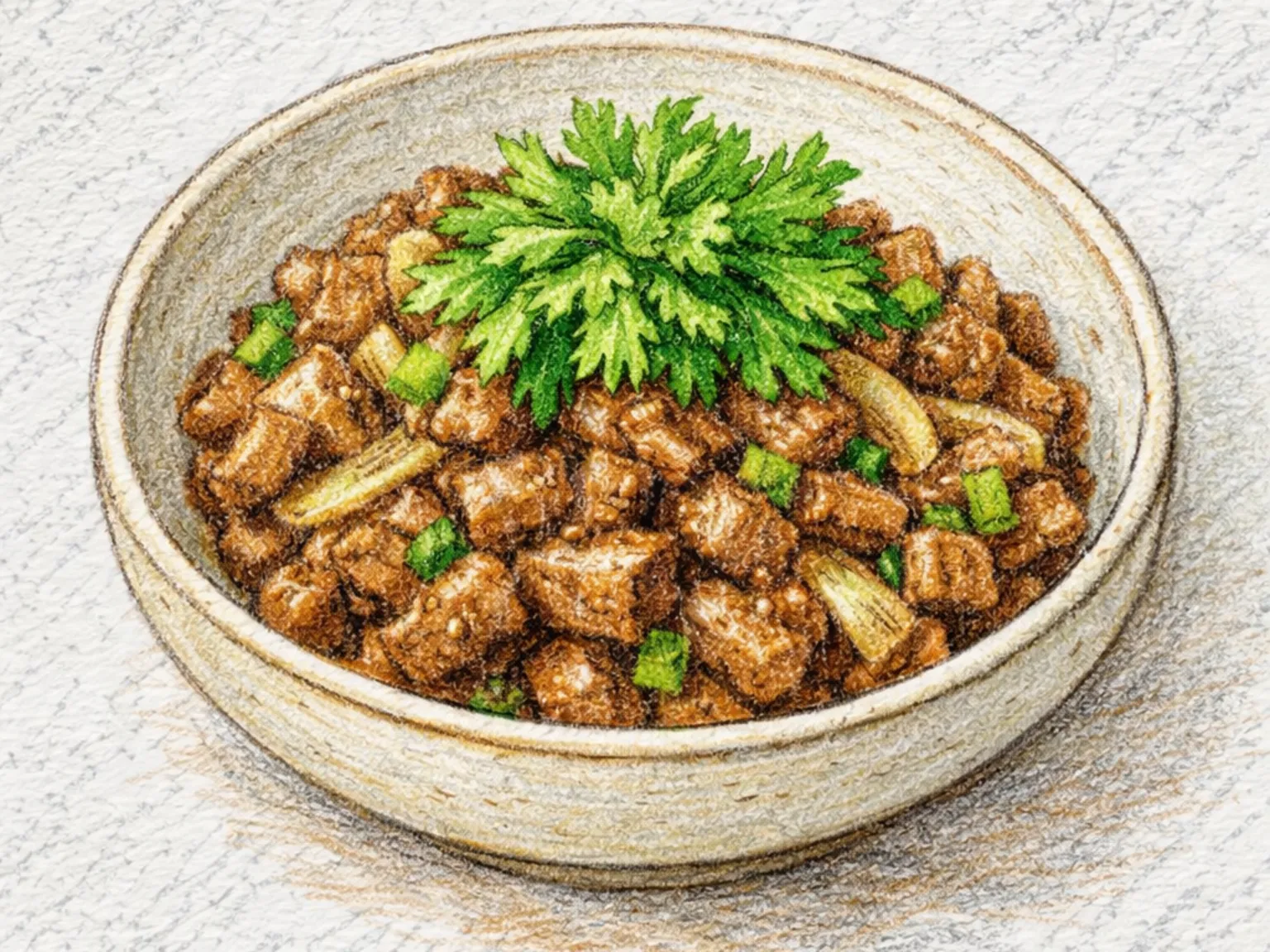
Ssukgat-dwaeji-doenjang-bokkeum is a Korean stir-fry of pork shoulder marinated in doenjang (fermented soybean paste) and gochujang, cooked with onion and scallion before crown daisy is tossed in at the end. The doenjang penetrates the pork during marination, producing a deep, salty fermented savoriness once seared. Crown daisy is added briefly to keep its herbal fragrance and gentle bitterness intact, which cuts through the richness of the pork fat. The contrast between the heavy, umami-laden meat and the bright green aromatics keeps each bite balanced.
Adjust Servings
Instructions
- 1
Pat dry the pork, then marinate with soybean paste, gochujang, and minced garlic for 10 minutes.
- 2
Cut crown daisy into 5 cm pieces, and slice onion and green onion thinly.
- 3
Heat oil in a pan and stir-fry onion for 1 minute to bring out sweetness.
- 4
Add marinated pork and stir-fry over high heat for 4–5 minutes until fully cooked.
- 5
Add green onion and crown daisy, toss for 1.5 minutes, then finish with sesame oil.
As an Amazon Associate, we may earn from qualifying purchases.
Tips
Nutrition (per serving)
More Recipes

Korean Pork and Kimchi Stir-Fry
Dwaejigogi-kimchi-bokkeum is a Korean stir-fry of pork and well-aged napa cabbage kimchi, one of the country's most common home-cooked dishes. The deep acidity of fermented kimchi meets the richness of pork fat, intensifying in flavor the longer they cook together. A touch of Korean chili flakes is added to deepen the color and build an extra layer of heat. It requires no special technique and is a staple side dish found in nearly every Korean set-meal restaurant.

Korean Pork & Swiss Chard Stir-fry
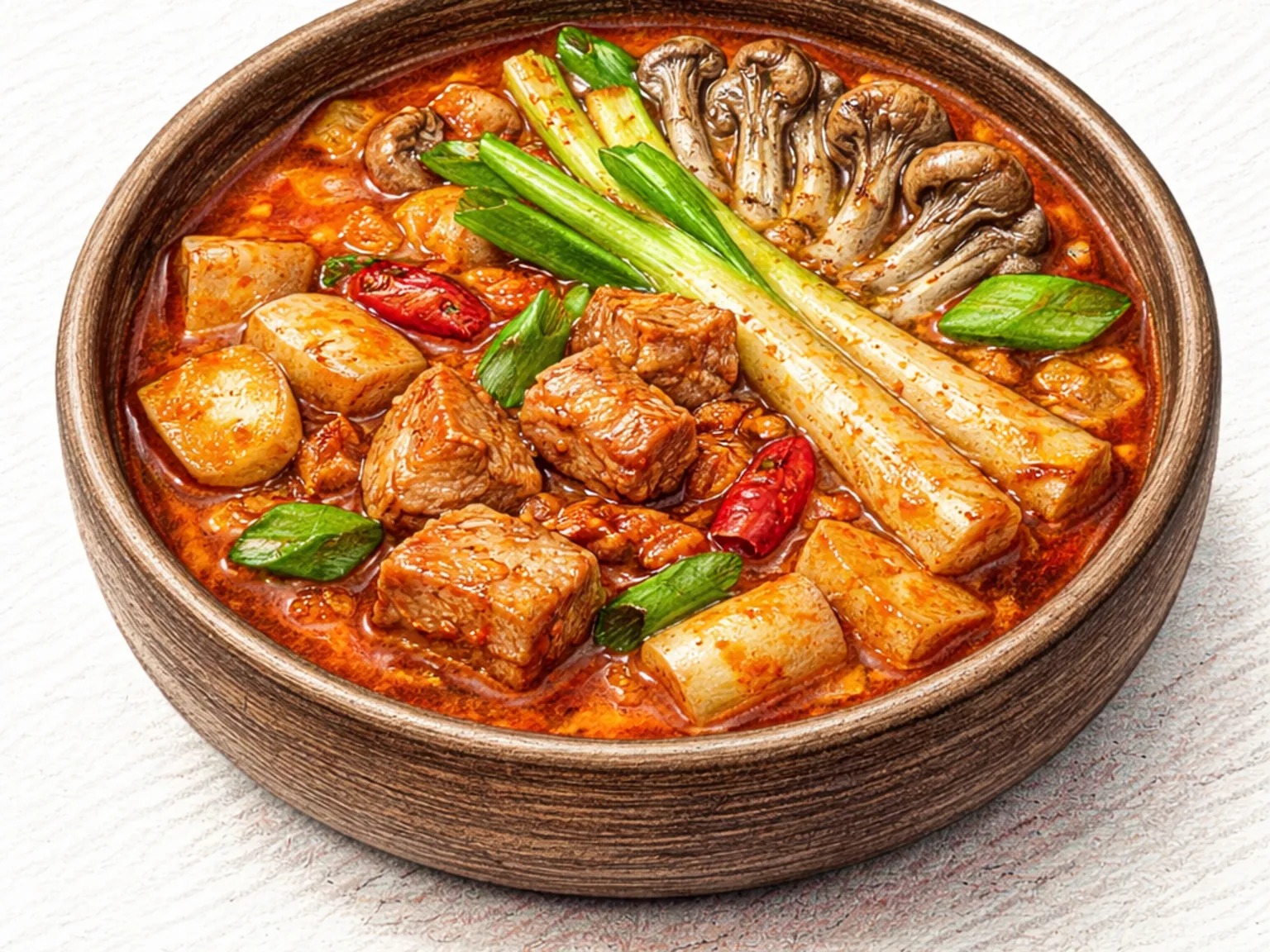
This hearty stir-fry combines pork shoulder and Swiss chard in a doenjang-based sauce that delivers deep, earthy umami. Separating the chard stems from the leaves and adding them at different times preserves contrasting textures: the stems remain snappy while the leaves wilt into tender ribbons. Doenjang neutralizes any gamey pork notes and builds a robust savory backbone, finished with sesame oil for a nutty warmth. A touch of Korean chili flakes introduces mild heat that rounds out the dish. It pairs naturally with a bowl of steamed rice for a complete, nourishing meal.

Korean Cauliflower Soybean Paste Pork Stir-fry
Kollipeullawo doenjang dwaeji bokkeum is a stir-fry of pork shoulder seared until browned, then cooked with doenjang and gochugaru before briefly blanched cauliflower florets are folded in at the end. The doenjang's fermented saltiness merges with rendered pork fat to create a deep, earthy savoriness, and draining the cauliflower thoroughly keeps the sauce concentrated rather than watery. The cauliflower's neutral flavor serves as a counterbalance to the heavy fermented paste. With relatively low carbohydrate content, this dish fits well into reduced-carb meal planning.

Korean Clam Stir-Fry (Manila Clams with Butter, Garlic and Chili)
Bajirak bokkeum is a Korean clam stir-fry where purged manila clams are cooked quickly over high heat with butter, garlic, and cheongyang chili. Rice wine goes in first and the lid is closed so the alcohol steam helps the clams open rapidly while neutralizing any briny off-notes. Once the shells open, butter is added and emulsifies with the released clam juices, forming a naturally salty, rich sauce without any additional effort. Generous sliced garlic infuses the butter sauce with depth, and the cheongyang chili cuts through the richness with its sharp heat. A small amount of soy sauce adjusts the seasoning, kept restrained because the clams carry their own salinity. Scallion is tossed in at the very end for a final layer of aroma before the pan comes off the heat. Total cooking time stays under three to four minutes to prevent the clam meat from shrinking and toughening. The remaining sauce in the pan is intensely flavored and pairs exceptionally well with bread for soaking up every last drop.

Korean Crown Daisy Kimchi
Ssukgat kimchi is a fragrant seasonal kimchi that highlights crown daisy's herbal bitterness alongside chili flakes and sand lance fish sauce. The greens are salted for only seven minutes to preserve their delicate, tender texture, then dressed with a paste enriched by sweet rice flour for better adhesion. Plum extract balances the bitterness with gentle sweetness and acidity during fermentation. After two hours at room temperature followed by overnight refrigeration, the kimchi reaches its aromatic peak within a single day. Because the leaves bruise easily, gentle tossing during seasoning is essential to maintain their shape.

Korean Bulgogi Deopbap (Pork Rice Bowl)
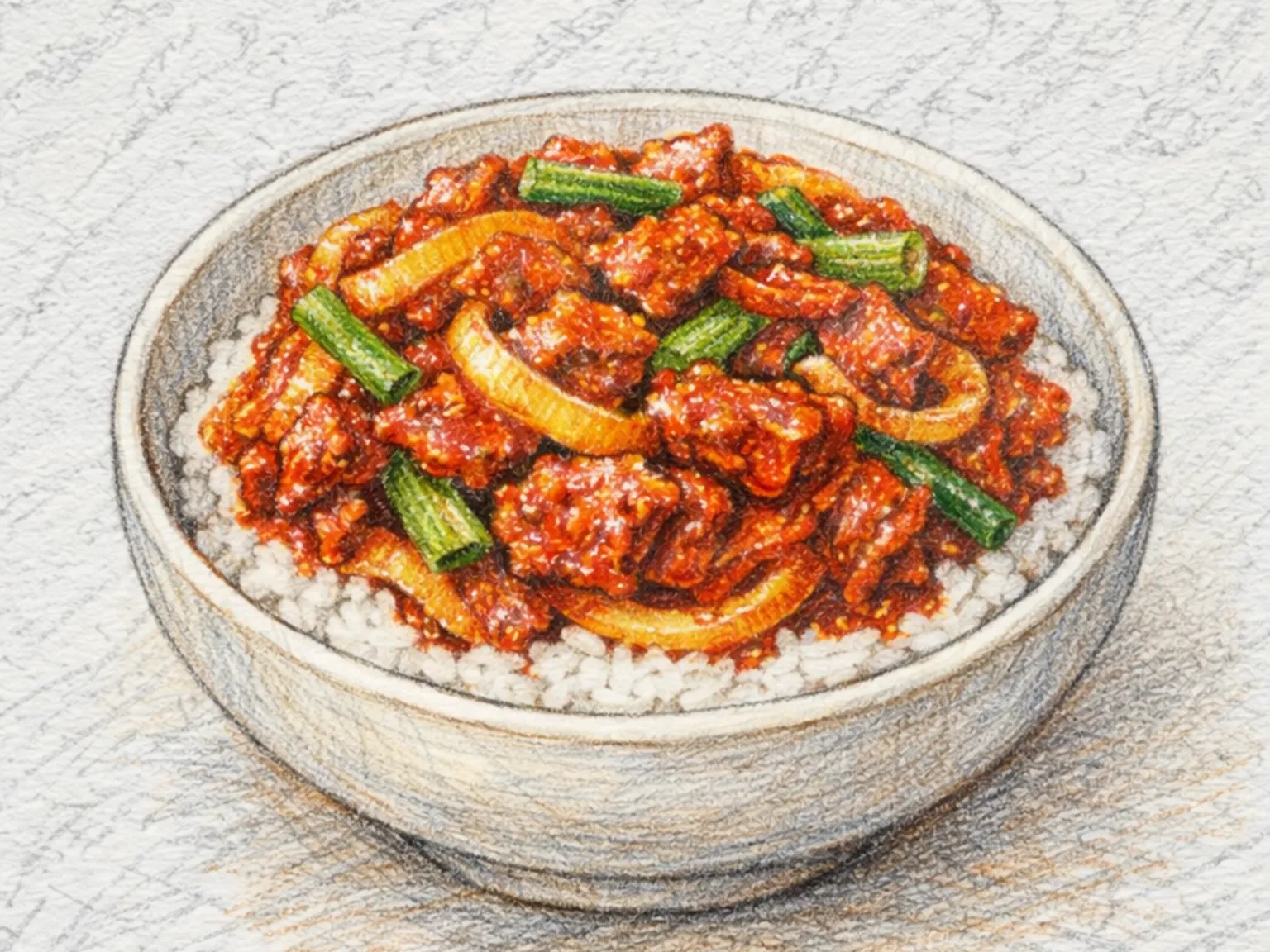
Spicy-sweet pork bulgogi piled over rice with aromatic crown daisy greens - a one-bowl Korean dinner ready in 30 minutes. Gochujang-marinated pork shoulder is stir-fried with onion over high heat and finished with a handful of crown daisy greens. The marinade layers gochujang, chili flakes, soy sauce, sugar, and garlic into a sauce that is simultaneously spicy, sweet, and deeply savory. Pork shoulder renders enough fat during cooking to carry the sauce into the rice below, creating a rich base. Crown daisy goes in during the final thirty seconds - just long enough to wilt slightly and release its herbal, almost chrysanthemum-like fragrance, which cuts through the heaviness of the pork and sauce with a green, aromatic brightness. The timing of the ssukgat addition is critical: too early and it turns limp and bitter, too late and the aroma stays locked inside the leaves. The finished bowl needs no accompaniment to feel complete.