Korean Seasoned Crown Daisy Namul
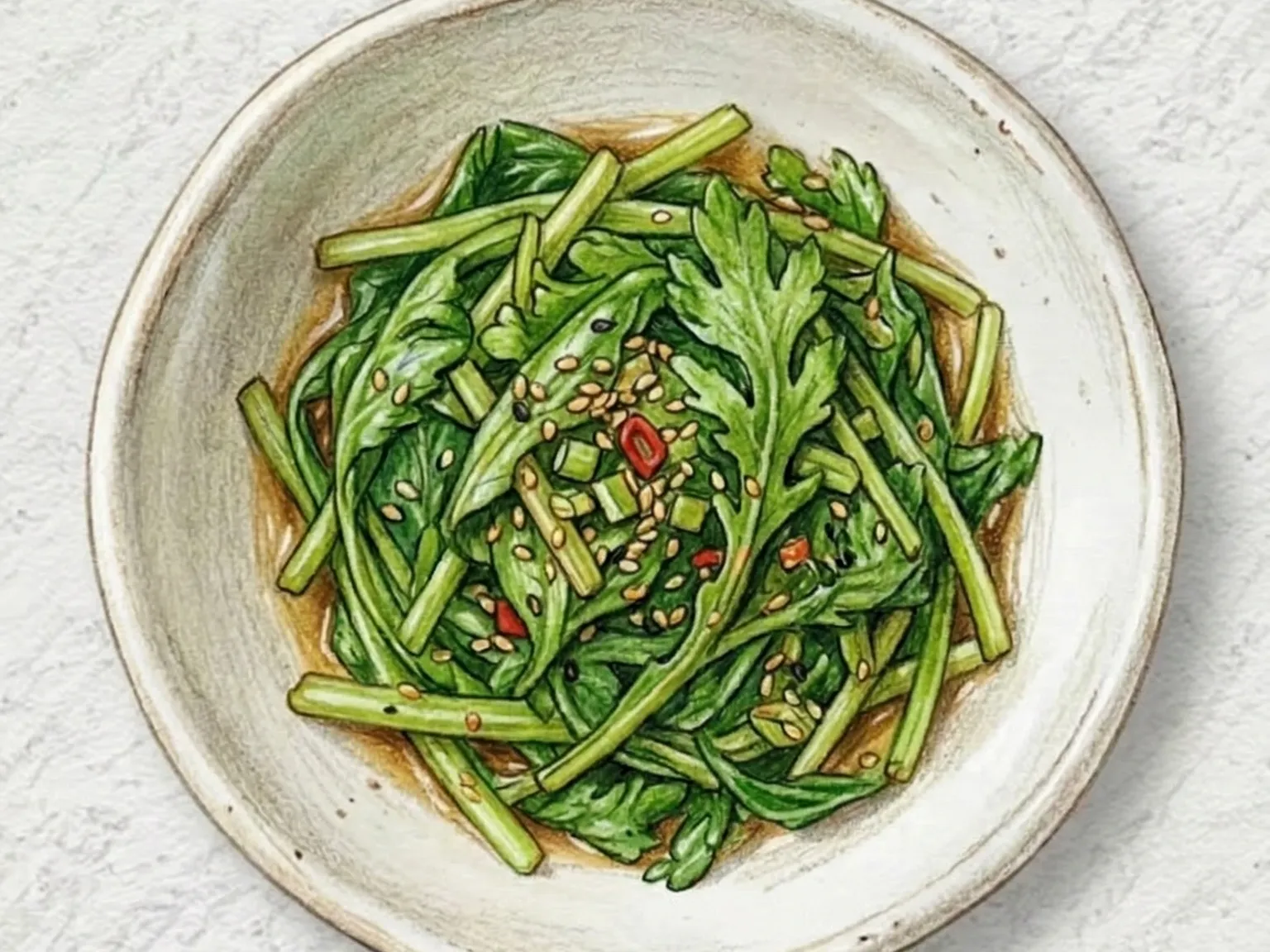
Crown daisy greens are blanched for no more than ten seconds, just long enough to wilt the stems while preserving the leaves' intense herbal fragrance. This chrysanthemum-family herb carries a distinctive aroma that can overwhelm if overcooked but captivates when handled briefly. The dressing is straightforward: soy sauce provides the salty base, sesame oil contributes richness, and toasted sesame seeds burst with a nutty flavor when bitten. Through this simple seasoning, the crown daisy's slightly bitter, almost medicinal character cuts clearly, making the dish taste more vivid than its ingredient list suggests. Minced garlic and chopped green onion layer additional aromatics without competing with the main ingredient. Shocking the greens in ice water immediately after blanching locks in their bright green color, and squeezing out excess moisture before dressing prevents the sauce from diluting. The result is a namul with a clean, sharp personality that pairs well with milder dishes on a Korean table.
Adjust Servings
Instructions
- 1
Trim tough stems and wash the crown daisy.
- 2
Blanch in salted boiling water for 20 to 30 seconds, then cool in cold water.
- 3
Squeeze out water well and cut into 4 to 5 cm lengths.
- 4
Mix soy sauce, garlic, green onion, sesame oil, and sesame seeds.
- 5
Add the greens and toss gently before serving.
As an Amazon Associate, we may earn from qualifying purchases.
Tips
Nutrition (per serving)
More Recipes

Korean Seasoned Chili Leaves
Gochuip - chili pepper leaves - are harvested after the peppers themselves have been picked, a practice rooted in Korean rural frugality where nothing from the kitchen garden goes to waste. The leaves are at their most tender and fragrant in August and September, after the main pepper harvest. Blanched for one minute to temper bitterness, squeezed dry, and dressed with soy sauce, gochugaru, garlic, sesame oil, and sesame seeds. The leaves carry a distinctive faintly bitter, herbaceous note that overlaps with the gochugaru's heat in a way no other Korean green replicates. Because the thin leaves absorb seasoning rapidly, this namul is fully flavored from the moment it is dressed.

Korean Seasoned Carrot Namul
Carrot namul is one of the five-color banchan Koreans prepare for ancestral rites, where orange represents fire. Julienned thin, the carrots are salted briefly to shed water, then stir-fried with garlic for two to three minutes - just enough to soften the raw edge while keeping an audible crunch. No soy sauce or chili enters the pan; seasoning stays minimal to preserve natural sweetness. A final toss with sesame oil and seeds rounds out this clean, single-ingredient side.

Korean Seasoned Young Radish Greens
Young radish greens are blanched in boiling water for just ten to fifteen seconds and dressed with soup soy sauce, garlic, sesame oil, and toasted sesame seeds. The greens' summer abundance of moisture and tender fiber means they wilt quickly in hot water, so a brief dip is all that is needed; the stems stay crunchy while the leaves soften just enough to absorb the dressing. Soup soy sauce supplies a light salinity that lets the greens' fresh, grassy flavor come forward, and minced garlic adds a sharp note that anchors the mild base. Sesame oil coats the strands thinly, creating a smooth mouthfeel, and sesame seeds release a warm, nutty fragrance each time they are bitten. Rinsing in cold water immediately after blanching locks in the bright, pale green color, and squeezing out excess water ensures the seasoning clings tightly to the greens. This namul wins on clean, understated flavor rather than bold seasoning, making it an effective palate cleanser alongside spicy stews or rich grilled meats.

Korean Crown Daisy Pancake
Fragrant crown daisy leaves are coated in a light pancake batter and pan-fried until the edges crisp and the herb's aroma intensifies. Heat amplifies the crown daisy's grassy, slightly bitter character, and the scent rises through the thin layer of batter as the jeon cooks. Egg in the batter provides structure, helping the exterior hold its crunch, while a small addition of potato starch keeps the texture light and prevents sogginess as the pancake cools. Sliced onion mixed into the batter introduces a gentle sweetness that offsets the herb's bitterness. Cooking over medium-low heat with ample oil ensures the interior sets evenly before the surface browns too deeply, and waiting until one side has fully firmed before flipping prevents the pancake from falling apart. The finished jeon is served with a dipping sauce of soy sauce and vinegar, whose acidity lifts the richness of the fried exterior and highlights the crown daisy's herbal notes.

Korean Crown Daisy Kimchi
Ssukgat kimchi is a fragrant seasonal kimchi that highlights crown daisy's herbal bitterness alongside chili flakes and sand lance fish sauce. The greens are salted for only seven minutes to preserve their delicate, tender texture, then dressed with a paste enriched by sweet rice flour for better adhesion. Plum extract balances the bitterness with gentle sweetness and acidity during fermentation. After two hours at room temperature followed by overnight refrigeration, the kimchi reaches its aromatic peak within a single day. Because the leaves bruise easily, gentle tossing during seasoning is essential to maintain their shape.

Korean Crown Daisy Soy Pickle
Ssukgat jangajji is a soy-brined pickle that captures the distinctly herbaceous, slightly bitter aroma of crown daisy greens. Pouring a boiling mixture of soy sauce, vinegar, sugar, and whole peppercorns directly over the trimmed greens wilts them just enough to tame any raw grassiness while locking in their aromatic character. Thin lemon slices layered between the greens introduce a citrus brightness that lifts the salty-sweet brine. The pickle is ready after just 24 hours of refrigeration and is best consumed within a week, when the herbal fragrance is at its peak. It works well as a rice topping or alongside grilled meat.