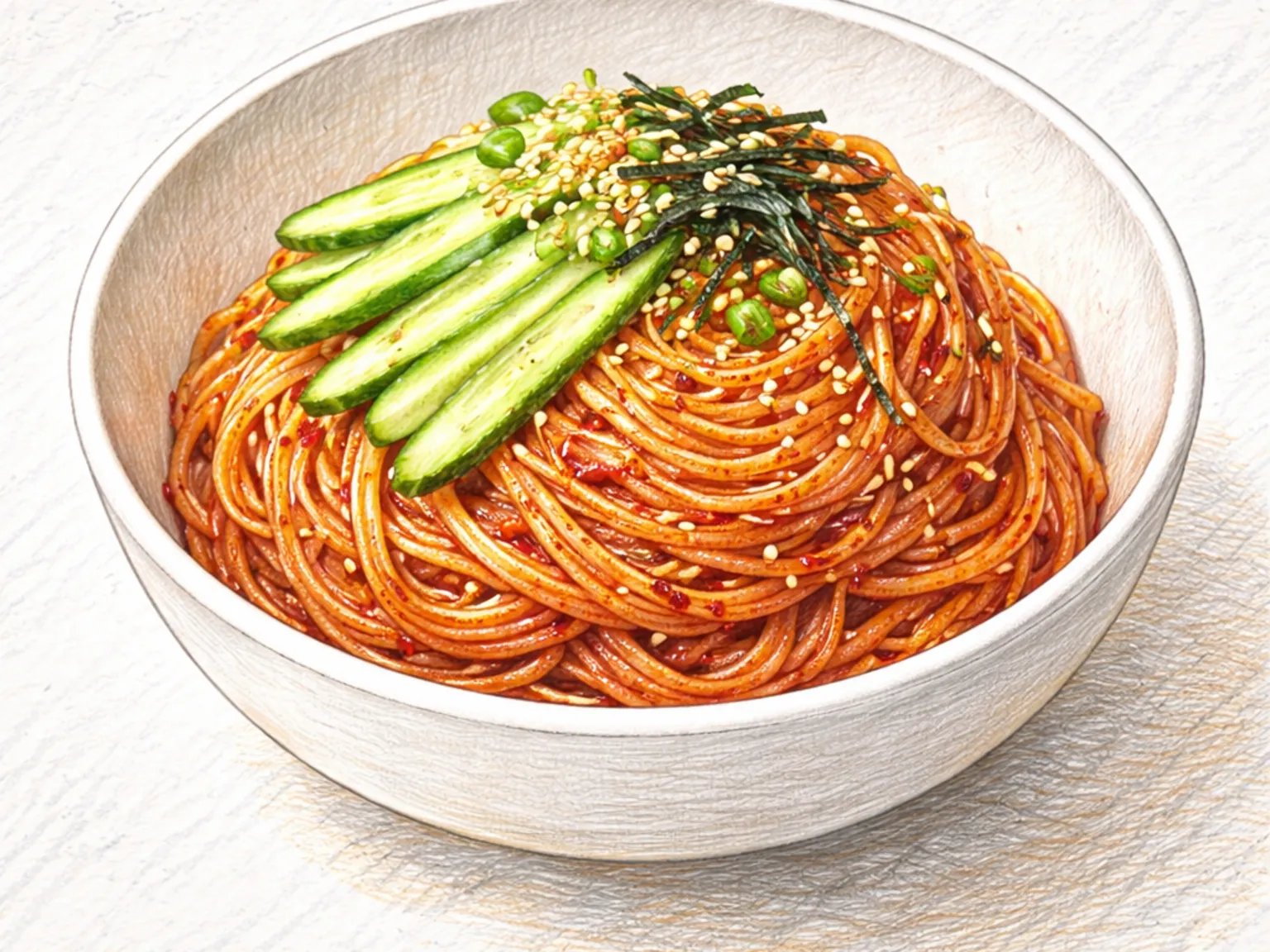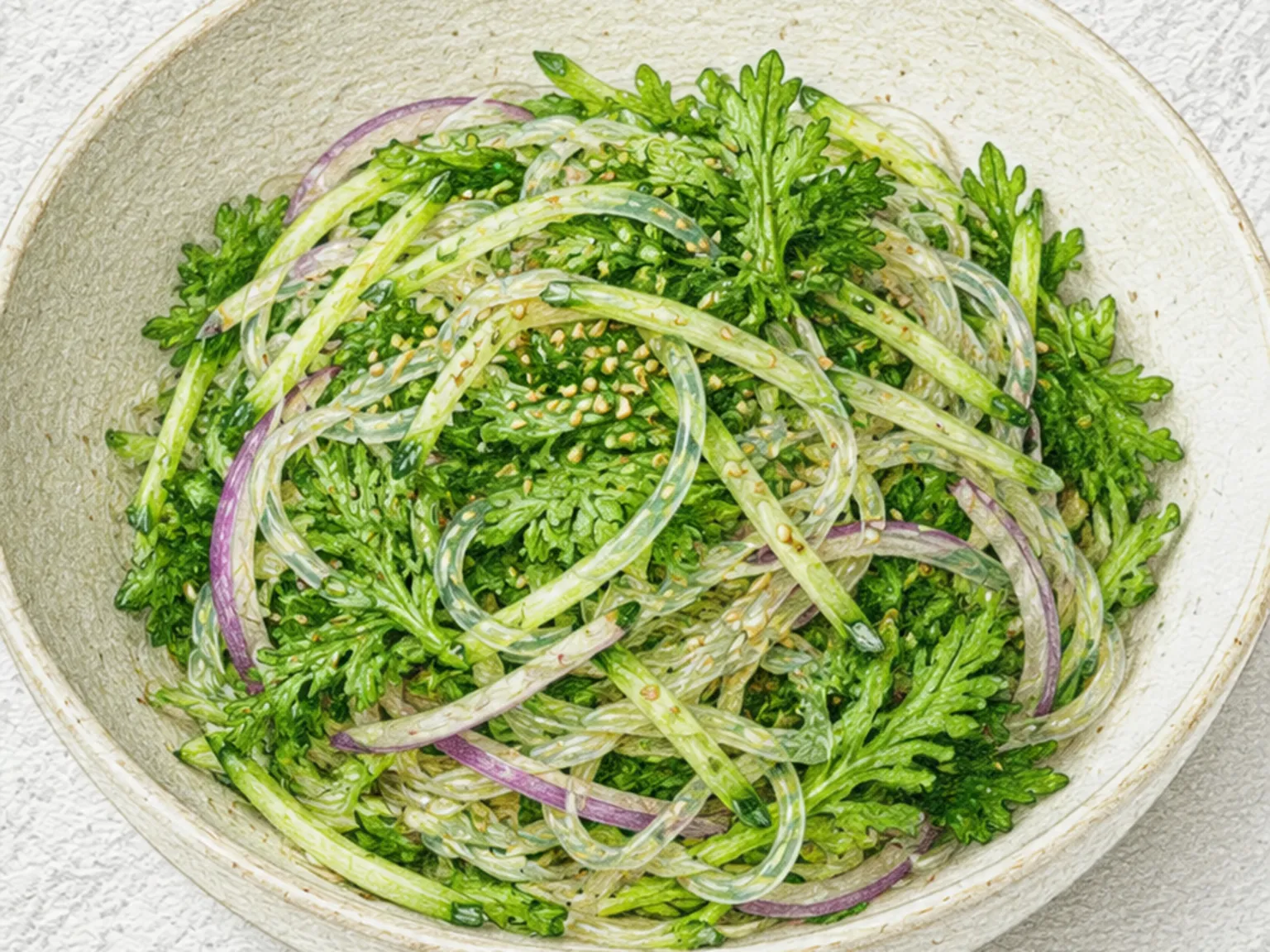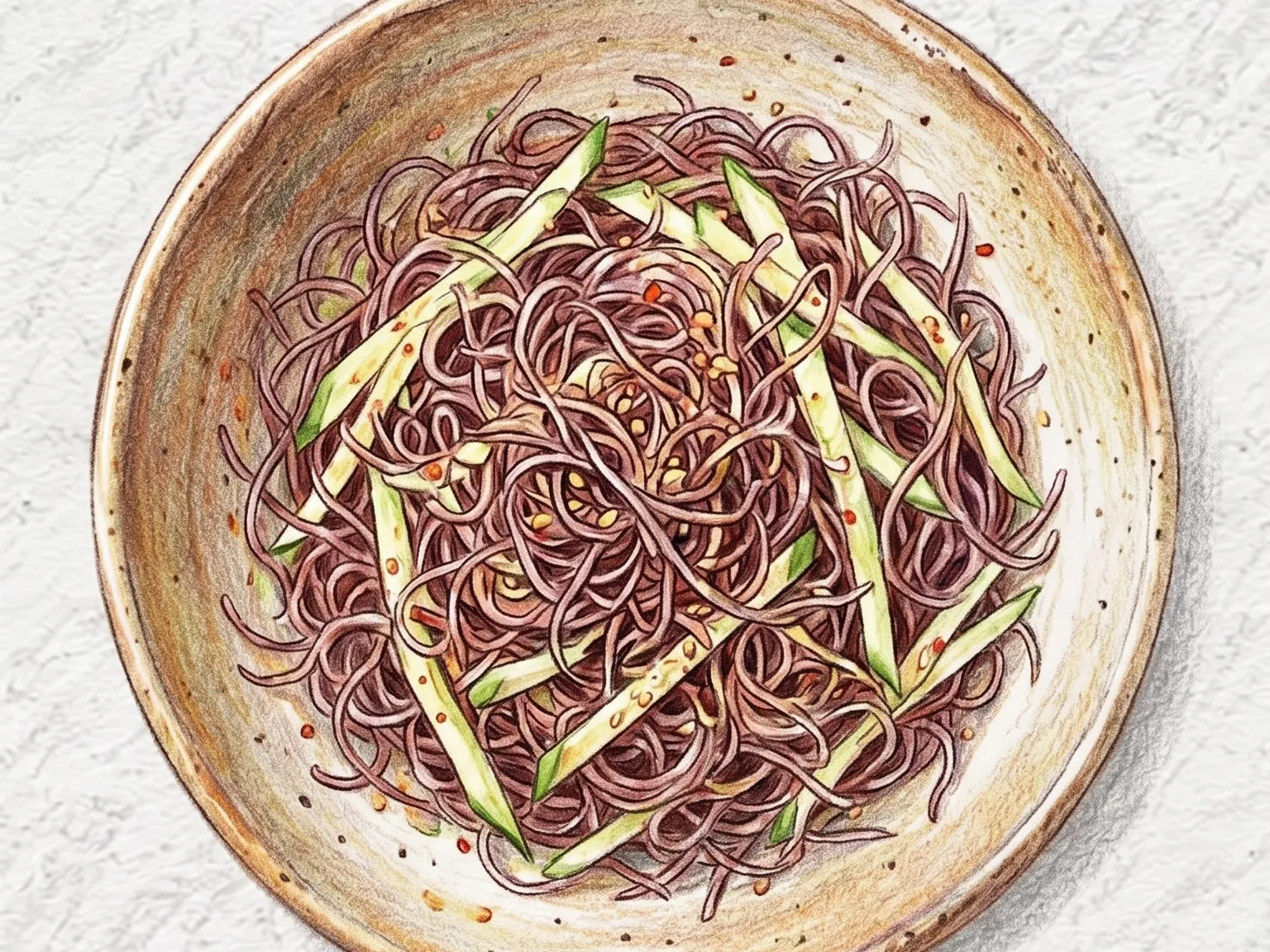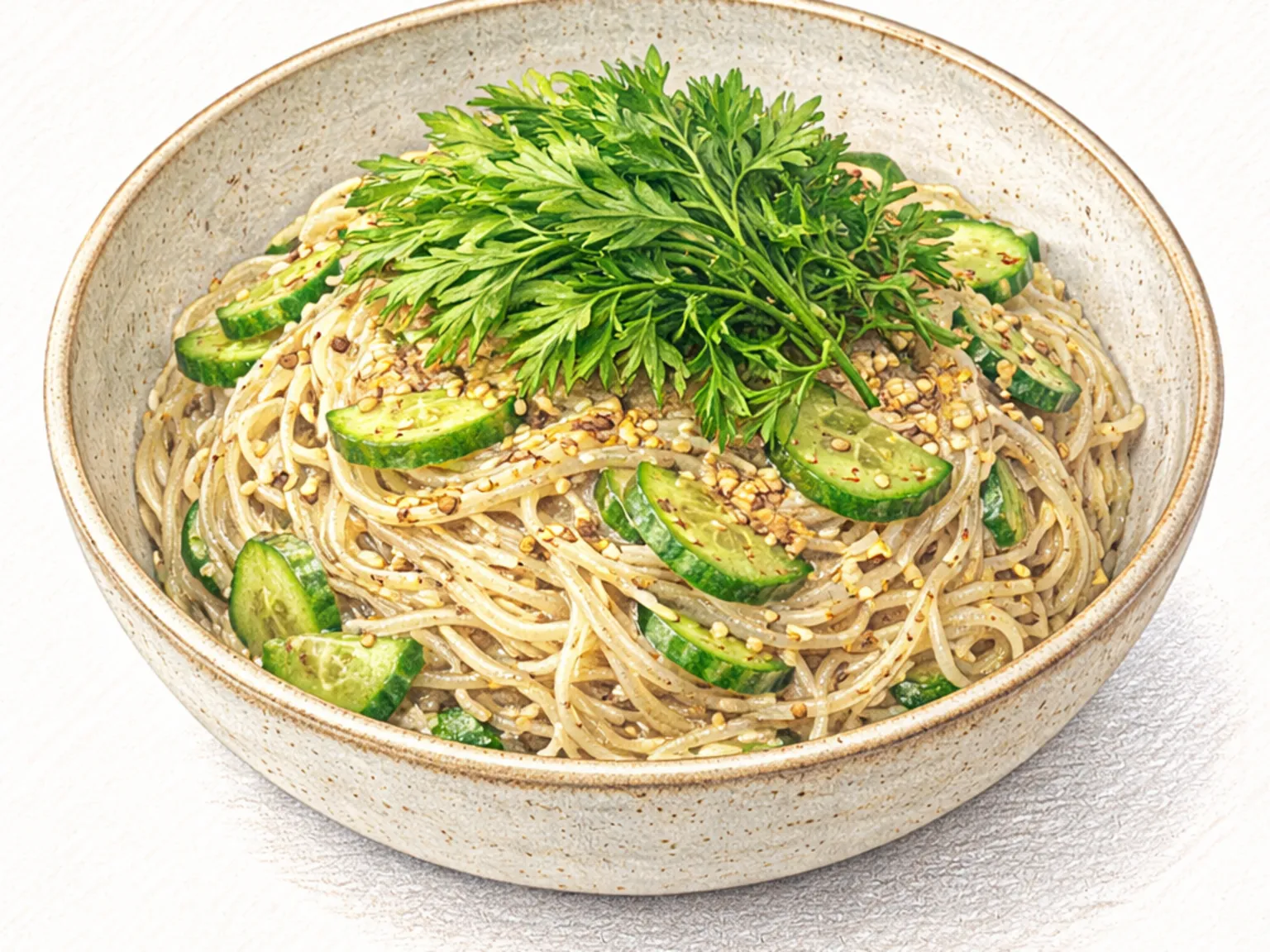
Korean Ssukgat Perilla Bibim Somyeon

Korean Ssukgat Perilla Bibim Somyeon

Quick answer

Ground perilla seeds create a nutty foundation for this cold noodle dish, while crown daisy leaves contribute a distinctive herbal bitterness.

What makes this special

  • Nutty ground perilla seeds and bitter crown daisy leaves balance this Korean cold noodle dish.
  • Ssukgat's bitter herbal note counterbalances perilla's heavy nuttiness
  • 30-second ice water dip tightens starch strands for firmer noodle bite
Total time
25 min
Level
Easy
Servings
2 servings
Ingredients
9
Calories
510 kcal
Protein
14 g

Key ingredients

Somyeon (thin wheat noodles)Crown daisyCucumberPerilla seed powderSoy sauce

Core cooking flow

  1. 1 Rinse 40 g crown daisy, shake off excess water, and cut it into 4 cm pieces.
  2. 2 In a large bowl, first mix 1.5 tablespoons soy sauce with 1 tablespoon each...
  3. 3 Bring a generous pot of water to a full boil, add 200 g somyeon, and cook ov...

Ground perilla seeds create a nutty foundation for this cold noodle dish, while crown daisy leaves contribute a distinctive herbal bitterness. Thin somyeon noodles serve as the base, tossed in a savory dressing made from soy sauce and freshly ground perilla seeds. Julienned cucumber adds a crisp texture and freshness that contrasts with the soft strands. Preparing the noodles involves boiling and rinsing them multiple times in cold water to build elasticity and remove surface starch. Ensuring the noodles are dry prevents the sauce from thinning out during mixing. Using seeds that are toasted and ground just before serving heightens the aromatic quality of the bowl. The entire preparation takes approximately twenty-five minutes, making it an efficient option for warm weather. It lacks the heat typically associated with spicy noodles, making it approachable for newcomers. Adding chili oil provides a spicy kick for variety, or the dressing can be paired with buckwheat noodles instead. Any remaining sauce functions effectively as a topping for tofu or fresh garden salads.

Prep 15min Cook 10min 2 servings

Instructions

Read the steps as a cooking flow: prep, heat, seasoning, doneness control, and finish.

6 steps
  1. 1
    Heat

    Rinse 40 g crown daisy, shake off excess water, and cut it into 4 cm pieces.

    Julienne 60 g cucumber thinly, then soak it in cold water so it stays crisp while the noodles cook.

  2. 2
    Season

    In a large bowl, first mix 1.5 tablespoons soy sauce with 1 tablespoon each vinegar and plum syrup, plus 1 teaspoon minced garlic.

    Stir in sesame oil and 2 tablespoons perilla powder until the dressing looks smooth and slightly thick.

  3. 3
    Control

    Bring a generous pot of water to a full boil, add 200 g somyeon, and cook over medium-high heat for 3 minutes.

    Stir right away so the strands separate, and add a small splash of cold water if it starts foaming over.

  4. 4
    Heat

    Drain the cooked noodles and rub-rinse them several times in cold water to remove surface starch.

    Soak them in ice water for 30 seconds, then drain in a sieve and squeeze firmly so the dressing does not become watery.

  5. 5
    Step

    Add the well-drained noodles to the bowl and toss first with about 80 percent of the dressing.

    When the strands are evenly coated in a pale beige color, taste and adjust with the remaining dressing as needed.

  6. 6
    Finish

    Just before serving, add the crown daisy and drained cucumber, then toss lightly so the greens keep their aroma and do not bruise.

    Plate the noodles, sprinkle a little more perilla powder on top, and serve cold right away.

After the steps

Pick a recipe that fits this dish.

Continue with shared ingredients, meal pairings, or a similar method.

Recipes That Go Well With This

More Noodles →

Based on shared ingredients and meal pairing

Korean Spicy Mixed Wheat Noodles
Shared ingredient: somyeon noodles Noodles

Korean Spicy Mixed Wheat Noodles

Bibim guksu is a chilled Korean noodle dish in which boiled and cold-rinsed somyeon wheat noodles are tossed in a sauce of gochujang, chili flakes, plum syrup, vinegar, soy sauce, and sesame oil. The heat from the gochujang, the sweetness of plum syrup, and the brightness of vinegar stack into a multi-dimensional flavor in every bite. Rinsing the noodles thoroughly in cold water removes excess starch, giving them a bouncy texture and allowing the sauce to cling evenly. Torn lettuce and julienned cucumber folded in at the end add crunch and release moisture that loosens the thick sauce just enough. A tablespoon of noodle cooking water can thin the sauce if needed. For 100 g of somyeon, a starting ratio of 1 tablespoon gochujang, 1 tablespoon plum syrup, and 1 teaspoon vinegar provides a reliable base to adjust from.

Korean Yeolmu Bibim Guksu
Shared ingredient: somyeon noodles Noodles

Korean Yeolmu Bibim Guksu

Yeolmu bibim guksu is a Korean mixed noodle dish built around young radish kimchi (yeolmu kimchi). The kimchi provides a crunchy texture and a fermented tanginess that anchors the bowl. Thin somyeon noodles are rinsed in cold water, then tossed with gochugaru or gochujang dressing, sesame oil, and sesame seeds. The heat level stays moderate, letting the kimchi's sourness come through. Total preparation is about 23 minutes, and the recipe requires no cooking beyond boiling the noodles. The main ingredients are Somyeon noodles, Yeolmu kimchi, Gochujang, and Vinegar, and the recipe depends on careful handling of noodle cooking time and sauce thickness.

Korean Seasoned Kelp Strips
Serve together Side dishes

Korean Seasoned Kelp Strips

Kelp strips are soaked in cold water for ten minutes to draw out excess salt, then blanched for twenty seconds, just long enough to turn them pliable without losing their snap. The strips are dressed with gochugaru, vinegar, soy sauce, sugar, and garlic while julienned cucumber adds a cool, refreshing contrast. The seasoning sits over the mineral-dense ocean flavor of the kelp, layering a bright, acidic kick onto each bite. Sesame oil and whole sesame seeds finish the dish. The strips keep a satisfying resistance between the teeth that sets them apart from softer Korean seaweed preparations. Best served cold; the texture and flavor hold up well in packed lunches. Blanching beyond twenty seconds causes the kelp to soften and lose the chew that defines this banchan.

Korean Seasoned Veggie Mixed Noodles
Similar recipe Noodles

Korean Seasoned Veggie Mixed Noodles

Namul bibim somyeon is a Korean mixed noodle dish where thin wheat noodles are tossed with blanched spinach, soybean sprouts, and julienned carrot in a soy-based dressing. Each vegetable is blanched separately and squeezed firmly dry before mixing; residual moisture dilutes the sauce and causes the noodles to clump as they sit. Dry-sauteing the carrot for one minute without any oil pulls out a sweetness that raw carrot cannot deliver. The dressing combines soy sauce, rice vinegar, plum syrup, minced garlic, and sesame oil into a sauce that is salty, tart, and faintly sweet all at once, strong enough to season the mild vegetables and noodles evenly. Coating the noodles with the dressing first and folding in the vegetables afterward ensures every strand is seasoned rather than leaving the sauce concentrated on the vegetable surfaces. A generous scatter of toasted sesame seeds on top brings a nutty warmth that ties together the clean vegetable flavors and the aromatic sesame oil in the dressing.

Serve with this

Naengi Doenjang Mushroom Salad
Salads Easy

Naengi Doenjang Mushroom Salad

Naengi is blanched for about thirty seconds in boiling water to remove its raw grassy edge while keeping the earthy, faintly sweet spring aroma that makes it distinctive. Oyster mushrooms go onto a dry, well-heated pan with no oil, pressed gently as they cook, so the moisture evaporates and the surfaces caramelize to a light golden color, concentrating their savory depth. The dressing is made by dissolving doenjang in yuja marmalade, rice vinegar, and sesame oil, producing a layered flavor that is nutty and fermented at the base with a bright citrus lift. Baby greens spread across the plate as a soft, neutral bed, and halved cherry tomatoes add bursts of juice that cut through the weight of the fermented paste. A few drops of sesame oil and toasted sesame seeds add a roasted, nutty finish, and minced garlic folded into the dressing contributes a quiet warmth that ties the individual flavors together without dominating. Using freshly foraged naengi in early spring gives the salad a vivid seasonal character that dried or stored greens cannot replicate.

🥗 Light & Healthy ⚡ Quick
Prep 15min Cook 10min 2 servings
Korean Dried Radish Greens Pancake
Pancakes Easy

Korean Dried Radish Greens Pancake

Boiled dried radish greens are combined with doenjang and pan-fried into a dense, rustic jeon with deep fermented character. The fibrous texture of the radish greens gives the pancake a satisfying chew, and the soybean paste saturates the batter so thoroughly that no dipping sauce is necessary. Buckwheat flour adds an earthy coarseness that suits the greens well. Cheongyang chili provides a spicy accent throughout. Minced garlic benefits from a brief saute in oil before being mixed into the batter-the raw edge cooks off and the garlic's savory depth integrates fully into the finished pancake. Cooking over low heat lets the inside set without burning the outside, producing a crisp surface and a tender, flavorful center.

🍺 Bar Snacks ⚡ Quick
Prep 18min Cook 10min 2 servings
Korean Soy Pickled Burdock
Kimchi Easy

Korean Soy Pickled Burdock

Ueong jangajji is a soy-pickled burdock root prepared by soaking cut burdock in vinegar water to prevent browning, blanching to remove any earthiness, then submerging in a brine of soy sauce, vinegar, and sugar. Kelp, dried red chili, and whole peppercorns boiled into the brine contribute umami depth and a subtle warmth. The root's natural nuttiness and earthy aroma meld with the sweet-salty-tangy brine into a layered, lingering flavor. Its firm, crunchy texture holds up well over days of storage, and reboiling the brine on the third day extends the pickle's shelf life further. Because burdock oxidizes quickly once cut, transferring it to the vinegar soak immediately after slicing is essential for keeping the finished pickle looking clean and bright rather than muddy.

🏠 Everyday 🍱 Lunchbox
Prep 20min Cook 12min 4 servings

Similar recipes

Korean Spicy Pork Mixed Noodles
Noodles Medium

Korean Spicy Pork Mixed Noodles

Jeyuk bibim-guksu tops cold mixed noodles with stir-fried spicy pork, combining two popular Korean preparations into one bowl. Pork shoulder is marinated in gochujang and gochugaru, then seared quickly so the edges caramelize while the inside stays moist and tender. Shredded cabbage and onion provide a crisp contrast to the sauced pork, and soy sauce with sugar balances the heat with savory sweetness. The temperature contrast between chilled somyeon noodles and hot, sizzling pork creates a distinctive eating experience that is one of the dish's defining pleasures. Keeping the noodles and the pork separate until the moment of serving prevents the somyeon from absorbing moisture and going soft. A final drizzle of sesame oil adds a nutty send-off.

🍺 Bar Snacks 🌙 Late Night
Prep 20min Cook 15min 2 servings
Korean Gochujang Bibim Udon Cup (Spicy Mixed Udon Cup)
Street food Easy

Korean Gochujang Bibim Udon Cup (Spicy Mixed Udon Cup)

Gochujang bibim udon cup is a cold-tossed udon noodle dish served in a cup, dressed with a sauce built from gochujang, soy sauce, oligosaccharide syrup, vinegar, and sesame oil. The fermented heat of gochujang meets the acidity of vinegar to create a bright, tangy-spicy flavor profile that avoids sharpness, and the viscous syrup gives the sauce enough body to cling evenly to the thick udon strands. Raw julienned cabbage and carrot are folded in without cooking, adding a snappy crunch that contrasts the soft noodles. Cooling the noodles completely before tossing is a key step that prevents the sauce from clumping and ensures even distribution throughout the cup. The handheld cup format suits street food settings, and additional toppings such as a soft-boiled egg or seasoned seaweed can elevate it into a fuller meal.

🌙 Late Night ⚡ Quick
Prep 12min Cook 8min 2 servings
Kongguksu-Style Cold Linguine
Pasta Easy

Kongguksu-Style Cold Linguine

Kongguksu-style cold linguine reinterprets Korea's chilled soy noodle soup using Italian linguine in place of traditional wheat noodles. Unsweetened soy milk is blended with toasted sesame seeds and peanut butter into a thick, nutty cold broth poured directly over the pasta at serving. The linguine is cooked al dente and immediately shocked in ice water to firm up the texture and chill it completely before the broth goes on. Julienned cucumber and halved cherry tomatoes scatter on top for fresh crunch and color. Salt and sugar are adjusted at the end to balance the broth's natural bean flavor against the richness from the peanut butter. The full preparation takes about ten minutes, with stovetop time limited strictly to boiling the pasta, which makes it one of the more practical cold dishes to assemble in summer heat. Adding more peanut butter thickens the broth further, while extra sesame seeds push the nuttiness higher.

🥗 Light & Healthy ⚡ Quick
Prep 20min Cook 10min 2 servings

Tips

Soak rinsed noodles in ice water for 30 seconds for a chewier bite.
Add crown daisy at the end to keep its fresh aroma without grassy bitterness.

Nutrition (per serving)

Calories
510
kcal
Protein
14
g
Carbs
88
g
Fat
12
g