Steak Frites
Quick answer
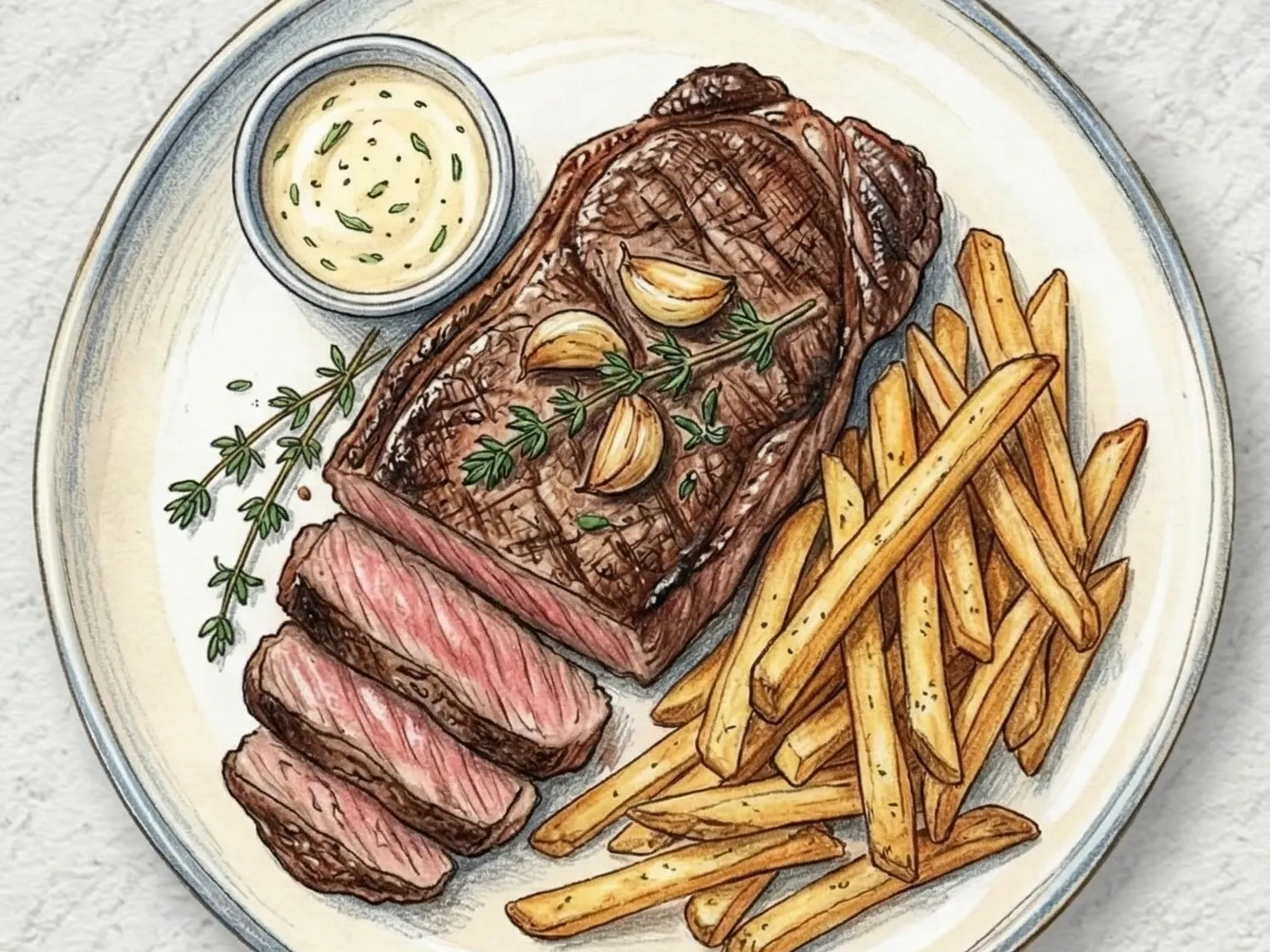
Steak frites pairs a butter-basted sirloin steak with double-fried potatoes, a combination that defines the French bistro experience.
What makes this special
- Two-stage frying at 160C then 190C crisps the frites alongside butter-basted sirloin rested five minutes.
- Soaking fries in cold water removes surface starch before the two-stage fry
- 160C first fry cooks the interior; 190C second fry crisps only the exterior
Key ingredients
Core cooking flow
- 1 Cut 500 g potatoes into 1 cm sticks and soak them in cold water for 15 minutes.
- 2 Heat 700 ml grapeseed oil to 160C and add the dried potatoes without crowding.
- 3 Pat 360 g sirloin completely dry, then season it evenly with salt and black pepper.
Steak frites pairs a butter-basted sirloin steak with double-fried potatoes, a combination that defines the French bistro experience. The potatoes are cut into sticks, soaked in cold water for 15 minutes to wash off surface starch - this prevents them from sticking together during frying and gives a cleaner fry. The first fry at 160 degrees Celsius cooks the interior until tender, and after cooling, a second fry at 190 degrees turns the outside crisp and golden while the inside stays fluffy. The steak is seasoned only with salt and pepper, seared hard in a hot pan, then basted with butter, garlic, and thyme for a final minute before resting for five minutes off heat. Despite the short ingredient list, the dish demands precise heat control - the sear must be aggressive enough to crust the meat, and the oil temperatures for double-frying must be accurate.
Instructions
Read the steps as a cooking flow: prep, heat, seasoning, doneness control, and finish.
- 1Prep
Cut 500 g potatoes into 1 cm sticks and soak them in cold water for 15 minutes.
When the water turns cloudy from starch, rinse briefly, then dry every surface thoroughly to prevent splattering in the oil.
- 2Heat
Heat 700 ml grapeseed oil to 160C and add the dried potatoes without crowding.
Fry for 5 to 6 minutes to cook the centers, not to brown them, then remove them while pale and let them cool.
- 3Control
Pat 360 g sirloin completely dry, then season it evenly with salt and black pepper.
Heat the pan over high heat until very hot, and place the steak down only when it sizzles immediately on contact.
- 4Step
Sear the steak hard for about 2 to 3 minutes per side, until a brown crust forms.
Move it as little as possible during searing, because frequent turning weakens the crust and slows browning.
- 5Season
Add 20 g unsalted butter, 2 garlic cloves, and 2 thyme sprigs to the pan.
Spoon the melted butter over the steak for 1 minute, then take it off the heat and rest it for 5 minutes.
- 6Finish
Raise the oil to 190C and fry the potatoes again for 2 to 3 minutes.
When the outside turns golden and crisp, drain them, season with salt, slice the rested steak, and serve both while hot.
After the steps
Pick a recipe that fits this dish.
Continue with shared ingredients, meal pairings, or a similar method.
Recipes That Go Well With This
More Western →Based on shared ingredients and meal pairing
Cream of Mushroom Soup
The preparation of cream of mushroom soup begins by sautéing chopped onion and minced garlic to establish a fragrant aromatic foundation for the dish. Once these aromatics have softened, sliced button mushrooms are added to a mixture of butter and olive oil. These mushrooms are cooked for a duration of eight to ten minutes, a process that continues until their internal moisture has fully evaporated and the slices have taken on a deep brown color. Dried thyme is incorporated during the cooking process to provide an earthy herb quality that works in conjunction with the savory profile of the mushrooms. To build the body of the soup, flour is stirred into the fat and cooked for approximately one minute. This step is essential for creating a roux that will thicken the liquid effectively while ensuring the base remains smooth. Chicken stock is then introduced by whisking it in gradually, which prevents the formation of lumps. Heavy cream is added at the final stage of cooking, followed by a brief period of simmering to allow the flavors to combine and the texture to gain its characteristic richness. To achieve the final consistency, only half of the soup is processed in a blender. This technique produces a result that is simultaneously velvety and full of chunky mushroom pieces.
Steak au Poivre (Peppercorn Sirloin with Brandy Cream Sauce)
Steak au poivre presses coarsely crushed peppercorns into the surface of sirloin steaks before searing in a smoking-hot pan, then builds a sauce in the same pan using brandy, shallot, heavy cream, and Dijon mustard. Crushing the peppercorns rather than grinding them fine is essential - coarse pieces embed into the seared crust and release their sharp, aromatic bite when chewed, rather than just adding uniform heat. When brandy hits the hot pan, the alcohol ignites and burns off in seconds, leaving behind concentrated fruit sweetness and caramel notes that deepen the sauce. The cream tempers the pepper's aggressive heat into something rich and rounded, while the mustard adds a subtle acidic edge that keeps the sauce from feeling heavy. Bringing the steaks to room temperature for 20 minutes before cooking ensures even doneness from edge to center.
Beet and Goat Cheese Salad
Beet and goat cheese salad begins with whole beets wrapped in foil and roasted at 200°C for forty-five to sixty minutes, long enough for their raw, earthy undertone to convert almost entirely into a concentrated, caramel-adjacent sweetness. Peeling the skins while the beets are still warm requires only the pressure of a paper towel - they slip off cleanly - and slicing them before they cool preserves the vivid crimson-purple cross-section that makes the dish visually striking. Crumbled goat cheese placed on the warm slices softens slightly, and its tangy acidity cuts through the dense sweetness of the roasted root rather than competing with it. Walnuts toasted briefly in a dry pan lose much of their raw bitterness, developing a nuttiness that bridges the mineral quality of the beet and the dairy sharpness of the cheese. Balsamic reduction does more than dress the plate: its concentrated sweet-tart intensity ties the separate components into a coherent whole. Arugula underneath the beet slices provides a peppery bitterness that sharpens the contrast against the sweetness, giving the salad a complexity well beyond what its short ingredient list suggests. A simple dressing of extra-virgin olive oil and lemon juice over the greens keeps the balance light and clear.
Chicken Provençal (South French Tomato Olive Herb Chicken)
Chicken Provencal sears chicken thighs skin-side down on high heat until deeply golden, then braises them with cherry tomatoes, black olives, capers, garlic, and thyme in white wine for a southern French home-style dish. A prolonged sear of the chicken skin develops both crispness and a rich layer of fond on the pan bottom, which the wine dissolves into the sauce during deglazing. As the cherry tomatoes burst during cooking, their juice combines with the salty olives and sharp capers to form a bright, layered Mediterranean sauce. Twenty minutes of covered simmering followed by eight to ten minutes uncovered concentrates the sauce and allows it to penetrate the chicken deeply. A small amount of lemon zest stirred in at the end clarifies and lifts the aromatics of the finished dish. Using whole unpitted olives rather than pitted ones during cooking lets a slight bitterness leach from the pits into the sauce, adding an extra dimension that rounds out the sweetness of the tomatoes.
Serve with this
Soy Butter Steak Garlic Spaghetti
Thick-cut sirloin seared at high heat, then glazed in soy sauce and butter, forms the base of this steak pasta. The fond left in the pan gets deglazed with soy sauce and butter, then emulsified with pasta water into a thin, shiny coating that clings to each strand without turning greasy. Generous garlic browned in olive oil beforehand builds a deep, roasted-garlic base that runs through the entire sauce, and tsuyu -- a Japanese seasoning concentrate made from kombu and bonito -- adds the round umami depth of dashi without any extra steps. The steak is best cooked to medium-rare and sliced against the grain before laying over the pasta; resting the meat first keeps the juices from running out when cut. Black pepper and sliced scallions cut through the richness at the end. The full cook time is about 20 minutes, and pasta water volume controls the final sauce consistency.
Korean Fish Cake Soup (Clear Anchovy Radish Broth)
Eomuk-tang is a Korean fish cake soup in which skewered fish cakes and thick radish slices simmer in a clear broth built from dried anchovies and kelp. The kelp must be removed the moment the water begins to boil, otherwise it releases a slimy texture that clouds the broth. Cutting the radish thick allows it to slowly release natural sweetness over the long simmer. Rinsing the fish cakes in hot water before adding them washes away surface oil and keeps the broth clear and clean. Soup soy sauce adjusts the seasoning, and green onion and black pepper finish the pot. Adding the radish before the fish cakes ensures it has enough time to fully soften and sweeten the broth, since it takes longer than the eomuk to cook through.
Bam Tiramisu (Chestnut Tiramisu)
Chestnut tiramisu is a variation of the traditional Italian dessert that incorporates chestnut puree into the mascarpone cheese filling. This modification transforms a standard cafe dessert into a preparation specifically associated with the autumn season in Korea. The fundamental elements of the recipe remain consistent with the classic version. It utilizes ladyfinger biscuits that have been soaked in espresso, a filling made of whipped mascarpone and cream, and a final layer of cocoa powder. However, the introduction of chestnut puree alters the profile of the cream. Instead of a simple dairy richness, the mixture takes on an earthy quality. Using a puree made from chestnuts boiled at home, rather than a store-bought paste, helps maintain the natural grain of the nut. This provides the cream with a specific texture that is noticeable in every spoonful. When preparing the ladyfingers, the espresso soak requires a high level of precision. Each biscuit should be dipped for approximately one to two seconds. If the ladyfingers are submerged for a longer duration, they absorb an excessive amount of liquid. This leads to a waterlogged consistency which can cause the structural layers of the dessert to collapse while it sits in the refrigerator. The assembly process follows a predictable sequence. A layer of soaked ladyfingers is placed at the bottom, followed by a layer of the chestnut cream. This pattern is repeated once more before the entire dish is placed in the refrigerator to rest for at least four hours. This period of refrigeration is essential to the final outcome. During these hours, the ladyfingers absorb moisture from both the espresso and the cream layer above them. This process changes the biscuits from a crunchy state to a soft texture similar to cake, which allows for clean slices. Just before the dessert is served, a thin layer of cocoa powder is applied to the top. This adds a bitter element that balances the sweetness of the chestnuts. Preparing the tiramisu in individual glass containers or cups ensures that the portions are easy to manage and allows the different layers of the dessert to be clearly visible from the side.
Similar recipes
Cod en Papillote (French Parchment-Steamed Cod with Vegetables)
Cod en papillote involves wrapping cod fillets along with several specific ingredients including sliced zucchini, cherry tomatoes, shallots, fresh thyme, and rounds of lemon. These components are drizzled with olive oil and a small amount of dry white wine before being enclosed within a piece of parchment paper that is crimped tightly at the edges to create a secure seal. The prepared parcel is placed into an oven preheated to 200 degrees Celsius and baked for a duration of fifteen to eighteen minutes. This cooking technique relies on the sealed packet to trap steam inside, which cooks the fish with a gentle heat and ensures that the flesh remains moist throughout the entire process. As the white wine and lemon heat up, they produce an aromatic steam that penetrates the mild texture of the cod, providing it with a distinct brightness and a clean overall flavor profile. The addition of thyme introduces a subtle herbal quality that works in conjunction with the natural sweetness released by the vegetables as they soften under the heat. Olive oil serves to integrate the various elements of the dish while contributing a smooth and rich mouthfeel. When the parchment is eventually opened at the dining table, the accumulated aromas are released immediately, which turns the simple act of serving into an integral part of the meal. If parchment paper is unavailable, aluminum foil serves as an effective substitute for creating the necessary seal. Furthermore, the selection of vegetables is flexible and can be adjusted according to the current season, as ingredients such as sliced carrots, asparagus, or spinach can be incorporated as natural alternatives within the wrap.
French Baguette
A baguette is a traditional French bread made from only four ingredients: bread flour, water, yeast, and salt. Because the formula strips away every variable beyond technique, the final quality is determined almost entirely by the precision of fermentation management and the confidence of the baker at each stage. A hydration level of seventy percent or higher is required to develop the open, irregular crumb structure that defines the interior; dough that is too dry will close up in the oven and produce a dense, uniform crumb with none of the characteristic airy pockets. A long first fermentation builds layers of acidity and deep wheat flavor that a short rise simply cannot provide, and during shaping the dough should be handled with restraint, using only gentle folds that preserve the large gas bubbles rather than pressing them out. Scoring lines, known as coupes, cut along the top surface control the direction of oven spring; the blade must be sharp enough and the movement decisive enough that the dough does not drag and tear beneath it. Introducing steam into the oven during the first ten to fifteen minutes of baking prevents the crust from setting prematurely, giving the loaf room to expand fully before the surface dries and crisps into its signature crackling shell. A well-made baguette crackles audibly when squeezed and, when sliced, reveals an interior cross-section showing holes of varied sizes scattered unevenly through the crumb. The day it is baked is the day it should be eaten; once the crust begins to soften as it cools, something irreplaceable is lost.
French Crepes
French crepes are thin, flexible pancakes made from a pourable batter of flour, eggs, milk, and melted butter, cooked on a hot surface until golden and slightly lacy at the edges. The batter must rest in the refrigerator for at least one hour before cooking so that the gluten network fully relaxes and the flour absorbs the liquid evenly. A rested batter spreads more smoothly and yields a crepe that is tender rather than rubbery. A small ladleful is poured onto a hot lightly buttered pan and tilted quickly in a circular motion to spread a thin, even layer that cooks in under a minute. When the edges lift slightly and develop a golden, freckled underside, the crepe is ready to flip for a brief second-side cook. The flavor is neutral and gently buttery, which makes crepes adaptable to sweet fillings like Nutella, jam, or fresh berries as well as savory combinations such as Gruyere, ham, and a fried egg in the style of a complete galette. Batter keeps well in the refrigerator for up to two days, making crepes a practical choice for weekday breakfasts and weekend brunches alike. On Parisian streets, crepe vendors work large round griddles, spreading, filling, and folding the crepes into paper-wrapped triangles handed to customers to eat while walking, a piece of everyday food culture inseparable from the city itself.