Sticky Toffee Pudding
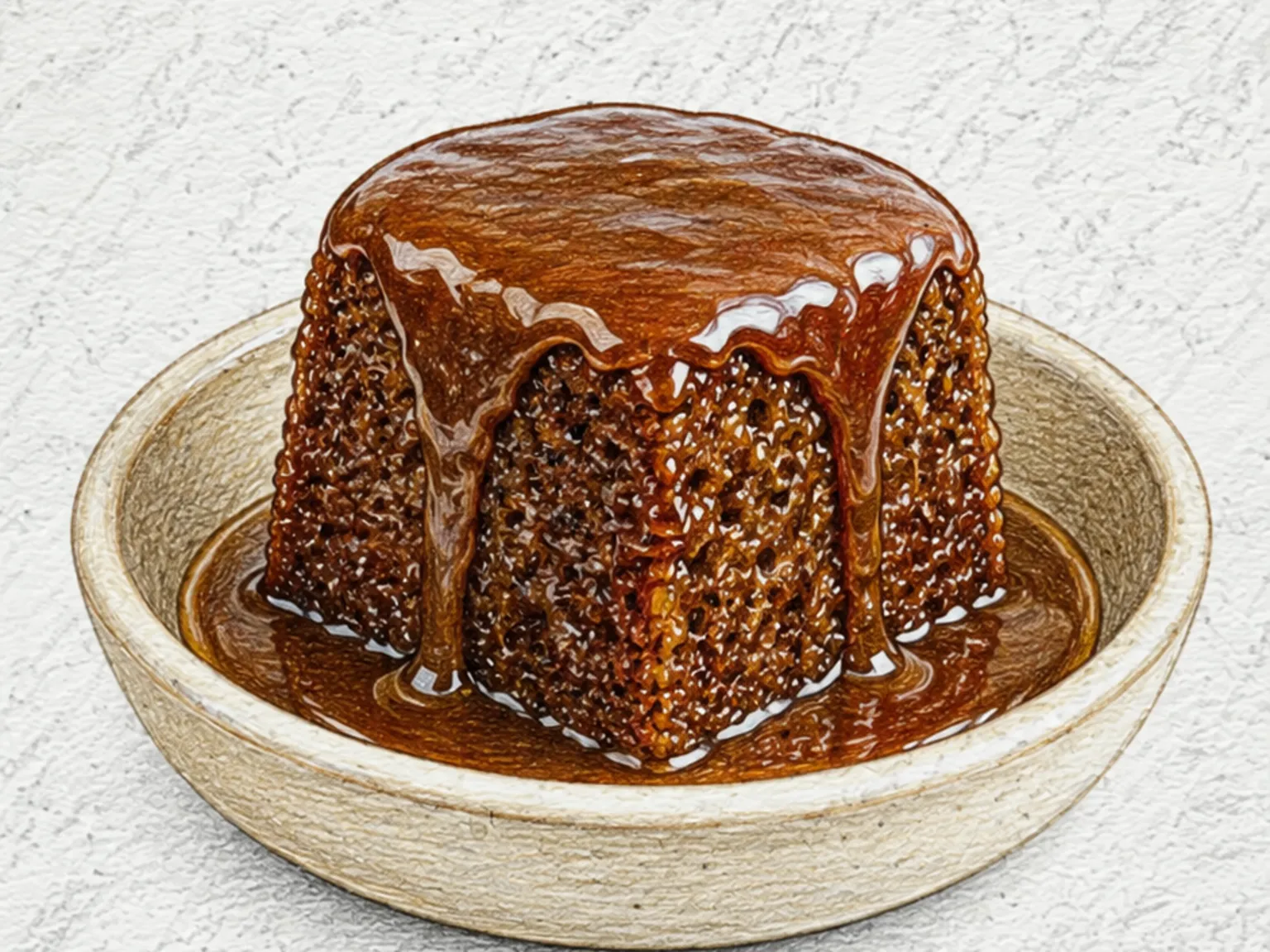
Sticky toffee pudding is a British dessert consisting of a moist date sponge cake drenched in a warm, buttery toffee sauce. Chopped dates are soaked in hot water with baking soda, which softens the fruit into a near-puree that distributes through the batter, providing natural sweetness and exceptional moisture. Brown sugar in the batter deepens the caramel character, and eggs give the sponge just enough structure to hold together under the weight of the sauce. The toffee sauce is made by simmering heavy cream with additional brown sugar and butter until it thickens to a pourable consistency that coats a spoon. Poured over the warm cake, the sauce seeps into the crumb and pools around the edges, creating a sticky, glossy finish. Reheating the sauce just before serving ensures it flows freely and releases its full butterscotch aroma. A scoop of vanilla ice cream on the side provides a cold, clean contrast that prevents the richness from becoming overwhelming. The dates must be thoroughly soaked - under-softened pieces leave gritty pockets in an otherwise uniformly tender cake.
Adjust Servings
Instructions
- 1
Chop dates and soak in hot water with baking soda for 10 minutes.
- 2
Cream butter and brown sugar, then beat in eggs one at a time.
- 3
Fold in flour and the date mixture, then transfer batter to a baking dish.
- 4
Bake at 180C for 28-32 minutes until the center is set.
- 5
Simmer cream with remaining brown sugar into toffee sauce and pour over warm cake.
As an Amazon Associate, we may earn from qualifying purchases.
Tips
Nutrition (per serving)
More Recipes

Victoria Sponge Cake (British Jam and Cream Layered Cake)
Equal weights of butter and sugar are creamed together, then eggs and cake flour are added to produce two round sponge layers that are sandwiched with strawberry jam and whipped cream - the defining structure of this quintessential British cake. Named after Queen Victoria, the cake is deliberately simple in presentation: no elaborate frosting or tiered decoration, just a dusting of powdered sugar on top. Thorough creaming is essential to a light rise, and room-temperature eggs integrate into the batter without curdling. The jam provides a bright, tart contrast to the buttery sponge, while the whipped cream softens each bite with cool richness. Both layers must cool completely before assembly, as warm sponge melts the cream and causes the filling to slide. Refrigerated, the cake stays moist through the next day, and the jam and cream flavors deepen as they settle into the sponge overnight. It is the standard cake served at British afternoon teas and garden parties.

Lemon Drizzle Cake (Syrup-Soaked British Lemon Loaf)
A British loaf cake that owes its lasting moisture to a lemon syrup poured over the surface straight from the oven. Creaming butter and sugar thoroughly at the start incorporates air for a lighter crumb, while lemon zest folded into the batter releases its essential oils during baking, filling the kitchen with citrus fragrance. The critical step comes after baking: a hot syrup of freshly squeezed lemon juice and sugar is drizzled over the cake while it is still warm, and the open crumb absorbs the liquid rapidly. As the cake cools, a thin crust of crystallized sugar forms on top, adding a faintly crunchy texture that gives way to the soft, syrup-soaked interior beneath. A skewer test determines doneness; underbaked cake collapses, while overbaked cake lacks the porosity to absorb the syrup fully. Wrapping the cooled cake and leaving it overnight allows the syrup to distribute evenly, deepening both the lemon flavor and the moist texture. It is a staple of the English afternoon tea table, needing no elaborate decoration to impress.

Banoffee Pie
Banoffee pie is a British no-bake dessert whose name combines banana and toffee, the two ingredients that define its character. A base of crushed digestive biscuits bound with melted butter is pressed into a pan and chilled until firm. Sweetened condensed milk is slowly heated until it transforms into a thick, amber toffee that is spread over the biscuit crust. Ripe bananas are sliced and layered on top, then the whole assembly is crowned with a tall dome of softly whipped cream and a dusting of cocoa powder. Each forkful delivers four distinct textures in sequence: the sandy crunch of the biscuit base, the dense caramel pull of the toffee, the soft sweetness of banana, and the cool lightness of cream.

Queen of Puddings (Custard Bread Base with Jam and Meringue)
Queen of puddings is a layered British dessert that begins with a base of breadcrumbs soaked in warm vanilla custard and baked until set. A thin layer of raspberry jam is spread over the surface, introducing a tart brightness that cuts through the richness below. Meringue made from the reserved egg whites is then piled on top and returned to the oven until the peaks turn golden, creating a shell that is crisp on the outside yet marshmallow-soft within. Each spoonful should capture all three layers - the dense, creamy custard base, the sharp fruit jam, and the airy meringue - so that the flavors interact on the palate simultaneously. The recipe wastes nothing: yolks enrich the custard while whites become the meringue, a practical economy that reflects its origins in frugal English country kitchens. Served warm, the custard feels almost like a savory bread pudding dressed in dessert clothing; chilled, the jam asserts itself more prominently, and the meringue firms to a gentle chew.

Bubble and Squeak (Pan-Fried Mashed Potato and Cabbage Cake)
Bubble and squeak is a British kitchen staple that combines mashed boiled potatoes with blanched, chopped cabbage, presses the mixture flat in a hot pan, and fries both sides until a golden-brown crust forms. The name comes from the sound the cabbage moisture makes when it hits the hot fat. Sauteing diced onion in butter before folding it into the potato-cabbage mix adds a caramelized sweetness that lifts the otherwise plain ingredients. Pressing firmly with a spatula while cooking is essential for building a crisp shell, and adding a tablespoon of flour helps bind the mixture if the potatoes are too wet. This dish has been a staple of British households for generations, traditionally made from leftover Sunday roast vegetables.

Toad in the Hole (British Sausages in Yorkshire Pudding)
Toad in the hole bakes pork sausages inside a risen Yorkshire pudding batter by first heating the sausages and oil in an oven pan at 220 degrees Celsius for 10 minutes, then quickly pouring cold batter into the scorching-hot fat. The temperature shock between cold batter and smoking oil is what drives the dramatic puff - if the pan cools before the batter goes in, the rise will be flat and dense. The batter itself is simple: flour, eggs, milk, salt, and pepper, rested for 10 minutes so the gluten relaxes and produces a more even rise. Once in the oven, the door must stay closed for the full 20 to 25 minutes - opening it drops the temperature and collapses the delicate air structure mid-bake. The finished dish has crisp, golden edges and a soft, custardy center cradling the browned sausages.