Charim

2686 Korean & World Recipes

2686+ Korean recipes, clean and organized. Ingredients to instructions, all at a glance.

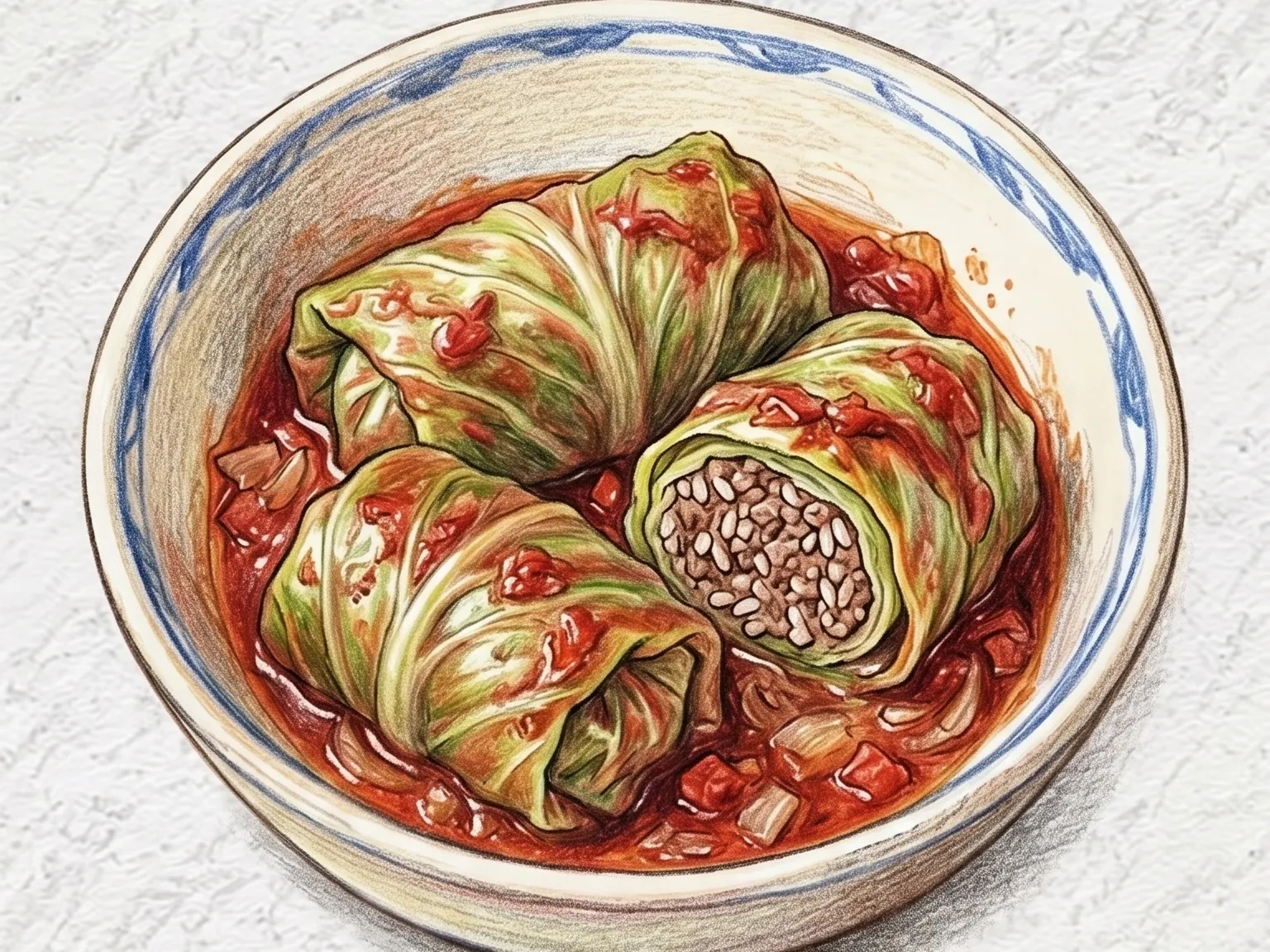
Stuffed Cabbage Rolls
Western Medium

Stuffed Cabbage Rolls

Stuffed cabbage rolls wrap a filling of ground beef, cooked rice, sautéed onion, and garlic inside blanched cabbage leaves, then braise in tomato sauce on low heat for 35 minutes until the leaves turn silky and the filling cooks through. Removing the core first lets the leaves separate cleanly, and rolling a pin over the thick central vein of each leaf thins it enough to fold without cracking. The rolls must be packed tightly in the pot - too much space allows them to shift as the sauce simmers, causing them to unravel. Spreading tomato sauce on the bottom of the pot before arranging the rolls prevents sticking and starts building flavor from underneath. The long, gentle braise draws natural sweetness from the cabbage, which meets the acidity of the tomato sauce to produce a mellow, deeply savory result.

Prep 25min Cook 45min 4 servings

Adjust Servings

2servings
servings

Instructions

  1. 1

    Core the cabbage, separate leaves, and blanch for 2 minutes.

  2. 2

    Sauté onion and garlic, then mix with beef, rice, and salt for filling.

  3. 3

    Place filling on cabbage leaves and roll tightly.

  4. 4

    Spread tomato sauce in a pot and arrange rolls snugly inside.

  5. 5

    Pour remaining sauce over and simmer covered on low for 35 minutes.

  6. 6

    Serve once the cabbage is tender and sauce is rich.

🛒Shop Ingredients on Amazon

As an Amazon Associate, we may earn from qualifying purchases.

Tips

If leaves tear, patch with a smaller leaf before rolling.
Pack rolls tightly so they hold shape while simmering.

Nutrition (per serving)

Calories
470
kcal
Protein
24
g
Carbs
36
g
Fat
24
g

Goes Well With

Roasted Mushroom Perilla Potato Salad
SaladsMedium

Roasted Mushroom Perilla Potato Salad

Potatoes are boiled skin-on and roughly mashed with a fork to keep a mix of fluffy interior and chunky structure rather than a smooth puree. King oyster mushrooms are torn lengthwise into thick strips and pan-roasted in olive oil until chewy and deeply savory, developing color on the cut surfaces. Perilla seed powder and Greek yogurt create a nutty, creamy binder that unifies the two main components without masking their individual flavors. Shredded perilla leaves release their bold, anise-like fragrance across the entire plate, while lemon juice and minced garlic cut through the richness and sharpen the overall aroma. Two distinctly Korean aromatics, perilla seed and perilla leaf, give the familiar potato salad format a flavor profile that diverges significantly from its Western counterpart. The salad is best at room temperature, where the potato texture stays fluffy and the mushrooms hold their chew; if refrigerated, pulling it out 30 minutes before serving restores the right consistency.

🥗 Light & Healthy🎉 Special Occasion
Prep 20minCook 25min4 servings
Korean Five-Grain Sweet Rice Punch
DrinksMedium

Korean Five-Grain Sweet Rice Punch

Ogok-sikhye is a traditional Korean grain punch made by saccharifying a mix of cooked sweet rice, barley, millet, and foxtail millet in barley malt extract at 60 to 65 degrees Celsius for one hour. The malt powder is soaked in lukewarm water for 20 minutes, kneaded by hand, and strained through a cloth to yield a clear, enzyme-rich liquid -- this is the working ingredient that converts the grain starches into natural sugars during the slow saccharification. Temperature control is central to the process: below 60 degrees the enzymes slow down, and above 70 degrees they denature and die, so maintaining the right range throughout the hour-long rest determines whether the conversion succeeds. As saccharification progresses, the rice grains hollow out and float to the surface; these are skimmed off, rinsed separately, and later floated back into the finished punch to add a soft, chewable element to each cup. After sweetening with sugar and chilling completely in the refrigerator, the drink is served cold with pine nuts floating on top. The combination of multiple grains produces a more layered, complex sweetness than single-grain sikhye, and the overnight rest in the refrigerator smooths the flavor into something more cohesive.

🍺 Bar Snacks🎉 Special Occasion
Prep 20minCook 70min2 servings
Sweet Chestnut Confection
DessertsMedium

Sweet Chestnut Confection

Yulran is a traditional Korean chestnut confection that is prepared by boiling 300 grams of chestnuts in water for a duration of 20 minutes. Once the boiling process is complete, the chestnut flesh is removed from the shells and pressed through a fine sieve. This manual pressing continues until the texture becomes perfectly smooth. The purpose of using a sieve is to eliminate any grainy bits, which results in a chestnut paste with an even and velvety consistency. This puree is then kneaded together with a combination of honey and ground cinnamon. After the ingredients are thoroughly mixed, the paste is shaped into small, bite-sized rounds. The honey used in this recipe serves as both a source of moisture and a necessary adhesive. Its sticky property provides the strength required for the confection to hold its molded shape effectively without crumbling into pieces. Ground cinnamon is included to provide a warm spice note. This flavor is chosen because it complements the starchy and earthy sweetness of the chestnut rather than competing with the natural profile of the nut. Following the shaping process, each piece is rolled in ground pine nuts. This step coats the exterior in a mild nuttiness and introduces a subtle textural contrast against the smooth paste contained within. For a final visual touch, thin slices of jujube are placed on top as a garnish to provide a stroke of red color. The finished rounds are then placed in the refrigerator to chill for 15 minutes. This cooling period firms the surface of the paste just enough so that the confections can be picked up cleanly with the fingers without sticking to the skin. Historically, Yulran was a common fixture on the ceremonial and banquet tables of the Joseon court. It was valued for its clean and understated sweetness, which allows the natural flavor of the chestnut to remain the central focus.

🎉 Special Occasion🧒 Kid-Friendly
Prep 25minCook 20min2 servings
Gochujang Beef Ragu Rigatoni
PastaMedium

Gochujang Beef Ragu Rigatoni

Gochujang beef ragu rigatoni builds depth in two stages: first, ground beef is seared undisturbed over high heat until a proper crust forms, then gochujang, tomato puree, and red wine are added and the whole pot simmers on medium-low heat for twenty minutes. The browning step is critical and non-negotiable-stirring too early releases steam and moisture from the meat, which prevents crust formation and produces braised ground beef instead of seared. Frying the gochujang in oil for a full minute before adding the tomato puree unlocks its fermented sweetness and blunts the raw edge of the paste; the acidity of the tomato then balances the gochujang's heat naturally. As the red wine reduces, it leaves behind layered fruit notes that add complexity the tomato alone cannot provide. Rigatoni is pulled from the water one minute before al dente and transferred to the sauce pan with a ladle of pasta water; the starch dissolves into the sauce and coats the tubes inside and out with a glossy, cohesive finish. Grated Parmesan stirred in at the end deepens the overall savory character of the ragu.

🎉 Special Occasion
Prep 15minCook 35min2 servings

More Recipes

Pot Roast
WesternMedium

Pot Roast

Pot Roast is a cornerstone of American home cooking, where a tough cut of beef is braised low and slow with vegetables and stock until it can be pulled apart with a fork. Chuck roast is the ideal choice - its abundant connective tissue and intramuscular fat break down over hours of gentle heat, converting collagen into gelatin that makes the meat moist and rich. Searing the beef on all sides builds a brown crust that contributes deep flavor, and adding tomato paste to the pan before deglazing creates an umami-rich foundation. Beef stock is poured to about two-thirds up the side of the meat, and the covered pot goes into a 160-degree oven for at least three hours, during which the liquid reduces and concentrates into a natural gravy. Carrots and potatoes are added in the final hour so they hold their shape while absorbing the braising liquid's flavor.

🎉 Special Occasion
Prep 20minCook 120min4 servings
Chili con Carne
WesternMedium

Chili con Carne

Chili con carne is a Mexican-influenced American dish that simmers ground beef, kidney beans, and diced tomatoes together with chili powder, cumin, and other spices in a single pot. Onion and garlic are cooked first to build an aromatic foundation, and the meat is browned thoroughly over high heat so the Maillard reaction develops a savory depth that simmering alone cannot produce. Adding the spices and cooking them in the fat for one minute before the liquid goes in blooms the heat and earthy character of the blend throughout the oil. Simmering on low heat for thirty minutes or more mellows the acidity of the tomatoes and allows the beans and meat to absorb the seasoning fully, producing a thick, concentrated richness. Resting the chili overnight and reheating it the following day deepens the flavor further as the spices continue to meld. Sour cream or cheese on top introduces a creamy, tangy layer that balances the bold spice profile. The heat level adjusts easily by varying the chili powder quantity, and cayenne pepper added to taste produces a sharper, more intense warmth. Soaking and cooking dried beans rather than using canned ones yields a firmer texture with more presence. The finished chili works equally well over rice, alongside tortilla chips, or as a taco filling the next day.

🍺 Bar Snacks🎉 Special Occasion
Prep 15minCook 45min4 servings
Chicken and Dumplings
WesternMedium

Chicken and Dumplings

Chicken and dumplings is a Southern American comfort dish built on simplicity and patience. Bone-in or boneless chicken thighs simmer with carrot, onion, and celery in chicken stock for about fifteen minutes, after which the meat is lifted out, shredded along the grain, and returned to the pot. Shredding rather than cubing matters because the torn fibers absorb broth more deeply, carrying more flavor into every bite. The vegetables release natural sugars as they cook, and those sugars combine with the chicken stock to create a layered, savory-sweet base. Once a simple batter of flour, baking powder, butter, and milk is spooned in spoonfuls onto the simmering surface, the lid goes on and must stay closed for a full twelve minutes. Steam trapped inside puffs the dumplings into light, pillow-like rounds, and lifting the lid even briefly lets the steam escape, resulting in flat, doughy discs instead. The finished dumplings are soft on the outside and tender and bread-like inside, and eating them together with the rich broth in a single spoonful is the point of the whole dish.

🎉 Special Occasion
Prep 20minCook 35min4 servings
French Beef Stew
WesternMedium

French Beef Stew

French beef stew transforms inexpensive, collagen-rich cuts like chuck or brisket into something deeply tender through unhurried heat. The process begins by cutting the beef into large chunks, dusting them with flour, and searing in a hot pan until every surface is properly browned. That browning step is not optional: the Maillard crust formed at high heat becomes the flavor foundation of the entire pot. Red wine and beef stock are then added, and the pot cooks at a low, gentle temperature for at least two hours. During that time the tough connective tissue in the shank breaks down completely, and the meat becomes soft enough to fall apart with a fork. Root vegetables including carrots, potatoes, celery, and onion braise alongside the beef, gradually releasing natural sugars and body into the liquid. The red wine reduces throughout the cook, its sharp acidity mellowing away while the fruit depth and tannic structure remain, giving the sauce a rounded, full-bodied backbone. Thyme and bay leaf infuse the broth with herbal warmth from the first moment and continue building throughout the long cook. The stew improves overnight, when the flavors continue to develop in the refrigerator and the seasoning penetrates every part of the meat.

🎉 Special Occasion
Prep 25minCook 120min4 servings
Korean Jangjorim Butter Rice
RiceEasy

Korean Jangjorim Butter Rice

The preparation of this dish starts by placing a portion of unsalted butter directly onto a bowl of steaming, freshly cooked white rice. As the residual heat from the grains begins to melt the fat, the butter flows over the rice to coat each individual grain in a thin, smooth layer, which creates a rich and nutty foundation before any other components are introduced. Following the butter, a serving of shredded soy-braised beef is added to the bowl along with a generous amount of its dark and concentrated braising liquid. This liquid is infused with both salt and sweetness from the long cooking process of the beef, meaning that there is no need to include any extra seasonings or sauces to achieve a balanced flavor. A single raw egg yolk is then dropped into the center of the bowl and stirred through the mixture. This addition changes the overall texture of the dish, making it significantly more creamy while simultaneously intensifying the savory profile of the seasoned meat. To provide a necessary contrast to the heavy richness of the egg and butter, crushed roasted seaweed flakes are sprinkled over the surface. These flakes offer a brittle, crunchy texture and a distinct marine element that cuts through the fat. Finally, the dish is finished with a garnish of thinly sliced green onions and toasted sesame seeds for a clean and aromatic end. If the soy-braised beef is already available in the refrigerator, the entire meal can be put together in under fifteen minutes, making it an efficient option for a filling single-bowl meal in the routine of Korean home cooking.

🏠 Everyday🍱 Lunchbox
Prep 10minCook 15min2 servings
Korean Burdock Beef Pot Rice
RiceMedium

Korean Burdock Beef Pot Rice

Beef is marinated in soy sauce to build savory depth, then placed on top of rice with crisp-cut burdock root and cooked together in a heavy pot. The marinated beef releases its juices during cooking, and they soak into the rice so each grain carries flavor without any extra sauce. Burdock retains its firm texture even after pot-cooking, releasing an earthy sweetness with every chew. Adding carrot brings a gentle sweetness and color that rounds out the bowl.

🎉 Special Occasion
Prep 20minCook 35min4 servings
More Western →