Ricotta Spinach Stuffed Shells
Quick answer
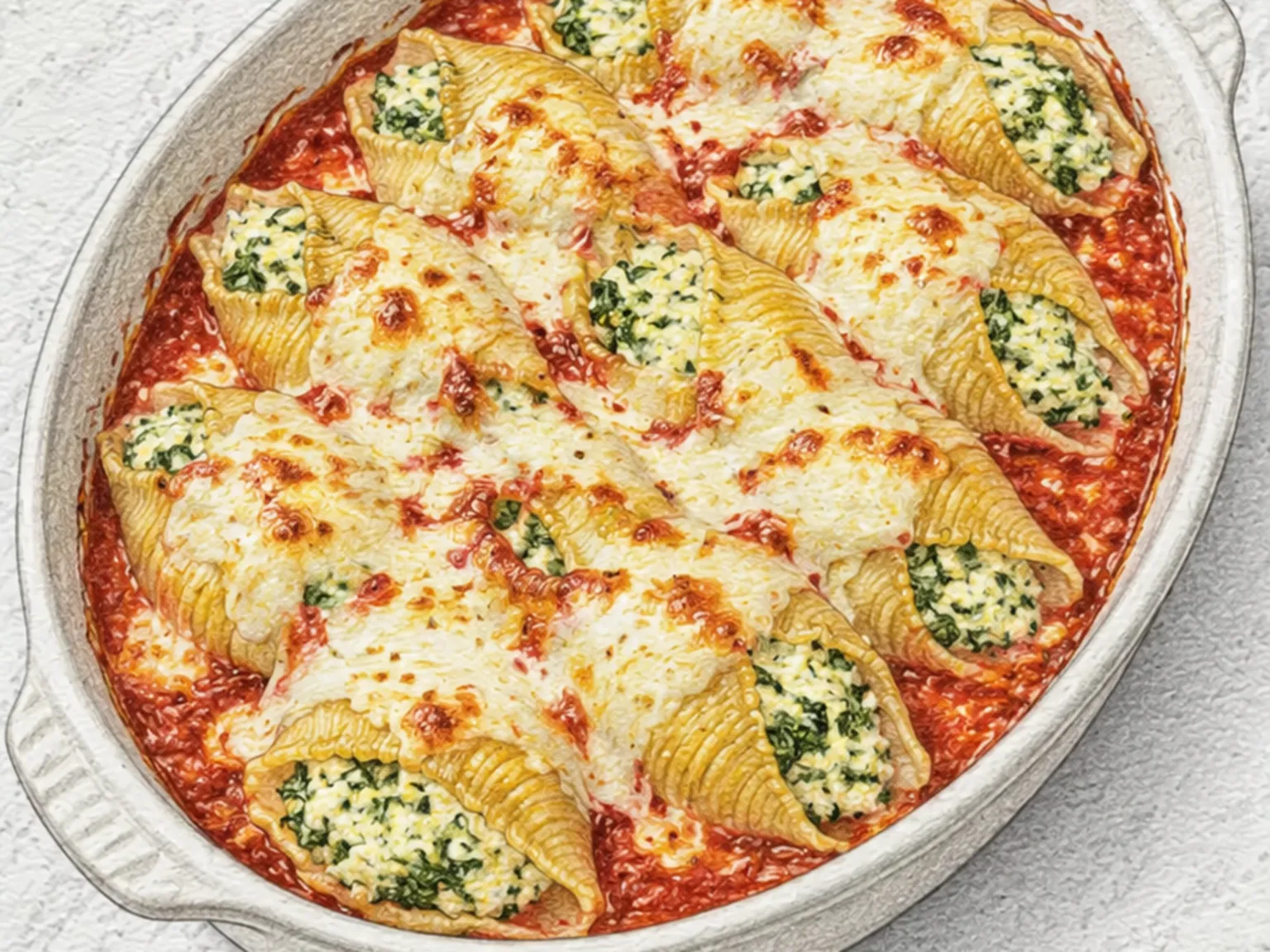
Ricotta spinach stuffed shells fill jumbo pasta shells with a mixture of ricotta cheese, blanched spinach, egg, and Parmesan, then bake them in tomato sauce under a layer...
What makes this special
- Egg-bound ricotta and spinach fill jumbo shells baked on a sauce bed while mozzarella browns on top.
- Egg acts as a binder so the filling sets firm inside the shells at 190C
- A generous layer of sauce on the pan bottom keeps shell bases moist throughout baking
Key ingredients
Core cooking flow
- 1 Preheat the oven to 190C. Boil 240 g jumbo pasta shells in salted water unti...
- 2 Blanch 140 g spinach in boiling water just until wilted.
- 3 In a bowl, combine 300 g ricotta, the chopped spinach, 1 egg, 40 g Parmesan, and 1 teaspoon salt.
Ricotta spinach stuffed shells fill jumbo pasta shells with a mixture of ricotta cheese, blanched spinach, egg, and Parmesan, then bake them in tomato sauce under a layer of melted mozzarella. Squeezing all excess water from the blanched spinach is the critical step - soggy filling makes the shells slide apart and dilutes the sauce underneath. The egg in the filling acts as a binder that firms up during baking, holding the ricotta and spinach together as a cohesive mass inside each shell. Even shells that tear during boiling can be placed on the sauce and baked without issue - the sauce supports them and the cheese covers any imperfections. A generous layer of tomato sauce on the bottom of the baking dish prevents the shells from drying out, while 20 minutes at 190 degrees Celsius melts the mozzarella into a soft, stretchy cap.
Instructions
Read the steps as a cooking flow: prep, heat, seasoning, doneness control, and finish.
- 1Season
Preheat the oven to 190C.
Boil 240 g jumbo pasta shells in salted water until al dente, then rinse briefly with cool water and spread them out so they do not stick together.
- 2Heat
Blanch 140 g spinach in boiling water just until wilted.
Cool it in cold water, squeeze it firmly by hand until no excess liquid drips out, then chop it finely for an even filling.
- 3Season
In a bowl, combine 300 g ricotta, the chopped spinach, 1 egg, 40 g Parmesan, and 1 teaspoon salt.
Mix until evenly combined, stopping before the ricotta turns loose or watery.
- 4Season
Spread 500 ml tomato sauce generously across the bottom of the baking dish.
Fill each shell with the ricotta mixture and set torn shells with the split side facing up so the sauce supports them.
- 5Season
Scatter 180 g mozzarella evenly over the filled shells.
Bake at 190C for about 20 minutes, until the cheese has melted into a soft layer and the tomato sauce bubbles around the edges.
- 6Finish
Remove the dish from the oven and let it stand for 3 minutes so the filling firms up inside the shells.
Serve with some sauce from the bottom of the dish to keep each portion moist.
After the steps
Pick a recipe that fits this dish.
Continue with shared ingredients, meal pairings, or a similar method.
Recipes That Go Well With This
More Western →Based on shared ingredients and meal pairing
Spinach Ricotta Ravioli
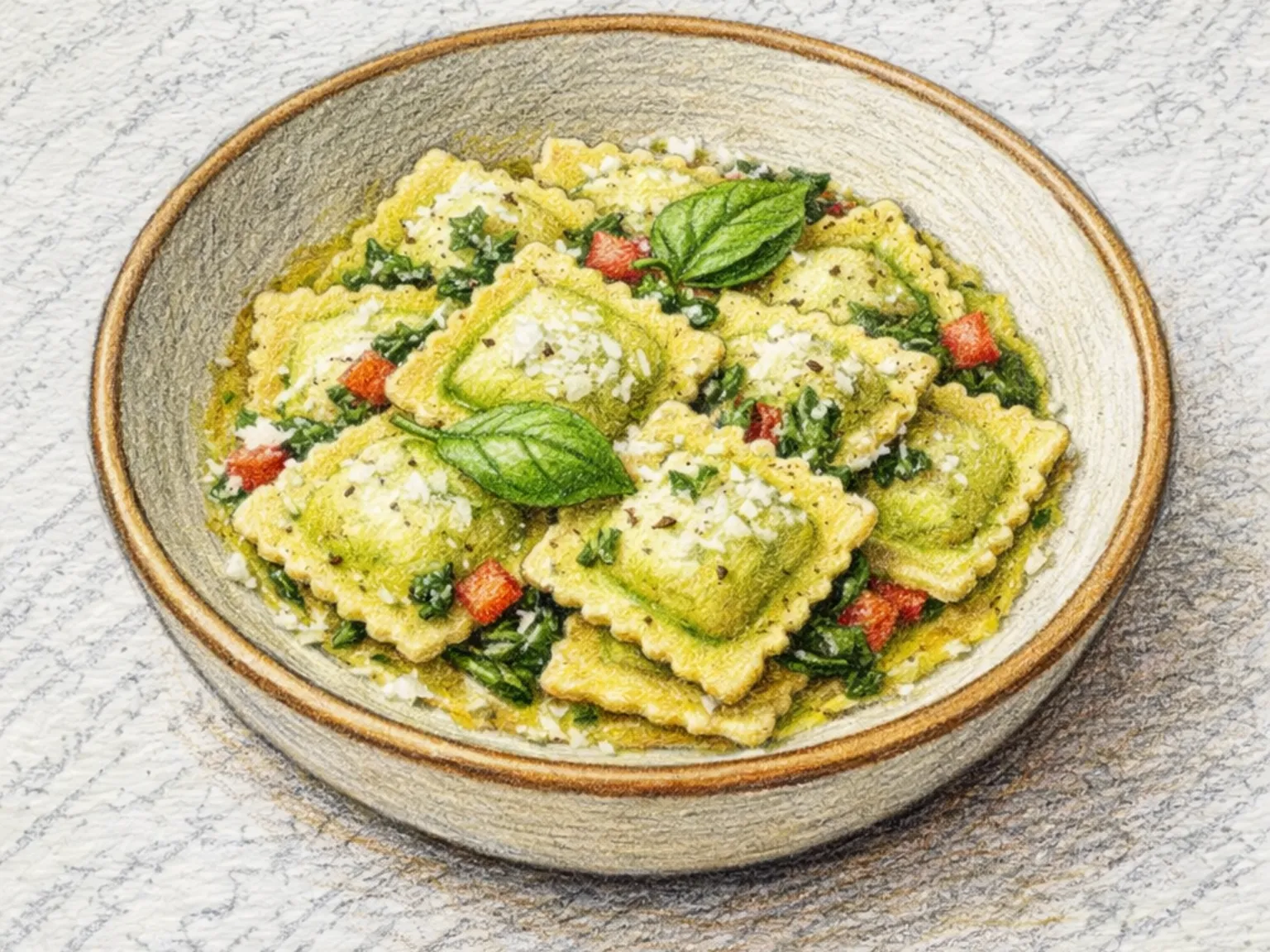
Spinach ricotta ravioli is made by placing mounds of a filling - ricotta cheese, blanched and squeezed spinach, Parmesan, and egg - onto fresh pasta sheets, then sealing and cutting individual pieces. Squeezing every drop of water from the blanched spinach is non-negotiable; wet filling loosens the seal and causes the ravioli to burst in boiling water. When pressing the top sheet down, working from the filling outward pushes trapped air to the edges, and a firm seal along the border keeps each piece intact during cooking. A quick boil of three to four minutes in salted water is all the thin pasta needs - overcooking turns it mushy. Tossing the cooked ravioli gently in melted butter lets the fat coat each piece without tearing the delicate dough, and the butter's richness rounds out the mild ricotta and earthy spinach.
Eggplant Parmesan
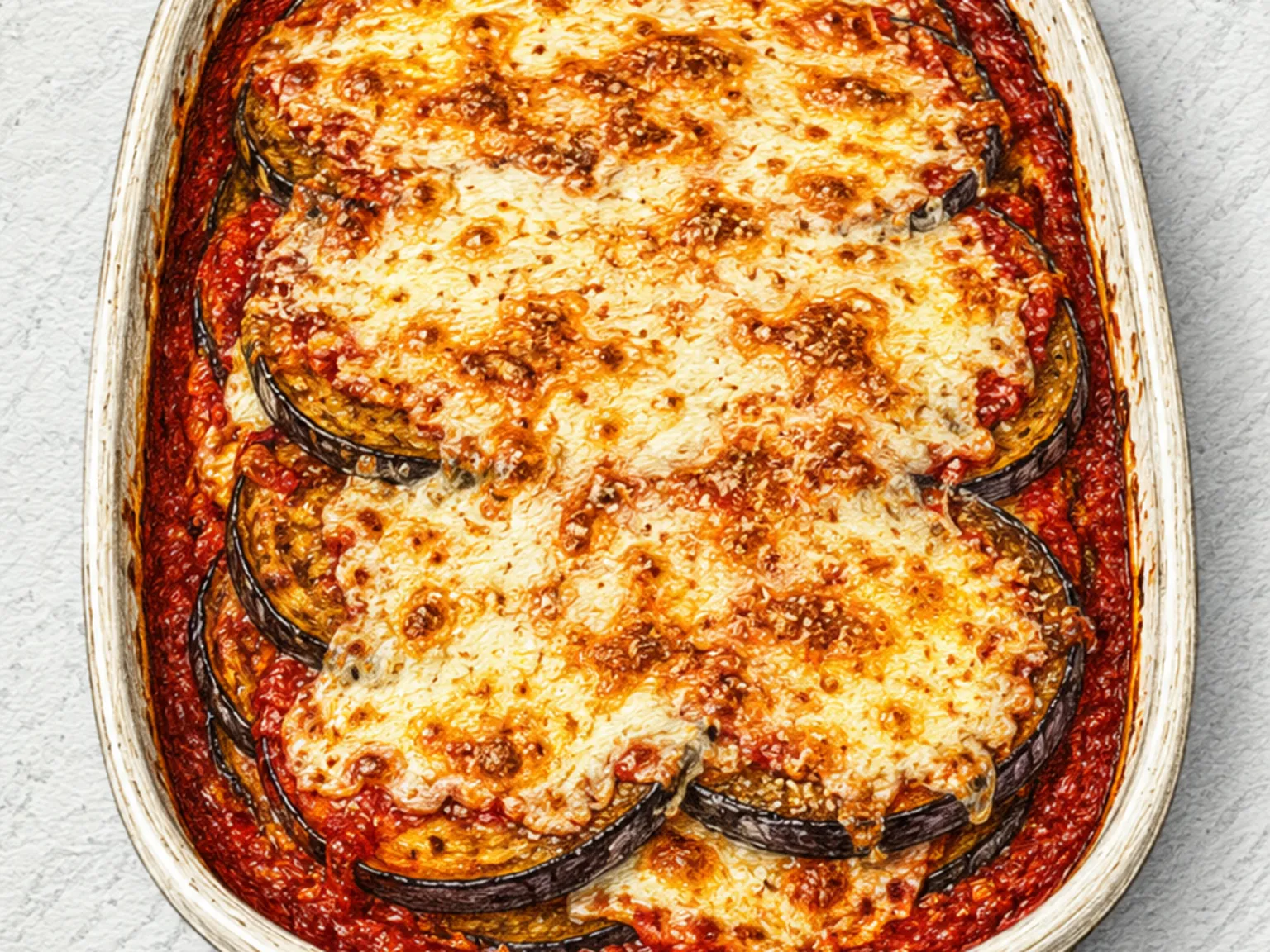
Eggplant Parmesan starts by salting one-centimeter-thick rounds of eggplant and leaving them for ten minutes so that bitterness and excess moisture draw out before cooking. Each slice is then patted dry, dredged through flour, dipped in beaten egg, and pressed into breadcrumbs before pan-frying in olive oil until the coating turns golden and crisp on both sides. In a baking dish, layers of tomato sauce, fried eggplant, torn mozzarella, and grated Parmesan are stacked twice in succession, then baked at 200 degrees Celsius for twenty minutes until the cheese has melted, bubbled up, and browned at the edges. The eggplant contributes a dense, meaty softness that holds the weight of the sauce and cheese above it. The tomato's bright acidity cuts through the richness of two cheeses, and the sharp, granular edge of Parmesan sharpens each layer where the milder mozzarella melts smoothly. Over-saucing is the main hazard: too much tomato makes the layers collapse and turns the eggplant waterlogged, so measuring the sauce with a restrained hand protects both texture and structure. Assembling the dish a day ahead and refrigerating before baking lets the flavors develop further, producing a noticeably richer result the following day.
Squid Ink Seafood Linguine
Squid ink seafood linguine dissolves squid ink in reserved pasta water before adding it to the pan, ensuring even distribution without clumping. Shrimp and squid rings are seared quickly over high heat to set their surfaces, then finished during the final emulsification step so they stay springy rather than rubbery. Sliced garlic infused slowly in olive oil forms the aromatic base, and white wine with halved cherry tomatoes introduces a gentle acidity once the alcohol cooks off. The ink coats linguine in a glossy black sauce that carries concentrated brininess, and chopped parsley scattered on top provides a fresh herbal contrast. A small squeeze of lemon juice added at the end brightens the deep, saline richness of the squid ink and makes the oceanic flavors more vivid with each bite.
Spinach Ricotta Cannelloni
Spinach ricotta cannelloni fills tube-shaped pasta with a mixture of sautéed spinach, ricotta cheese, garlic, and Parmesan, then bakes them in tomato sauce topped with mozzarella. Removing as much moisture from the spinach as possible is the most important step - excess water thins the filling and causes the tubes to split during baking. Half the Parmesan goes into the filling for depth, while the rest is scattered on top with mozzarella to build a golden, bubbling crust. Baking covered at 190 degrees Celsius for the first 25 minutes lets the sauce steam the pasta through, and uncovering for the final 10 minutes crisps the cheese surface. Resting the dish for 10 minutes after it comes out of the oven allows the sauce to thicken and the filling to set, producing cleaner portions when sliced.
Serve with this
Bam Tiramisu (Chestnut Tiramisu)
Chestnut tiramisu is a variation of the traditional Italian dessert that incorporates chestnut puree into the mascarpone cheese filling. This modification transforms a standard cafe dessert into a preparation specifically associated with the autumn season in Korea. The fundamental elements of the recipe remain consistent with the classic version. It utilizes ladyfinger biscuits that have been soaked in espresso, a filling made of whipped mascarpone and cream, and a final layer of cocoa powder. However, the introduction of chestnut puree alters the profile of the cream. Instead of a simple dairy richness, the mixture takes on an earthy quality. Using a puree made from chestnuts boiled at home, rather than a store-bought paste, helps maintain the natural grain of the nut. This provides the cream with a specific texture that is noticeable in every spoonful. When preparing the ladyfingers, the espresso soak requires a high level of precision. Each biscuit should be dipped for approximately one to two seconds. If the ladyfingers are submerged for a longer duration, they absorb an excessive amount of liquid. This leads to a waterlogged consistency which can cause the structural layers of the dessert to collapse while it sits in the refrigerator. The assembly process follows a predictable sequence. A layer of soaked ladyfingers is placed at the bottom, followed by a layer of the chestnut cream. This pattern is repeated once more before the entire dish is placed in the refrigerator to rest for at least four hours. This period of refrigeration is essential to the final outcome. During these hours, the ladyfingers absorb moisture from both the espresso and the cream layer above them. This process changes the biscuits from a crunchy state to a soft texture similar to cake, which allows for clean slices. Just before the dessert is served, a thin layer of cocoa powder is applied to the top. This adds a bitter element that balances the sweetness of the chestnuts. Preparing the tiramisu in individual glass containers or cups ensures that the portions are easy to manage and allows the different layers of the dessert to be clearly visible from the side.
Tomato Basil Juice
Tomato basil juice is a cold savory drink made by blending ripe tomatoes with fresh basil leaves and straining the result through a fine sieve to remove seeds and skins. The ripeness of the tomato determines much of the flavor: fully ripe tomatoes carry free glutamates that produce a natural umami depth, whereas underripe fruit tastes predominantly sour without the sweetness and savory body that makes the juice satisfying. Basil should be added to the blender immediately before blending rather than sitting cut or torn, because the volatile oils that produce its aroma begin oxidizing quickly once the leaves are damaged. After blending to a smooth consistency, passing the juice through a fine-mesh strainer or cheesecloth removes the solids and produces a texture smooth enough to drink without resistance. Salt and black pepper season the juice, and fresh lemon juice raises the acidity in a way that brightens the overall flavor rather than making it sour. A small addition of olive oil emulsifies into the juice and activates fat-soluble aromatic compounds in both the tomato and the basil, producing a fuller, rounder flavor than the unstrained version. The juice must be thoroughly chilled before serving, as warmth mutes the herbal freshness. It works well as a brunch drink, a light non-alcoholic aperitif, or a base for savory cocktails.
Grilled Peach Burrata Basil Salad
The peaches are sliced into wedges and brushed with a thin layer of olive oil before they are placed into a grill pan. Each side requires between one and two minutes of contact with the heat to develop a charred surface. This method draws out a caramelized sweetness and a subtle smoky quality that is not present in raw fruit. The application of direct heat to the cut surfaces of the peaches concentrates their natural sugars, which results in a deeper flavor profile and a savory quality that supports the other ingredients. Preparation of the burrata involves removing it from the refrigerator ten minutes prior to assembly. This pause allows the cheese to lose its chill so that the creamy interior can soften. When the cheese is eventually torn apart and placed over the peaches, the center should be loose enough to flow freely, which ensures the full milky richness is distributed throughout the salad. The assembly includes a base of warm grilled peaches topped with the torn burrata, fresh arugula, and basil leaves. Arugula is chosen for its peppery bitterness, which provides a functional balance to the sweet peaches and the heavy cream of the cheese, preventing the dish from becoming one-dimensional. Lightly toasted walnuts are added to provide a specific textural contrast and a roasted nuttiness that complements the softer components. Finally, a thick balsamic glaze with a sweet and tart profile is drizzled over the top to bring the different elements together into a single cohesive dish. This salad is best prepared during the summer when peaches are at their peak ripeness and sweetness.
Similar recipes
Baked Lasagna
Baked lasagna stacks wide pasta sheets between slow-cooked beef Bolognese sauce, ricotta, mozzarella, and Parmesan, then bakes the whole assembly into the kind of deeply layered dish that is foundational to Italian baked pasta. Construction begins with a thin coat of tomato sauce on the bottom of the baking dish to prevent sticking, followed by alternating layers of pasta, meat sauce, and cheese. Ricotta spreads as a mild, creamy buffer between the layers, tempering the acidity of the tomato base and keeping the interior moist. Mozzarella melts into the spaces between layers, binding them together and stretching when pulled. Parmesan scattered over the top forms a golden-brown crust after forty-five minutes of baking. A single preparation yields four or more servings, making it practical for gatherings. Assembling the lasagna the night before and refrigerating it overnight gives the sauce time to absorb into the pasta, producing a more cohesive texture when it finally bakes. Leftovers reheat well and lose little of the original flavor, so the dish improves as a meal-prep option.
Gochujang Eggplant Ricotta Lasagna Rolls
Gochujang eggplant ricotta lasagna rolls begin by roasting diced eggplant with olive oil and salt at 200 degrees Celsius. Fifteen minutes in the oven drive out moisture and collapse the flesh into a soft, dense interior. The roasted eggplant is combined with ricotta and spread across boiled lasagna sheets, which are rolled tight and arranged in a baking dish. A sauce of tomato puree, gochujang, sauteed onion and garlic, and dried oregano is simmered for ten minutes until the chili paste loses its raw edge and the tomato acidity settles into the mix, producing a layer that is spicy and faintly tangy. The rolled sheets are covered in sauce and topped with mozzarella, then baked until the cheese browns and blisters into a firm crust. Below that crust the eggplant-ricotta filling stays moist and soft, and the contrast between the crisp cheese cap and the tender interior defines each slice.
Rigatoni all'Amatriciana (Roman Guanciale Tomato Spicy Pasta)
Rigatoni all'Amatriciana is a Roman pasta where crisp-rendered guanciale fat forms the base of a tomato sauce enriched with peperoncino heat. White wine deglazes the pan before crushed whole tomatoes are added and simmered for fifteen minutes to thicken. The ridged surface of rigatoni traps the sauce, ensuring each bite carries the full flavor of cured pork and tomato. A generous grating of Pecorino Romano finishes the dish with sharp, salty contrast. Controlling noodle texture and sauce coating helps the ingredients cook evenly while keeping the final seasoning balanced.