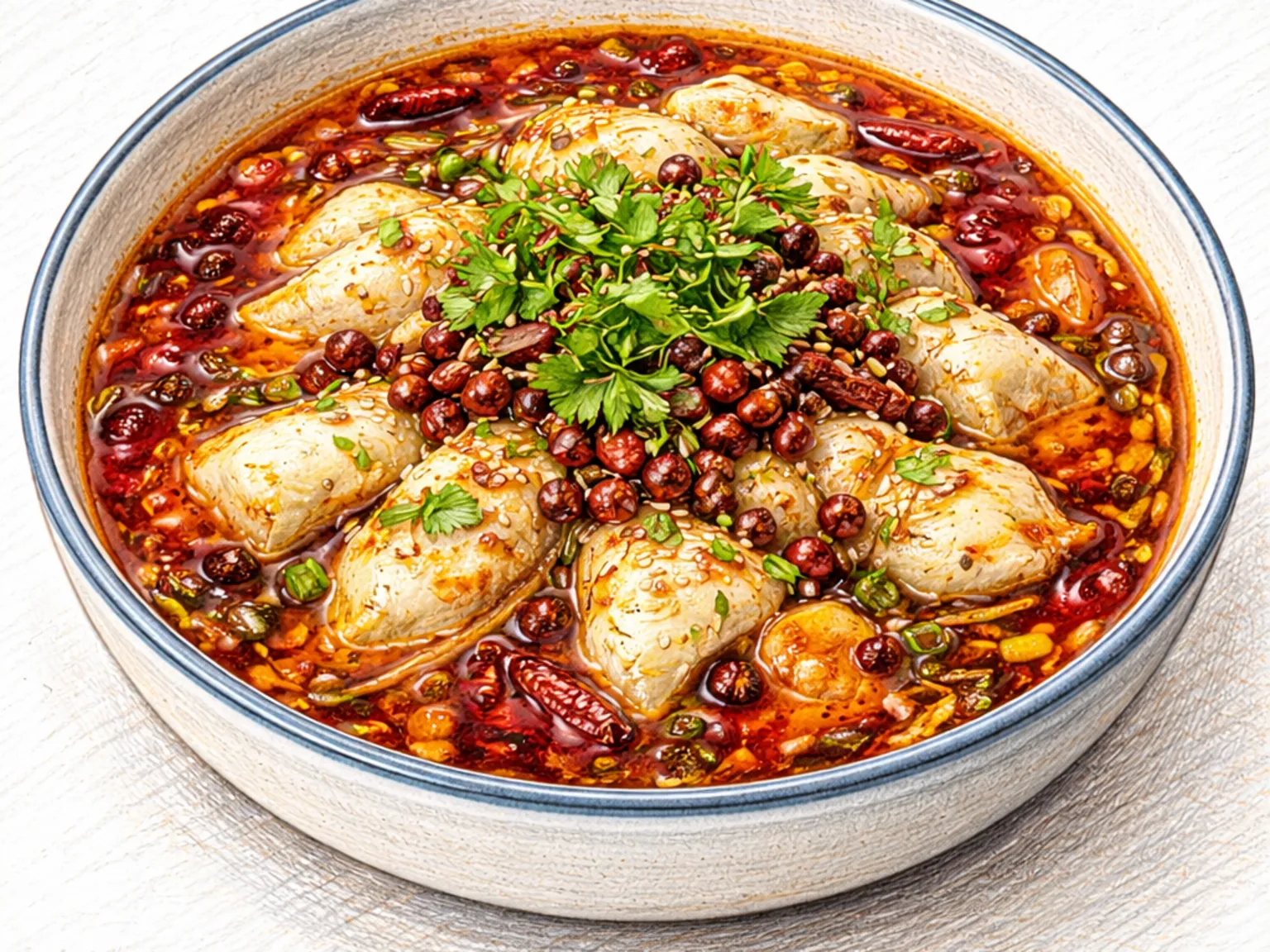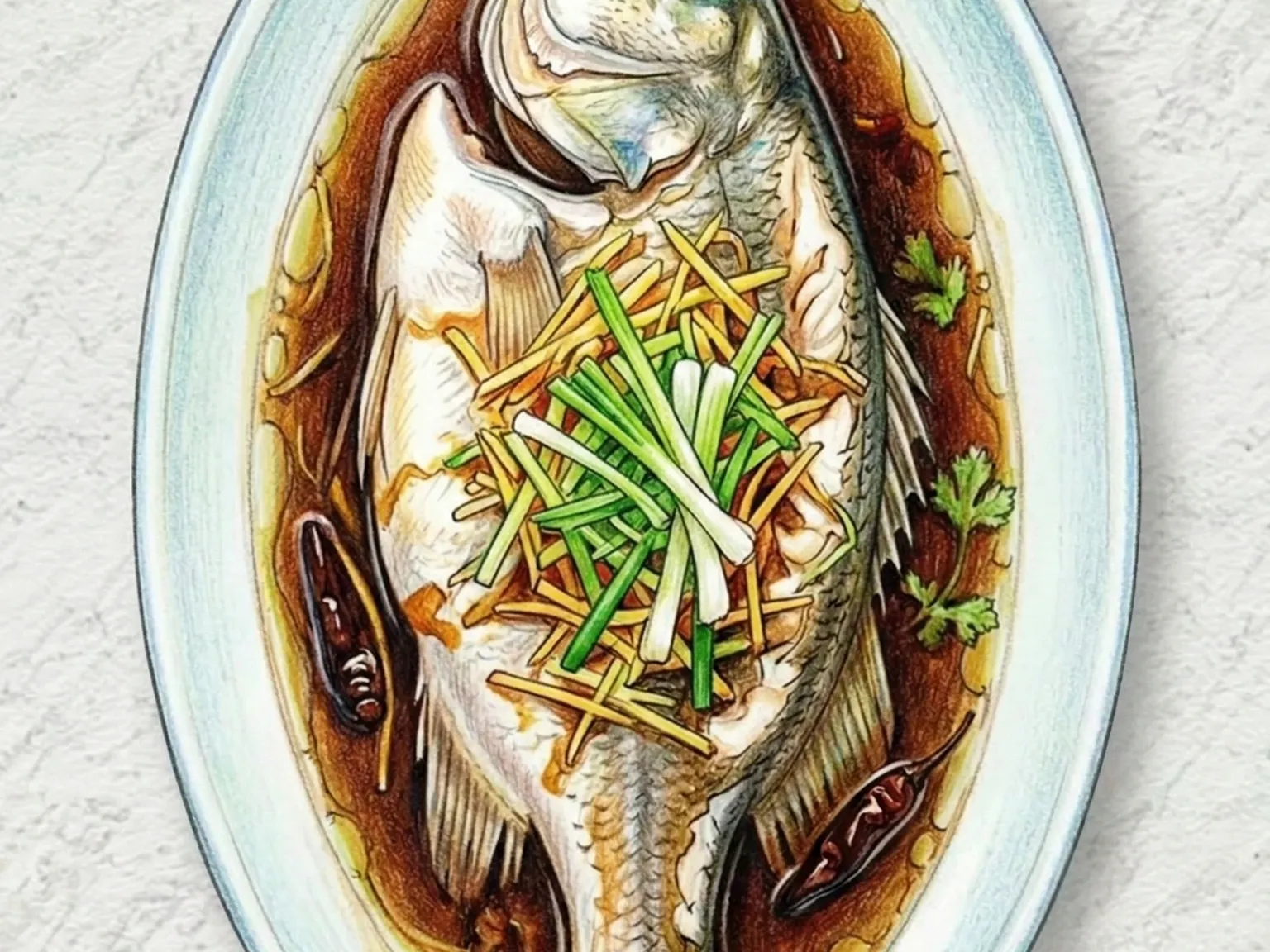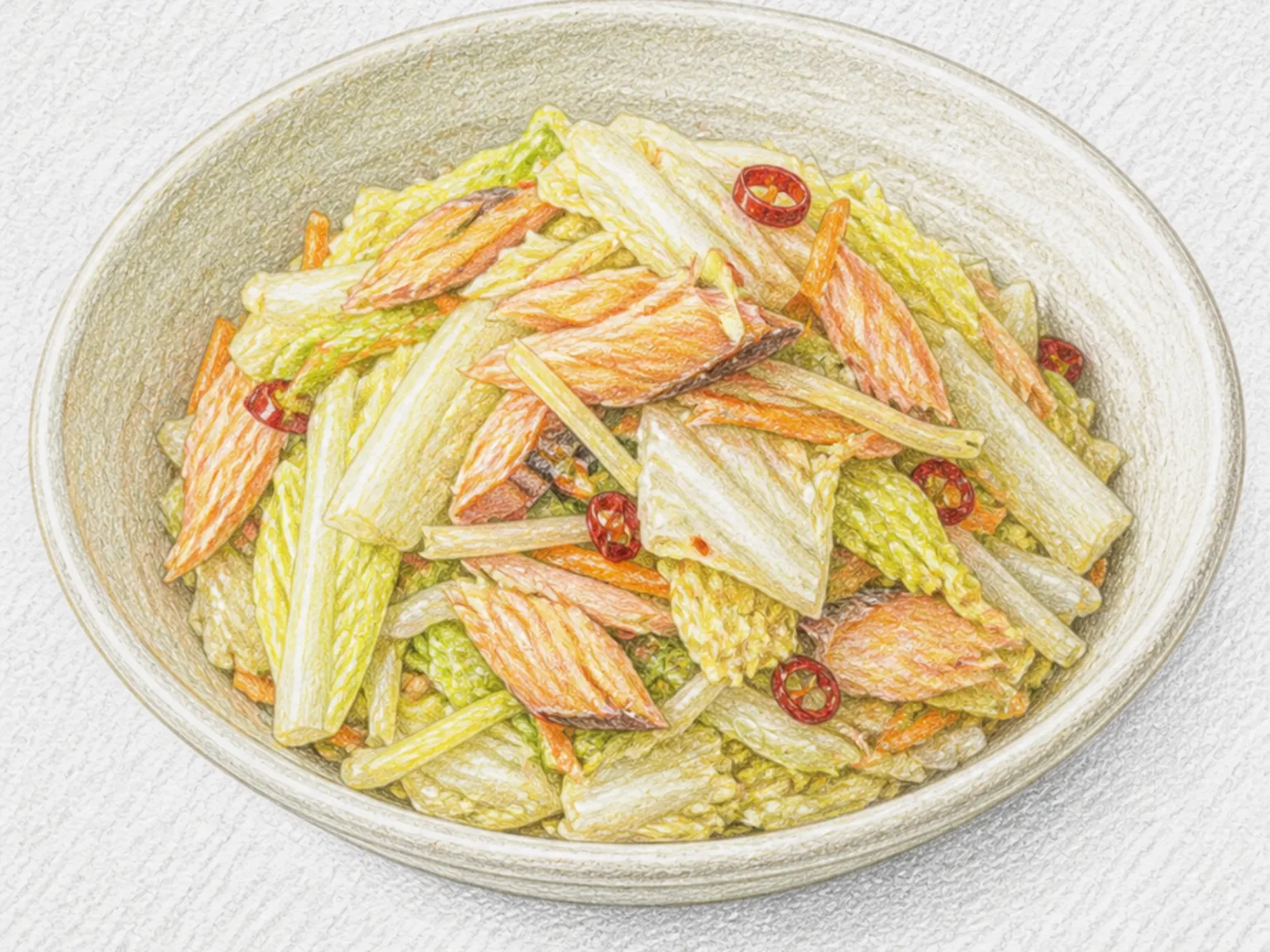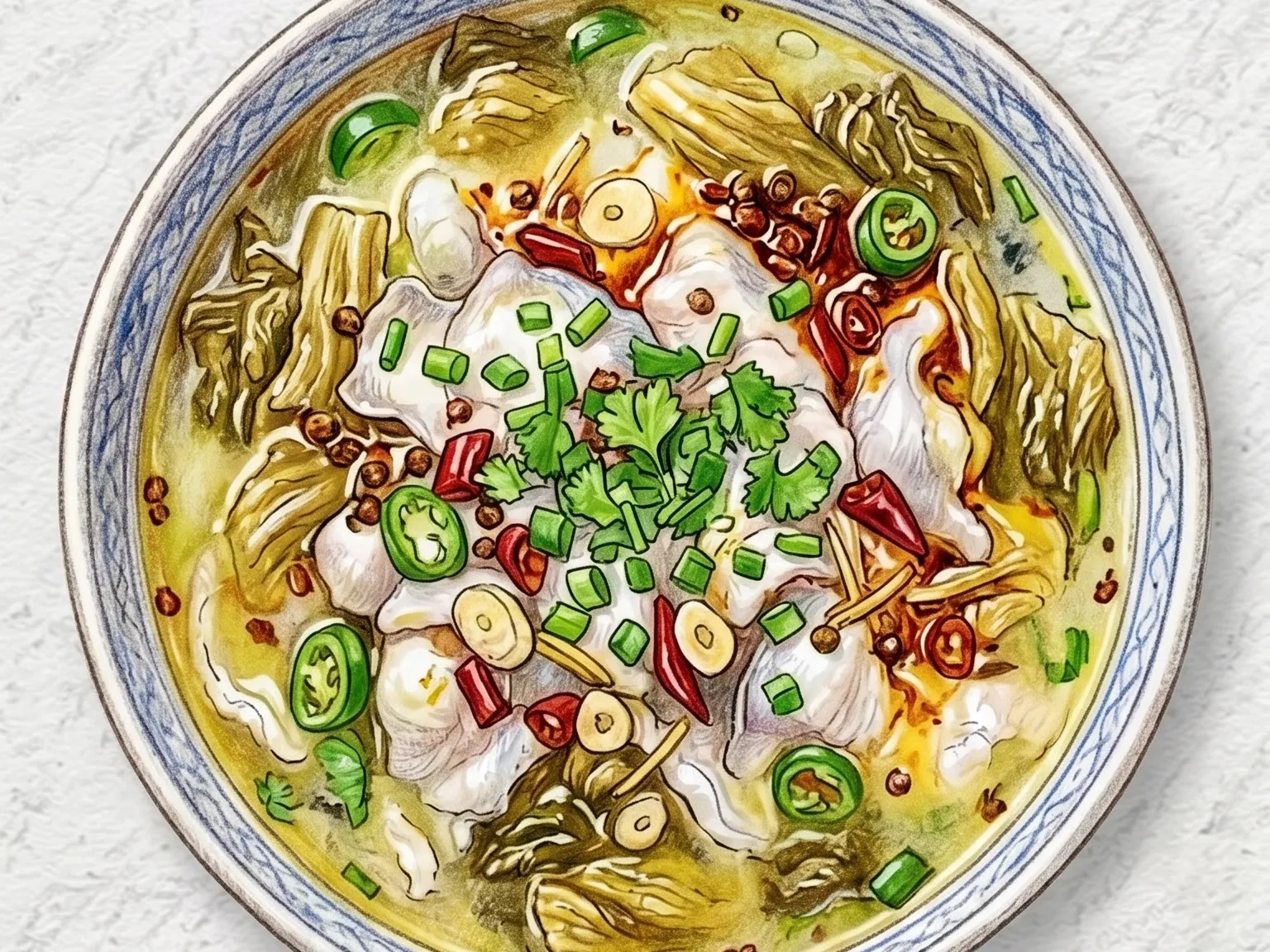
Suan Cai Yu (Sichuan Pickled Mustard Greens Fish Stew)
Suan cai yu is a Sichuan fish stew that draws its defining character from pickled mustard greens-fermented vegetables whose sharp acidity provides the tangy backbone of the dish. The cooking starts with chili oil, garlic, ginger, and dried chilies sizzled together to create a pungent, aromatic base. The rinsed pickled greens go in next, their sour bite mellowing slightly as they simmer in stock for ten minutes, releasing a complex fermented depth into the broth. Thin slices of white fish, lightly dusted with starch to protect their delicate texture, are added at the very end and cooked for only a few minutes so they remain silky and intact. The finished bowl is a study in contrasts: the broth is simultaneously sour from the pickled greens, spicy from the chili oil, and savory from the stock, while the fish offers a clean, mild counterpoint. It is a deeply satisfying dish that showcases Sichuan cuisine's mastery of bold, layered flavors.
Adjust Servings
Instructions
- 1
Slice the fish thinly and lightly coat with starch.
- 2
Rinse pickled mustard greens once and chop into bite-size pieces.
- 3
Heat chili oil in a pot and gently sauté garlic, ginger, and dried chili until fragrant.
- 4
Add mustard greens, stir-fry for 2 minutes, then pour in stock and simmer for 10 minutes.
- 5
When boiling, add fish slices one by one and cook for 3-4 minutes.
- 6
Adjust seasoning, transfer to a bowl, and serve hot.
As an Amazon Associate, we may earn from qualifying purchases.
Tips
Nutrition (per serving)
More Recipes

Shui Zhu Yu (Sichuan Poached Fish in Fiery Chili Oil Broth)
Shui zhu yu - literally 'water-boiled fish' - is one of Sichuan cuisine's most dramatic presentations, despite its modest name. Thin slices of white fish are coated in a light starch slurry and poached in a broth loaded with doubanjiang chili bean paste and Sichuan peppercorns. The fish cooks gently so each slice remains silky and intact. A wide bowl is lined with blanched bean sprouts, celery, and tofu, then the poached fish is laid on top. Dried chilies and whole Sichuan peppercorns are scattered over the surface, and smoking-hot oil is poured over them tableside - the sizzle sends a plume of chili-laced steam into the air. The resulting pool of fiery red oil looks intimidating, but the fish beneath is mild and buttery, creating a contrast between the numbing, tingling broth and the delicate flesh that defines the dish.

Sichuan Spicy Tofu (Mapo Tofu)
Mapo tofu is the dish that defines Sichuan cooking for much of the world. Blocks of silken tofu are slid into a wok with ground pork, doubanjiang (fermented chili bean paste), and a generous measure of ground Sichuan pepper, then cooked until the sauce thickens and clings to every cube. The doubanjiang provides a deep, fermented heat and ruddy color, while the Sichuan pepper delivers the numbing sensation - ma - that makes the dish unmistakable. Spooned over steamed rice, the sauce soaks into every grain. The interplay of ma (numbing) and la (spicy) is Sichuan cuisine's signature, and no dish demonstrates it more directly than this one.

Sesame Spicy Tantanmen (Chinese Creamy Sesame Chili Oil Noodle Soup)
Tantanmen is a Chinese-origin noodle soup that combines a creamy sesame-based broth with the heat of chili oil to produce a bowl that is simultaneously nutty, spicy, and deeply savory. The broth begins with chicken stock into which sesame paste is whisked until fully dissolved, creating a thick, tan-colored liquid with a pronounced roasted-nut fragrance. Ground pork is fried separately with garlic, ginger, and doubanjiang-a fermented chili bean paste-until the meat is browned and crumbly, then spooned over the noodles as a rich, salty topping. Blanched bok choy adds a crisp, vegetal note that breaks up the heaviness of the broth, and a final drizzle of chili oil pools on the surface, releasing its fragrance with every sip. The noodles should be cooked just short of fully done so they maintain their chew in the hot liquid. Each component-sesame, chili, fermented bean, and pork-contributes a distinct layer of flavor, and the bowl rewards slow eating as they gradually merge.

Yu Xiang Eggplant (Sichuan Spicy Garlic Pork Eggplant)
Yu Xiang Qiezi is a Sichuan-style eggplant stir-fry with ground pork, doubanjiang, black vinegar, and sugar. The eggplant is pre-fried to firm it up so it holds its shape in the sauce, while the pork and doubanjiang create a spicy, aromatic oil base. Soy sauce, vinegar, and sugar layer sweet and sour notes over the heat, producing the characteristic Yu Xiang flavor profile. Garlic and ginger add fragrance, and the eggplant absorbs the sauce deeply so every bite releases a concentrated burst of seasoning.

Kung Pao Chicken
Kung pao chicken is a landmark dish of Sichuan cuisine, combining diced chicken, roasted peanuts, and dried chilies in a sauce that is simultaneously spicy, sweet, sour, and numbing. The chicken is cut into small cubes and marinated briefly in soy sauce and cornstarch, which creates a thin coating that seals in moisture when the meat hits the searing-hot wok. Dried red chilies and Sichuan peppercorns are fried in oil first, infusing it with their heat and the distinctive tingling sensation known as mala. The sauce - a balanced mixture of soy sauce, black vinegar, and sugar - is added at the end and reduced quickly into a glossy glaze that clings to every piece. Roasted peanuts are tossed in just before serving to preserve their crunch, and chopped scallion adds a final layer of freshness. The interplay of spice, tang, and nuttiness in each bite explains why this dish has traveled far beyond Sichuan to become one of the most recognized Chinese dishes worldwide.

Chinese Red-Braised Fish (Hong Shao Yu)
Golden pan-seared white fish glazed in a glossy, caramelized soy-sugar sauce with ginger and green onion -- a Chinese home-cooking classic ready in under 30 minutes. Searing creates a firm exterior that holds the fish together throughout braising, while ginger and green onion infuse the sauce with fragrance and neutralize any fishiness. The sauce reduces into a glossy, dark glaze that coats each piece of fish. With a cooking time under 30 minutes, this is a practical weeknight dish that delivers the deep, caramelized soy flavors of long-braised Chinese cooking in a fraction of the time.