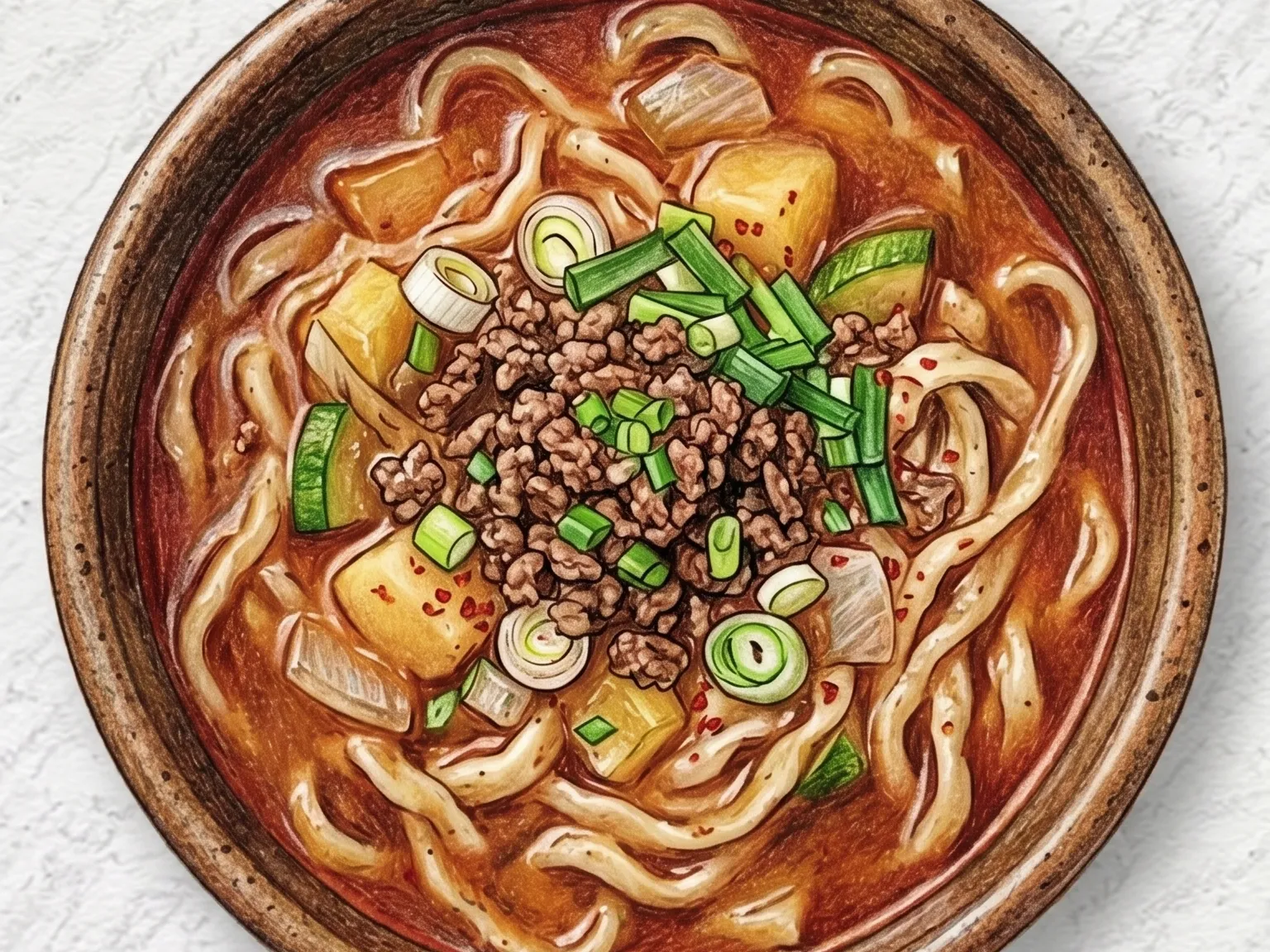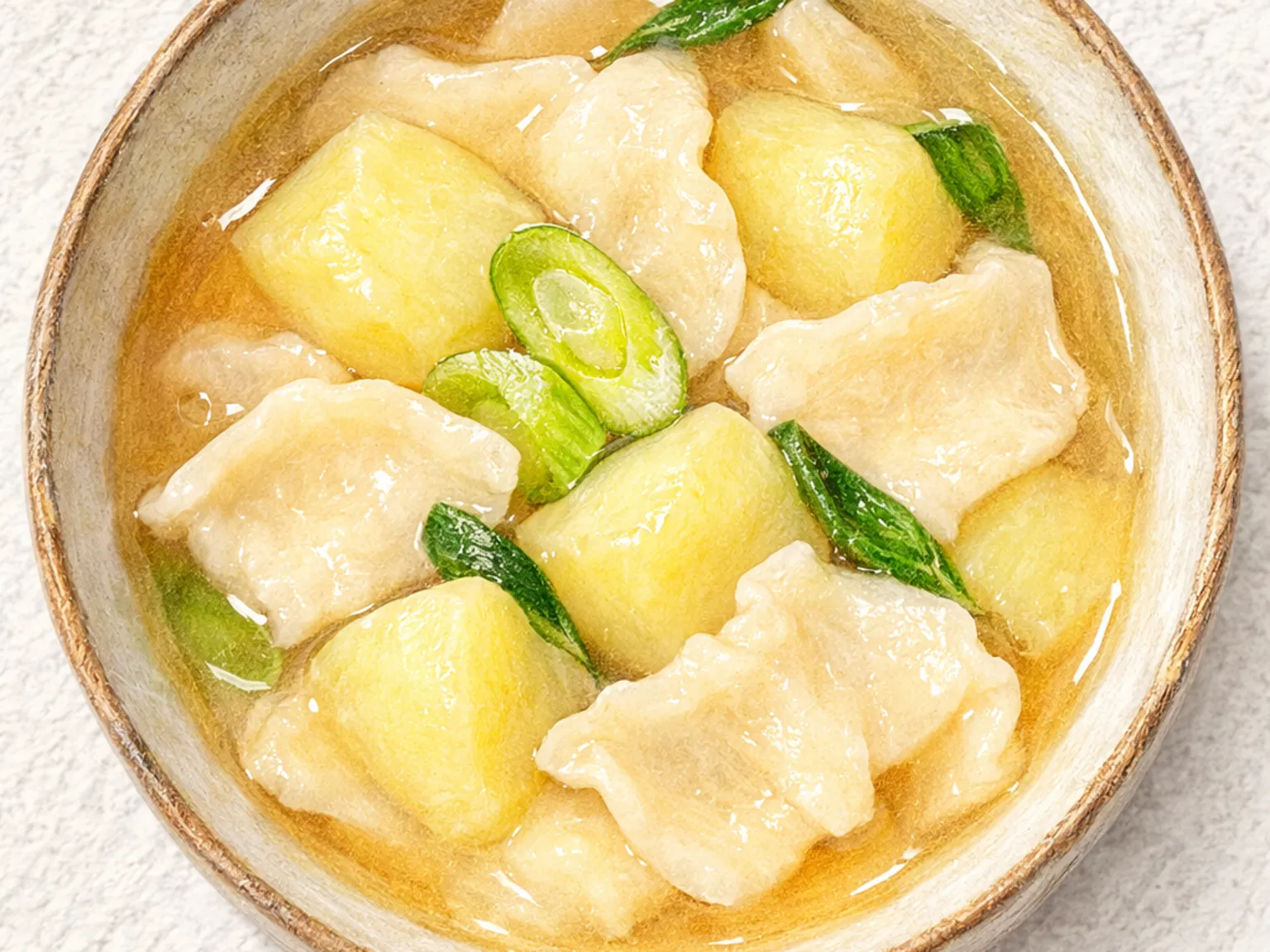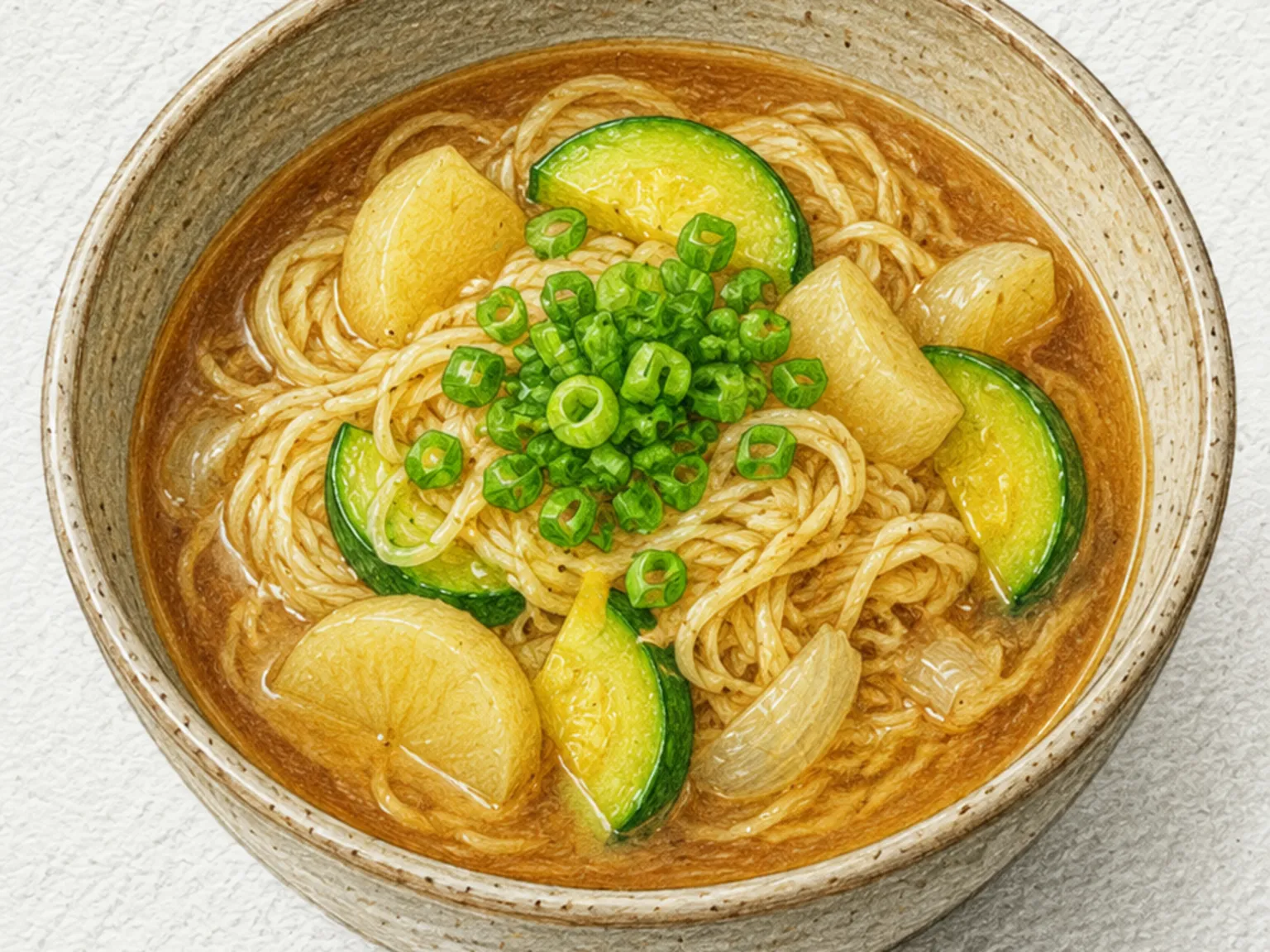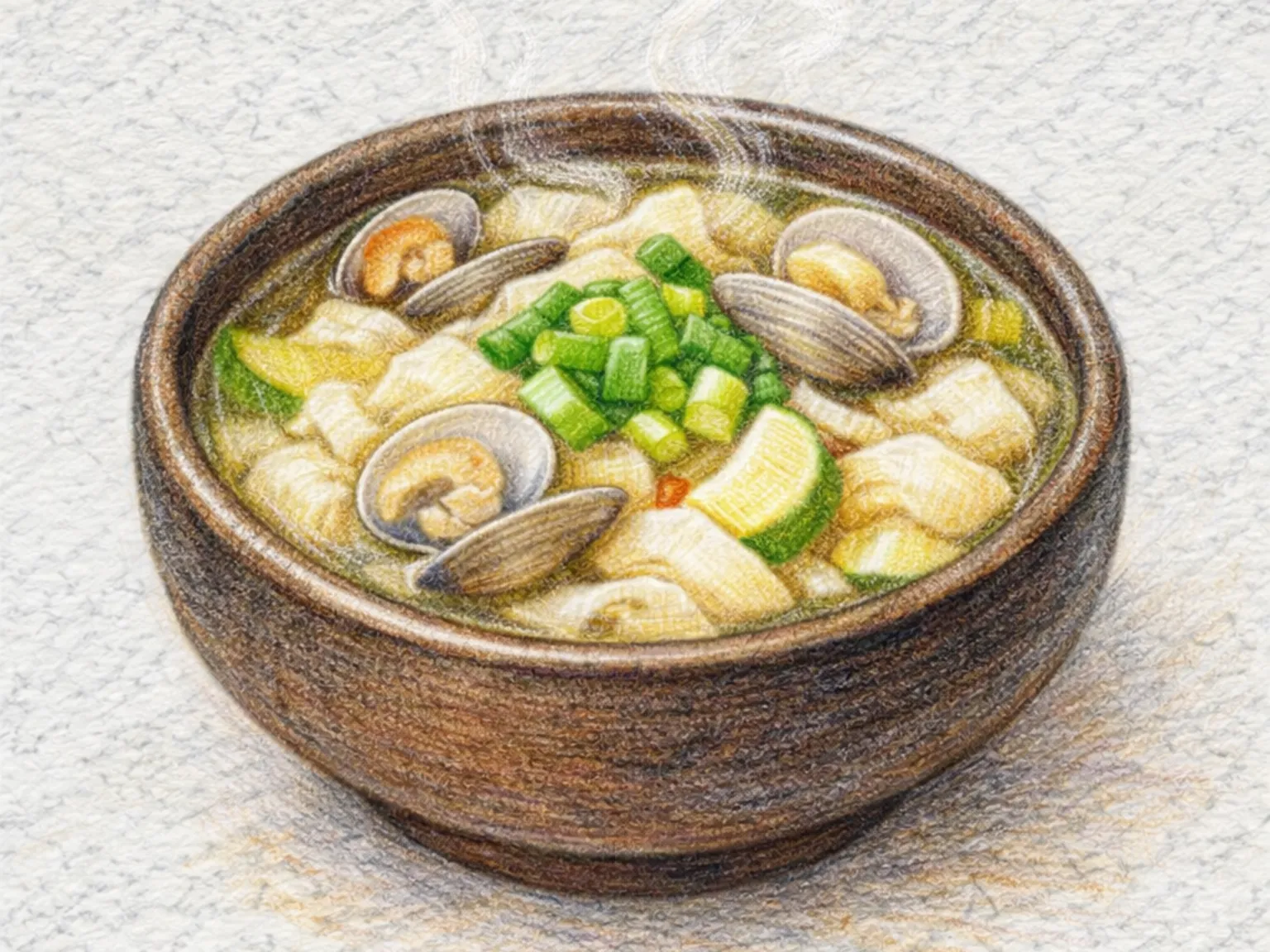
Korean Clam Sujebi Stew (Hand-Torn Dough in Clam Broth)
This stew combines hand-torn flour dumplings with clams, potato, and zucchini in an anchovy-kelp stock. The clams infuse the broth with a clean, briny depth, and the dough pieces cook into chewy, irregular shapes that catch the soup nicely. Potato melts partially to thicken the broth, while zucchini and onion lend sweetness. Finished with soup soy sauce and green onion, it works as a complete one-bowl meal covering both soup and starch.
Adjust Servings
Instructions
- 1
Mix flour and water into dough, then rest for 20 minutes.
- 2
Purge clams in salted water, then rinse thoroughly.
- 3
Boil stock and add potato and onion, cooking for 6 minutes.
- 4
Add zucchini, garlic, and soup soy sauce to season the broth.
- 5
Tear in thin dough pieces; when they float, add clams and cook 4 minutes.
- 6
Add green onion, simmer 1 more minute, and serve immediately.
As an Amazon Associate, we may earn from qualifying purchases.
Tips
Nutrition (per serving)
More Recipes

Korean Bajirak Miyeok Jjigae (Clam Seaweed Stew)
Bajirak miyeok jjigae is a Korean stew combining manila clams and soaked seaweed, layering shellfish umami with the mineral depth of sea vegetables. Clams start in cold water with radish, which adds a cool sweetness to the broth that balances the clams' natural saltiness as the temperature climbs. Once the shells open, rice wine removes any briny off-notes, and the stew is seasoned with soup soy sauce and minced garlic. The seaweed, soaked and cut into bite-sized pieces, must enter the pot only in the last five minutes; longer cooking turns it tough and unpleasantly slippery. Diagonally sliced scallion added at the end releases a fresh aroma across the surface of the stew. The iodine-rich character of the seaweed and the briny depth of the clams belong to the same marine family yet occupy different flavor registers, creating a broth with compound depth. Any clams that remain closed after cooking must be removed to prevent grit from contaminating the finished stew.

Korean Mallow & Clam Stew
Where auk-bajirak-guk is a mild, brothy soup, this jjigae version intensifies every element - more doenjang, denser ingredients, and a spicier edge from sliced cheongyang chili. The clams open first in boiling water, releasing concentrated sea juice. Doenjang and a spoonful of gochugaru dissolve into the broth, building a base that is simultaneously earthy, briny, and warm with chili heat. Cubed tofu and sliced zucchini add body and substance, turning the soup into a stew that can anchor a meal. Mallow leaves fold in at the end, their mucilaginous quality giving the broth a velvety body that clings to the spoon. Cheongyang chili slivers on top deliver a sharp, clean heat that cuts through the richness. This jjigae sits at the intersection of comfort and intensity - thick, warming, and deeply layered, meant to be eaten with steamed rice on cold evenings.

Korean Spicy Blue Crab Seafood Stew
This seafood jjigae pulls together blue crab, Manila clams, and shrimp in 1.2L of anchovy-kelp stock for maximum ocean flavor. Each shellfish contributes its own layer of brininess and sweetness, building a deeply complex broth. Radish and zucchini absorb the seafood-infused liquid, while doenjang and gochugaru create a spicy, fermented seasoning base. Topped with Cheongyang chili and green onion, the stew finishes with a clean, lingering aftertaste.

Korean Water Parsley Clam Stew
This jjigae pairs briny clams with aromatic water parsley (minari) for a clean, refreshing broth. Korean radish and zucchini lend natural sweetness, while a green chili and a touch of gochugaru add subtle heat without overwhelming the seafood flavor. The clams open up during simmering and release their juices into the light broth, making it an uncomplicated but flavorful soup to serve over rice.

Korean Clam Soft Tofu Soup
Bajirak sundubu guk is a Korean soup where manila clam broth meets soft tofu for a texture that is simultaneously silky and full of marine flavor. Radish simmers first to release its cool sweetness into the water, and when the purged clams are added afterward, the radish sweetness wraps around the clams' saltiness, creating a balanced base. Once the shells open, soft tofu is scooped in with a large spoon and left largely undisturbed; stirring too vigorously dissolves the tofu completely and clouds the broth, while gentle placement preserves its pillowy, cloud-like texture. Soup soy sauce and minced garlic provide seasoning, and scallion goes in at the end for aroma. Each spoonful delivers the soft tofu holding a pocket of clam-infused broth, making the eating experience both mild and deeply flavored at once. Because clam meat toughens with prolonged cooking, the tofu should go in immediately after the shells open and the soup should finish within three minutes.

Korean Spinach Clam Soup (Light Shellfish and Greens Broth)
Sigeumchi-bajirak-guk pairs spinach and manila clams in a light, transparent broth that showcases the natural flavor of both ingredients with minimal interference. The clams are purged of sand, placed in cold water, and brought to a boil; as each shell opens, it releases a briny, mineral-rich liquor that becomes the soup's foundation without any need for additional stock. Spinach is added only in the final minute so the leaves wilt just enough to soften while retaining their vivid green color and nutritional content. Soup soy sauce and a touch of garlic round out the seasoning, and the restraint is intentional - anything heavier would mask the delicate sweetness of the clam broth. The spinach's mild, grassy undertone quietly absorbs any seafood sharpness, leaving the overall flavor clean and balanced. Nutritionally, the pairing is notable: spinach is rich in iron, and clams are high in taurine and zinc, making this a soup frequently recommended for children and pregnant women in Korean households. From start to finish, the whole process takes about fifteen minutes, which explains why it appears so often on weeknight dinner tables.