Korean Crown Daisy Pancake
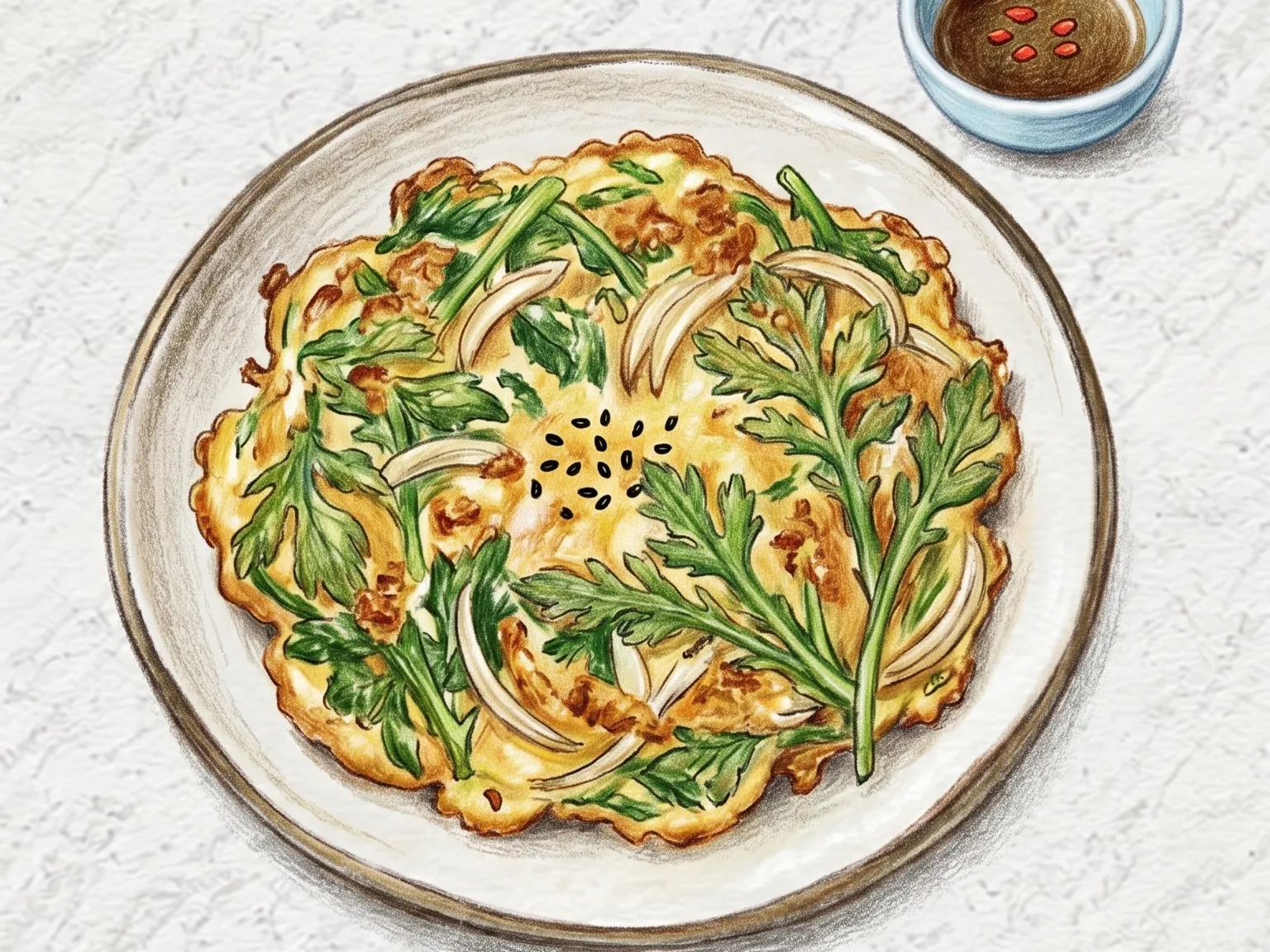
Fragrant crown daisy leaves are coated in a light pancake batter and pan-fried until the edges crisp and the herb's aroma intensifies. Heat amplifies the crown daisy's grassy, slightly bitter character, and the scent rises through the thin layer of batter as the jeon cooks. Egg in the batter provides structure, helping the exterior hold its crunch, while a small addition of potato starch keeps the texture light and prevents sogginess as the pancake cools. Sliced onion mixed into the batter introduces a gentle sweetness that offsets the herb's bitterness. Cooking over medium-low heat with ample oil ensures the interior sets evenly before the surface browns too deeply, and waiting until one side has fully firmed before flipping prevents the pancake from falling apart. The finished jeon is served with a dipping sauce of soy sauce and vinegar, whose acidity lifts the richness of the fried exterior and highlights the crown daisy's herbal notes.
Adjust Servings
Instructions
- 1
Cut crown daisy into 5 cm pieces and thinly slice onion.
- 2
In a bowl, mix pancake mix, potato starch, egg, water, and salt until smooth.
- 3
Add crown daisy and onion to the batter and toss lightly to coat.
- 4
Heat oil in a pan over medium, spread batter thinly, and cook for 2 minutes.
- 5
Flip and cook 2 more minutes, then cut into bite-size pieces to serve.
As an Amazon Associate, we may earn from qualifying purchases.
Tips
Nutrition (per serving)
More Recipes

Korean Seasoned Crown Daisy Namul
Crown daisy greens are blanched for no more than ten seconds, just long enough to wilt the stems while preserving the leaves' intense herbal fragrance. This chrysanthemum-family herb carries a distinctive aroma that can overwhelm if overcooked but captivates when handled briefly. The dressing is straightforward: soy sauce provides the salty base, sesame oil contributes richness, and toasted sesame seeds burst with a nutty flavor when bitten. Through this simple seasoning, the crown daisy's slightly bitter, almost medicinal character cuts clearly, making the dish taste more vivid than its ingredient list suggests. Minced garlic and chopped green onion layer additional aromatics without competing with the main ingredient. Shocking the greens in ice water immediately after blanching locks in their bright green color, and squeezing out excess moisture before dressing prevents the sauce from diluting. The result is a namul with a clean, sharp personality that pairs well with milder dishes on a Korean table.

Korean Eggplant Pancakes (Egg-Battered Pan-Fried Eggplant)
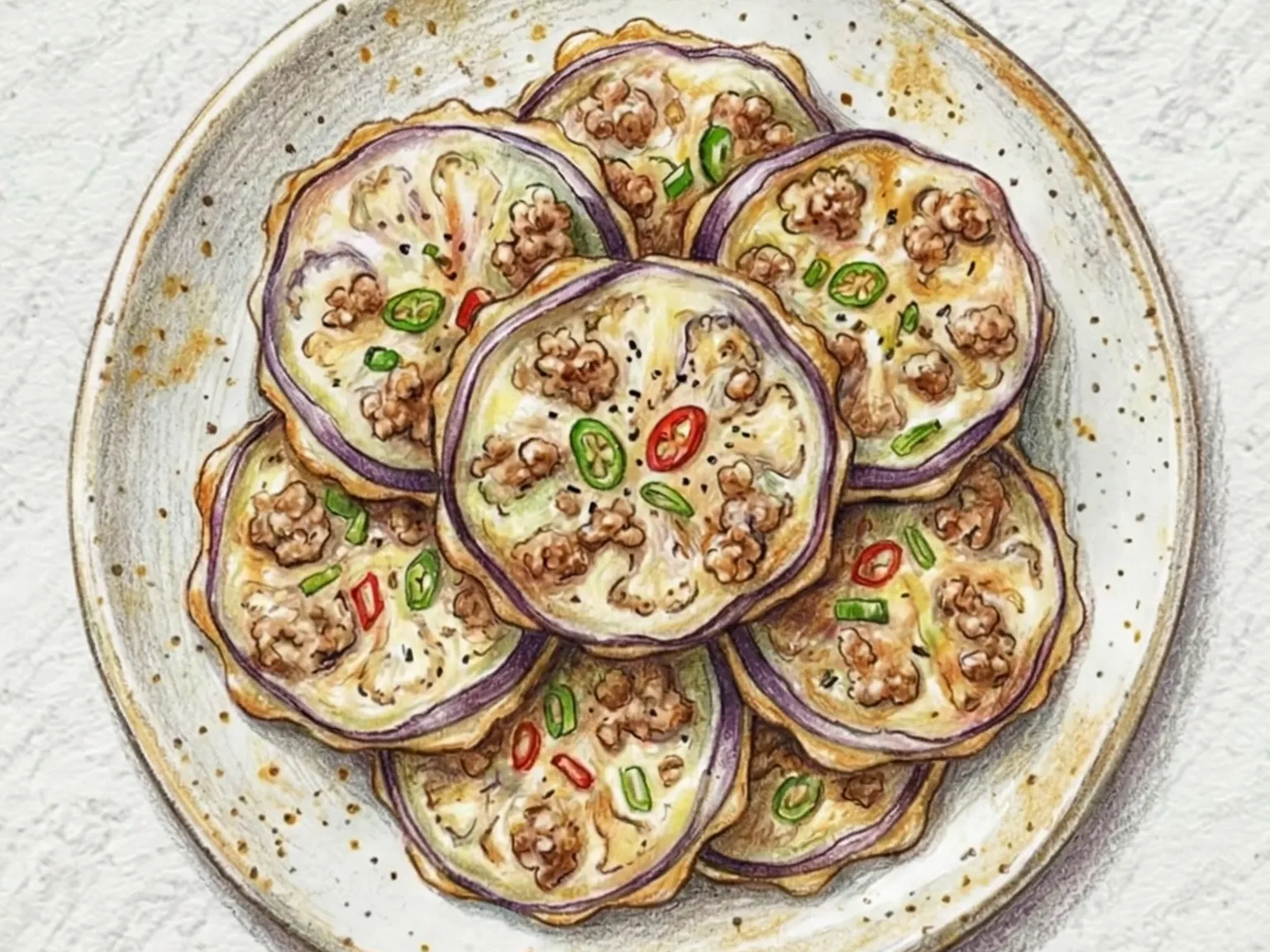
Gaji-jeon belongs to the Korean jeon family - vegetables dipped in egg wash and pan-fried in a thin layer of oil, a technique that appears at ancestral rites (jesa) and holiday tables. Eggplant rounds are sliced about 7mm thick - thin enough to cook through but thick enough to maintain a soft center. A light dusting of flour before the egg wash helps the batter adhere. The egg coating sets into a golden, lacy shell in the pan, while the eggplant inside steams in its own moisture. The result is a contrast between the crisp, slightly eggy exterior and the collapsing, custardy eggplant within. Dipped in a simple soy-vinegar sauce, each piece delivers a clean, understated flavor. Korean families often fry gaji-jeon alongside hobak-jeon and other vegetable jeon for Chuseok.

Korean Lotus Root Pancakes
Lotus root is sliced into rounds and coated in a light batter of buchim flour and egg before being pan-fried until golden on both sides. The root's characteristic perforations show through the thin batter, creating a lace-like appearance on each piece that makes this jeon visually distinctive. Biting through the crisp exterior reveals the lotus root's dual texture: an initial crunch from the starchy flesh followed by a slightly sticky chew that clings pleasantly to the teeth. Slicing to a thickness of five to six millimeters strikes the right balance between maintaining the crunch and ensuring the center cooks through. The egg-enriched batter adheres evenly to the root's smooth surface and sets immediately upon contact with hot oil, sealing in moisture. Minimal salt in the batter allows the lotus root's faint natural sweetness to emerge, and a dipping sauce of soy sauce and vinegar provides the acidity needed to cut through the fried exterior's richness. Commonly served during Korean holidays, this jeon is simple enough for everyday cooking as well.

Korean Paengi Beoseot Jeon (Enoki Pancake)
Paengibeoseot-jeon is a thin Korean pancake built around 200 grams of enoki mushrooms separated into loose strands and coated in a light batter of pancake mix, egg, and water. Cooked over medium-low heat, the batter spreads thin enough that the edges turn golden and crisp while the mushroom clusters in the center stay moist and chewy. Chopped scallions add color and a mild onion fragrance throughout. The pancake is served with a dipping sauce of soy sauce, vinegar, and a pinch of chili flakes, whose acidity and salt lift the subtle earthiness of the mushrooms. Keeping the heat moderate is essential - too high and the outside burns before the interior sets.

Korean Aralia Shoot Jeon (Spring Herb Shoot Pancake)
Durup-jeon is a seasonal Korean pancake made during the brief spring window when aralia shoots are available, coated in a thin layer of flour and egg wash to showcase the vegetable's distinctive bitter-herbal fragrance. The shoots are blanched for just thirty seconds in vinegared boiling water to remove harshness while keeping the stems crisp, then thoroughly dried and lightly floured so the egg coating adheres evenly. Cooking over medium-low heat ensures the egg browns gently without scorching, allowing the interior stems to soften properly-high heat leaves them tough. Dipping in cho-ganjang, soy sauce mixed with vinegar, sharpens the wild mountain herb character of the aralia.

Korean Tofu Jeon (Golden Egg-Coated Pan-Fried Tofu)
Dubu-jeon is a Korean pan-fried tofu dish where firm tofu is sliced into 1 cm thick pieces, seasoned with salt and pepper, dusted in flour, dipped in beaten egg, and fried until golden. Pressing the tofu for at least fifteen minutes under a heavy weight wrapped in paper towels is the most important step-excess moisture causes oil to splatter and prevents the egg coating from adhering properly. Each side needs three to four uninterrupted minutes over medium heat to develop an even golden crust; flipping too often strips the egg batter away. A dipping sauce of soy sauce, vinegar, and chili flakes transforms the mild, nutty tofu into something more complex, adding salt, acidity, and heat that complement the plain simplicity of the base.