Charim

2686 Korean & World Recipes

2686+ Korean recipes, clean and organized. Ingredients to instructions, all at a glance.

Korean Stir-Fried Mung Bean Sprouts and Mushrooms

Korean Stir-Fried Mung Bean Sprouts and Mushrooms

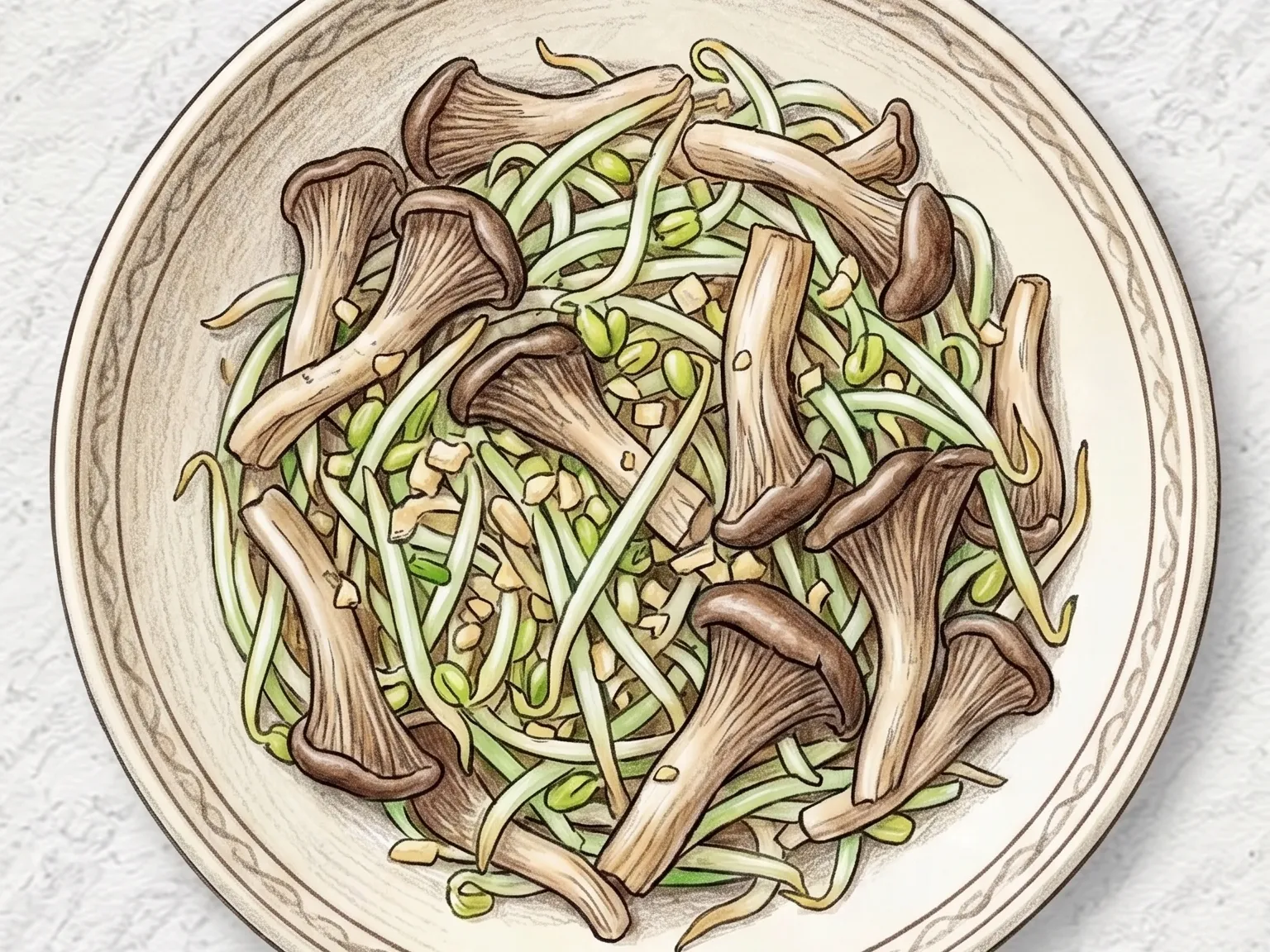
Mung bean sprouts and oyster mushrooms are tossed together in a hot pan for a stir-fry that contrasts the sprouts' crisp snap with the mushrooms' tender chew. Speed is critical: the sprouts lose their crunch within seconds of overcooking, so the entire process finishes in under a minute once the ingredients hit the oil. Tearing the oyster mushrooms along their natural grain rather than chopping them exposes more surface area, allowing the seasoning to penetrate each strand. Soup soy sauce seasons the dish with depth while keeping the color clean and light, and minced garlic and sliced green onion provide an aromatic backbone that fills the kitchen as the pan sizzles. Sesame oil is added just before removing from heat so its fragrance survives intact, and a scattering of toasted sesame seeds supplies a nutty accent. Both ingredients release significant moisture, so either salting them briefly beforehand or ensuring the pan is blazing hot prevents the stir-fry from turning soggy.

Prep 12minCook 8min4 servings

Adjust Servings

2servings
servings

Instructions

  1. 1

    Rinse sprouts and drain well; tear mushrooms into strips.

  2. 2

    Heat oil in a pan and stir-fry onion and garlic for 1 minute.

  3. 3

    Add mushrooms and stir-fry on high heat for 2 minutes to reduce moisture.

  4. 4

    Add sprouts, soy sauce, and salt, then toss quickly for 2 minutes.

  5. 5

    Turn off heat and finish with green onion, sesame oil, and sesame seeds.

🛒Shop Ingredients on Amazon

As an Amazon Associate, we may earn from qualifying purchases.

Tips

Keep stir-fry time short to preserve crunch.
If mushrooms are watery, cook them first on high heat.

Nutrition (per serving)

Calories
92
kcal
Protein
4
g
Carbs
8
g
Fat
5
g

More Recipes

Korean Stir-Fried Soybean Sprouts
Side dishesEasy

Korean Stir-Fried Soybean Sprouts

Kongnamul-bokkeum is stir-fried soybean sprouts cooked over high heat for a result that differs fundamentally from the blanched-and-dressed kongnamul-muchim. While the muchim version is cold and gentle, the bokkeum version introduces direct contact with a hot oiled pan, creating a faint wok char on the sprout surfaces. The critical rule is to never cover the pan - trapped steam converts the stir-fry into a boiled dish and locks in the raw bean smell that proper cooking should eliminate. Garlic goes into the oil first for twenty seconds to build an aromatic foundation, then the sprouts are tossed for no more than two minutes on high heat to preserve their crunch. Soup soy sauce (gukganjang) seasons more lightly and keeps the color clean compared to regular soy sauce. When a bag of bean sprouts is the only vegetable in the refrigerator, this five-minute banchan is the pragmatic answer.

🏠 Everyday🍱 Lunchbox
Prep 8minCook 7min2 servings
Korean Seasoned Mung Bean Sprouts
Side dishesEasy

Korean Seasoned Mung Bean Sprouts

Mung bean sprouts are blanched briefly in boiling water and dressed with sesame oil, salt, garlic, and toasted sesame seeds to produce one of the cleanest-tasting namul dishes on the Korean table. The blanching window is narrow: thirty seconds is enough to soften the raw edge while keeping the stems crunchy from tip to tail. Plunging the sprouts into cold water immediately halts the cooking and preserves their pale, translucent appearance. Salt draws out the sprouts' mild natural sweetness, and sesame oil wraps each strand in a thin, fragrant coat that makes the mouthfeel smooth without adding weight. Garlic is used sparingly so it accents rather than dominates the sprouts' delicate flavor. Toasted sesame seeds contribute a nutty depth that elevates the otherwise minimal seasoning. Thorough squeezing removes the water trapped between the tangled sprouts, ensuring the dressing clings rather than pools at the bottom of the bowl. Gentle hand-mixing prevents the fragile sprouts from bruising.

🏠 Everyday🍱 Lunchbox
Prep 5minCook 5min4 servings
Korean Spicy Stir-Fried Fish Cake
Side dishesEasy

Korean Spicy Stir-Fried Fish Cake

Square fish cake sheets are cut into bite-size pieces and stir-fried in a gochujang-based glaze that balances heat with sweetness. Blanching the fish cake briefly before cooking removes excess oil and opens the surface so the sauce adheres more evenly. Over high heat, the edges of each piece caramelize lightly, adding a subtle smoky note that deepens the overall flavor. The sauce combines gochujang, soy sauce, and oligodang, a Korean corn syrup that gives the glaze its glossy finish and tempers the chili paste's sharpness. Onion slices soften quickly in the pan, releasing moisture that deglazes the base and contributes their own natural sweetness to the sauce. Green onion added at the very end keeps its fresh bite, providing an aromatic counterpoint to the rich coating. Sesame seeds scattered on top round out the dish with a nutty finish. Because the glaze intensifies rather than deteriorates when cooled, this banchan holds up well in packed lunches.

🏠 Everyday🍱 Lunchbox
Prep 8minCook 10min4 servings
Korean Soy Sauce Stir-Fried Lotus Root and Bean Sprouts
Stir-fryEasy

Korean Soy Sauce Stir-Fried Lotus Root and Bean Sprouts

Yeongeun-kongnamul-ganjang-bokkeum stir-fries sliced lotus root and bean sprouts in a soy sauce and oligosaccharide glaze. The lotus root goes in first over medium heat for three minutes until slightly translucent, then carrot and garlic are added before the soy seasoning. Bean sprouts join last and cook on high heat for just two minutes to drive off moisture while staying crunchy. The starchy snap of the lotus root contrasts with the watery crispness of the bean sprouts, tied together by a light sweet-salty soy coating.

🏠 Everyday🍱 Lunchbox
Prep 14minCook 9min2 servings
Korean Stir-Fried Kimchi (Caramelized Aged Kimchi Banchan)
Side dishesEasy

Korean Stir-Fried Kimchi (Caramelized Aged Kimchi Banchan)

Kimchi-bokkeum is the default way Korean households use up kimchi that has fermented past its fresh prime. Stir-frying tempers the sharp lactic acidity that over-ripe kimchi develops - the heat transforms the sourness into something mellower, sweeter, and more rounded. Onion goes in first and cooks until translucent, laying a sweet foundation before the kimchi and garlic join. Medium heat is essential: it drives off moisture gradually, yielding a thick, concentrated sauce rather than a watery stew. A small addition of gochugaru brightens the color, and a pinch of sugar balances the fermented tang. One tablespoon of kimchi brine amplifies the umami from the lactobacillus culture itself. The finished banchan is versatile enough to eat straight over rice, fold into fried rice, or pile on top of ramyeon.

🏠 Everyday🍱 Lunchbox
Prep 8minCook 10min4 servings
Korean Stir-fried Crown Daisy and Mushrooms
Stir-fryEasy

Korean Stir-fried Crown Daisy and Mushrooms

Ssukgat-beoseot-bokkeum is a quick stir-fry of oyster mushrooms and crown daisy (ssukgat) cooked in a garlic-infused pan. The mushrooms are seared over high heat to drive off moisture and develop a chewy bite, while the crown daisy stems and leaves go in at staggered intervals to preserve their crunch and aroma. Soy sauce and cooking wine provide the seasoning base, finished with sesame oil and toasted sesame seeds. The slightly bitter, herbal character of the crown daisy plays off the mild earthiness of the mushrooms for a clean, well-defined flavor.

🏠 Everyday🍱 Lunchbox
Prep 10minCook 8min2 servings
More Side dishes