Charim

2686 Korean & World Recipes

2686+ Korean recipes, clean and organized. Ingredients to instructions, all at a glance.

Korean Seasoned Mung Bean Sprouts

Korean Seasoned Mung Bean Sprouts

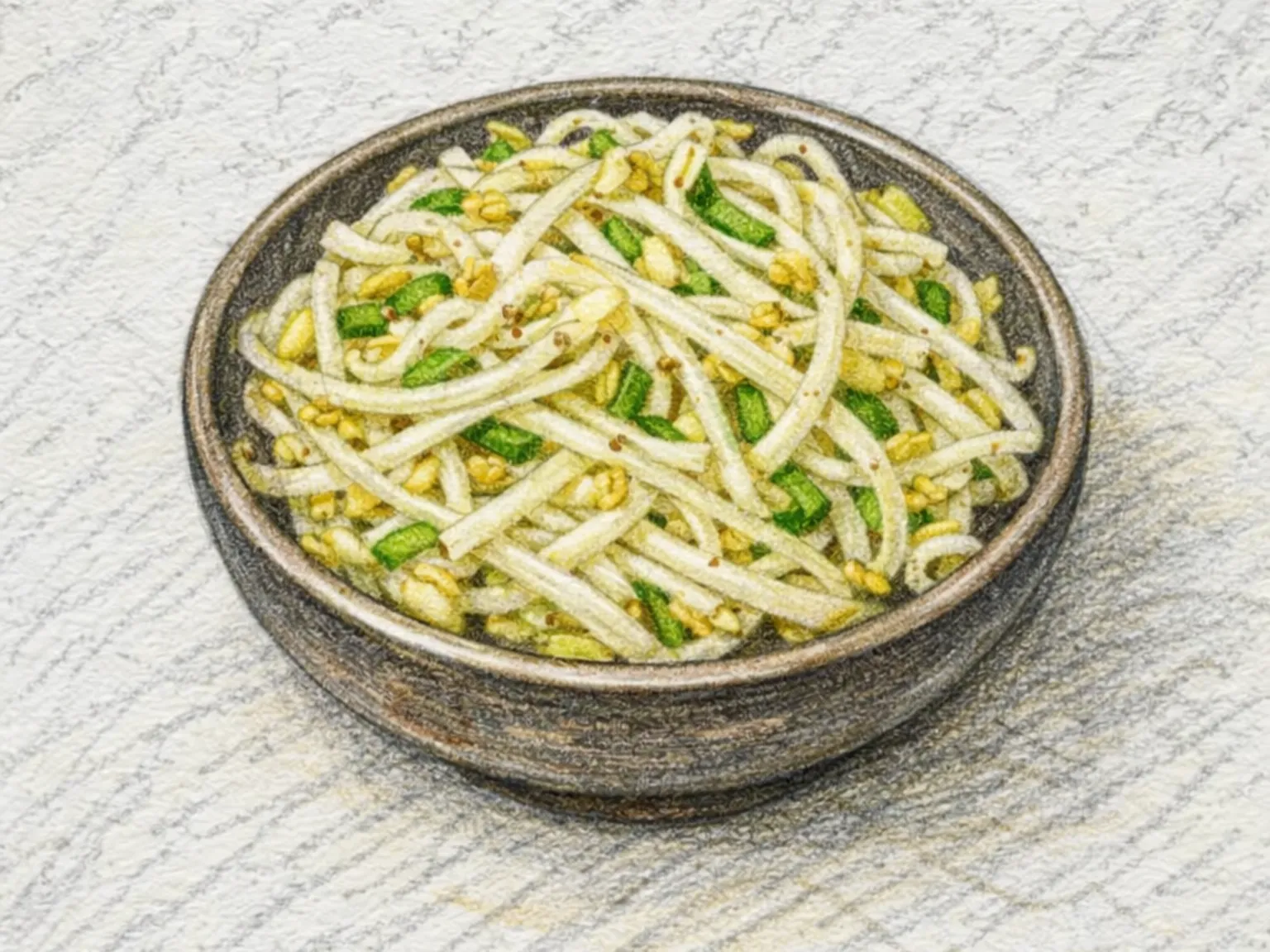
Mung bean sprouts are blanched briefly in boiling water and dressed with sesame oil, salt, garlic, and toasted sesame seeds to produce one of the cleanest-tasting namul dishes on the Korean table. The blanching window is narrow: thirty seconds is enough to soften the raw edge while keeping the stems crunchy from tip to tail. Plunging the sprouts into cold water immediately halts the cooking and preserves their pale, translucent appearance. Salt draws out the sprouts' mild natural sweetness, and sesame oil wraps each strand in a thin, fragrant coat that makes the mouthfeel smooth without adding weight. Garlic is used sparingly so it accents rather than dominates the sprouts' delicate flavor. Toasted sesame seeds contribute a nutty depth that elevates the otherwise minimal seasoning. Thorough squeezing removes the water trapped between the tangled sprouts, ensuring the dressing clings rather than pools at the bottom of the bowl. Gentle hand-mixing prevents the fragile sprouts from bruising.

Prep 5min Cook 5min 4 servings

Adjust Servings

2servings
servings

Instructions

  1. 1

    Trim the tails of mung bean sprouts, rinse, and drain.

  2. 2

    Blanch sprouts in boiling salted water for 30 seconds.

  3. 3

    Rinse in cold water and squeeze out excess moisture.

  4. 4

    Toss sprouts with minced garlic, salt, and sesame oil in a bowl.

  5. 5

    Top with sliced green onion and sesame seeds before serving.

🛒Shop Ingredients on Amazon

As an Amazon Associate, we may earn from qualifying purchases.

Tips

Do not blanch for more than 30 seconds or the sprouts will become mushy.
Squeeze out moisture thoroughly so the seasoning sticks and the dish stays dry.

Nutrition (per serving)

Calories
55
kcal
Protein
3
g
Carbs
5
g
Fat
3
g

More Recipes

Korean Seasoned Carrot Namul
Side dishesEasy

Korean Seasoned Carrot Namul

Carrot namul is one of the five-color banchan Koreans prepare for ancestral rites, where orange represents fire. Julienned thin, the carrots are salted briefly to shed water, then stir-fried with garlic for two to three minutes - just enough to soften the raw edge while keeping an audible crunch. No soy sauce or chili enters the pan; seasoning stays minimal to preserve natural sweetness. A final toss with sesame oil and seeds rounds out this clean, single-ingredient side.

🏠 Everyday🍱 Lunchbox
Prep 8minCook 6min2 servings
Korean Seasoned Bean Sprouts
Side dishesEasy

Korean Seasoned Bean Sprouts

Kongnamul-muchim is arguably the most frequently served banchan on Korean family tables - boiled soybean sprouts dressed simply with sesame oil, garlic, and salt. The famous never-open-the-lid rule during cooking has a biochemical basis: the lipoxygenase enzyme in soybeans activates during early heating and produces the raw-bean off-odor. Keeping the lid sealed maintains a full boil at 100 degrees Celsius, which rapidly deactivates the enzyme. Three minutes of covered boiling is the standard. Cold water rinse after cooking halts carryover heat, preserving the crisp stem texture, and thorough squeezing prevents the dressing from becoming watery. Adding gochugaru creates the spicy red version; omitting it yields the white baek-kongnamul variant. This namul is one of the mandatory components of bibimbap and is particularly associated with Jeonju, where kongnamul-gukbap (sprout rice soup) and bibimbap together define the city's culinary identity.

🏠 Everyday🍱 Lunchbox
Prep 5minCook 5min4 servings
Korean Stir-Fried Mung Bean Sprouts and Mushrooms
Side dishesEasy

Korean Stir-Fried Mung Bean Sprouts and Mushrooms

Mung bean sprouts and oyster mushrooms are tossed together in a hot pan for a stir-fry that contrasts the sprouts' crisp snap with the mushrooms' tender chew. Speed is critical: the sprouts lose their crunch within seconds of overcooking, so the entire process finishes in under a minute once the ingredients hit the oil. Tearing the oyster mushrooms along their natural grain rather than chopping them exposes more surface area, allowing the seasoning to penetrate each strand. Soup soy sauce seasons the dish with depth while keeping the color clean and light, and minced garlic and sliced green onion provide an aromatic backbone that fills the kitchen as the pan sizzles. Sesame oil is added just before removing from heat so its fragrance survives intact, and a scattering of toasted sesame seeds supplies a nutty accent. Both ingredients release significant moisture, so either salting them briefly beforehand or ensuring the pan is blazing hot prevents the stir-fry from turning soggy.

🏠 Everyday🍱 Lunchbox
Prep 12minCook 8min4 servings
Korean Stir-Fried Soybean Sprouts
Side dishesEasy

Korean Stir-Fried Soybean Sprouts

Kongnamul-bokkeum is stir-fried soybean sprouts cooked over high heat for a result that differs fundamentally from the blanched-and-dressed kongnamul-muchim. While the muchim version is cold and gentle, the bokkeum version introduces direct contact with a hot oiled pan, creating a faint wok char on the sprout surfaces. The critical rule is to never cover the pan - trapped steam converts the stir-fry into a boiled dish and locks in the raw bean smell that proper cooking should eliminate. Garlic goes into the oil first for twenty seconds to build an aromatic foundation, then the sprouts are tossed for no more than two minutes on high heat to preserve their crunch. Soup soy sauce (gukganjang) seasons more lightly and keeps the color clean compared to regular soy sauce. When a bag of bean sprouts is the only vegetable in the refrigerator, this five-minute banchan is the pragmatic answer.

🏠 Everyday🍱 Lunchbox
Prep 8minCook 7min2 servings
Korean Steamed Soybean Sprouts
SteamedEasy

Korean Steamed Soybean Sprouts

Kongnamul-jjim is a Korean steamed bean sprout dish cooked covered with gochugaru, soy sauce, and minced garlic. Keeping the lid on throughout cooking preserves the sprouts' characteristic crunch while allowing the seasoning to permeate evenly. The chili heat meets the sprouts' refreshing quality, leaving a clean aftertaste, and sesame oil with chopped scallions finish the dish with fragrance. Inexpensive and quick to prepare, this is a practical banchan that delivers reliable flavor when side dishes are needed in a hurry.

🥗 Light & Healthy🏠 Everyday
Prep 10minCook 10min2 servings
Korean Spicy Braised Tofu
Stir-fryEasy

Korean Spicy Braised Tofu

Spicy dubu-jorim pan-sears firm tofu slabs cut 1.5 centimeters thick until golden on both sides, then braises them in a sauce of soy sauce, gochugaru, garlic, and sugar. Searing first firms the tofu so it holds its shape through the eight-minute simmer, during which onion and green onion cook alongside in the reducing liquid. The chili flakes deliver a direct, persistent heat that penetrates the tofu as the sauce thickens, balanced by the sugar's sweetness. A final circle of sesame oil ties the flavors together with a roasted, nutty aroma.

🏠 Everyday🍱 Lunchbox
Prep 10minCook 15min2 servings
More Side dishes →