Korean Stir-fried Sundae (Sundae Bokkeum)
Quick answer
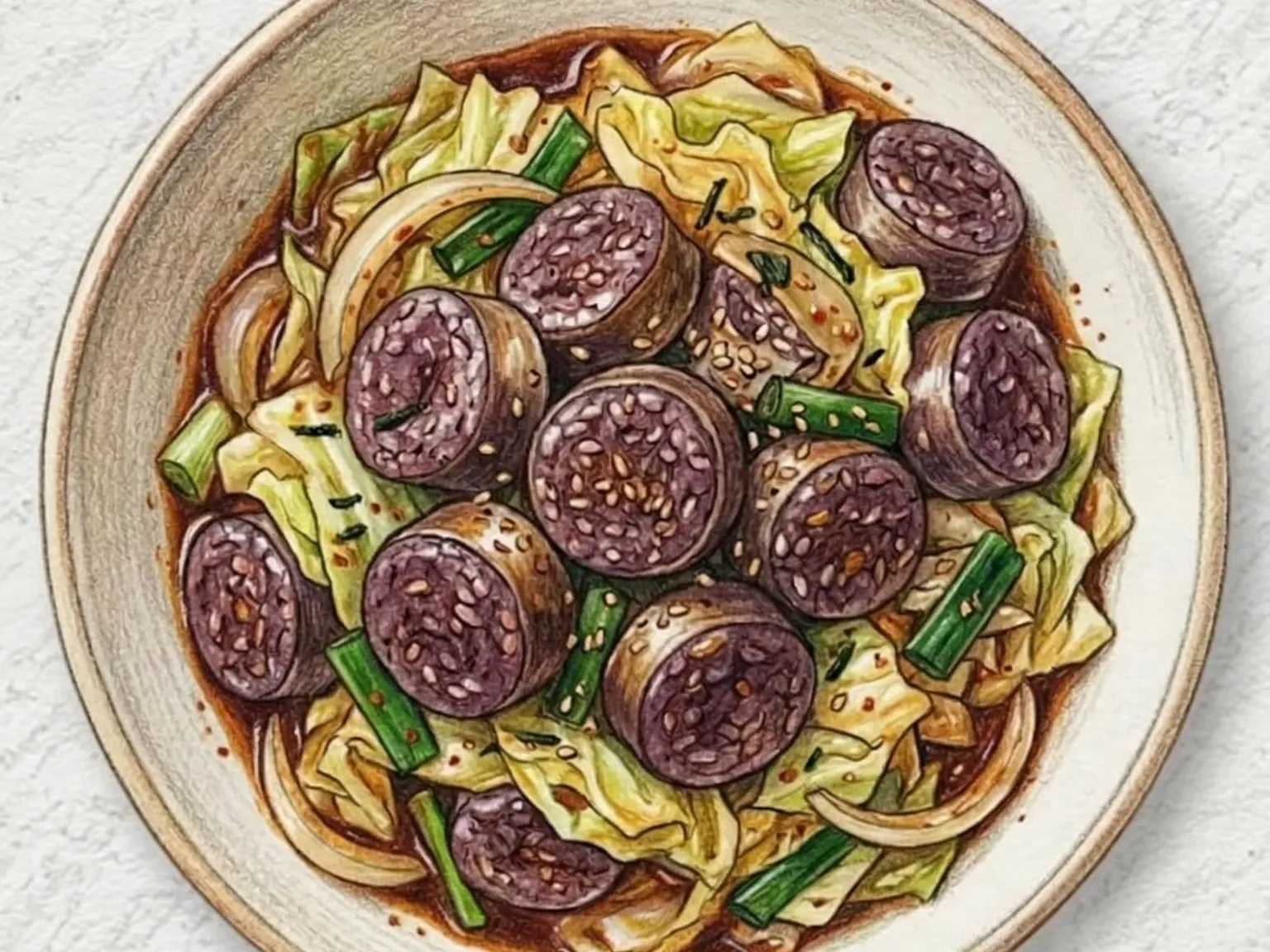
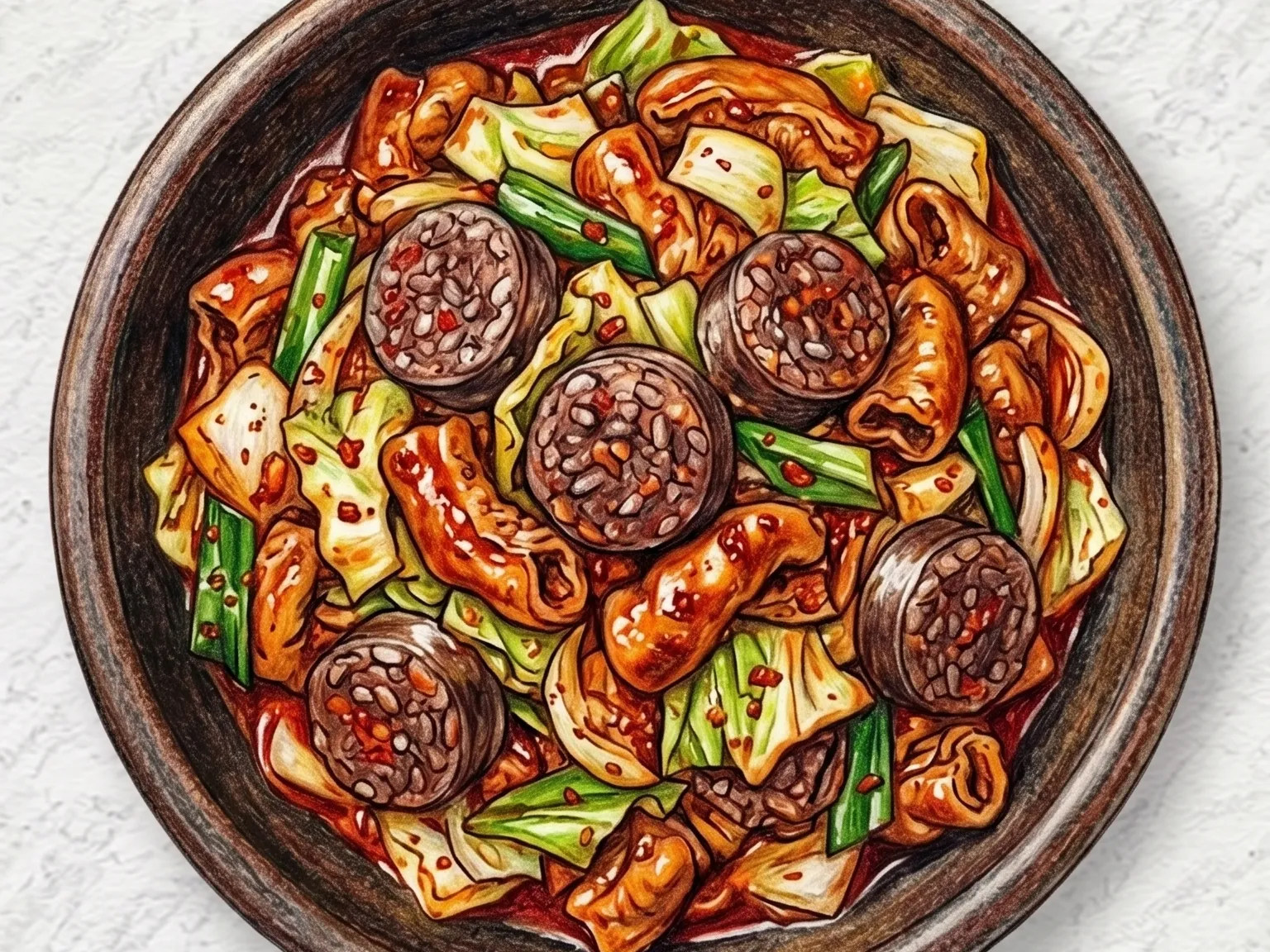
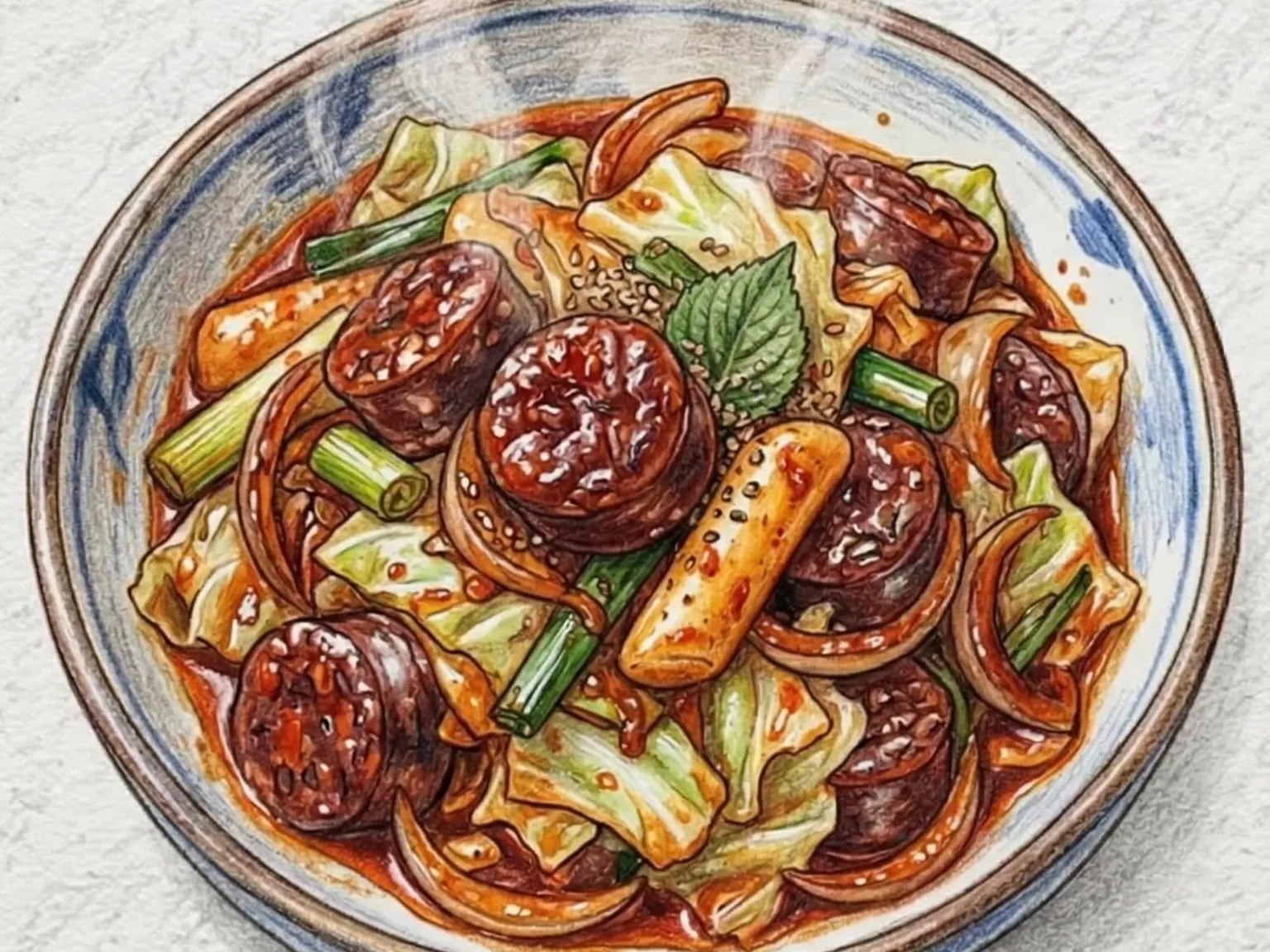
Sundae-bokkeum is a spicy Korean stir-fry of blood sausage with cabbage, onion, and green onion in a sauce made from gochujang, gochugaru, soy sauce, sugar, and garlic.
What makes this special
- Spicy stir-fried blood sausage with cabbage and onions delivers a savory, high-heat finish.
- High heat and fast stir-fry finishes the dish before soondae toughens
- Cabbage releasing moisture as it wilts spreads the sauce evenly
Key ingredients
Core cooking flow
- 1 Cut 300 g sundae into bite-size pieces that are not too thick, so they heat quickly without bursting.
- 2 Mix 1.5 tablespoons gochujang, 1 tablespoon gochugaru, 1 tablespoon soy sauc...
- 3 Heat a pan over high heat, then add 1 tablespoon cooking oil.
Sundae-bokkeum is a spicy Korean stir-fry of blood sausage with cabbage, onion, and green onion in a sauce made from gochujang, gochugaru, soy sauce, sugar, and garlic. High heat and a short cooking time are essential because prolonged stir-frying causes the sundae casing to burst and the filling to toughen, while the cabbage and onion release just enough moisture as they wilt to help the sauce coat every piece evenly. The seasoning stacks direct heat from gochujang, a gentler radiant warmth from gochugaru flakes, and sweetness from sugar into a multidimensional spicy-sweet profile. Green onion is held until the very last moment so its fragrance survives the heat; added earlier, the aroma disappears before the dish reaches the table. Adding tteokbokki rice cakes transforms the dish into the popular combo known as tteoksuni, and a layer of melted cheese on top rounds out the spice.
Instructions
Read the steps as a cooking flow: prep, heat, seasoning, doneness control, and finish.
- 1Finish
Cut 300 g sundae into bite-size pieces that are not too thick, so they heat quickly without bursting.
Cut 100 g cabbage, 1/2 onion, and 1 stalk green onion, keeping the green onion separate for the finish.
- 2Season
Mix 1.5 tablespoons gochujang, 1 tablespoon gochugaru, 1 tablespoon soy sauce, 0.5 tablespoon sugar, and 1 tablespoon minced garlic before cooking. Break up thick lumps now, because the stir-fry moves too quickly to fix the sauce later.
- 3Control
Heat a pan over high heat, then add 1 tablespoon cooking oil.
Add the onion and cabbage and stir-fry for about 2 minutes, just until the onion edges turn slightly translucent and the cabbage begins releasing moisture.
- 4Season
When the vegetables start to soften, add the sauce and stir-fry for about 30 seconds.
Keep tossing so the paste does not scorch, using the moisture from the cabbage and onion to loosen and spread the seasoning.
- 5Heat
Add the sundae and keep the heat high, stir-frying quickly for about 2 minutes.
Stop before the casings split open; the pieces should be hot through and evenly coated on the outside, not dry or tough.
- 6Finish
Just before turning off the heat, add the green onion and toss for only about 20 seconds.
Serve immediately while its aroma is still fresh, scraping up the sauce from the bottom of the pan onto the dish.
After the steps
Pick a recipe that fits this dish.
Continue with shared ingredients, meal pairings, or a similar method.
Recipes That Go Well With This
More Street food →Based on shared ingredients and meal pairing
Korean Stir-fried Sundae and Tripe
Sundae-gopchang-bokkeum is a bunsik-style stir-fry combining blanched beef tripe and Korean blood sausage (sundae) with cabbage, onion, and scallion in a gochujang-gochugaru sauce. The tripe is seared first for a lightly charred exterior, then the spicy sauce is built in the pan before vegetables are added. Sundae goes in last and cooks briefly to prevent the casing from splitting. Each component brings a distinct texture - springy tripe, dense chewy sundae, and sweet crunchy cabbage - unified by the bold, spicy coating.
Korean Stir-fried Sundae with Vegetables
Sundae yachae bokkeum stir-fries Korean blood sausage with cabbage, onion, and scallion in a sauce of gochujang, soy sauce, and gochugaru. The vegetables go into the pan first to drive off excess water so the sauce clings better, while the sundae is added later to keep its casing intact and its filling dense and chewy. The combined seasoning creates a spicy-salty glaze that coats the sundae slices evenly. Compared to sundae-gopchang-bokkeum, this version skips the tripe and leans heavier on vegetables, making it a lighter take on the same street food flavor.
Korean Mugwort Latte (Herbal Mugwort Condensed Milk Drink)
Ssuk latte is a Korean mugwort milk drink built on a simple technique: mugwort powder is first dissolved in a small amount of water to form a smooth paste before being whisked into warm milk. Adding the powder directly to cold milk tends to produce lumps, so dissolving it into a paste first is the step that determines whether the finished drink is silky or gritty. Condensed milk and honey soften the herb's inherent bitterness, the quality that characterizes mugwort most distinctly, while a small pinch of salt sharpens the contrast between sweet and earthy and adds a layer of depth that sugar alone cannot provide. The milk is heated on medium-low heat until the surface begins to tremble and small bubbles appear at the edges, just before boiling, which is enough warmth for the powder to integrate fully and produce a uniform, jade-green color without scorching. Served hot, the drink carries a lingering herbal warmth and a faint bitter note in the back of the throat that traditional Korean drinks often feature. Served over ice and shaken, the same base transforms into a lighter, more refreshing version with a cleaner mouthfeel. Mugwort has been a seasonal spring ingredient in Korean food culture for centuries, valued for its distinctive fragrance and tonic properties. Those unfamiliar with the flavor can start with a smaller amount of powder and increase gradually until the intensity suits their taste.
Korean Blood Sausage Skewers
Soondae-kkochi are Korean blood sausage skewers threaded alternately with onion and green onion pieces, pan-grilled and glazed with a sauce made from gochujang, ketchup, oligosaccharide syrup, and soy sauce. Applying the glaze in two separate rounds rather than all at once is critical: the first coat caramelizes and sets, then a second layer is brushed on over low heat to build a glossy, deeply lacquered finish without burning. The sundae must be cooked slowly over low heat, rolling it gently so the casing does not split while the interior stays chewy throughout. Onion and scallion segments release their moisture on the grill, concentrating into a natural sweetness that balances the bold, iron-rich flavor of the sausage and provides a textural shift between bites. A scatter of toasted sesame seeds over the finished skewers adds a final layer of nutty fragrance.
Serve with this
Gotgam Cream Cheese Roll (Dried Persimmon Rolls)
Gotgam cream cheese roll is a no-cook Korean dessert that requires nothing more than a knife, a bowl, and a refrigerator. Dried persimmons are slit open and flattened into thin sheets, each one acting as the outer wrapper. The filling is cream cheese mixed with honey and fresh lemon juice to balance its natural richness with acidity, and finely chopped walnuts are folded in throughout to add a crunchy, nutty element to every bite. The filling is spread across the opened persimmon, which is then rolled tightly and wrapped in plastic wrap. Twenty minutes in the refrigerator firms the roll enough to slice cleanly. Dipping the knife in warm water and wiping it dry before each cut produces the smoothest cross-sections. The finished slices reveal clearly defined layers: the chewy, caramel-sweet dried persimmon on the outside, the tangy cream cheese in the middle, and flecks of walnut distributed throughout. The combination makes it a natural pairing with wine or a polished addition to a traditional holiday table.
Korean Spicy Stir-Fried Anchovies
Spicy stir-fried anchovies (maeun myeolchi-bokkeum) toss medium-sized dried anchovies in a gochujang-gochugaru glaze, occupying the opposite end of the flavor spectrum from the sweet jiri-myeolchi version and targeting adult palates. Medium anchovies are larger and thicker than the tiny variety, requiring individual head-and-gut removal to eliminate bitterness - a tedious prep step that nonetheless determines the dish's clean finish. After dry-toasting to drive off moisture, the anchovies simmer in a sauce of gochujang, gochugaru, soy sauce, oligosaccharide, and minced garlic until each piece is coated in a rust-colored glaze. The gochujang's fermented heat combines with gochugaru's vivid red to create both flavor depth and visual appeal. The larger anchovy size delivers a satisfying crunch that lingers alongside a lasting savory umami. Heat intensity is adjustable via gochugaru quantity - adding chopped cheongyang chili ratchets it up another notch. This banchan doubles as a soju drinking snack, appearing as frequently on bar tables as on dinner tables.
Korean Mussel Soup Noodles
Honghap tangmyeon is a mussel noodle soup where a generous quantity of mussels is simmered to produce a deeply briny, clear broth that serves as the foundation of the entire dish without the use of prepared stock. The mussels release their concentrated sea flavor directly into the pot, and this self-made broth is what distinguishes the dish from simpler seafood noodle soups. Korean radish is cooked alongside from the start, lending a natural sweetness and a refreshing clarity to the liquid as it breaks down gently. Soup soy sauce and cooking wine adjust the seasoning and temper the salt that the mussels contribute, pulling the flavor into balance. Minced garlic and green onion build an aromatic layer that keeps any fishiness in check, leaving only a clean, deep savoriness in its place. A generous crack of black pepper over the steaming bowl sharpens the marine character of the broth and warms the palate. The noodles should not be overcooked; they need enough bite to hold up against the rich, hot liquid. A few slices of cheongyang chili on top add a brisk heat that makes the broth feel simultaneously cool and fiery, the defining sensation of good Korean seafood soup.
Similar recipes
Korean Crispy Fried Sundae
Soondae-twigim is deep-fried Korean blood sausage, sliced thick and coated in a batter of frying mix blended with potato starch for extra crunch. A double-frying method is used: the first round at 170 degrees Celsius cooks the inside through, followed by a brief second fry at 185 degrees that hardens the crust to a shattering crispness while the interior stays chewy and moist. Patting the sundae surface dry before battering is essential so the coating adheres evenly and does not peel off in the oil. A light dusting of chili powder and a side of mustard add heat and a sharp tang that cuts through the richness.
Korean Spicy Tteok and Sundae Stir-Fry
Tteokbokki-sundae-bokkeum combines chewy rice cakes and Korean blood sausage in a spicy-sweet gochujang, soy sauce, and sugar sauce. The rice cakes are soaked first and then simmered in the sauce so the seasoning penetrates their dense, glutinous interior. Sundae is added near the end and stirred briefly to prevent the casing from bursting. Each bite alternates between the elastic pull of the rice cakes coated in red sauce and the heavier, starchy chew of the sundae filling - a recreation of the classic Korean street food pairing of tteokbokki and sundae in a single pan.
Korean Sausage Skewers
Sosiji kkochi are Korean sausage skewers made by scoring Vienna sausages deeply along their length and threading two or three onto wooden sticks, then pan-frying them until golden brown all over. The score marks serve a functional purpose: as the sausages heat, the cuts open up, allowing heat to penetrate to the center more evenly and creating edges that caramelize slightly and turn crisp. A thin film of oil in a medium-heat pan and steady rotation ensures even color across the entire surface, producing a skin that snaps on the outside while the inside stays juicy and springy. Ketchup and mustard are the classic accompaniments, with the tomato sweetness and the sharp, pungent bite of the mustard complementing the salt and fat of the sausage. Threading rice cakes between the sausage pieces transforms the skewer into a sotteok-sotteok style, a widely popular Korean street food variation. The dish comes together in under fifteen minutes and requires no special equipment beyond a pan and wooden skewers, making it a practical choice for a quick snack, a children's side dish, or a lunchbox item that holds up well at room temperature.