Korean Blood Sausage Perilla Stew
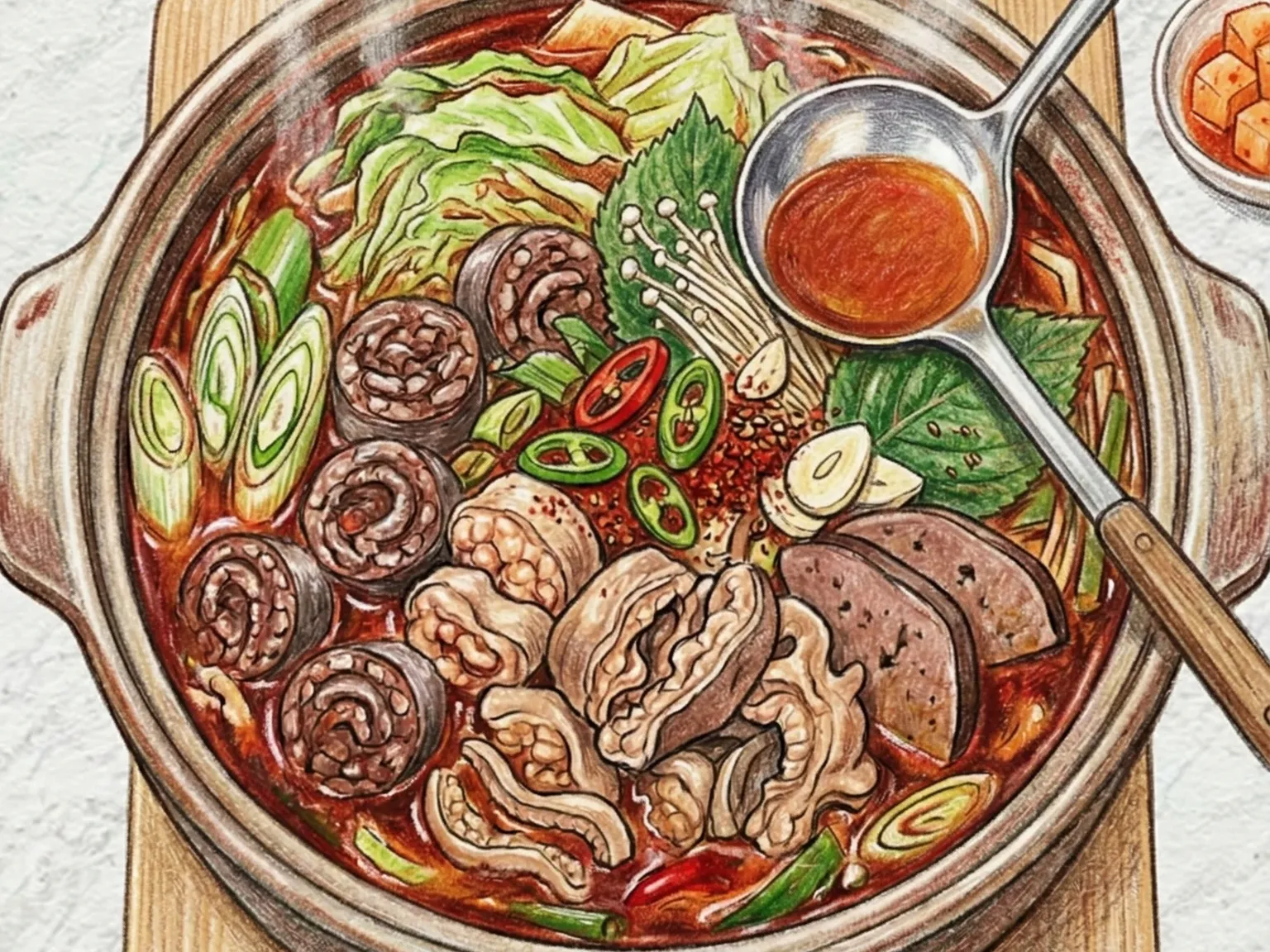
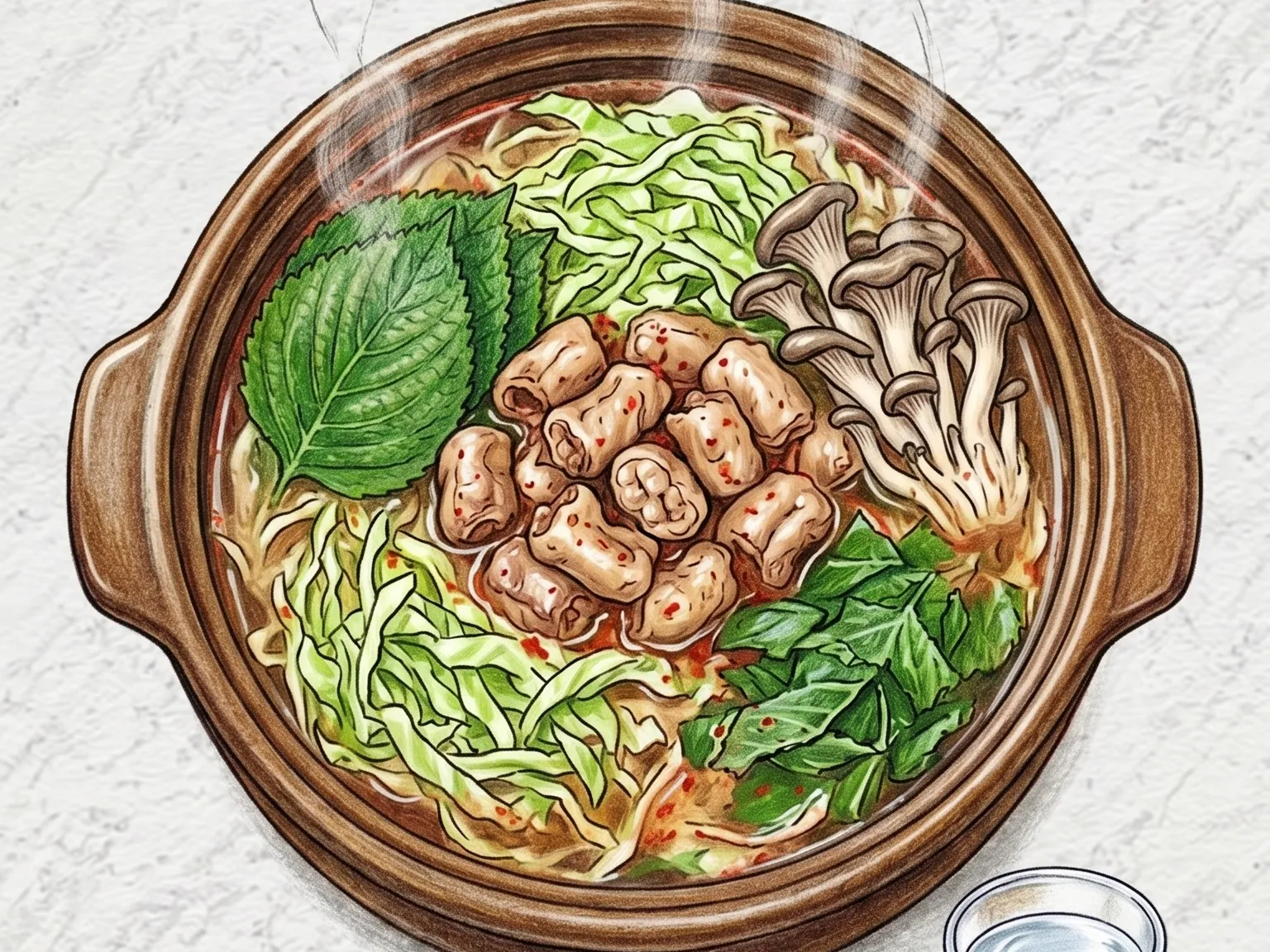
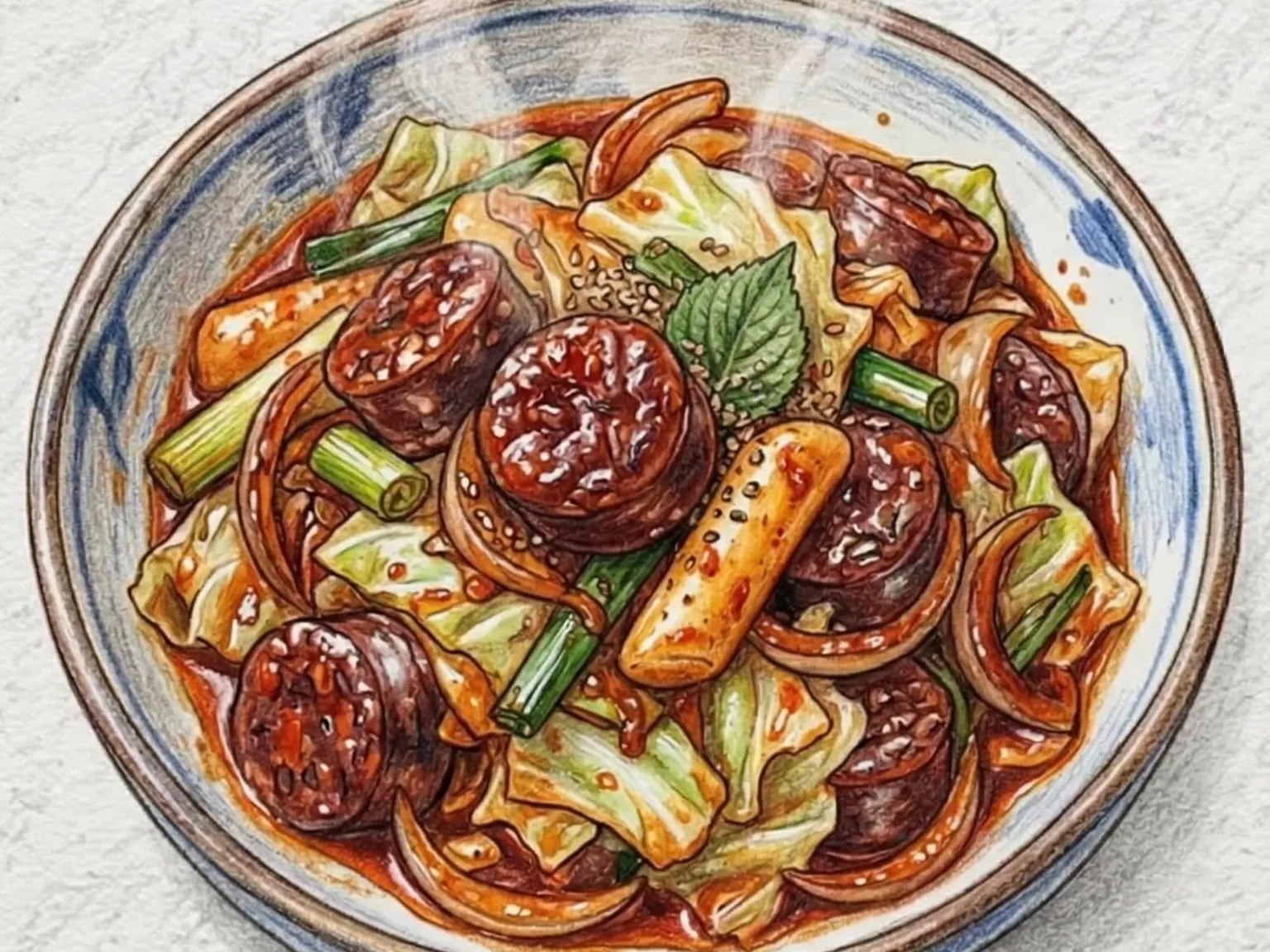
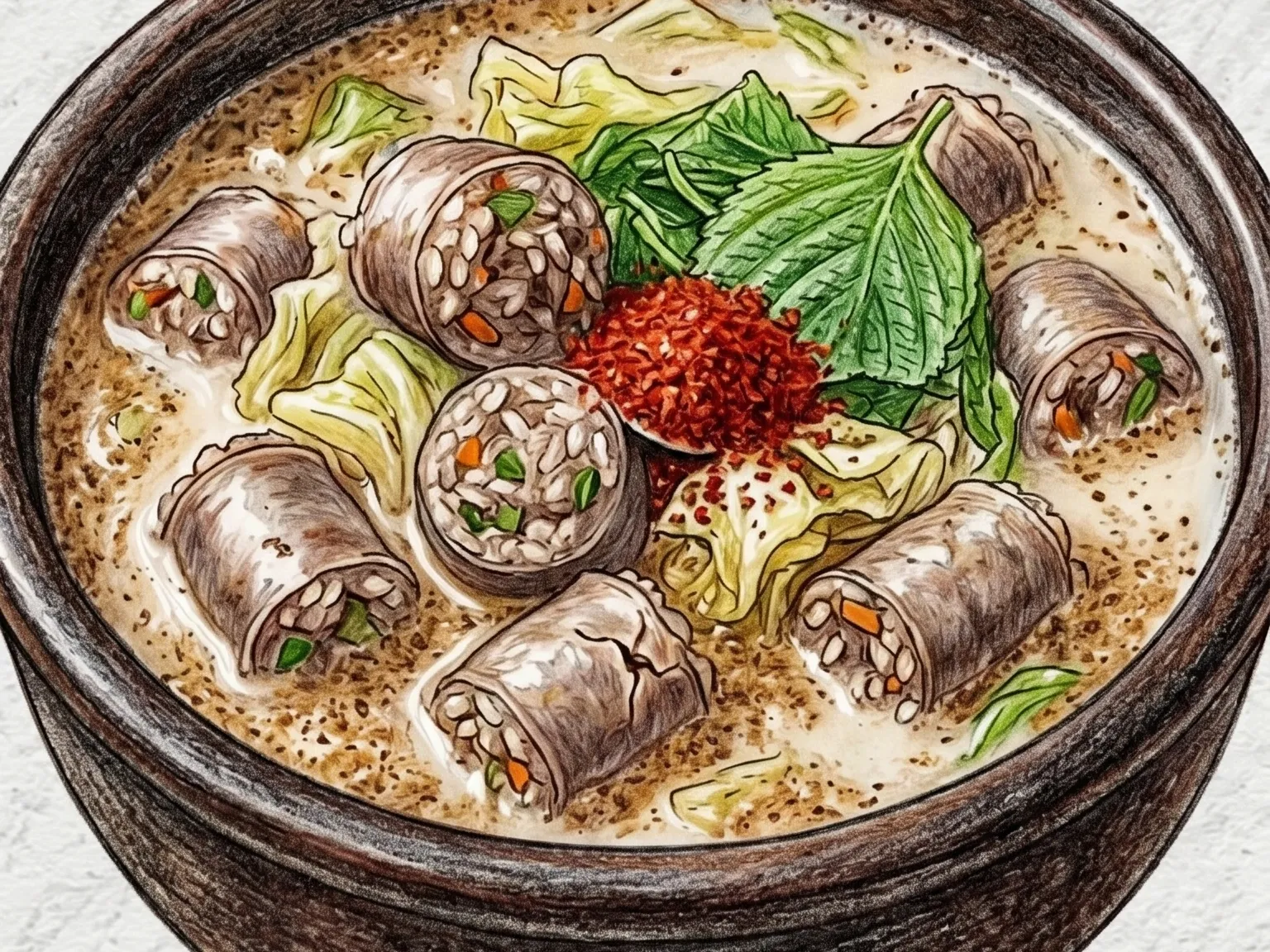
This stew simmers Korean blood sausage in a beef bone broth enriched with ground perilla seed. The chewy casing and savory stuffing of the sundae blend with the nutty richness of the perilla to create a distinctive flavor profile. Cabbage and perilla leaves cut through the richness, while a spoonful of gochugaru adds mild heat. Built on a beef bone broth base, the stew has a notably heavy, full-bodied character.
Adjust Servings
Instructions
- 1
Slice sundae into 2 cm rounds, chop cabbage, and shred perilla leaves.
- 2
Simmer beef bone broth with cabbage over medium heat for 8 minutes.
- 3
Season with garlic, chili flakes, and soup soy sauce.
- 4
Add sundae and gently simmer 6 minutes until heated through.
- 5
Stir in perilla powder, add green onion and perilla leaves, and simmer 2 minutes.
As an Amazon Associate, we may earn from qualifying purchases.
Tips
Nutrition (per serving)
More Recipes

Korean Blood Sausage Hot Pot
This spicy hot pot features Korean blood sausage with cabbage, perilla leaves, and onion in a chili-seasoned beef bone broth. The sundae absorbs the broth and becomes even chewier, while a touch of doenjang adds fermented depth. Cabbage releases sweetness as it wilts, and the perilla leaves provide an herbal accent. The combination of rich bone broth and fiery gochugaru makes this a communal dish suited for cold weather gatherings.

Korean Perilla Seed and Potato Stew
A comforting potato jjigae enriched with ground perilla seeds, which give the broth a nutty thickness reminiscent of a light porridge. Potatoes and zucchini simmer in anchovy stock until the potatoes begin to break down, naturally thickening the stew. Three tablespoons of perilla seed powder are stirred in to create the signature creamy, toasty flavor that defines this dish. Seasoned simply with soup soy sauce and garlic, it showcases how a few humble ingredients can produce a deeply satisfying meal.

Korean Ssuk Deulkkae Jjigae (Mugwort Perilla Stew)
This seasonal stew highlights fresh mugwort simmered with perilla seed powder in a rice-rinse water base. The perilla powder gives the broth a creamy, nutty thickness, while the mugwort's slightly bitter herbaceous aroma floats through gently. Potato breaks down to add heartiness, and oyster mushrooms and firm tofu provide textural variety. Seasoned lightly with soup soy sauce, it is a springtime specialty that captures the taste of the season.

Korean Turnip Perilla Seed Stew
This gentle stew simmers turnip with ground perilla seed in a kelp stock base. As the turnip cooks, it turns soft and releases a mild sweetness that the perilla powder wraps in a creamy, nutty layer. Oyster mushrooms add a chewy bite, and soft tofu brings protein to the bowl. Seasoned with soup soy sauce and a drizzle of sesame oil, it is a soothing stew with a clean, understated depth of flavor.

Korean Blood Sausage Soup
Sundae-guk is a hearty soup built on a long-simmered pork bone broth that turns milky white from hours of boiling. Thick slices of Korean blood sausage - pork intestine casing stuffed with glass noodles, barley, and pig's blood - sit in the center of the bowl, their chewy casing absorbing the hot broth while the dense filling inside stays warm and soft. Alongside the sundae, slices of boiled pork shoulder and, in more traditional versions, offal like liver or lung add variety in texture and a faint mineral note. The broth itself is rich yet surprisingly clean, seasoned at the table with either salted shrimp paste or coarse salt depending on the diner's preference. Stirring in a spoonful of dadaegi, a thick chili paste condiment, transforms the bowl entirely, cutting through the richness with a sharp heat. Some shops finish the soup with ground perilla seeds for added nuttiness. Rice is spooned directly into the bowl and eaten together with the broth, making sundae-guk one of the most satisfying cold-weather meals in the Korean street-food tradition.

Korean Pork Bone Hangover Soup
Ppyeo-haejang-guk is a Korean hangover soup built on a foundation of pork neck bones simmered for well over an hour until their collagen dissolves into a heavy, full-bodied stock. The bones are soaked and blanched beforehand to eliminate any off-flavors, and the resulting broth is clean despite its richness. Blanched napa cabbage outer leaves are pre-seasoned with doenjang, gochugaru, garlic, and soup soy sauce before being added to the pot, where they absorb the meaty broth and release their own earthy flavors in return. Perilla seed powder is stirred in at the end, thickening the liquid to a creamy consistency and adding a nutty finish. The completed soup is spicy, deeply savory, and thick enough to feel restorative after a long night. In Korea, this style of haejang-guk is a morning-after institution, served steaming in dedicated restaurants that open before dawn.