Korean Stir-fried Sundae with Vegetables
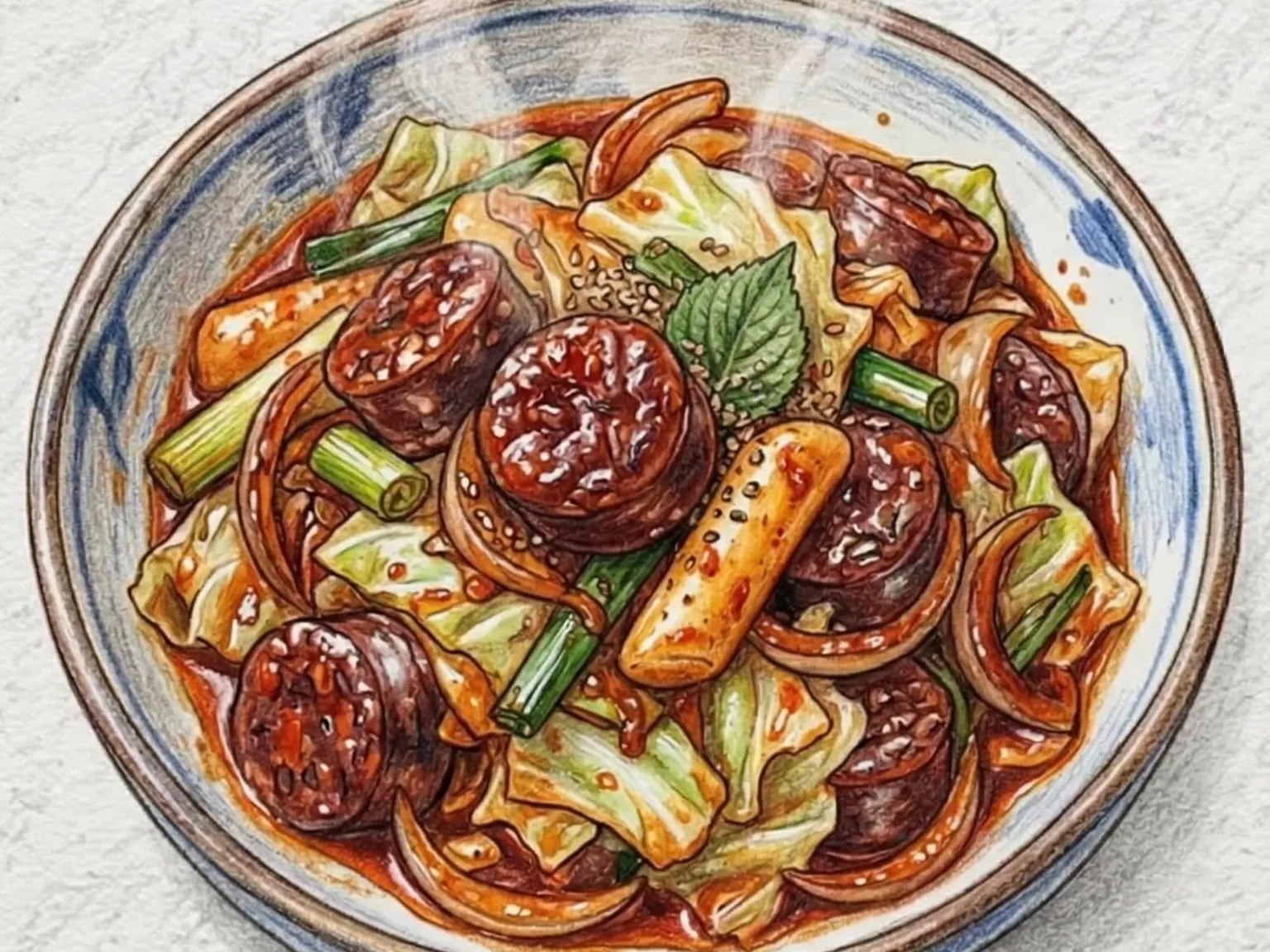
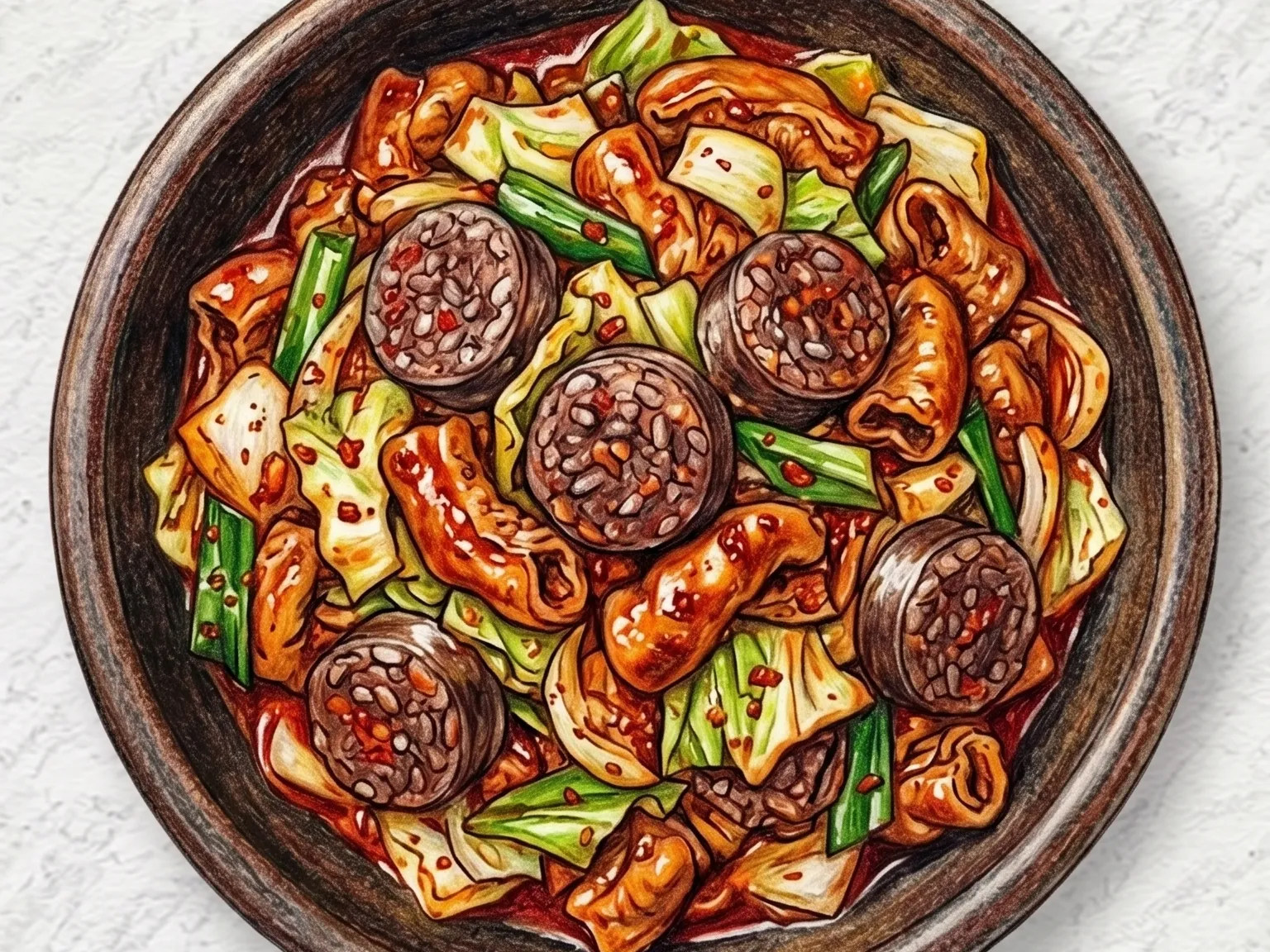
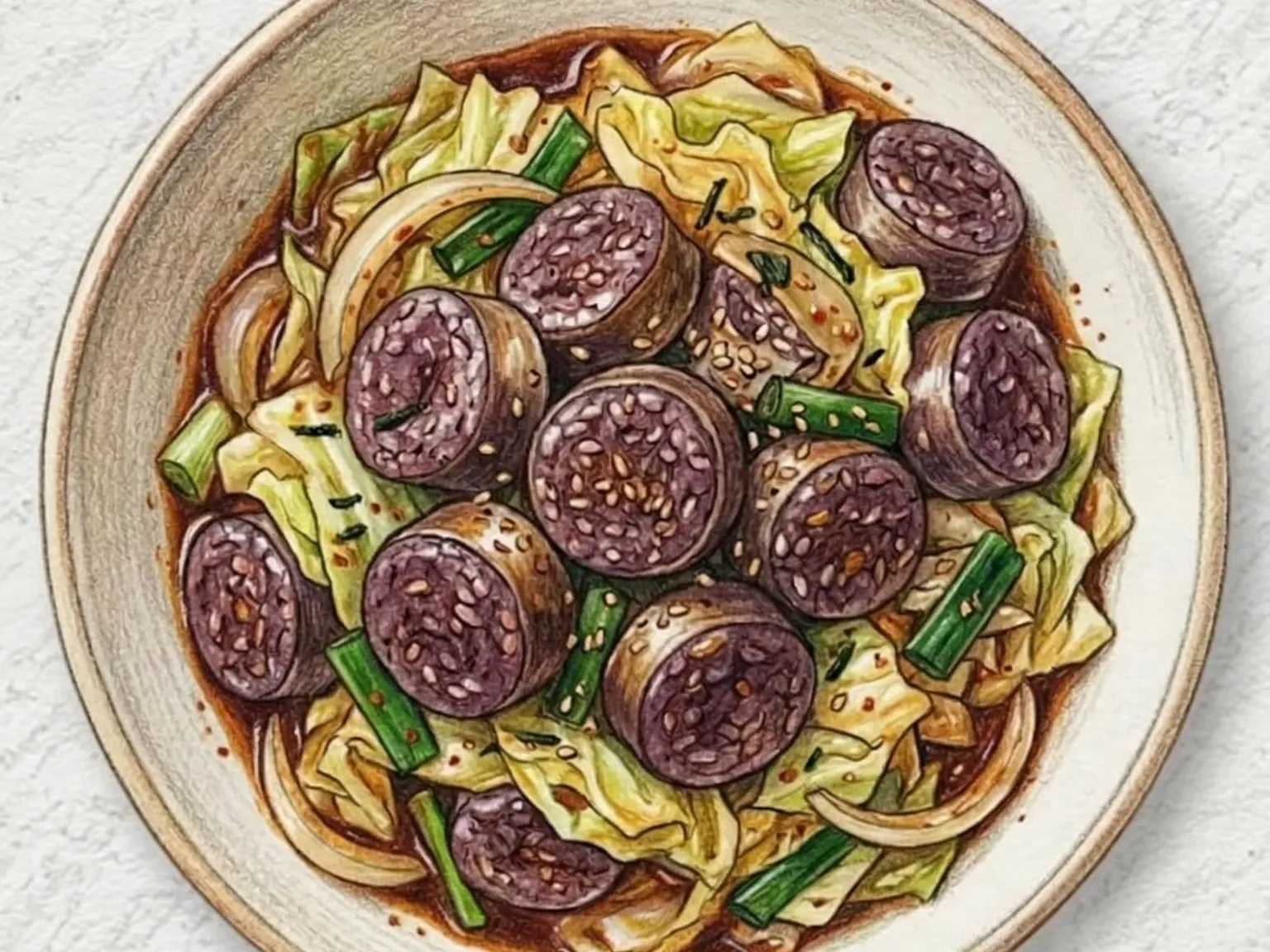
Sundae yachae bokkeum stir-fries Korean blood sausage with cabbage, onion, and scallion in a sauce of gochujang, soy sauce, and gochugaru. The vegetables go into the pan first to drive off excess water so the sauce clings better, while the sundae is added later to keep its casing intact and its filling dense and chewy. The combined seasoning creates a spicy-salty glaze that coats the sundae slices evenly. Compared to sundae-gopchang-bokkeum, this version skips the tripe and leans heavier on vegetables, making it a lighter take on the same street food flavor.
Adjust Servings
Instructions
- 1
Slice sundae and cut vegetables into bite-size pieces.
- 2
Mix gochujang, soy sauce, and gochugaru for sauce.
- 3
Stir-fry cabbage and onion in oil first.
- 4
Add sundae and sauce, then stir-fry over medium heat.
- 5
Finish with scallion and cook 1 more minute.
As an Amazon Associate, we may earn from qualifying purchases.
Tips
Nutrition (per serving)
More Recipes

Korean Stir-fried Sundae (Sundae Bokkeum)
Sundae-bokkeum is a spicy Korean stir-fry of blood sausage with cabbage, onion, and green onion in a sauce made from gochujang, gochugaru, soy sauce, sugar, and garlic. High heat and a short cooking time are essential because prolonged stir-frying toughens the sundae, while the cabbage and onion release enough moisture to help the sauce coat every piece evenly. The seasoning layers direct heat from gochujang, a gentler warmth from gochugaru flakes, and sweetness from sugar into a multidimensional spicy-sweet profile. Green onion goes in last for a burst of fragrance, and adding tteokbokki rice cakes transforms the dish into the popular combo known as tteoksuni.

Korean Stir-fried Sundae and Tripe
Sundae-gopchang-bokkeum is a bunsik-style stir-fry combining blanched beef tripe and Korean blood sausage (sundae) with cabbage, onion, and scallion in a gochujang-gochugaru sauce. The tripe is seared first for a lightly charred exterior, then the spicy sauce is built in the pan before vegetables are added. Sundae goes in last and cooks briefly to prevent the casing from splitting. Each component brings a distinct texture - springy tripe, dense chewy sundae, and sweet crunchy cabbage - unified by the bold, spicy coating.

Korean Spicy Tteok and Sundae Stir-Fry
Tteokbokki-sundae-bokkeum combines chewy rice cakes and Korean blood sausage in a spicy-sweet gochujang, soy sauce, and sugar sauce. The rice cakes are soaked first and then simmered in the sauce so the seasoning penetrates their dense, glutinous interior. Sundae is added near the end and stirred briefly to prevent the casing from bursting. Each bite alternates between the elastic pull of the rice cakes coated in red sauce and the heavier, starchy chew of the sundae filling - a recreation of the classic Korean street food pairing of tteokbokki and sundae in a single pan.

Korean Stir-fried Fish Cake with Vegetables
Eomuk-yachae-bokkeum is a Korean stir-fry of fish cake sheets with onions, carrots, and bell peppers in a soy-based glaze. The chewy fish cake contrasts with the crisp vegetables, delivering varied textures in every bite. Soy sauce and oligosaccharide syrup create a lightly sweet and salty coating that clings to each piece. The entire dish cooks in under ten minutes, making it a go-to option for packed lunches or quick weeknight sides.

Korean Blood Sausage Skewers
Soondae-kkochi are Korean blood sausage skewers threaded alternately with onion and green onion pieces, then pan-grilled and glazed with a gochujang-ketchup sauce. The glaze gains depth from oligosaccharide syrup and soy sauce, and is brushed on in two rounds to build a glossy, caramelized coating without burning. The sundae must be cooked slowly over low heat, rolling it gently to prevent the casing from bursting while keeping the interior chewy. The onion and scallion segments soften and sweeten as they grill, providing contrast between the bites of sundae.

Korean Spicy Whelk Stir-fry
Golbaengi bokkeum is a Korean spicy whelk stir-fry that combines canned whelk with a sauce of gochujang, gochugaru, vinegar, and sugar. The whelk's firm, chewy texture is central to the dish, so cooking time is kept to just 2 to 3 minutes to prevent toughness. Vinegar adds a tangy brightness that balances the chili heat. Julienned cucumber, onion, and scallion are tossed in off the heat to maintain their crunch and freshness. Served alongside thin wheat noodles or glass noodles, it transitions easily from a banchan into a popular drinking snack.