Korean Silken Tofu Seafood Stew
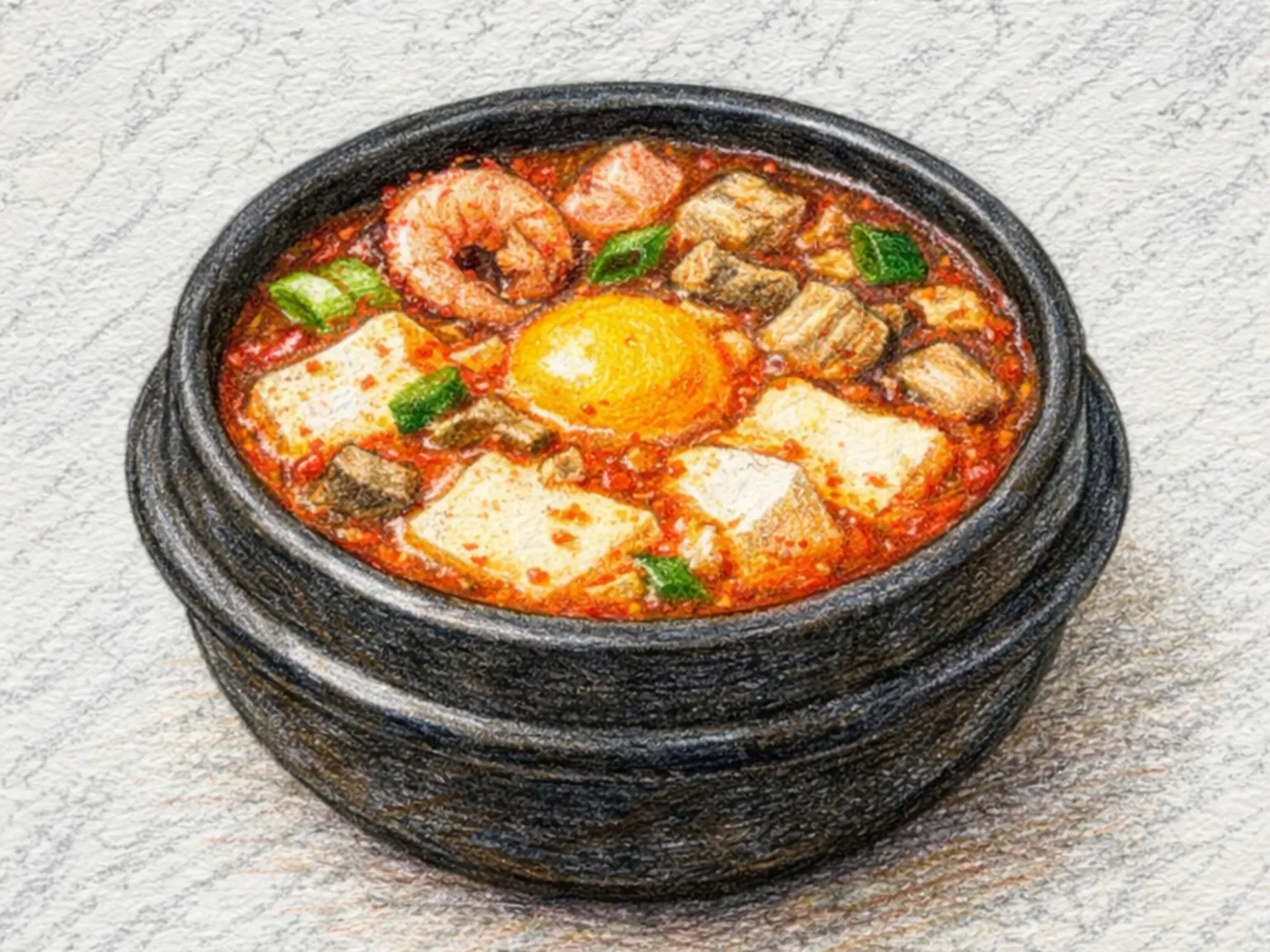
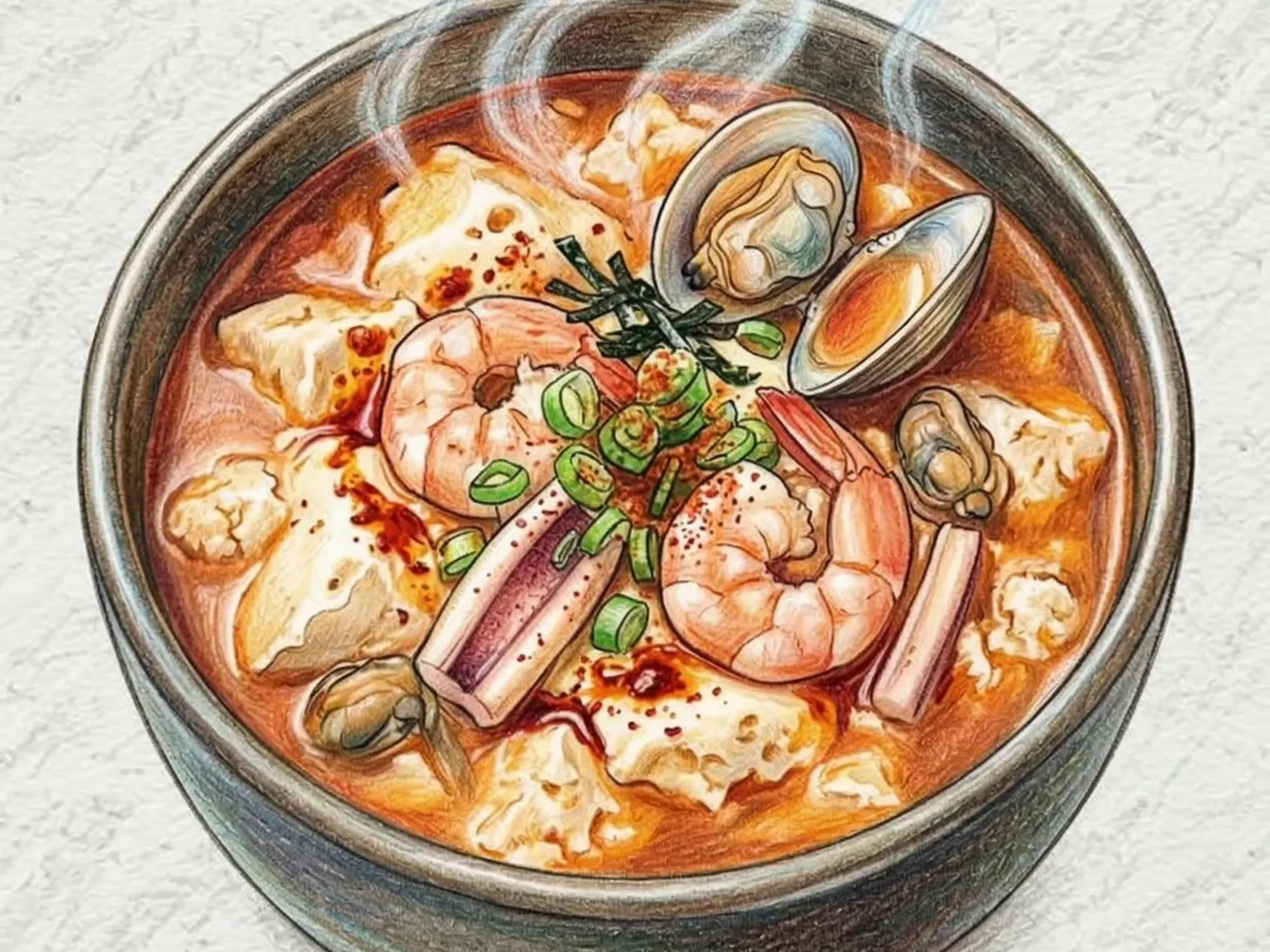
This seafood soft tofu stew combines silken tofu with shrimp and Manila clams in an anchovy stock seasoned with gochujang and Korean chili flakes. The aromatics are first sauteed in sesame oil to build flavor before the stock is added. The shellfish release their briny juices into the spicy broth, and a cracked egg stirred in at the end adds richness. It is a widely loved Korean stew that delivers both oceanic depth and bold spice.
Adjust Servings
Instructions
- 1
In an earthenware pot, sauté sesame oil, garlic, and chili flakes.
- 2
Add anchovy stock; season with gochujang and soup soy sauce.
- 3
Add clams and shrimp; bring to a boil.
- 4
Add silken tofu in large spoonfuls.
- 5
Crack an egg in and cook to desired doneness.
As an Amazon Associate, we may earn from qualifying purchases.
Tips
Nutrition (per serving)
More Recipes

Korean Seafood Doenjang Stew
Haemul doenjang jjigae elevates the classic soybean paste stew by adding clams and shrimp. The clams open during cooking and release their clear, briny liquor into the doenjang-seasoned kelp and anchovy broth. Shrimp add another layer of seafood flavor. Tofu and zucchini provide familiar textures that soak up the enriched broth. The seafood transforms what is already a staple Korean stew into something noticeably more complex.

Korean Seafood Stew (Shrimp, Squid & Clam Spicy Pot)
Haemul jjigae is a spicy Korean seafood stew loaded with shrimp, squid, and clams simmered in a broth seasoned with gochugaru and gochujang. Cubed tofu and sliced zucchini absorb the rich shellfish-infused liquid, adding substance to every spoonful. The clams release a briny sweetness that balances the heat from Korean chili peppers and red pepper flakes. Served bubbling in a stone pot with green onion scattered on top, it pairs naturally with steamed white rice.

Korean Soybean Sprout Stew
This spicy stew features soybean sprouts as the star, with tofu and optional pork in a broth seasoned with Korean chili flakes and soup soy sauce. The sprouts release a clean, refreshing liquid that balances the heat of the gochugaru. Tofu soaks up the broth and provides a soft contrast, while the pork adds savory depth. Finished with green onion and minced garlic, it is a straightforward home-style stew known as a hangover remedy.

Korean Clear Broth Tofu Stew
Tofu simmers in a deep beef stock alongside shiitake mushrooms and zucchini in this clean-flavored stew. The quality of the beef stock drives the entire dish, with shiitake mushrooms reinforcing the umami depth. Soft tofu cubes absorb the rich broth, while zucchini contributes a mild sweetness. Seasoned only with soup soy sauce and salt, this stew showcases a restrained, elegant approach to Korean jjigae without any chili heat.

Korean Soft Tofu Stew Rice Bowl
Fiery soft-tofu stew is cooked until bubbling and poured directly over a bowl of rice so the spicy broth seeps into every grain. The silky tofu breaks apart gently, creating pockets of creamy texture within the chili-laced soup. Cracking a raw egg into the simmering pot softens the heat and adds body to the broth. Variations with shrimp, clams, or pork each shift the base flavor in a different direction, making this a versatile single-bowl meal.

Korean Soft Tofu Soup (Mild Clear Broth with Silken Tofu)
Sundubu-guk is the gentler sibling of the more widely known sundubu-jjigae, trading the latter's fiery red broth for a clear, mild soup that puts silken tofu front and center. The base is a simple anchovy and kelp stock, seasoned with soup soy sauce and nothing more assertive, so the broth stays transparent and clean on the palate. Blocks of unpressed soft tofu are slipped into the simmering liquid and heated just until they are warmed through - overcooked sundubu loses the trembling, custard-like texture that defines the dish. Each spoonful collapses gently on the tongue, releasing a faint, sweet soybean flavor that pairs effortlessly with the umami-rich stock. A small addition of salted shrimp paste can be stirred in at the table to introduce a subtle marine depth without disrupting the soup's calm character. This is the soup Koreans turn to when appetite is low, digestion needs rest, or the body simply craves something warm and uncomplicated. It is equally suitable for young children and elderly diners, and its quiet simplicity is precisely its strength.