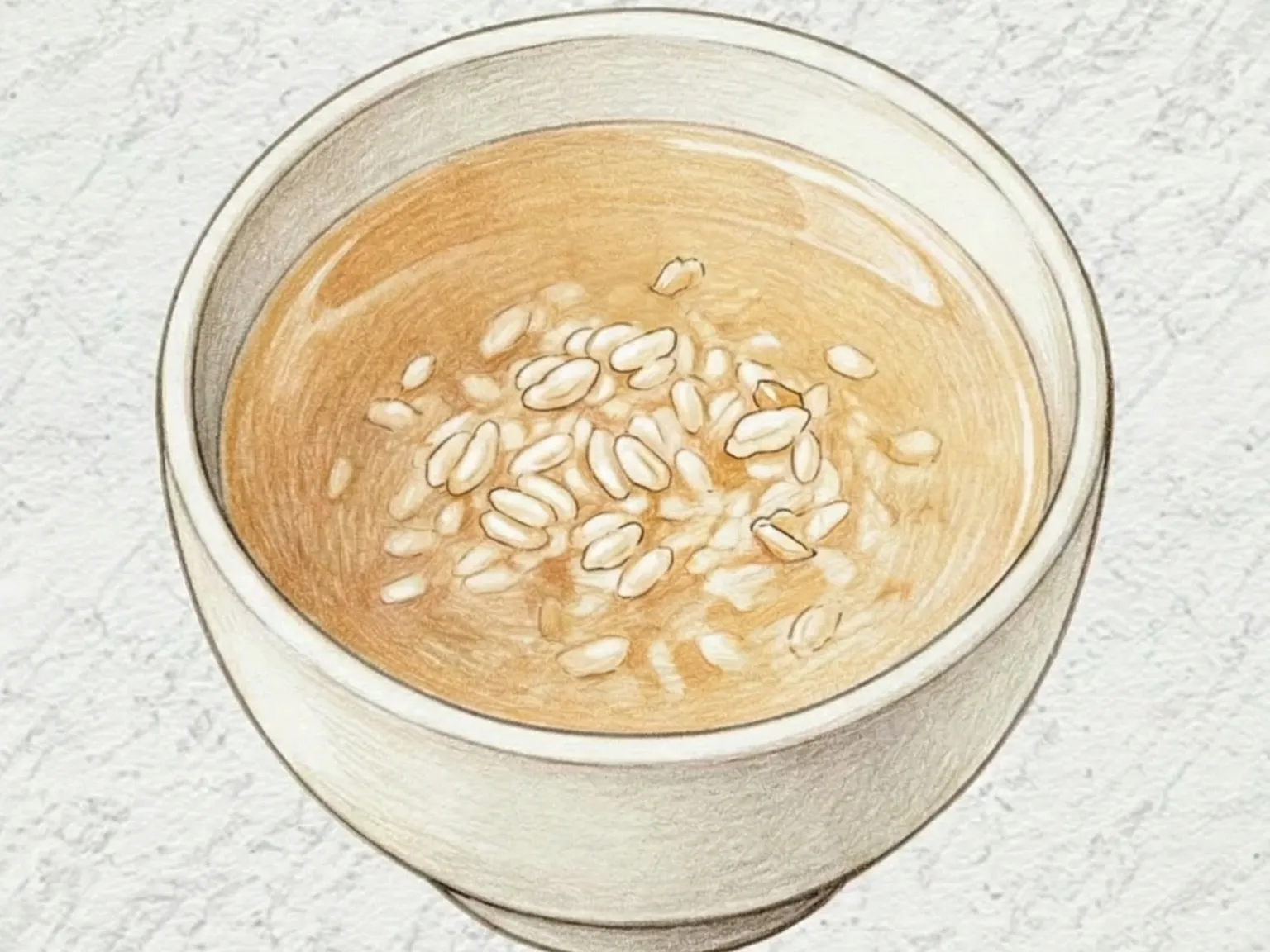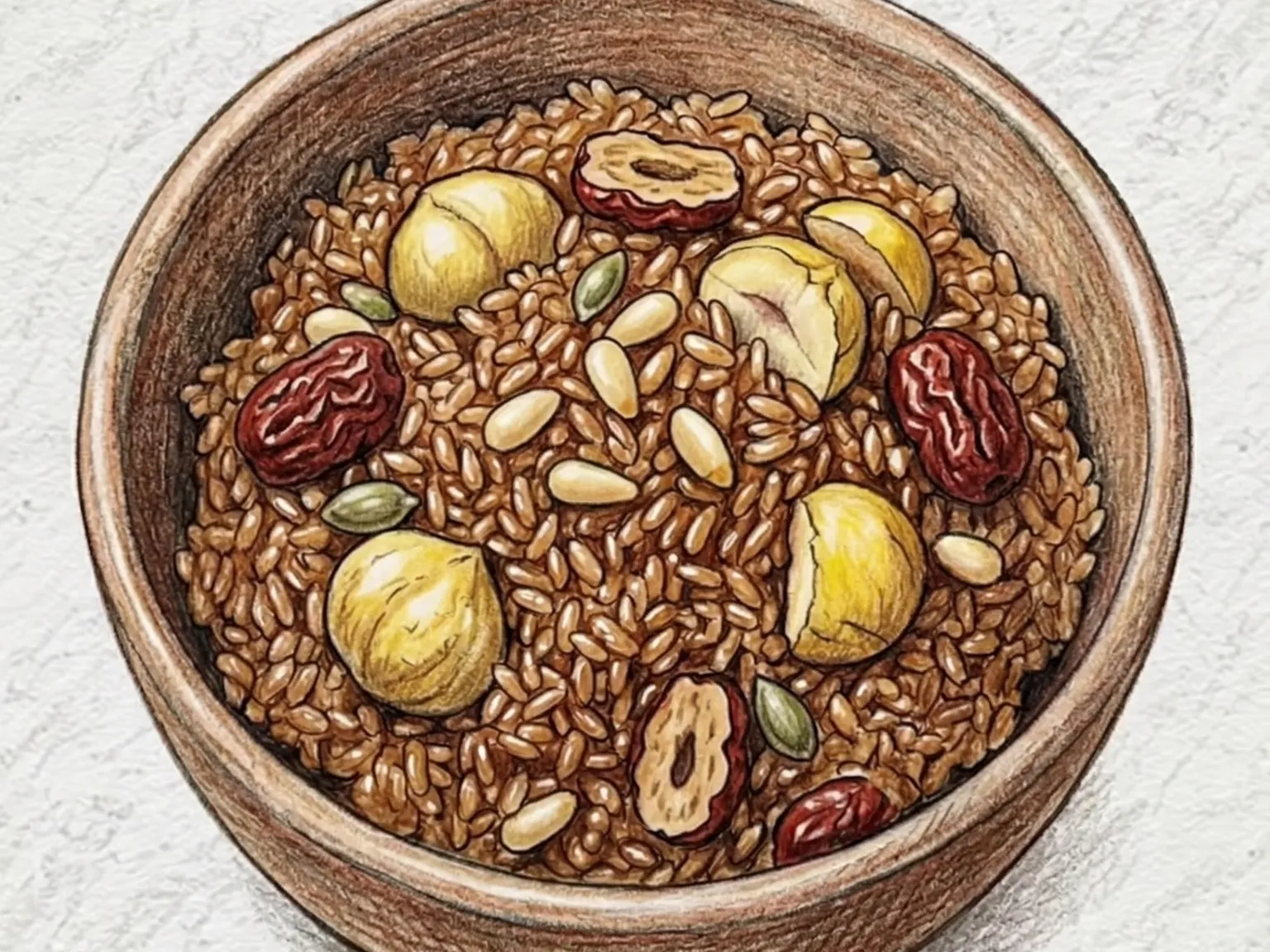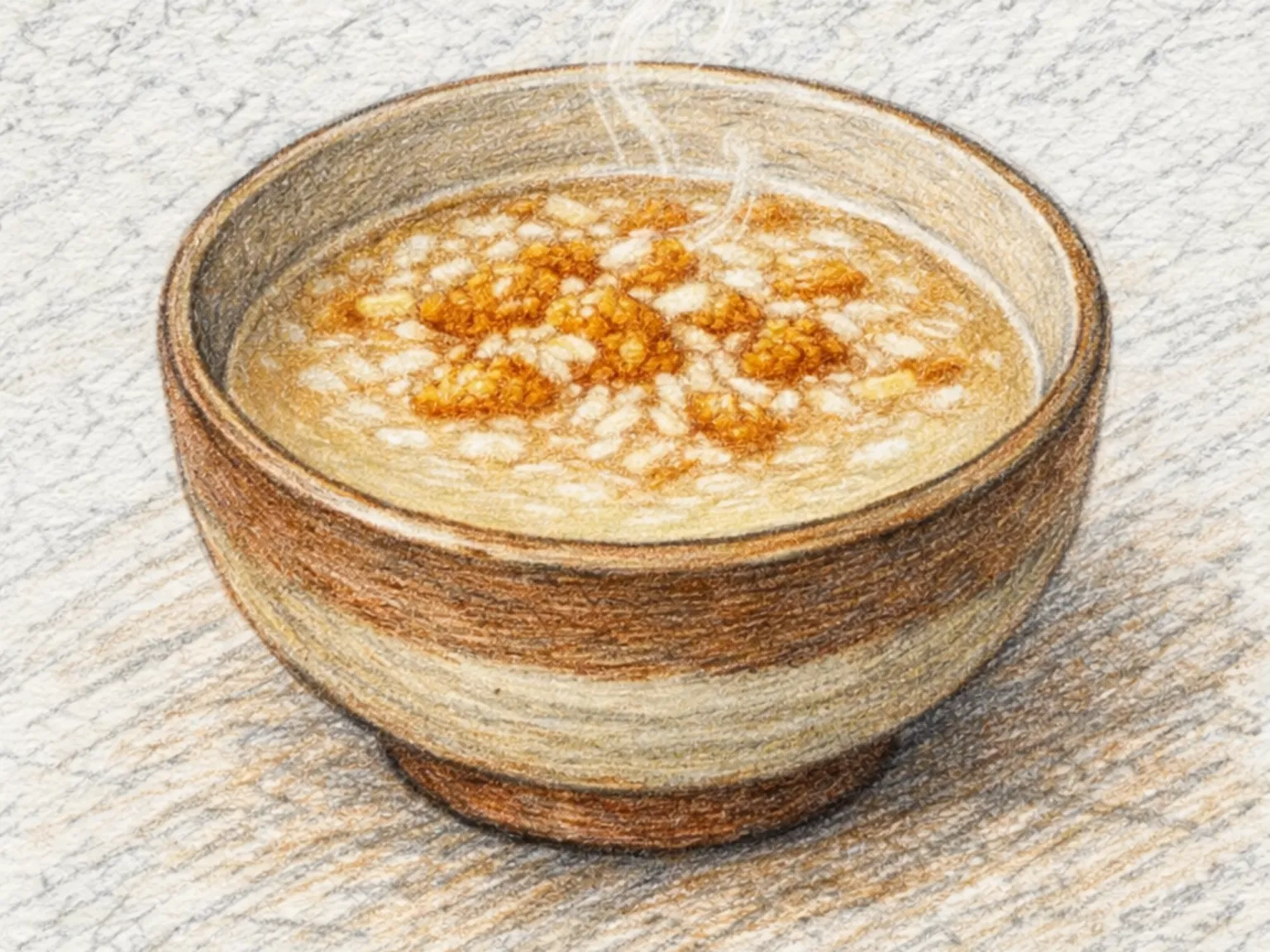
Korean Scorched Rice Tea (Toasted Rice Grain Brew)
Quick answer
Sungnyung is a traditional Korean grain beverage made by toasting the cooked rice left on the bottom of a pot until it forms a golden crust called nurungji, then pouring...
What makes this special
- Sungnyung extracts nutty, roasted depth from a toasted rice crust simmered with water into a clear tea.
- 5 minutes on low heat forms the scorched rice crust that drives nutty depth
- Brown rice and glutinous rice add grain complexity to the roasty base
Key ingredients
Core cooking flow
- 1 Spread 120 grams of cooked rice thinly and evenly across the bottom of a pot...
- 2 Place 20 grams of brown rice and 15 grams of glutinous rice in a bowl, rinse...
- 3 Pour 900 milliliters of water into the pot with the scorched rice, add the w...
Sungnyung is a traditional Korean grain beverage made by toasting the cooked rice left on the bottom of a pot until it forms a golden crust called nurungji, then pouring in water and simmering the crust with small additions of brown rice and glutinous rice for about fifteen minutes. The toasting step is where the character of the drink is established: enough scorching produces a deep, roasted, almost tea-like aroma, but any actual burning spreads bitterness through the entire liquid, so keeping the heat low and watching carefully is essential. A small pinch of salt sharpens the perception of the grain flavor without making the drink taste seasoned in any obvious way, and two or three pine nuts floated on the surface add a mild, oily richness that gives the otherwise lean liquid some body. Sungnyung has long been served at the end of meals in Korean households, rooted in the practical experience that a cup of the hot, gentle drink settles the stomach and eases the discomfort of having eaten heavily. There was also a household efficiency dimension: the same pot used to cook the rice would be used to make sungnyung, and the process cleaned the stuck rice off the bottom without scrubbing. With electric rice cookers now standard in most Korean homes, nurungji does not form naturally, but commercially produced nurungji can be purchased and simmered in the same way to achieve a close approximation.
Instructions
Read the steps as a cooking flow: prep, heat, seasoning, doneness control, and finish.
- 1Control
Spread 120 grams of cooked rice thinly and evenly across the bottom of a pot, then toast over low heat for 5 minutes until it becomes golden brown and crispy.
- 2Step
Place 20 grams of brown rice and 15 grams of glutinous rice in a bowl, rinse them lightly under running water to remove impurities, and drain thoroughly using a sieve.
- 3Control
Pour 900 milliliters of water into the pot with the scorched rice, add the washed brown and glutinous rice, then bring the entire mixture to a boil over medium heat.
- 4Control
Reduce the heat to low once boiling and simmer for 15 minutes, allowing the grains to soften completely and release a deep, nutty aroma into the toasted rice liquid base.
- 5Control
Add 1 gram of salt to season very lightly, then simmer for another 2 minutes to enhance the savory flavor and ensure the milky grain liquid reaches a perfect consistency.
- 6Finish
Pour the finished tea into serving cups, garnish with 4 grams of pine nuts, and serve immediately while warm to enjoy the soothing, nutty flavor of this traditional brew.
After the steps
Pick a recipe that fits this dish.
Continue with shared ingredients, meal pairings, or a similar method.
Recipes That Go Well With This
More Drinks →Based on shared ingredients and meal pairing
Sweet Rice Punch (Traditional Korean Malted Barley Grain Drink)
Sikhye is a traditional Korean sweet rice punch made by steeping malted barley powder in lukewarm water, straining the liquid, adding cooked rice, and holding the mixture at around 60 degrees Celsius for one hour until the rice grains float to the surface. The amylase enzymes in the malt break down the rice starch, producing a distinctly malty, clear sweetness with grain depth that no sugar alone can replicate. Only the clear top liquid is used after settling -- discarding the sediment keeps the punch from turning cloudy. Simmering with sugar and sliced ginger for 20 minutes rounds the sweetness and adds a gentle, spiced warmth to the finish. Served well chilled with the reserved floating rice grains and pine nuts on top, the cold temperature sharpens the malty aroma and makes each sip crisp. Temperature control during the steeping stage is critical: if the mixture exceeds 70 degrees Celsius, the amylase denatures and the grains will not float, so keeping a steady 60-degree hold determines whether the preparation succeeds.
Korean Ginseng Tea (Fresh Ginseng Jujube Herbal Brew)
Insam-cha is a traditional Korean ginseng tea made by thinly slicing fresh ginseng root and simmering it with dried jujubes and ginger over low heat for twenty minutes. Fresh ginseng is milder and less bitter than dried root, but slicing it thin is essential for the active compounds to infuse efficiently, releasing the root's characteristic earthy, herbal aroma as it cooks. Jujubes naturally soften the ginseng's bitterness, and ginger introduces a sharp warmth that gives the tea its backbone and prevents it from tasting flat. Honey is added to balance the flavor, and a few pine nuts floated on the surface at serving add an oily richness that complements the herbal notes without cooking away. Adding pine nuts at the end rather than simmering them preserves their fragrance in the finished cup. The amount of ginger can be adjusted to control the intensity of the heat, and the ratio of jujubes to ginger shifts the tea toward sweeter or more pungent depending on preference.
Gotgam Cream Cheese Roll (Dried Persimmon Rolls)
Gotgam cream cheese roll is a no-cook Korean dessert that requires nothing more than a knife, a bowl, and a refrigerator. Dried persimmons are slit open and flattened into thin sheets, each one acting as the outer wrapper. The filling is cream cheese mixed with honey and fresh lemon juice to balance its natural richness with acidity, and finely chopped walnuts are folded in throughout to add a crunchy, nutty element to every bite. The filling is spread across the opened persimmon, which is then rolled tightly and wrapped in plastic wrap. Twenty minutes in the refrigerator firms the roll enough to slice cleanly. Dipping the knife in warm water and wiping it dry before each cut produces the smoothest cross-sections. The finished slices reveal clearly defined layers: the chewy, caramel-sweet dried persimmon on the outside, the tangy cream cheese in the middle, and flecks of walnut distributed throughout. The combination makes it a natural pairing with wine or a polished addition to a traditional holiday table.
Korean Scorched Rice Latte
Nurungji-latte is a Korean grain latte built from scorched rice that is dry-toasted an extra minute in a pan to intensify its roasted aroma before being simmered in water to extract a deeply nutty infusion, which is then blended with milk. The toasting step caramelizes residual starch on the rice crust, generating a toasty depth that persists even after milk is added. Rice syrup provides sweetness with a rounder, more subdued quality than refined sugar, and a pinch of salt sharpens the overall flavor profile and brings the grain notes into focus. A small measure of vanilla extract weaves a subtle fragrance that complements rather than competes with the base. A brief pass with an immersion blender leaves fine rice particles suspended in the drink, giving it a slightly grainy texture that sets it apart from a conventional latte; blending longer produces a smoother, creamier result. A dusting of ground cinnamon over each cup adds a warm aromatic layer on top. The latte works equally well served warm in a mug or poured over ice for a chilled version.
Serve with this
Korean Spicy Octopus Skewers
Blanched octopus is cut into bite-sized pieces, threaded onto skewers, and grilled on a pan or open flame while being basted repeatedly with a spicy sauce of gochujang, soy sauce, sugar, minced garlic, and sesame oil. Octopus toughens dramatically with prolonged heat, so high-temperature, quick grilling is essential. Adding a slice of ginger to the blanching water removes any fishiness before the octopus hits the grill. The layered sauce builds up with each basting: gochujang contributes heat, sugar balances it with sweetness, soy sauce deepens the umami, and sesame oil finishes with a nutty fragrance. Keeping the heat at medium-high and turning the skewers frequently prevents the sugar in the glaze from burning while still achieving light char marks. The result has a caramelized, sticky crust over a chewy, springy center. Equally at home as street food or as bar snacks alongside cold beer or soju, these skewers are a reliable crowd-pleaser.
Korean Tofu and Bell Pepper Salad
Paprika-dubu-muchim combines 300 grams of blanched firm tofu, crumbled coarsely by hand, with julienned red and yellow bell peppers, cucumber, and onion in a soy-vinegar dressing. Blanching the tofu for just one minute removes any raw bean flavor while preserving a soft, creamy texture that contrasts with the crisp, sweet snap of the peppers. The onion is soaked in cold water for three minutes to tame its bite before joining the bowl. Sesame oil and minced garlic round out the dressing, adding depth without heaviness. Chilling the finished dish for 10 minutes before serving sharpens the vegetable flavors and makes the tofu firmer to the bite.
Dasik (Korean Honey-Pressed Roasted Grain Confection)
Dasik is a traditional Korean pressed confection made by kneading roasted grain or nut powders with honey and pressing the mixture into carved wooden molds. Unlike baked goods, dasik holds its shape entirely through the binding power of honey, with no heat applied during preparation. This technique produces a texture that is slightly resistant at first contact, then dissolves gently at body temperature in a way that releases the full aroma of the main ingredient. Roasted soybean powder yields a nutty version, black sesame produces a deeply aromatic one, and additions of pine nut powder or cinnamon develop the flavor in different directions. The wooden molds carve decorative patterns into the surface of each piece, giving dasik a visual refinement that matches its restrained sweetness. For centuries, dasik has been a standard offering at Korean tea gatherings, and its subtle flavor remains a natural match for the gentle bitterness of green tea.
Similar recipes
Korean Heotgae Tea (Oriental Raisin Tree Hangover Herbal Brew)
Heotgae-cha is a traditional Korean herbal tea made by simmering dried oriental raisin tree fruit with jujubes, ginger, and cinnamon over low heat for thirty-five minutes. The dried heotgae fruit, small and knobby in appearance, is astringent and muted in raw form, but prolonged simmering draws out a deep, earthy sweetness that gradually fills the water. Jujubes add natural sweetness and a faint fruity note, ginger contributes a sharp warmth that lingers at the tip of the tongue, and cinnamon layers in a gentle, aromatic sweetness, building a multi-layered flavor that develops slowly over the long cooking time. Honey is stirred in at the end to adjust sweetness to taste. In Korean traditional medicine, the oriental raisin tree has long been associated with supporting liver function and alleviating hangover symptoms, which is why the tea has been consumed as a morning-after drink for generations. Among Korean office workers accustomed to frequent after-work drinking gatherings, heotgae-cha remains one of the most commonly reached-for hangover remedies.
Korean Persimmon Leaf Tea
Gamnip-cha is a Korean caffeine-free tea made by simmering dried persimmon leaves and dried tangerine peel together - no rolling boil, just a low steady heat held for twelve minutes. That slow extraction pulls out the soft, grassy character of the leaves while keeping astringency in check. Thinly sliced Korean pear, skin on, goes into the pot for natural sweetness and a clean brightness, and the tangerine peel stays at a small quantity so it supports rather than overtakes the leaf aroma. Once strained, honey goes in and a trace of ground cinnamon finishes the cup. With no caffeine, it works equally well in the morning or late at night.
Handmade Scorched Rice
Crispy and savory handmade scorched rice that is easy to make at home.