Swedish Meatballs
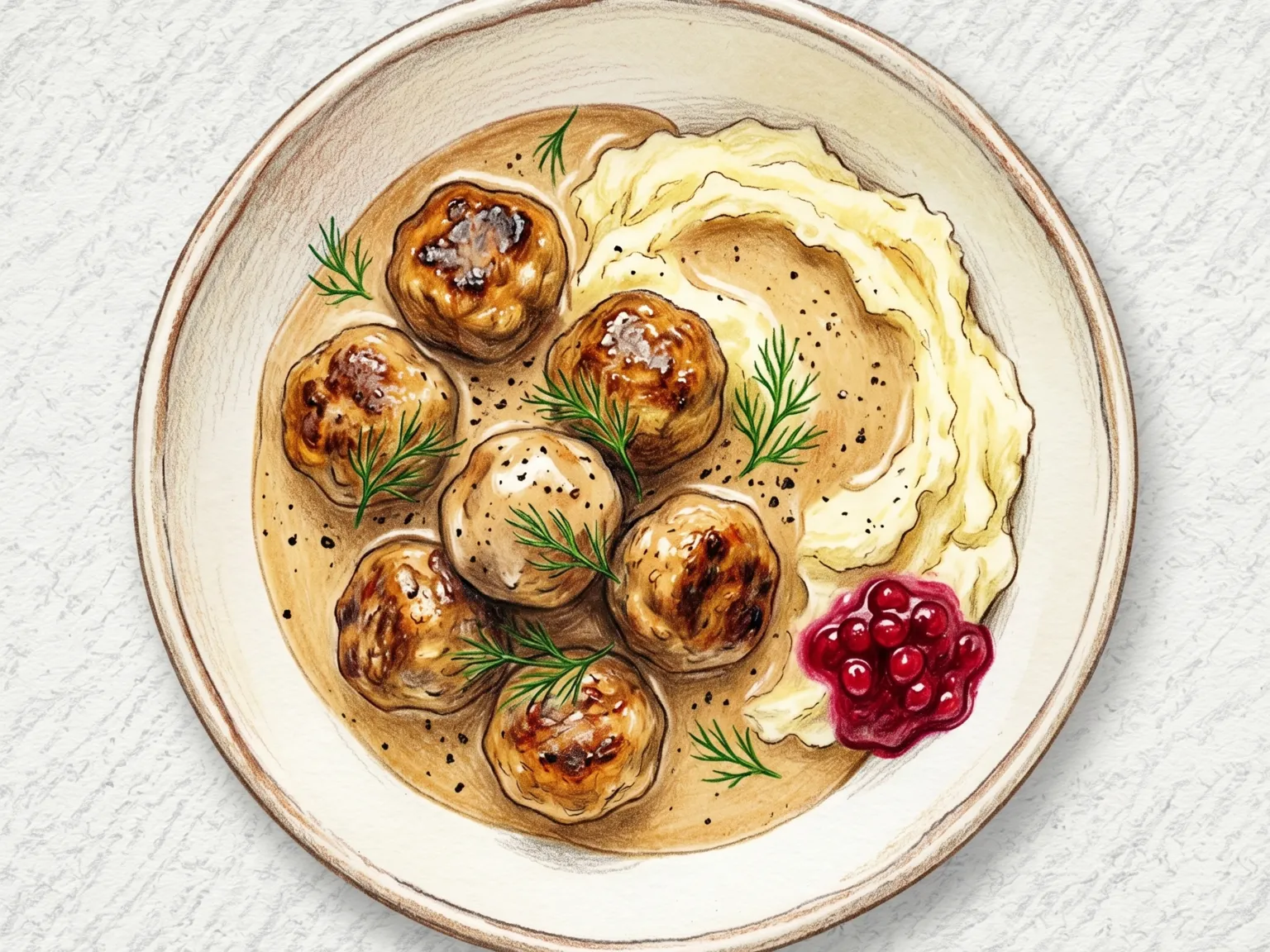
Swedish meatballs mix ground beef with sautéed onion, breadcrumbs, egg, and milk, shape the mixture into bite-size balls, brown them in butter, then simmer in a creamy gravy built in the same pan. The key to tender meatballs is minimal handling - overworking the mixture tightens the protein network and produces a tough, dense texture. Browning the meatballs leaves behind caramelized drippings on the pan floor, and these fond bits become the flavor base of the gravy when flour is whisked in to form a roux. Adding milk gradually while stirring prevents lumps, and a splash of Worcestershire sauce introduces a savory depth that rounds out the cream. The gravy's thickness is adjustable at the end - more milk loosens it, less keeps it rich - and serving over mashed potatoes lets nothing go to waste.
Adjust Servings
Instructions
- 1
Cook onion until soft, cool, then mix with beef, breadcrumbs, egg, and a little milk.
- 2
Shape the mixture into bite-size meatballs.
- 3
Brown meatballs in butter, turning to cook evenly.
- 4
Remove meatballs and whisk flour into the pan drippings to make a roux.
- 5
Add remaining milk and Worcestershire to form gravy, then return meatballs.
- 6
Simmer on low for 5 minutes until coated and tender.
As an Amazon Associate, we may earn from qualifying purchases.
Tips
Nutrition (per serving)
More Recipes

Beef Stroganoff
Beef stroganoff sears thin strips of sirloin over high heat just long enough to brown the surface while keeping the interior pink, then folds them into a pan sauce of sauteed mushrooms, onions, and sour cream. The mushrooms contribute their own meaty depth alongside the beef, and sour cream transforms the pan drippings into a sauce that is simultaneously creamy and subtly tangy. A touch of mustard sharpens the finish without announcing itself. Spooned over egg noodles or mashed potatoes, the cream sauce soaks into the starch below, pulling the whole plate together into a rich, cohesive meal.

Albondigas en Salsa (Spanish Meatballs in Tomato Sauce)
Tender, bread-softened meatballs simmered in a smoky paprika-tomato sauce until every bite soaks up the rich, glossy gravy -- Spain's ultimate weeknight comfort food. Ground pork and beef are mixed with soaked bread, egg, and garlic, then rolled small and browned in olive oil before simmering in a tomato-based sauce seasoned with smoked paprika and bay leaf. The bread in the mixture keeps the meatballs from turning dense, giving them a soft, almost spongy center that absorbs the sauce as they braise. The tomato sauce mellows over twenty minutes of gentle heat, losing its raw acidity and developing a concentrated sweetness that clings to each ball. Served with crusty bread to mop up the sauce, or spooned over plain rice, this is the kind of dish Spanish grandmothers make on weekday evenings without measuring anything.

French Beef Stew
French beef stew takes tough, inexpensive cuts of beef and transforms them through patience and slow heat into a deeply flavored, fork-tender dish. Chuck or brisket is cut into large chunks, dusted with flour, and seared until a dark brown crust forms - this initial browning builds the foundation of flavor for the entire pot. Red wine and beef stock are poured in, and the pot goes into a low oven or onto a gentle burner for at least two hours. Root vegetables - carrots, potatoes, celery, and onions - braise alongside the meat, contributing natural sweetness and body to the liquid. As the wine reduces, its acidity dissipates while its fruit depth and tannic structure remain, giving the sauce a robust backbone. Thyme sprigs and bay leaves infuse the broth with herbal warmth. The stew tastes even better the next day, after the flavors have had time to marry overnight in the refrigerator.

Shrimp and Grits
Shrimp and grits layers creamy, cheese-enriched grits beneath sauteed shrimp cooked in rendered bacon fat. The grits are whisked gradually into a mixture of boiling water and milk, then stirred frequently over low heat for about fifteen minutes until they reach a smooth, porridge-like consistency. Cheddar cheese and butter folded in at the end add richness and a slight tang. Bacon is rendered until crisp first, and its fat becomes the cooking medium for the shrimp, transferring smoky, salty depth into each piece. Paprika dusted over the shrimp before cooking contributes warm color and a mild earthy note. The shrimp should be pulled from the heat the moment they turn opaque - even a minute too long makes them rubbery.

Nikujaga (Japanese Beef Potato Onion Soy-Sweet Stew)
Nikujaga is the quintessential Japanese home-cooked stew, often described as the dish that defines a mother's cooking in Japan. Thinly sliced beef, potatoes, onion, carrot, and shirataki noodles are simmered in a broth of dashi, soy sauce, mirin, and sugar. The dish traces its origins to the Meiji era, when a Japanese naval officer attempted to recreate British beef stew using local ingredients - resulting in a clear, soy-based braise rather than a thick, flour-bound stew. The potatoes absorb the seasoned liquid until soft at the edges but still holding shape, while shirataki noodles soak up flavor and add a springy contrast.

Semla (Swedish Cardamom Bun with Almond Cream)
Semla is a Swedish cardamom-scented bun that is baked, cooled, and then hollowed out to make room for a filling of almond paste mixed with the scooped crumb, topped with a generous mound of whipped cream. The bun itself is soft and fragrant, with cardamom lending an exotic warmth that distinguishes it from ordinary sweet rolls. The almond filling is dense and intensely nutty, providing a rich base layer that the light, billowy cream offsets with its cool freshness. The removed cap of the bun is placed back on top like a lid, and a final dusting of powdered sugar completes the presentation. Timing is important: the bun must cool completely before any cream goes in, or the heat will melt it into a flat puddle. If the cardamom flavor feels too subtle after baking, increasing the spice by half a teaspoon in the dough brings it to the forefront. In Sweden, semla appears in bakeries from January through Easter, and the best versions balance the three components - bread, nut paste, and cream - so that no single element dominates.