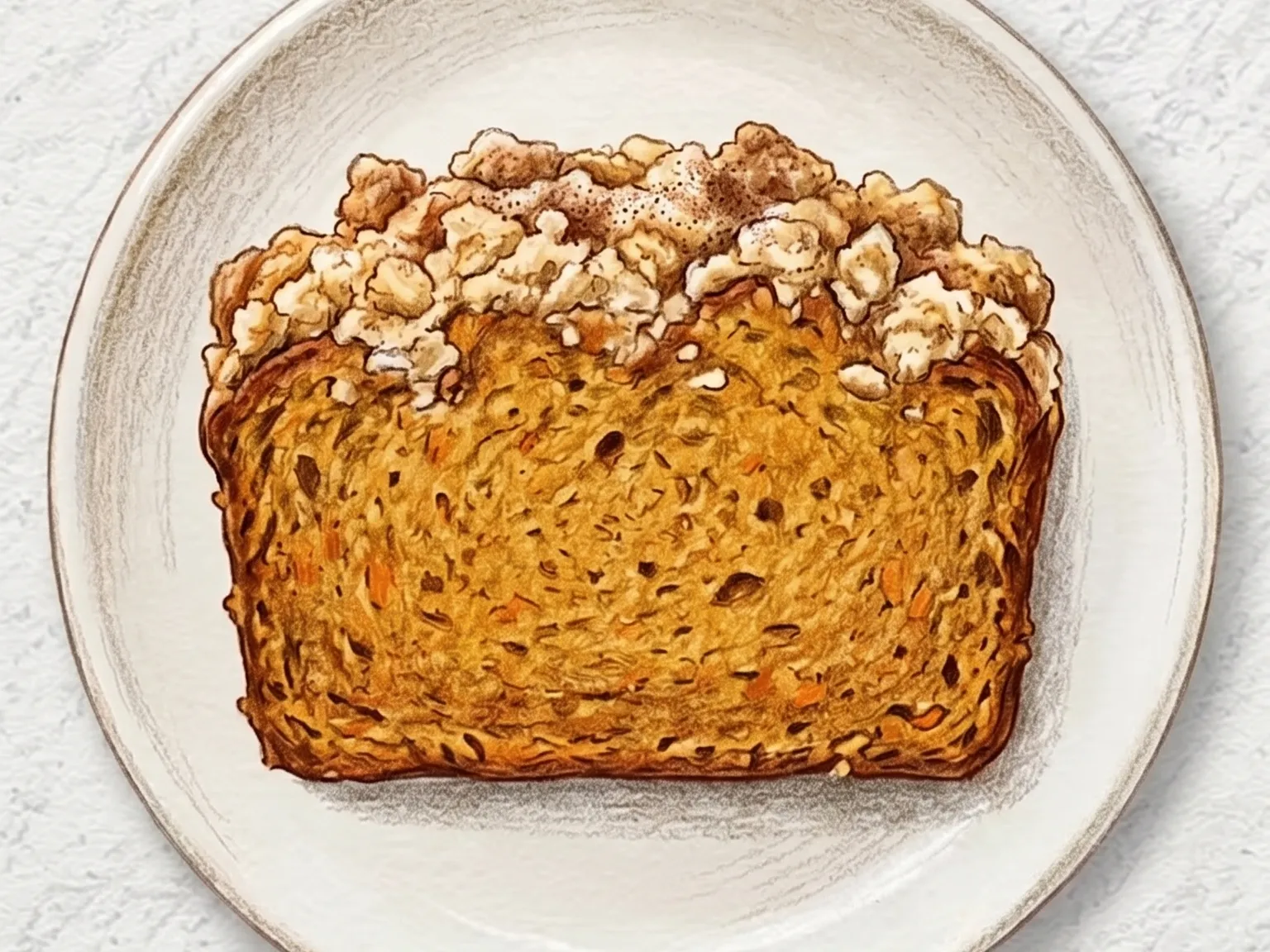
Goguma Streusel Loaf Bread (Sweet Potato Streusel Loaf)
Quick answer
Sweet potato puree is whisked into a batter enriched with brown sugar, eggs, and neutral oil, then baked in a loaf pan with a generous layer of butter streusel on top.
What makes this special
- Sweet Potato Streusel Loaf provides a dense, moist crumb topped with buttery crumble.
- Sweet potato puree in the batter keeps the loaf moist for days
- Rough streusel hand-rubbed from cold butter bakes into crunchy crumble clusters
Key ingredients
Core cooking flow
- 1 Preheat the oven to 175C and line the loaf pan tightly with parchment so the batter releases cleanly.
- 2 For the streusel, combine 35 g cold butter with 40 g flour and 30 g sugar.
- 3 In a large bowl, whisk 220 g sweet potato puree, 120 g brown sugar, 2 eggs...
Sweet potato puree is whisked into a batter enriched with brown sugar, eggs, and neutral oil, then baked in a loaf pan with a generous layer of butter streusel on top. The puree keeps the crumb remarkably moist and dense, while the streusel bakes into crunchy, crumbly clusters that shatter against the soft interior. Cinnamon reinforces the sweet potato's warmth, and brown sugar deepens the flavor with a faint molasses note. The streusel must be prepared with cold butter rubbed by hand into flour and sugar - the coarse, irregular texture is what creates the satisfying crunch after baking. If the puree is particularly wet, reducing the milk by ten milliliters prevents a batter that is too loose. Should the top brown too quickly during the long bake, a loose tent of foil protects the streusel without trapping steam. The loaf slices most neatly after cooling completely on a rack.
Instructions
Read the steps as a cooking flow: prep, heat, seasoning, doneness control, and finish.
- 1Step
Preheat the oven to 175C and line the loaf pan tightly with parchment so the batter releases cleanly.
Check the sweet potato puree first. If it looks very wet, measure only 60 ml milk instead of 70 ml.
- 2Season
For the streusel, combine 35 g cold butter with 40 g flour and 30 g sugar.
Rub with your fingertips until coarse pea-size crumbs form, then keep it cool so the butter does not melt before baking.
- 3Season
In a large bowl, whisk 220 g sweet potato puree, 120 g brown sugar, 2 eggs, 80 ml neutral oil, and the measured milk.
Mix until the sugar lumps dissolve and the batter looks smooth and glossy.
- 4Season
Sift in 210 g all-purpose flour, 7 g baking powder, 2 g cinnamon, and 2 g salt.
Fold gently with a spatula, stopping while a few flour streaks remain so the loaf does not turn tough.
- 5Heat
Pour the batter into the pan, level the surface, and scatter the streusel evenly without pressing it down.
Bake at 175C for 48-50 minutes. If the top browns too quickly, loosely tent with foil.
- 6Step
Test the center with a skewer.
It should come out without wet batter, though moist crumbs are fine. Rest the loaf in the pan for 10 minutes, then cool completely on a rack before slicing with a sawing motion.
After the steps
Pick a recipe that fits this dish.
Continue with shared ingredients, meal pairings, or a similar method.
Recipes That Go Well With This
More Baking →Based on shared ingredients and meal pairing
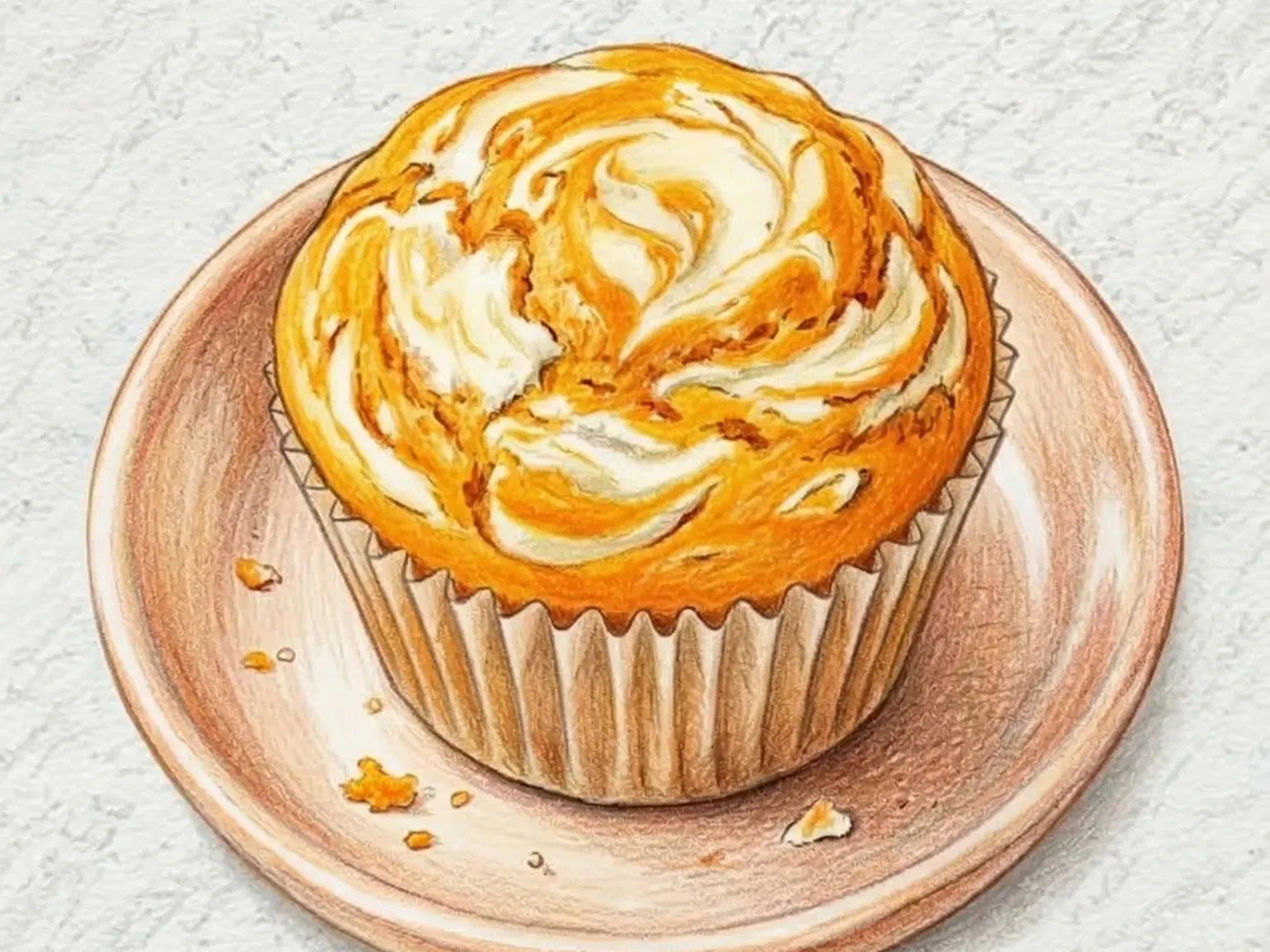
Danhobak Cream Cheese Swirl Muffin (Kabocha Cream Cheese Swirl Muffin)
Kabocha squash swirl muffins are autumn bakes that use steamed and mashed kabocha puree in the batter and a lightly sweetened cream cheese filling swirled across the top before baking. The puree contributes natural moisture and sweetness that transform the crumb from the typically dry muffin texture into something denser and notably more tender, while the orange pigment of the squash tints the batter to a warm amber that signals the season. A small amount of cinnamon and nutmeg deepens the earthy sweetness of the squash and wraps each bite in the rounded, cozy warmth that autumn spices are known for. The cream cheese filling is kept at minimal sweetness so its tanginess remains assertive, and drawing swirls through the batter with a toothpick before baking creates marble-like veins across the surface and through the interior once cut. The muffins emerge from the oven with lightly cracked, golden tops, and splitting one open reveals bright orange crumb threaded with white cream cheese streaks. The interplay between the sharp, rich cream cheese and the spiced squash crumb produces a complexity that makes these more interesting than a single-note muffin, and they come together in under an hour from mixing bowl to cooling rack.
Red Bean Pastry (Korean Gyeongju Soft Bun with Anko)
Gyeongju-ppang is a baked Korean pastry made from a yeast-leavened dough enriched with milk and butter, wrapped generously around a core of sweet red bean paste. The dough is rolled thin, formed around the filling with the seam placed down, and baked at 180 degrees Celsius until the top domes up smooth and the surface takes on a pale golden color. Because the filling-to-dough ratio is deliberately high, the dominant flavor in each bite is the dense, sweet red bean, with the thin enriched shell contributing a quiet dairy aroma. The pastry traces its lineage to hwangnam-ppang, originating in the Hwangnam district of Gyeongju, and has become one of the city's defining food souvenirs. It stays moist after cooling, which makes it practical both as a packaged gift and as an everyday snack eaten at room temperature.
Honey-Filled Rice Cakes (Steamed Glutinous Rice with Brown Sugar Syrup)
Kkultteok are bite-sized Korean rice cakes made by kneading glutinous rice flour with hot water, wrapping each 20-gram round of dough around a filling of dark brown sugar, ground cinnamon, and chopped walnuts, then steaming for eight to ten minutes. After steaming, a light brush of sesame oil gives the surface a sheen and keeps the pieces from sticking together, and a final roll in roasted soybean powder adds a dry, nutty outer coating. Biting through the soft, chewy shell releases a pool of melted brown sugar syrup with cinnamon warmth, while the walnut fragments provide crunch against the sticky interior. The most critical step is pinching the dough seam shut as tightly as possible: if the seal fails during steaming, the molten brown sugar syrup leaks out and the rice cake ends up hollow and dry.
Tofu Chocolate Loaf Cake (Light Cocoa Loaf with Silken Tofu)
Soft tofu is blended smooth and folded into a cocoa batter, replacing some of the butter and egg to produce a loaf cake that is moist, dense, and noticeably lighter in fat than a conventional chocolate cake. The cocoa provides deep, bittersweet flavor while the tofu contributes a clean, neutral backdrop - any bean taste is completely masked by the intensity of the cocoa. Neutral oil in the batter maintains moisture over several days, so the cake stays soft well after baking. The crumb is compact yet tender, somewhere between a brownie and a pound cake in density. Smoothing the surface of the batter before it enters the oven ensures an even rise and a flat top suitable for dusting with powdered sugar or glazing with dark chocolate ganache. Because the tofu adds water content, the baking time may run slightly longer than a standard loaf; a skewer inserted into the center should come out with only a few moist crumbs, not wet batter.
Serve with this
Korean Crispy Potato Pancake
Gamja-jeon is a Korean potato pancake made by finely grating raw potatoes, letting the starch settle out of the liquid for at least ten minutes, discarding the water, and folding the settled starch back into the pulp to improve binding. Waiting long enough for full starch separation is what gives the batter enough cohesion to hold together when the pancake hits the hot pan. Spreading the batter as thinly as possible produces glass-crisp edges while the center retains a chewy, starchy bite characteristic of potato starch. The first side must cook all the way through and the underside must firm up completely before any attempt to flip, and using two spatulas simultaneously makes the turn fast enough to keep the pancake intact. Frying both sides over medium heat until evenly golden delivers a crust that is crisp on the outside while the center stays moist. A dipping sauce of soy sauce, vinegar, and minced cheongyang green chili cuts through the oily richness with sharpness and heat.
Roasted Mushroom Perilla Potato Salad
Potatoes are boiled skin-on and roughly mashed with a fork to keep a mix of fluffy interior and chunky structure rather than a smooth puree. King oyster mushrooms are torn lengthwise into thick strips and pan-roasted in olive oil until chewy and deeply savory, developing color on the cut surfaces. Perilla seed powder and Greek yogurt create a nutty, creamy binder that unifies the two main components without masking their individual flavors. Shredded perilla leaves release their bold, anise-like fragrance across the entire plate, while lemon juice and minced garlic cut through the richness and sharpen the overall aroma. Two distinctly Korean aromatics, perilla seed and perilla leaf, give the familiar potato salad format a flavor profile that diverges significantly from its Western counterpart. The salad is best at room temperature, where the potato texture stays fluffy and the mushrooms hold their chew; if refrigerated, pulling it out 30 minutes before serving restores the right consistency.
Calzone
Calzone rolls pizza dough into a circle, fills one half with ricotta, mozzarella, diced ham, and fresh basil, then folds into a half-moon shape, seals the edges with a fork, and bakes until golden at 220 degrees Celsius. Leaving a two-centimeter border free of filling is critical -- overstuffing causes steam pressure to burst the seam during baking. Brushing a thin line of water along the edge before pressing firmly with a fork creates a tighter seal that holds through the full bake. Fifteen to twenty minutes in a well-preheated oven produces a crisp, burnished exterior while the interior heats the ricotta into a soft cream and melts the mozzarella into long, stretchy strings. Brushing olive oil on the surface before baking adds a richer color and a slight nuttiness to the crust. Tomato sauce served on the side for dipping provides an acidic counterpoint that cuts through the dense cheese filling and keeps each bite feeling balanced.
Similar recipes
Soboro Bread (Korean Sweet Streusel-Topped Bun)
Soboro bread is a Korean bakery staple that tops a soft, milk-enriched yeast bun with a layer of sweet cookie crumble. The bun interior is pillowy and slightly sweet, with a fine crumb that tears in gentle strands, while the streusel cap - mixed from butter, sugar, egg, and flour - bakes into a crunchy, golden shell that cracks into irregular pieces. The appeal lies in the contrast: each bite delivers both the airy softness of enriched bread and the sandy crunch of a cookie. Applying the crumble after the second proof, rather than before, prevents the rising dough from being weighed down and allows the surface to fracture naturally in the oven's heat. The crumble stays crisp even after the bread cools completely, which is why soboro bread remains satisfying the next day when many other bakery items have gone stale.
Blueberry Banana Bread
Blueberry banana bread is a quick bread that pairs the dense, sweet moisture of ripe bananas with the sharp burst of blueberries. The riper the banana, the more sugar has converted from starch, which means the bread needs less added sweetener while still tasting distinctly sweet. Melted butter enriches the crumb without weighing it down the way oil can, and baking soda creates a fine, tender rise that keeps the interior soft. Blueberries burst during baking and streak the crumb with rivulets of purple juice, making every slice visually distinct as well as flavorful. The most important technique is restraint with the mixing - once the flour is added, stirring just until the dry streaks disappear prevents gluten from over-developing and keeps the crumb moist rather than tough. Because the fruit carries most of the sweetness and moisture, this is a reasonable choice as a daily snack or a healthier baked good. Sliced warm with butter or cream cheese, it works as a simple brunch dish, and it keeps well for several days at room temperature before the crumb begins to dry.
Yuja Cheesecake Bars (Citron Cheesecake)
Yuja cheesecake bars are a baked dessert that begins with a pressed crust of cracker crumbs and melted butter, pre-baked for eight minutes to set a firm base before the filling goes in. The filling combines softened cream cheese, eggs, sugar, and yuja citron marmalade, poured over the crust and baked at 170 degrees Celsius until just set. Pre-baking the crust is essential for keeping the layers distinct, and room-temperature cream cheese is non-negotiable for a batter free of lumps. Seventy grams of yuja marmalade introduces the fruit's sharp, floral citrus fragrance alongside clean acidity that cuts through the dense richness of the cheese layer, preventing the aftertaste from feeling heavy or cloying. Chilling for two full hours in the refrigerator before slicing produces straight, clean edges on each bar, and the texture sits between dense and silky, dissolving slowly once it hits the palate.